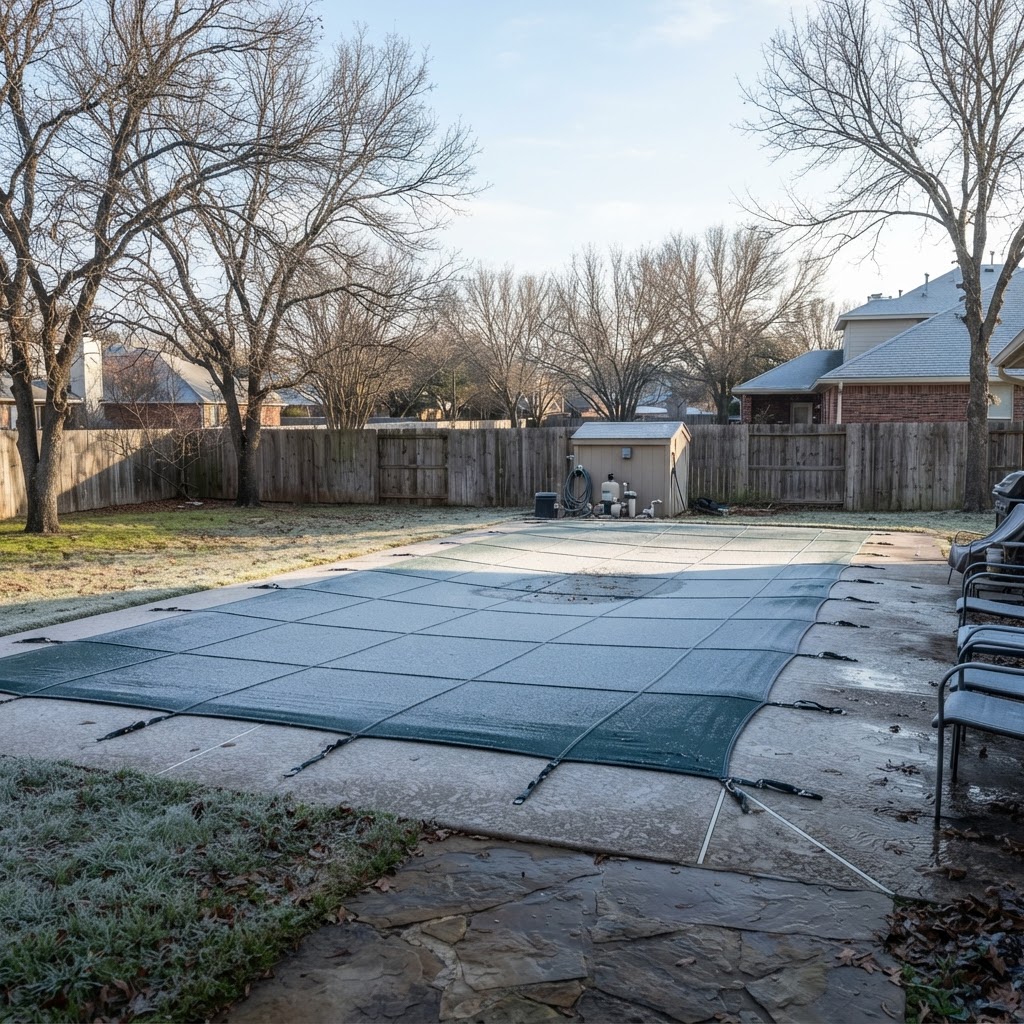
Texas weather is famous for its "wait five minutes and it will change" personality. For pool owners in the Lone Star State, this volatility presents a unique set of challenges. While our friends in the North are winterizing their pools by blowing out lines and installing heavy safety covers in October, Texas pools usually stay open all year. However, "staying open" doesn't mean "staying ignored."
Preparing your pool for a Texas winter is about two primary goals: maintaining water quality during the cooler months and protecting your expensive equipment from the sudden, deep freezes that have become more common in recent years. Whether you are dealing with a mild Austin autumn or a brutal North Texas ice storm, following a professional preparation routine will save you time, money, and stress. At Tiki Tides Pools, we've seen firsthand how a little preparation prevents massive repair bills.
Step 1: Deep Cleaning and System Inspection
Before the first cold front arrives, your pool needs to be in peak physical condition. Debris left in the pool over winter can cause permanent staining and radically shift your chemical balance. Start by thoroughly skimming the surface and vacuuming the floor to remove all organic matter like leaves and acorns.
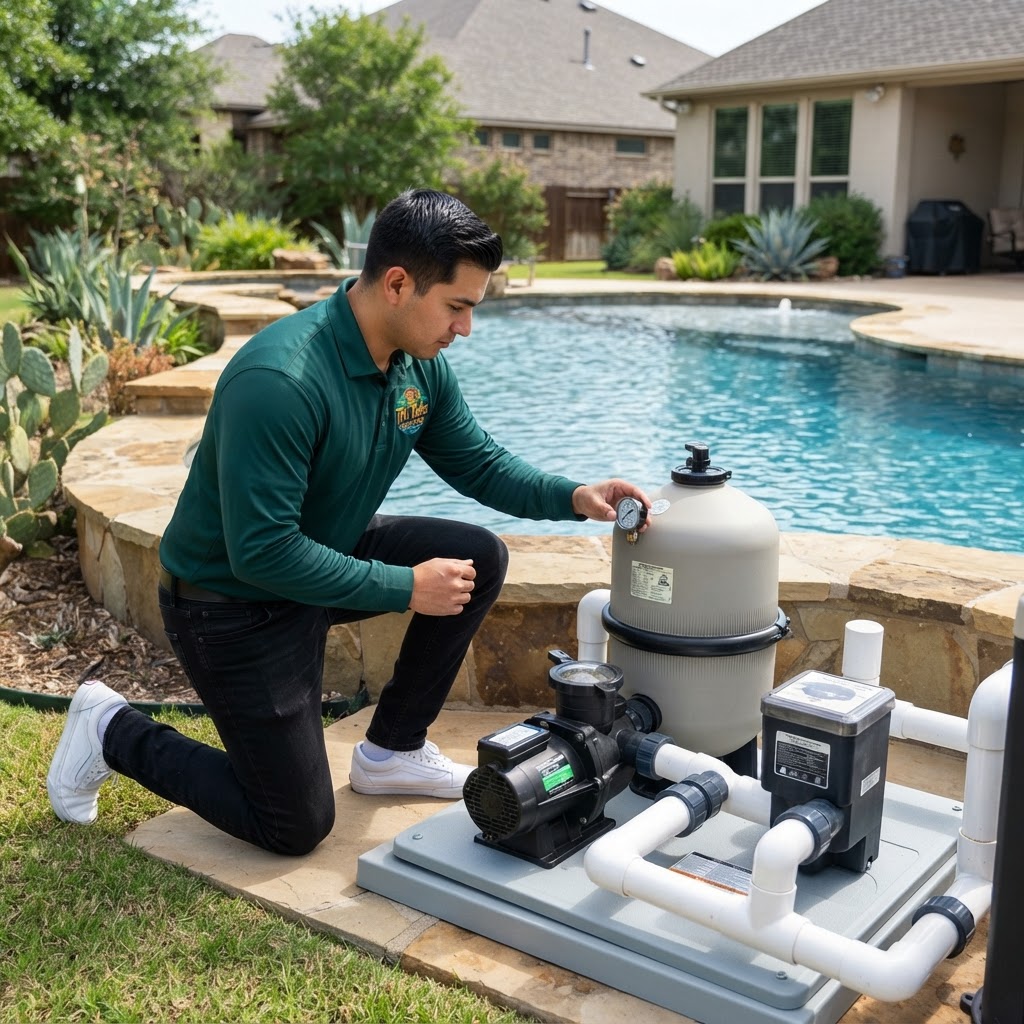
Next, focus on your filtration system. A clean filter ensures maximum water flow, which is your #1 defense against freezing pipes. If you have a DE or cartridge filter, now is the time for a deep clean. If you have a sand filter, perform a long backwash. While you are at the equipment pad, inspect every inch of PVC pipe for hairline cracks or leaks. Even a tiny drip can lead to a major pipe burst when water expands as it turns to ice.
Step 2: Master Your Winter Water Chemistry
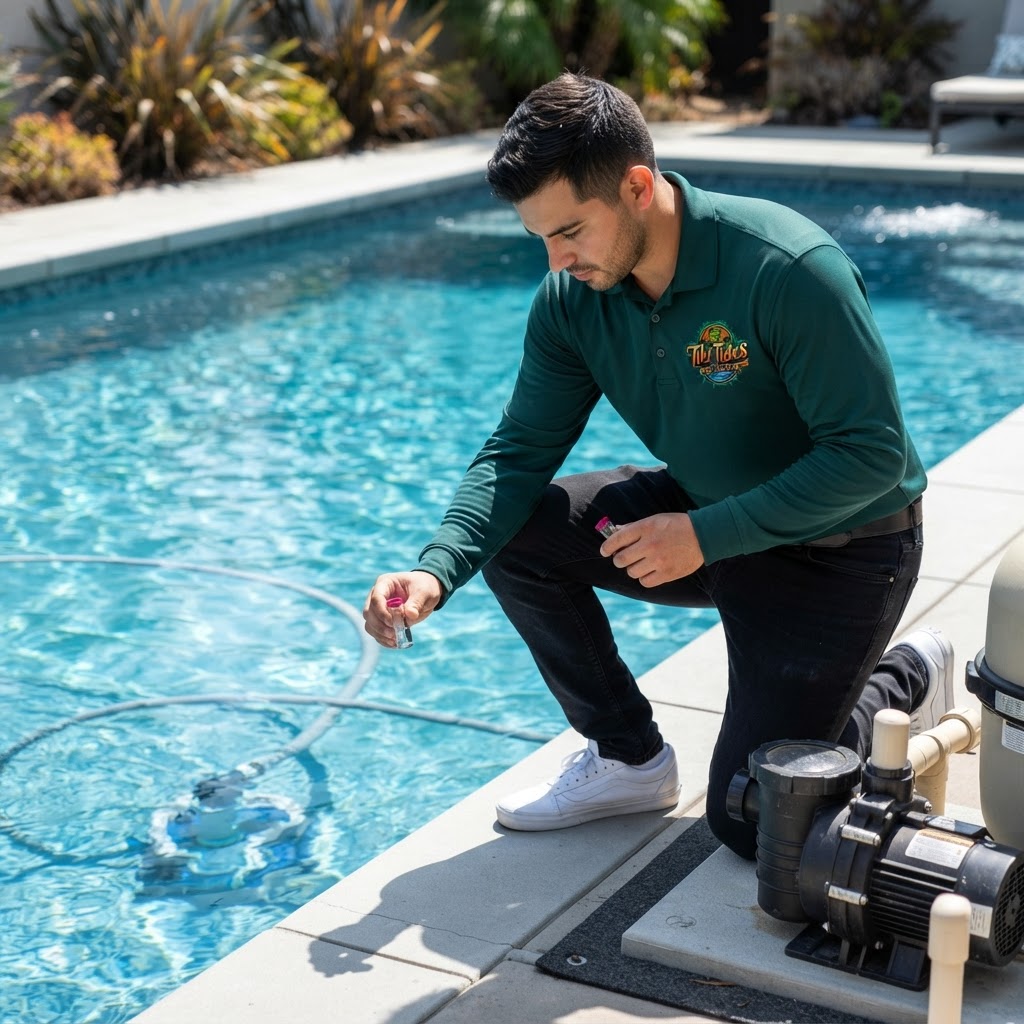
Many owners mistakenly believe that because they aren't swimming, they can stop testing their water. In reality, cold water is more aggressive. According to the Langelier Saturation Index (LSI), colder water is more prone to becoming corrosive, which can etch your pool's plaster or damage metal components in your heater. To keep your pool healthy and protected, adhere to these industry-standard ranges:
- Free Chlorine (FC): 1.0–3.0 ppm (CDC standard). Even in winter, UV rays and organic debris consume chlorine.
- pH Level: 7.2–7.8. This range is critical for equipment longevity and chemical effectiveness.
- Total Alkalinity (TA): 80–120 ppm. This acts as a buffer for your pH.
- Calcium Hardness (CH): 200–400 ppm. Proper calcium levels prevent the water from "eating" your plaster.
- Cyanuric Acid (CYA): 30–50 ppm. This protects your chlorine from the sun.
Pro Tip: If you have a Salt Water Chlorine Generator (SWCG), remember that most salt cells stop producing chlorine when water temperatures drop below 50-60°F. You may need to supplement with liquid chlorine or chlorine tabs during the coldest months to maintain your 1.0–3.0 ppm target.
Step 3: Equipment Care and Freeze Protection
In Texas, your "Freeze Guard" is your most important piece of equipment. This sensor triggers your pump to turn on automatically when temperatures hit a certain threshold (usually 38°F). Moving water is significantly harder to freeze than standing water.
Testing your freeze protection is mandatory before December. You can test it by wrapping a bag of ice around the sensor to see if the pump kicks on. Additionally, check your pump run times. While you can reduce run times in the winter to save electricity, you must ensure the system runs long enough to circulate the entire volume of the pool at least once per day. During a freeze warning, the pump should run 24/7 until the temperature rises above 32°F.
Quick Reference: Winter Maintenance Checklist
To keep your pool in top shape, follow this scannable checklist throughout the season:
- Weekly: Test water chemistry (FC and pH) and empty skimmer and pump baskets.
- Bi-Weekly: Brush the walls and floor to prevent winter algae blooms.
- Monthly: Check the water level; it should remain at the midpoint of the skimmer opening. Low water can cause the pump to lose prime and burn out.
- Pre-Freeze: Clear all debris from the pool and ensure all valves are open to allow full circulation.
The "Hard Freeze" Protocol
When a major ice storm or "Blue Norther" is forecasted, take these extra steps:
- Remove Pool Cleaners: Take automatic suction or pressure cleaners out of the pool and drain them. Plastic components can become brittle and break in extreme cold.
- Open All Valves: Ensure water is moving through every pipe, including water features and cleaners.
- Do Not Cover with Solar Blankets: Standard bubble-style solar covers can freeze to the water surface, creating a dangerous situation and blocking airflow.
- Monitor Power: If you lose power during a freeze, you must immediately go to the equipment pad and pull the drain plugs from your pump, filter, and heater to prevent the water inside from freezing and cracking the housings.
Safety Notes
Winter pool care involves electricity and chemicals, both of which require caution:
- Chemical Storage: Never let liquid pool chemicals freeze, as this can cause them to become unstable or lose efficacy. Store all chemicals in a dry, ventilated area away from children.
- Electrical Safety: If you notice ice buildup on your pump motor, do not attempt to chip it off while the unit is powered. Never handle electrical components while standing in slush or water.
- Ventilation: If you have an indoor pool or a pool enclosure, ensure proper ventilation when adding chemicals to prevent the buildup of toxic fumes.
When to Call a Professional
While many Texas homeowners can handle routine winter maintenance, certain tasks require a certified expert from Tiki Tides Pools:
- Freeze Guard Failure: If your pump doesn't turn on during a cold snap, call us immediately to prevent equipment loss.
- Heater Issues: If your heater fails to ignite or shows an error code, do not attempt to repair gas lines yourself.
- Visible Cracks: If you notice cracked PVC pipes or leaking seals after a freeze.
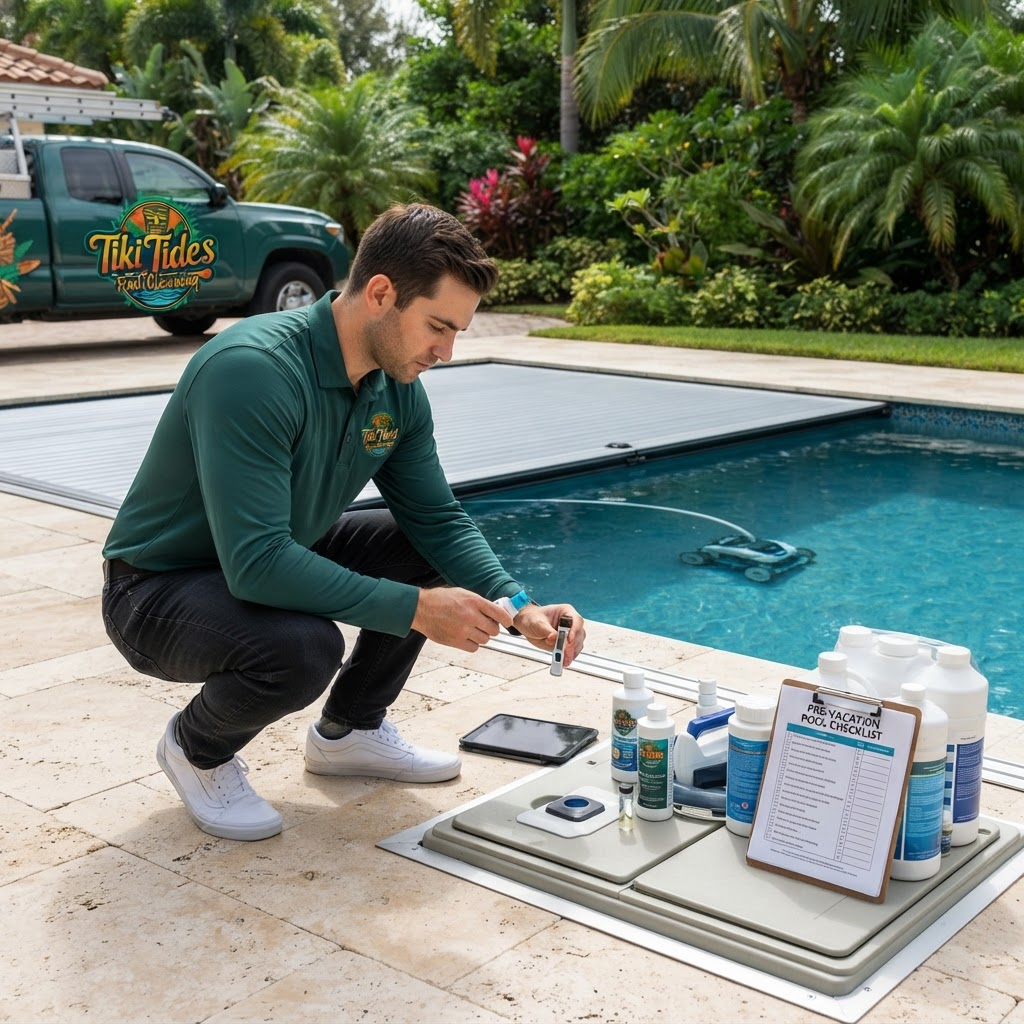
- Professional Winterization: If you plan to be away for the winter, our team can perform a "winter watch" service to ensure your pool remains safe and clear.
Summary
Preparing your pool for a Texas winter is an exercise in vigilance. By keeping your water balanced—specifically maintaining Free Chlorine at 1.0–3.0 ppm and pH at 7.2–7.8—and ensuring your freeze protection systems are operational, you can rest easy when the temperature drops. Remember, the goal is to keep the water moving and the chemistry stable. With these steps, your Tiki Tides pool will be ready for a splash the moment the Texas sun returns in the spring.