Why North Texas Pool Care is Unique
Owning a pool in North Texas is a fantastic way to beat the heat, but our climate presents a unique set of challenges that differ from other parts of the country. From the intense, triple-digit summer temperatures that accelerate chlorine depletion to the mineral-rich "hard" water common in our region, maintaining a pool here requires a proactive, consistent approach.
In North Texas, the combination of high UV exposure, frequent dust and pollen, and sudden, heavy rainstorms can throw your water chemistry out of balance in a matter of hours. By understanding these regional factors, you can move from reactive "emergency" cleaning to a smooth, year-round maintenance routine that protects your investment and keeps your water safe for swimming.
Essential Water Chemistry for Texas Pools
Water chemistry is the foundation of a healthy pool. Because North Texas tap water often has high calcium levels, you must monitor your levels closely to prevent scaling. Always aim for these industry-standard ranges:
- Free Chlorine: 1.0–3.0 ppm
- pH: 7.2–7.8
- Total Alkalinity: 80–120 ppm
- Calcium Hardness: 200–400 ppm
- Cyanuric Acid (CYA): 30–50 ppm
Pro Tip: In North Texas, high calcium hardness in fill water is common. If your levels exceed 400 ppm, consider a partial drain-and-refill or consult a professional about using sequestering agents to keep calcium dissolved and prevent surface scaling.
Weekly Maintenance Checklist
Consistency is the secret to a sparkling pool. Follow this routine to stay ahead of the Texas elements:
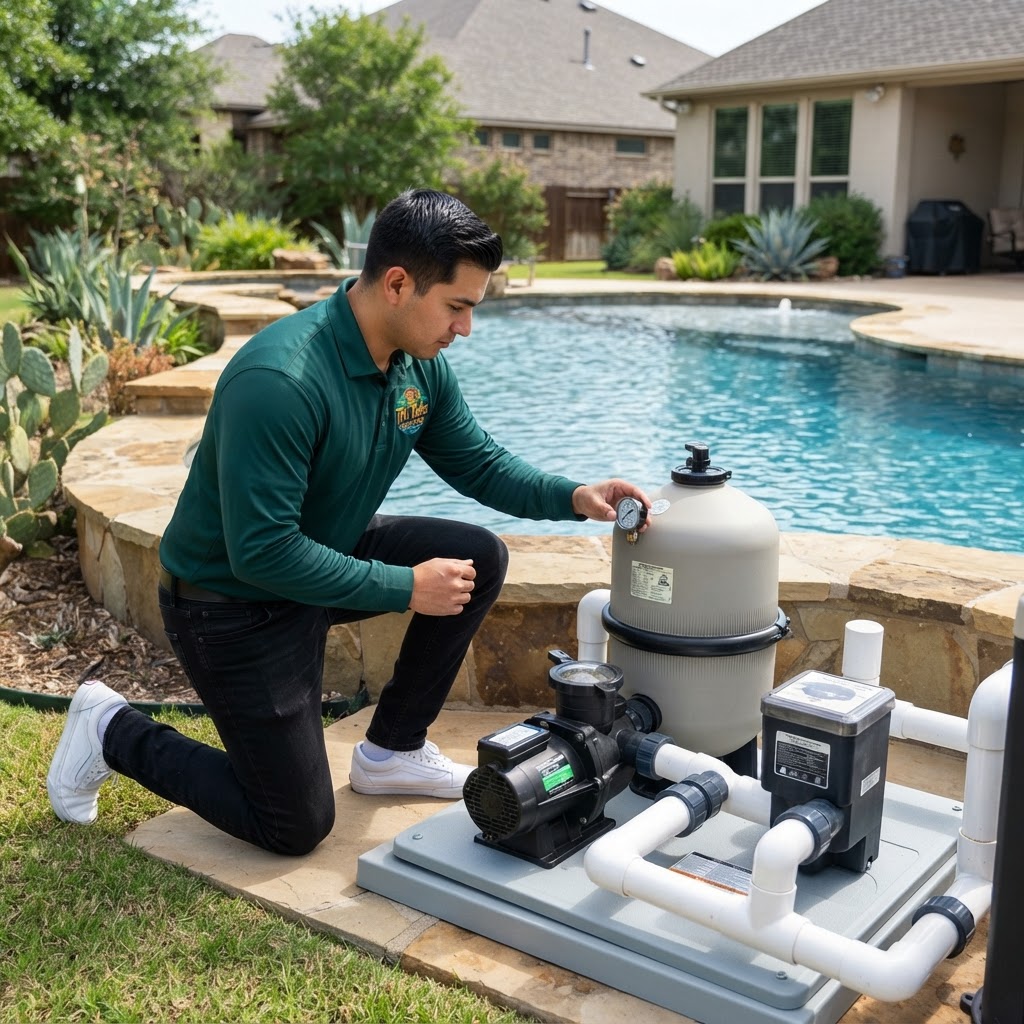
- Circulation: Run your pump at least 8 hours daily to ensure proper filtration and prevent stagnant water.
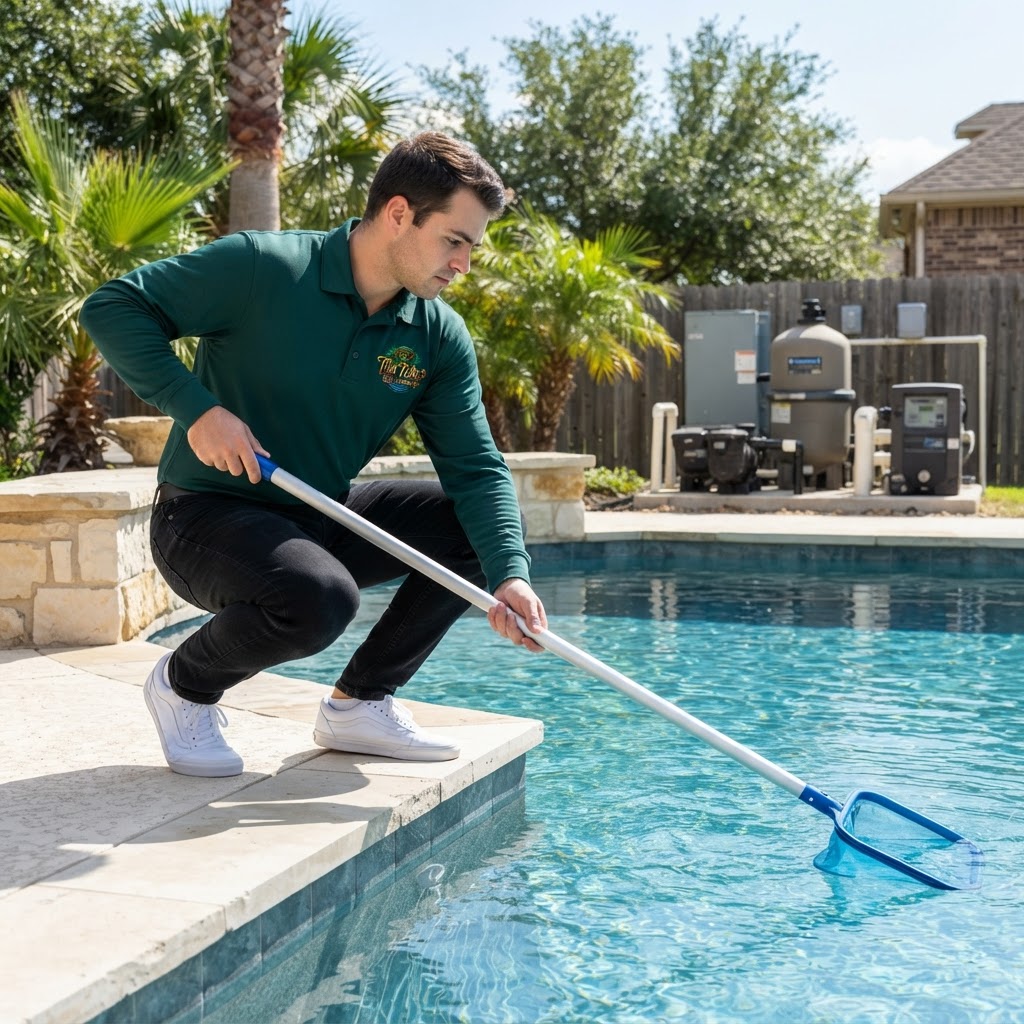
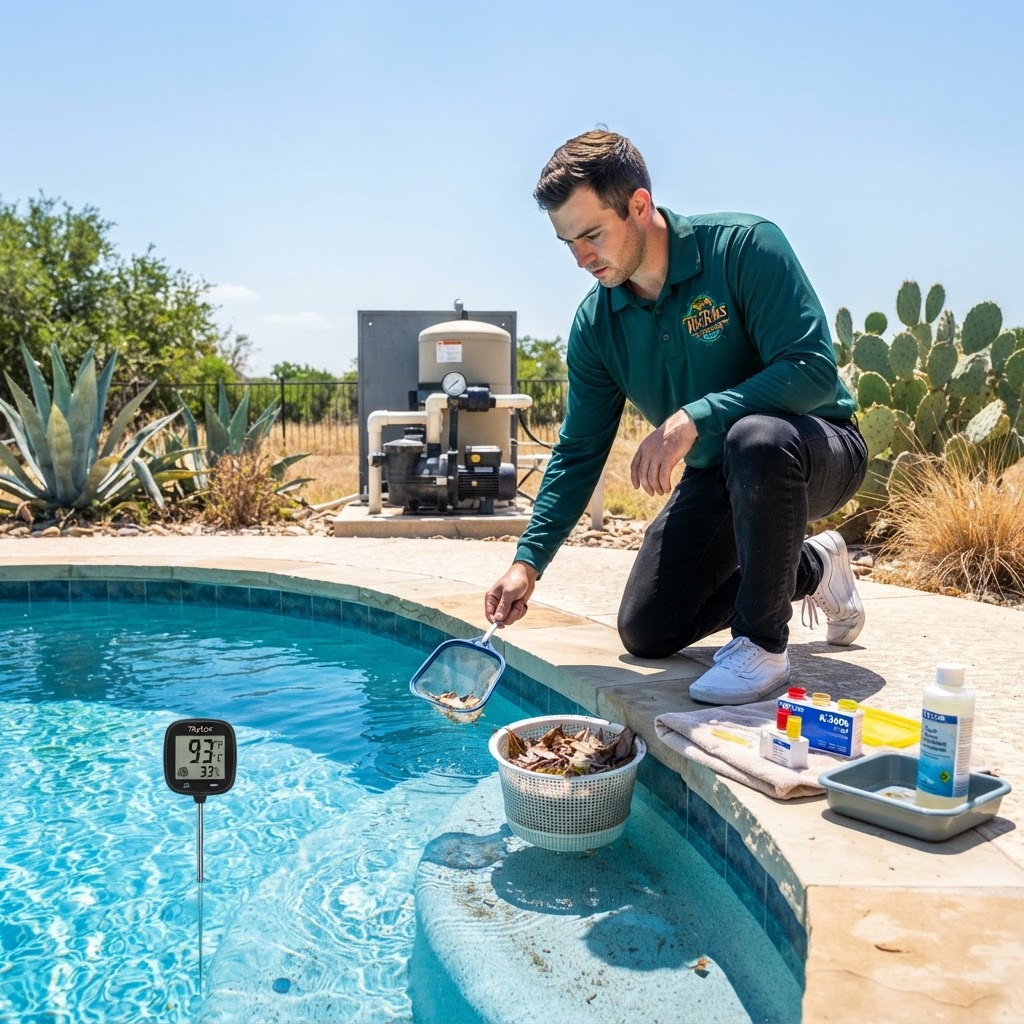
- Cleaning: Skim the surface, empty skimmer baskets, and brush the walls and floor weekly to prevent algae from taking hold.
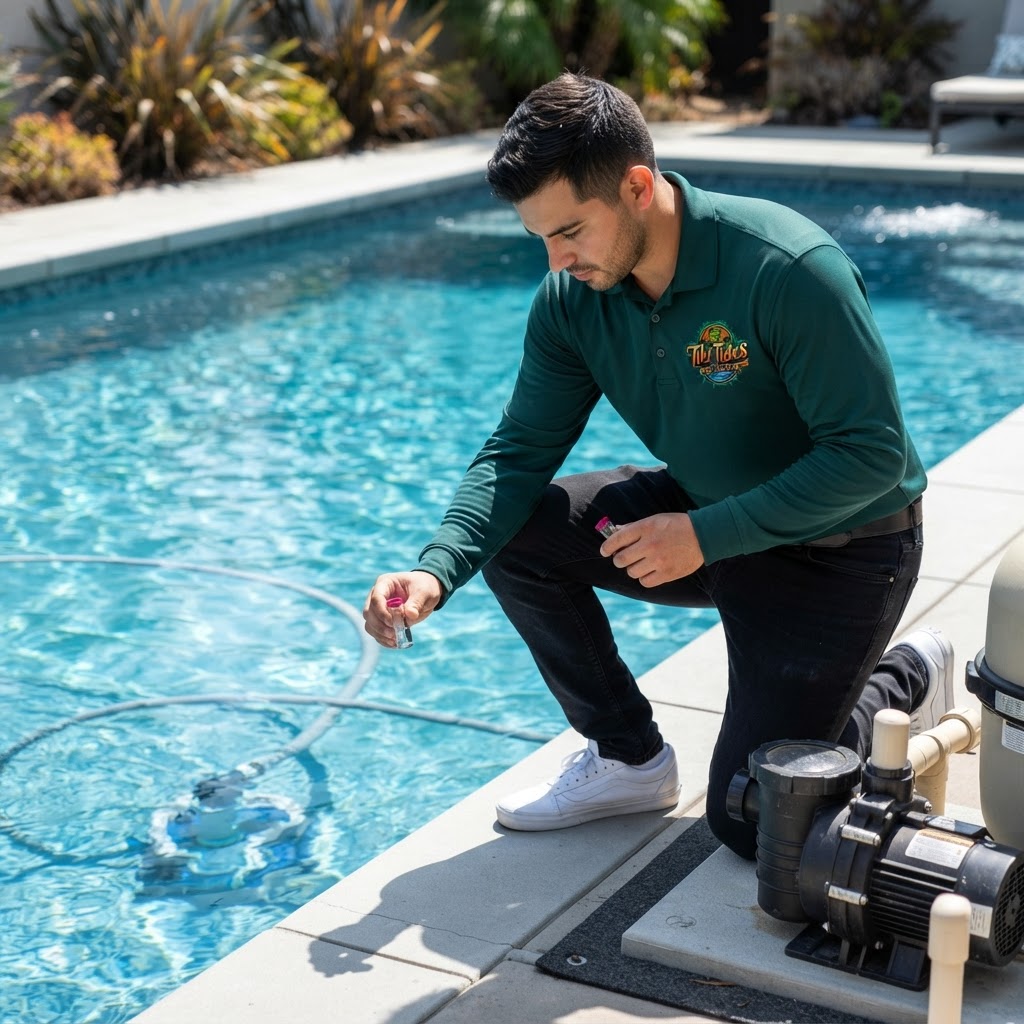
- Testing: Test your water chemistry at least twice weekly during the peak season. For more on managing extreme weather, see our guide on Summer Pool Maintenance: Beating the Heat for a Crystal Clear Season.
- Filter Care: Clean your filter regularly. Remember that tanning lotions and oils can clog filters quickly, so consider using enzymes to help break down organic contaminants.
Safety Notes
Chemical safety is non-negotiable. Always store pool chemicals in a cool, dry, and well-ventilated area below 95°F, away from direct sunlight and moisture. Never mix different chemicals, as this can cause dangerous reactions. Always follow the manufacturer's instructions on labels and ensure that only trained adults handle chemical adjustments. For more information on protecting your equipment during severe weather, check out our Hurricane and Storm Pool Preparation: The Ultimate Safety Guide.
When to Call a Professional
While weekly maintenance is manageable for most homeowners, some situations require an expert touch. You should contact a professional if:
- You notice persistent green or cloudy water that does not clear after shocking.
- You suspect a leak or notice a significant drop in water levels.
- Your pool equipment (pump, heater, or salt cell) is making unusual noises or failing to operate.
- You are struggling to stabilize your pH or alkalinity despite regular adjustments.
Summary
Maintaining a pool in North Texas is entirely achievable with the right strategy. By keeping your water circulating, testing your chemistry frequently, and staying consistent with your cleaning schedule, you can enjoy a beautiful, safe swimming environment all season long. If you ever feel overwhelmed, remember that Tiki Tides Pools is here to help you keep your backyard oasis in perfect condition.
Related Reading
- Heat Wave Pool Care: Protecting Your Pool in Extreme Temperatures
- Vacation Pool Care: What to Do Before You Leave
- Fall Pool Maintenance Guide: Preparing Your Oasis for the Off-Season
- Hurricane and Storm Pool Preparation: The Ultimate Safety Guide
- Summer Pool Maintenance: Beating the Heat for a Crystal Clear Season