Every swimming pool has a heartbeat, and it is located right inside your equipment pad. While the sparkling blue water gets all the glory, it is the pool pump that does the heavy lifting behind the scenes. At Tiki Tides Pools, we believe that understanding how your equipment works is the first step toward becoming a confident pool owner. A well-functioning pump is the difference between a refreshing backyard oasis and a stagnant, green pond.
In this guide, we will break down the complex mechanics of pool circulation, the specific components that make your pump tick, and why this piece of machinery is critical for maintaining safe water chemistry according to industry standards. Whether you are troubleshooting a noise or just curious about the physics of water movement, here is everything you need to know about how a pool pump works.
The Primary Function: Circulation and Filtration
At its most basic level, a pool pump is a centrifugal pump designed to move water. However, its job is much more than just pushing liquid around. It acts as the engine for your entire filtration system. Without the pump, your pool chemicals would not distribute evenly, and your filter would have no way to capture debris. The pump creates a continuous loop of water movement, pulling 'dirty' water from the pool and pushing 'clean' water back in.
According to the CDC and APSP, proper circulation is vital for maintaining a safe swimming environment. A pump ensures that Free Chlorine (maintained between 1.0–3.0 ppm) and pH levels (7.2–7.8) are consistent throughout the entire volume of water, preventing 'dead spots' where algae and bacteria can thrive.
The Main Components of a Pool Pump
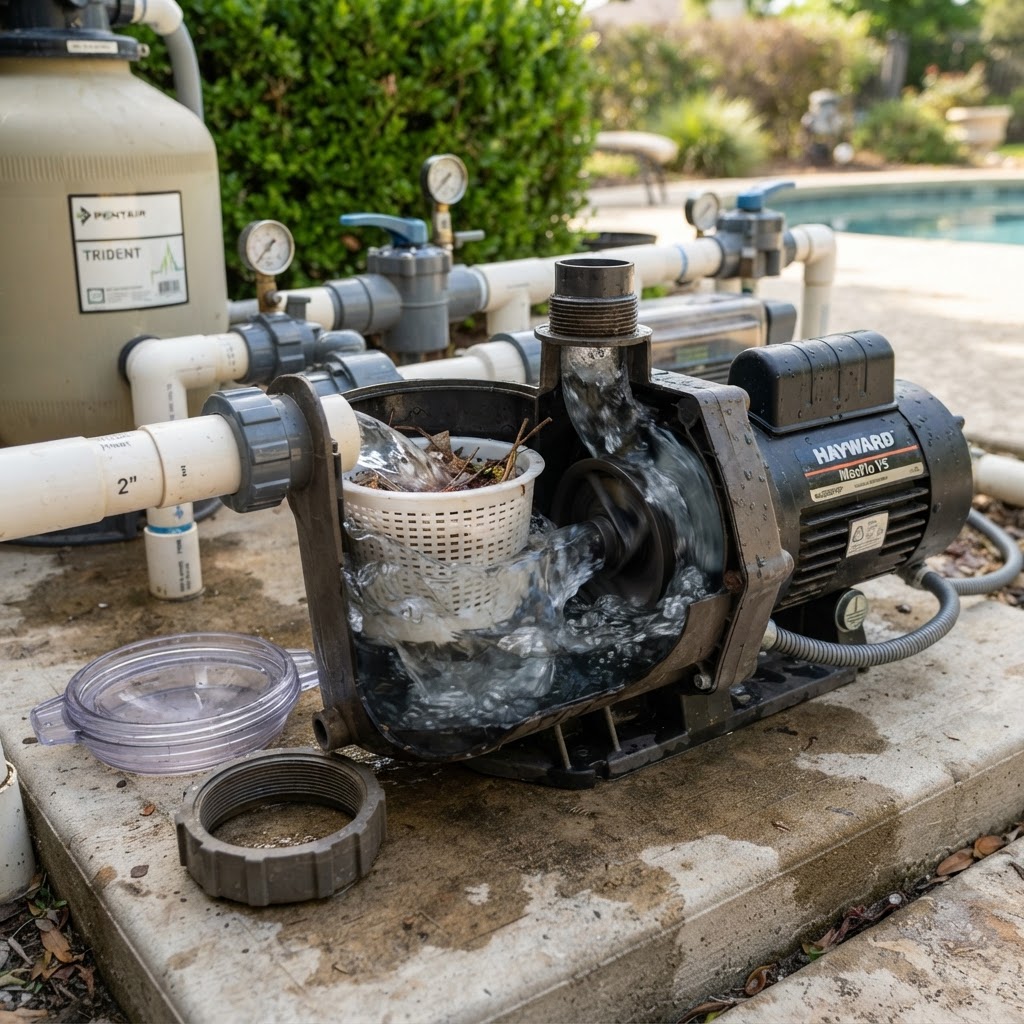
To understand how the system works, you must first recognize the parts. A standard pool pump consists of three main sections: the bucket (or strainer), the impeller, and the motor.
- The Motor: This is the electrical powerhouse of the unit. It sits at the back of the pump assembly and spins the shaft connected to the impeller. Motors can be single-speed, two-speed, or variable-speed.
- The Impeller: This is a rapidly spinning disc with vanes. As the motor turns the impeller, it creates centrifugal force, which is the secret sauce of water movement.
- The Hair and Lint Strainer (Basket): Located inside the pump housing, this basket catches large debris (leaves, twigs, toys) before they can reach the impeller and cause damage.
- The Diffuser: This part works with the impeller to increase the pressure of the water being moved.
- The Mechanical Seal: A critical component that prevents water from leaking out of the wet end of the pump and into the electrical motor.
The Physics: How Water Moves
How does a spinning plastic disc move thousands of gallons of water per hour? The answer lies in centrifugal force and atmospheric pressure. As the motor spins the impeller, the water inside the pump housing is slung outward toward the edges of the pump casing. This creates a low-pressure zone (a partial vacuum) at the 'eye' or center of the impeller.
Because nature abhors a vacuum, the higher atmospheric pressure pushing down on the surface of your pool water forces water up through the pipes (the suction side) and into the pump to fill that low-pressure gap.
The Suction Side vs. The Pressure Side
- The Suction Side: This includes the plumbing that pulls water from the pool. It consists of the skimmers and the main drains at the bottom of the pool. The pump creates the vacuum that draws water through these pipes.
- The Pressure Side: Once the water passes through the impeller, it is under high pressure. This 'pushed' water travels through the filter, the heater (if you have one), and the chlorinator before returning to the pool through the return jets.
Types of Pool Pumps
Not all pumps are created equal. The type of pump you have significantly impacts your energy bill and the efficiency of your filtration.
Single-Speed Pumps
These pumps run at one constant speed. They are simple but inefficient, as they often move water faster than necessary for basic filtration, leading to high electricity costs. Many regions are now phasing these out in favor of more efficient models.
Variable-Speed Pumps (VSPs)
Variable-speed pumps use permanent magnet motors (similar to those in electric cars). They allow you to dial in specific speeds for different tasks. Running a VSP at a lower speed for a longer duration is significantly more energy-efficient and provides better filtration.
Pro Tip: Running your variable-speed pump at a lower RPM for 24 hours a day often costs less than running a single-speed pump for 8 hours, while providing superior water clarity and constant chemical distribution.
Maintaining Proper Chemical Balance Through Circulation
Your pump is your best friend when it comes to water chemistry. Stagnant water is an invitation for pathogens. To keep your pool within safe ranges, you must run your pump long enough to achieve a full 'turnover' (circulating the entire volume of pool water) at least once or twice a day. This ensures the following parameters remain stable:
- Free Chlorine: 1.0–3.0 ppm
- pH: 7.2–7.8
- Total Alkalinity: 80–120 ppm
- Calcium Hardness: 200–400 ppm
- Cyanuric Acid (CYA): 30–50 ppm
Quick Reference: Signs of Pump Trouble
- Loud Grinding Noise: Often indicates failing motor bearings.
- Air Bubbles in Return Jets: Usually a sign of a suction-side air leak (check the pump lid O-ring).
- Leaking Water: Check the mechanical seal between the motor and the housing.
- Low Pressure on Filter Gauge: Could mean a clogged pump basket or a blocked suction line.
- High Pressure on Filter Gauge: Usually indicates the filter needs cleaning, not a pump issue.
Safety Notes
- Electrical Safety: Always turn off the power at the circuit breaker before opening the pump basket or performing maintenance. Water and electricity are a deadly combination.
- Entrapment Hazards: Modern pumps are powerful. Ensure your pool has VGB-compliant (Virginia Graeme Baker Act) drain covers to prevent suction entrapment. Never allow children to play near drains or suction inlets.
- Pressure Safety: When restarting a pump after cleaning the filter, always open the air relief valve on the filter tank to bleed out trapped air, which can cause the tank lid to blow off under extreme pressure.
When to Call a Professional
While cleaning the pump basket is a standard DIY task, some issues require a certified technician. You should call Tiki Tides Pools if:
- The motor hums but refuses to start (possible capacitor or impeller jam).
- The pump keeps tripping the electrical breaker.
- There is visible smoke or a burning smell coming from the motor.
- You cannot get the pump to 'prime' (pull water) after several attempts.
- The pump is leaking water near the electrical components.
Summary
The pool pump is the engine of your backyard retreat. By utilizing centrifugal force to create suction and pressure, it keeps water moving through the filtration and sanitation systems. Understanding the balance between the suction and pressure sides, maintaining the strainer basket, and choosing the right pump type can save you money and keep your water crystal clear. Remember, a healthy pool starts with a healthy pump!",