One of the most persistent myths in pool care is that saltwater pools are completely chlorine-free. Many pool owners invest in a saltwater setup expecting an ocean-like experience with zero harsh chemicals. In reality, a saltwater pool is very much a chlorine pool—it simply relies on an on-site manufacturing plant right at your equipment pad to sanitize the water automatically.
At the core of every saltwater pool sits a device called a salt chlorine generator (often abbreviated as SCG or salt chlorinator). Instead of forcing you to haul heavy jugs of liquid bleach or handle harsh trichlor tablets, this system utilizes ordinary dissolved salt to create pure, effective sanitizer on demand. The result is silkier water, significantly fewer irritating chloramines, and consistent sanitizer distribution.
Understanding the mechanics of your salt chlorine generator makes pool care predictable and cost-effective. Whether you are thinking of converting your pool or troubleshooting an existing setup, here is everything you need to know about how salt systems work, what chemistry they require, and how to maintain them for years of dependable service.
The Science of Electrolysis: How Salt Becomes Chlorine
A salt chlorine generator operates through a straightforward electrochemical process called electrolysis. Dissolved table-grade pool salt—sodium chloride ($NaCl$)—is transformed into the very same sanitizer you buy at the store.
Here is how the transformation unfolds step-by-step:
- Dissolved Salt in Circulation: Pure pool salt is dissolved directly into your pool water, typically maintained at a mild salinity of 2,700 to 3,500 ppm (around 3,200 ppm is ideal for most models). For context, this is only about one-tenth the salinity of ocean water and matches human tears, which is why it feels gentle on eyes and skin.
- Passing Through the Electrolytic Cell: As your pump circulates water through the plumbing, it passes through the salt cell. The cell contains metallic plates (typically coated in ruthenium or iridium) that carry a low-voltage DC electric current.
- The Chemical Split: When the saline water passes across the charged titanium plates, the electric current separates the sodium chloride molecules and water ($H_2O$). This reaction yields hypochlorous acid ($HOCl$, the active sanitizing agent) along with sodium hydroxide ($NaOH$) and hydrogen gas ($H_2$).
- Sanitizing the Pool: The freshly generated hypochlorous acid enters your pool via the return jets, actively destroying bacteria, algae, and organic contaminants.
- The Closed-Loop Cycle: Once hypochlorous acid neutralizes contaminants or is exposed to sunlight, it breaks down and recombines with sodium back into sodium chloride. The salt is not consumed during sanitization—it perpetually recycles back into the system, ready to pass through the cell again.
Because salt does not evaporate, you only lose salt through physical water loss, such as heavy backwashing, splash-out, or seasonal drainage.
Essential Anatomy of a Salt Chlorine Generator System
A complete salt chlorinator setup consists of three primary components working in tandem with your pool plumbing:
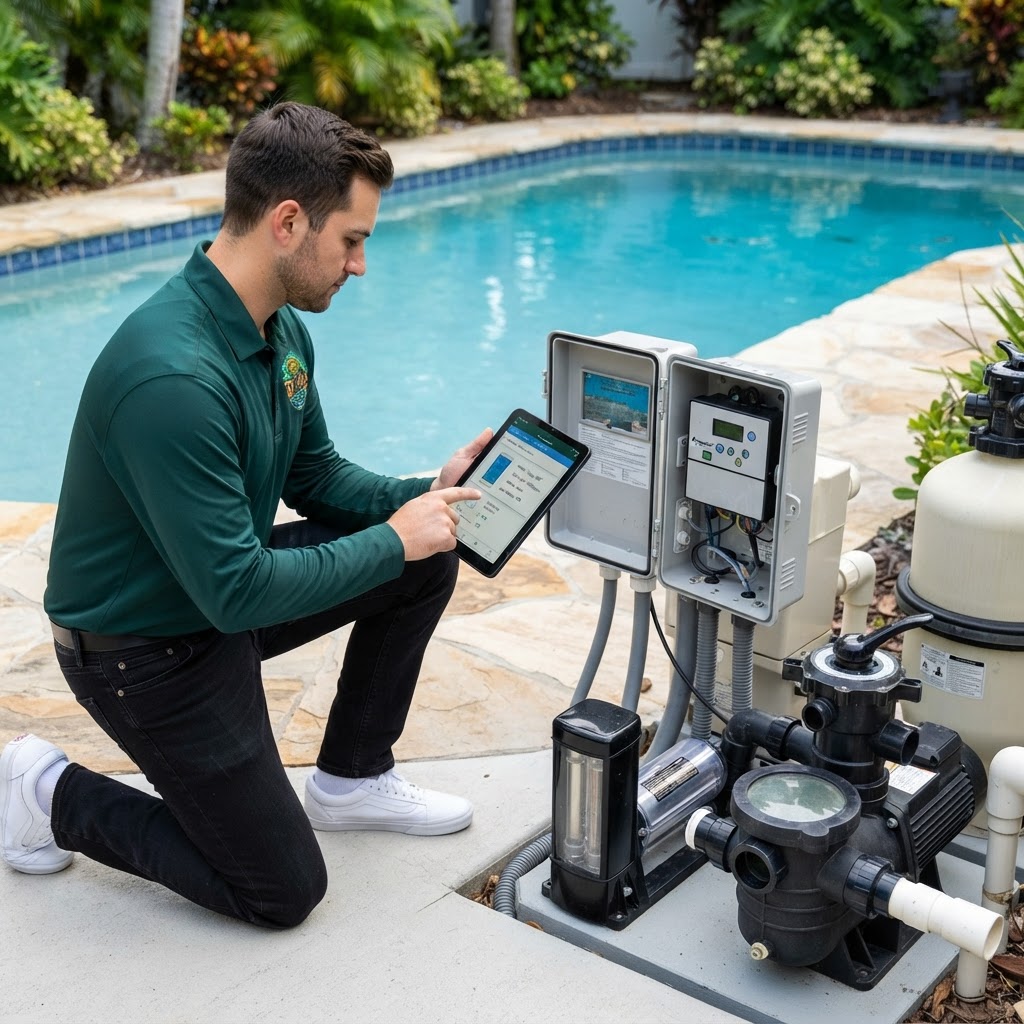
- The Control Center (Power Center): Mounted on your equipment wall, this computer controls the electrical power sent to the cell. It allows you to dial in your percentage output (e.g., 50% runtime capacity), features diagnostic lights (low salt, check cell, flow), and often integrates with digital automation.
- The Electrolytic Cell (Salt Cell): Plumbed in-line on your return line after the pool heater and filter. It houses the parallel metallic plates where electrolysis actually happens.
- The Flow Switch: A crucial mechanical safety sensor plumbed right beside the cell. It guarantees that the cell only receives electrical power when water is actively moving. Without continuous water flow, hydrogen gas produced during electrolysis can accumulate into a dangerous, pressurized hazard.
Because cell operation depends directly on continuous water movement, your pump must run reliably. Understanding Signs Your Pool Pump Is Going Bad: How to Diagnose and Fix Circulation Failures ensures you catch pump flow issues before your chlorinator enters an automatic safety shutdown.
Critical Water Chemistry Parameters for Salt Pools
While an SCG automates daily chlorine delivery, it does not manage your entire water balance. In fact, salt chlorination creates a unique chemical environment—specifically driving pH upward due to the generation of high-pH sodium hydroxide and aeration off-gassing.
To keep your pool safe, prevent equipment corrosion, and protect your expensive salt cell from premature calcification, you must adhere strictly to industry water quality standards established by the CDC and APSP/PPA:
- Free Chlorine: 1.0–3.0 ppm (Never let free chlorine drop below 1.0 ppm; adjust generator output percentage or pump run time if levels drift).
- pH: 7.2–7.8 (Salt cells naturally drive pH up; aim for 7.4–7.6 and use muriatic acid or sodium bisulfate weekly to control it).
- Total Alkalinity: 80–120 ppm (Acts as a stabilizing buffer for your pH).
- Calcium Hardness: 200–400 ppm (Excessive calcium above 400 ppm rapidly scales the electrolytic cell plates, reducing efficiency).
- Cyanuric Acid (CYA / Stabilizer): 30–50 ppm (Protects newly generated, unstabilized hypochlorous acid from rapid degradation under UV sunlight).
- Salinity: 2,700–3,500 ppm (Check your manufacturer’s exact target, usually 3,200 ppm).
If you find your salt cell struggling to keep up during peak summer heat, upgrading your circulation system can help. Pairing your cell with energy-efficient circulation—such as asking Save Big on Energy: Are Variable Speed Pool Pumps Actually Worth It?—allows you to run your pump longer at lower RPMs, generating steady chlorine all day without running up electric bills.
Pro Tip: Always test your pool water for salinity using an independent drop test kit or digital conductivity meter before adding salt. Built-in salt cell sensors can give falsely low readings when the cell plates are coated in calcium scale or when water temperatures drop below 60°F. Adding salt based solely on an unverified dashboard reading can accidentally over-salt your pool, which can only be corrected by draining and refilling water.
How to Clean and Maintain Your Salt Cell
Most modern salt systems feature "reverse polarity," automatically switching electrical current flow every few hours to flake away light scale deposits. However, self-cleaning features cannot eliminate all calcium carbonate buildup. Every 3 to 6 months, manual inspection and cleaning are necessary.
Signs Your Salt Cell Needs Cleaning
- The control panel flashes "Check Cell," "Inspect Cell," or "Low Salt" despite water salt levels being normal.
- Visible white, crusty, or chalky deposits between the titanium grid plates inside the clear housing.
- Chlorine output drops unexpectedly even though pump runtimes have remained consistent.
Step-by-Step Salt Cell Cleaning
- Shut Down Power: Turn off power to the pool pump and generator control center at the breaker.
- Remove the Cell: Unscrew the threaded PVC unions on both ends of the cell. Carefully remove the cell and inspect the internal grid plates under a bright light.
- Initial Flush: Use a high-pressure garden hose nozzle to rinse loose scale out of the grid. Never use a metal screwdriver, wire brush, or rigid tool to scrape the plates, as scratching the precious metal coating permanently ruins the cell.
- Acid Wash (If Scale Remains): If heavy white scale persists, mix a diluted acid solution consisting of 4 parts water to 1 part muriatic acid in a plastic bucket (always add acid to water, never water to acid). Secure the cell vertically in an acid wash stand or cleaning cap, pour in the solution, and allow it to foam for 10 to 15 minutes. Once foaming stops, empty the solution and rinse thoroughly with fresh water.
- Reinstall: Coat O-rings with silicone lubricant, hand-tighten the unions, and restore power.
Safety Notes
Operating equipment that merges 120V/240V electricity, pressurized water, and chemical byproduct generation requires sound safety practices:
- Hydrogen Gas Build-Up: Electrolysis releases hydrogen gas byproduct. The flow switch must always be installed correctly and tested regularly. Never bypass or jump the flow switch wiring, as running an active cell in stagnant water can cause explosive gas accumulation and ruptured plumbing.
- Acid Handling: When cleaning salt cells with muriatic acid, wear chemical-resistant gloves, safety goggles, and work outside in an open, well-ventilated area. Avoid breathing the noxious fumes.
- Equipment Bonding: Salt increases the electrical conductivity of water. Ensure all pool equipment, heaters, and metal ladders are properly grounded and bonded according to NEC code to prevent rapid galvanic corrosion or stray current hazards.
When to Call a Professional
While seasonal cleaning and chemical balancing are easy DIY tasks, you should call a certified pool professional when encountering:
- Persistent Error Codes: The control panel repeatedly signals error codes (e.g., "No Flow," "Cell Voltage Error") despite a clean cell and running pump.
- Control Board Failure: The control box displays burnt terminals, swollen capacitors, or will not power up after an electrical storm.
- Plumbing Replacements: Installing a new salt cell union manifold, replacing faulty flow switches, or bonding equipment to prevent corrosion.
- Sudden Algae Blooms: If free chlorine reads 0 ppm and your water turns green, the generator cannot bring the pool back alone; the pool requires manual breakpoint chlorination and diagnostic testing.
Summary
A salt chlorine generator offers an efficient, comfortable way to keep your swimming pool water sanitized without storing and handling traditional chlorine. By using electrolysis to continuously convert dissolved salt into hypochlorous acid, the system keeps your water sanitized and silky smooth. Remember: a saltwater pool is not self-maintaining. Keep your pH balanced, maintain free chlorine within the safe 1.0–3.0 ppm range, clean your cell periodically, and your salt chlorinator will deliver hassle-free sanitization for seasons to come.
Related Reading
- How Long Does a Pool Pump Last? Lifespan, Warning Signs, and Maintenance Tips
- Signs Your Pool Pump Is Going Bad: How to Diagnose and Fix Circulation Failures
- How to Prime a Pool Pump: A Step-by-Step Guide to Restoring Suction
- Pool Skimmer Maintenance: Keeping the Heart of Circulation Clean
- Save Big on Energy: Are Variable Speed Pool Pumps Actually Worth It?