Owning a pool is a dream come true for many homeowners, providing a private oasis for relaxation, exercise, and family fun. However, that sparkling blue water doesn't stay that way on its own. A common question we receive at Tiki Tides Pools is: How often should a pool be cleaned? The short answer is that pool maintenance is an ongoing process, but the specific tasks vary in frequency.
Maintaining a consistent cleaning schedule is about more than just aesthetics. It is a critical component of home hygiene and equipment longevity. Neglected water can harbor bacteria and algae, while debris buildup can strain your pump and filtration system, leading to costly repairs. By following a structured maintenance plan, you ensure that your pool remains a safe environment for your family and a valuable asset to your home.
In this comprehensive guide, we will break down the essential cleaning tasks into daily, weekly, and monthly categories to help you stay ahead of the curve and enjoy a hassle-free swimming season.
The Daily Pool Maintenance Routine
While it might sound daunting, daily pool maintenance takes only a few minutes and prevents small issues from becoming major headaches. Consistently performing these quick checks keeps the bather load and environmental debris from overwhelming your filtration system.
Skimming the Surface
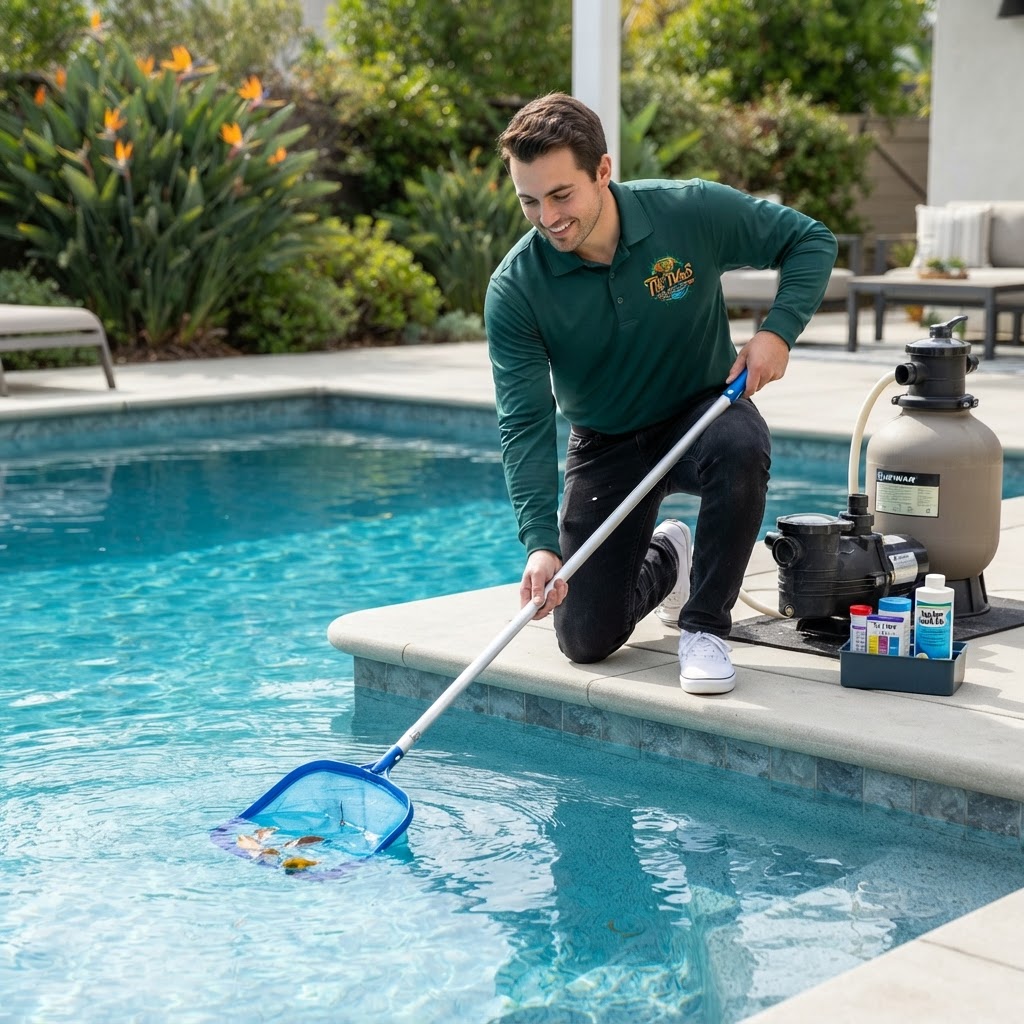
Floating leaves, insects, and pollen are easier to remove before they sink to the bottom. Use a long-handled leaf skimmer to clear the surface every day. This prevents organic matter from decaying and affecting your water chemistry.
Checking the Pump and Skimmer Baskets
Your skimmer and pump baskets act as the first line of defense for your filtration system. Check these daily, especially after a storm or high winds. A clogged basket restricts water flow, which can cause your pump to overheat and fail.
Monitoring Water Level
Water is lost through evaporation and splashing. Ensure the water level is at the midpoint of your skimmer opening. If it drops too low, the pump could draw in air, leading to a loss of prime and potential motor damage.
Weekly Pool Cleaning Tasks: The Core of Maintenance
Your weekly routine is the most important part of pool care. This is when you handle the heavy lifting of sanitation and physical cleaning. For most residential pools, setting aside one specific day a week for these tasks is the best way to ensure they get done.
1. Brushing the Walls and Floor
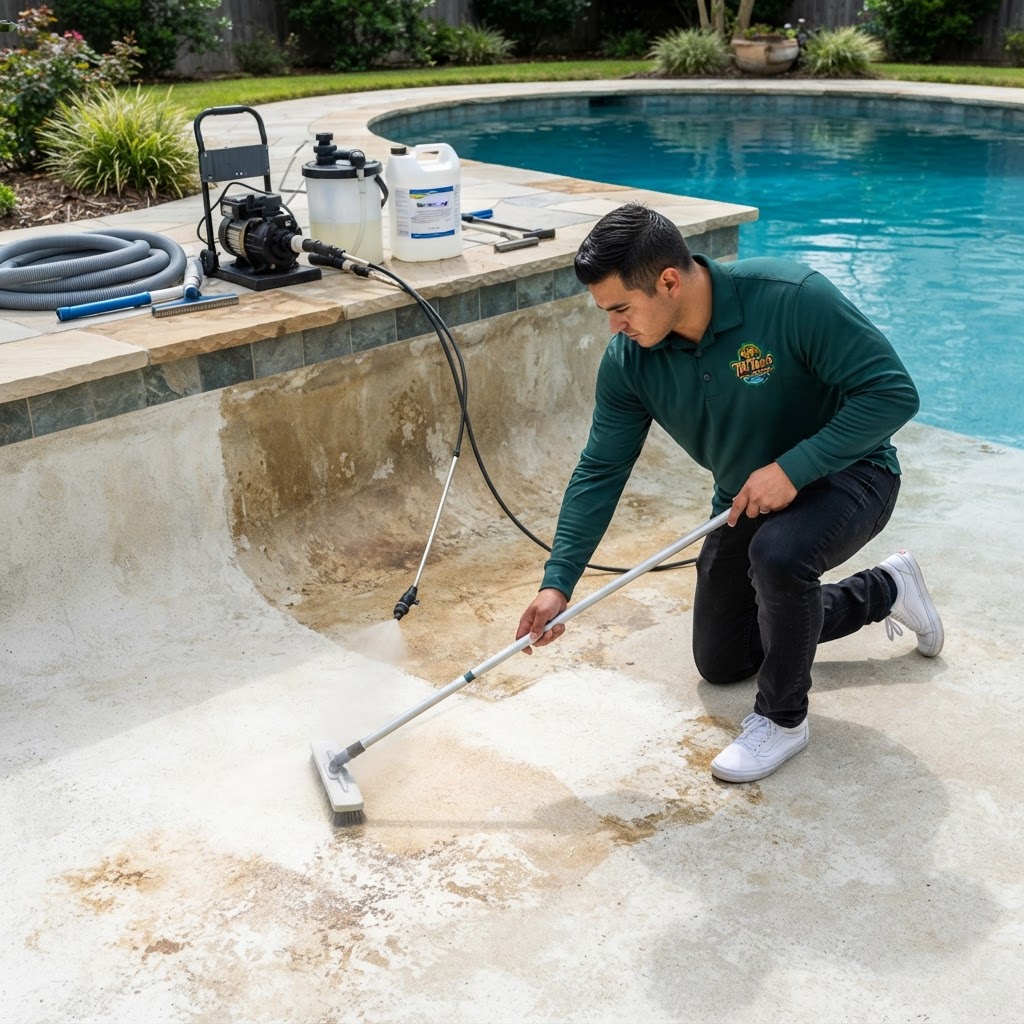
Even if your water looks clear, a microfilm of algae and bacteria can cling to the walls, steps, and corners. Use a pool brush at least once a week to scrub the entire surface. This knocks debris into the water so it can be filtered or vacuumed out. Pay special attention to areas with low circulation, such as behind ladders.
2. Vacuuming the Pool
Once you have brushed the walls, vacuum the floor to remove the settled debris. You can use a manual vacuum or an automatic pool cleaner. Regular vacuuming prevents staining and keeps the plaster or liner looking new.
3. Testing and Balancing Water Chemistry
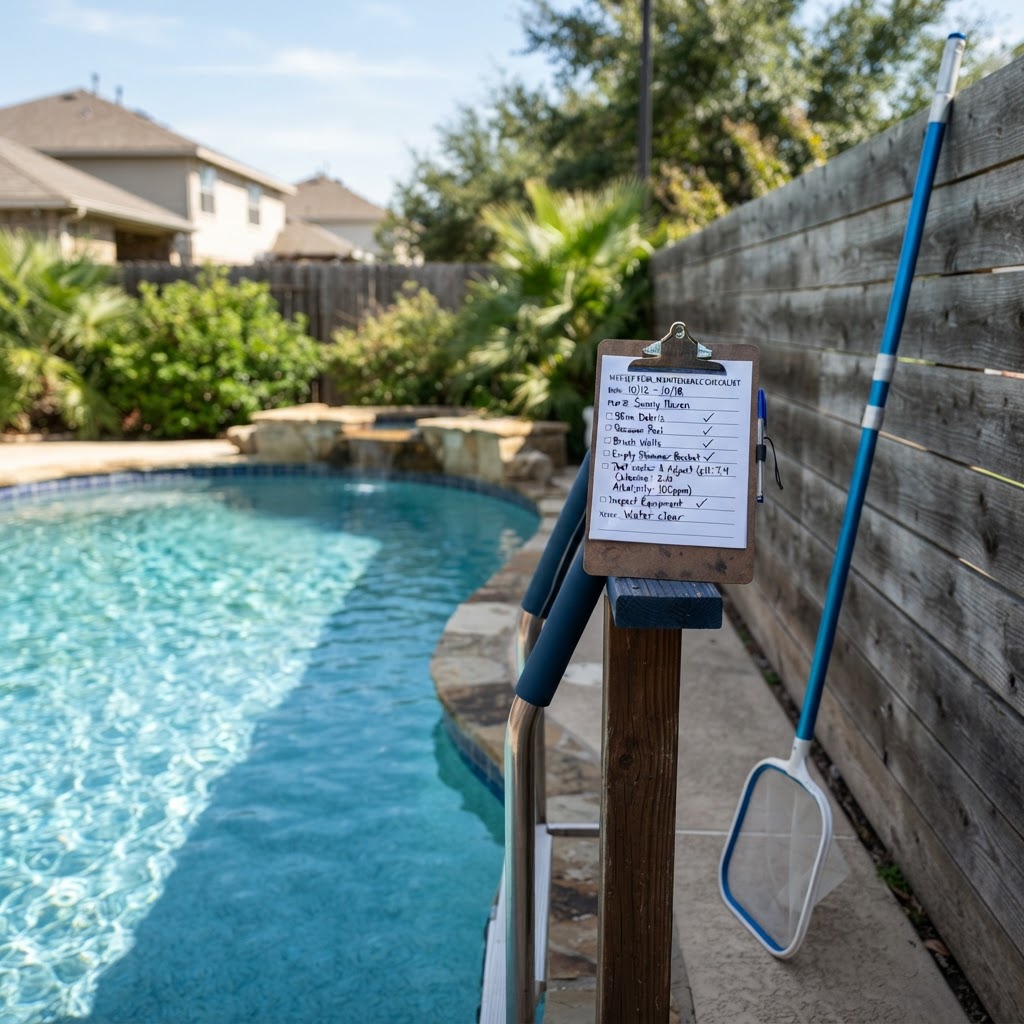
This is the most technical aspect of pool cleaning. You must test your water at least once a week to ensure it meets health and safety standards. At Tiki Tides Pools, we follow the strict guidelines set by the CDC and APSP.
Required Chemical Ranges:
- Free Chlorine: 1.0–3.0 ppm (For continuous sanitation)
- pH: 7.2–7.8 (To prevent eye irritation and equipment corrosion)
- Total Alkalinity: 80–120 ppm (To stabilize pH levels)
- Calcium Hardness: 200–400 ppm (To protect the pool structure)
- Cyanuric Acid (CYA): 30–50 ppm (To protect chlorine from UV degradation)
4. Cleaning the Pool Deck
Maintenance doesn't stop at the water's edge. Sweep or hose down the pool deck weekly to prevent dirt and leaves from blowing into the clean water.
Pro Tip: Always brush your pool walls before you vacuum. This ensures that any particles stuck to the sides are suspended in the water or settled on the floor, allowing the vacuum to pick them up more effectively.
Monthly and Seasonal Deep Cleaning
Some tasks are only necessary every few weeks or once a season, but they are vital for long-term health.
- Clean the Filter: Depending on your filter type (Sand, DE, or Cartridge), you should clean it when the pressure gauge reads 8-10 PSI above its normal operating pressure. For many pools, this happens roughly once a month.
- Scrub the Tile Line: Body oils and sunscreen create a "scum line" at the water's edge. Use a non-abrasive tile cleaner once a month to keep the perimeter looking sharp.
- Shock the Pool: Periodically adding a concentrated dose of chlorine (oxidizing) helps break down chloramines (spent chlorine) and kill resistant bacteria. This is especially important after heavy rain or a pool party.
Factors That Change Your Cleaning Frequency
Not every pool follows the same rules. Several environmental factors might require you to clean more often:
- Heavy Usage: If you have frequent guests or children swimming daily, the bather load increases oils and contaminants, requiring more frequent testing and skimming.
- Surrounding Landscape: Pools surrounded by deciduous trees or flowering plants will need skimming multiple times a day during certain seasons.
- Weather Events: Heavy rain can alter your pH and introduce debris. High heat can cause chlorine to dissipate faster, requiring more frequent chemical checks.
- Pets: Dogs can introduce significant amounts of hair and bacteria. If your furry friends enjoy a dip, plan on cleaning your filter and skimmers more frequently.
Quick Reference: Signs Your Pool Needs Immediate Cleaning
- Cloudy or Murky Water: Often a sign of poor filtration or chemical imbalance.
- Slippery Walls: A precursor to an algae bloom.
- Strong Chlorine Smell: Counterintuitively, this usually means you have too many chloramines and need more sanitizer or a shock treatment.
- Visible Debris on Floor: Indicates that the vacuuming schedule is insufficient.
Safety Notes
Handling pool chemicals and equipment requires caution. Always follow these safety protocols:
- Store Chemicals Safely: Keep all chemicals in a cool, dry, well-ventilated area, away from children and pets. Never store acids and chlorine directly next to each other.
- Add Chemicals to Water: Never add water to chemicals; always add the chemical to the water to prevent splashing or reactive fumes.
- Wear PPE: Use gloves and eye protection when handling concentrated pool chemicals.
- Electrical Safety: Ensure all pool equipment is properly grounded and that you never use electrical devices near the water unless they are specifically designed for pool use.
When to Call a Professional
While many homeowners manage the daily and weekly tasks themselves, there are times when you should call the experts at Tiki Tides Pools:
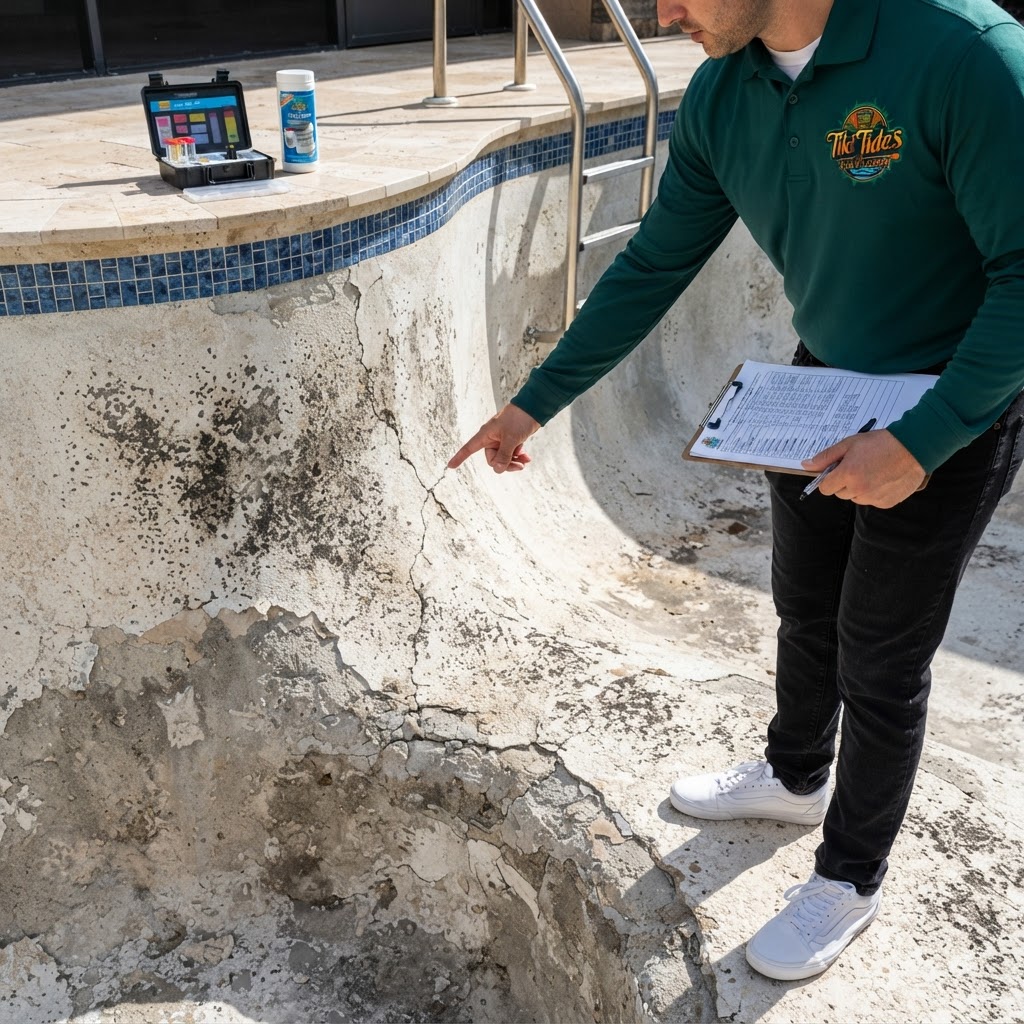
- Green Algae Blooms: If your pool has turned green, it requires professional-grade chemicals and specialized cleaning techniques to restore safety.
- Equipment Failure: If your pump is making strange noises, your heater isn't working, or you see leaks around the filter, professional repair is necessary.
- Consistently Unbalanced Water: If you struggle to keep your pH or Chlorine in the safe range (7.2-7.8 pH / 1.0-3.0 ppm FC), there may be an underlying issue with your source water or filtration.
- Vacation Coverage: Don't let your pool turn into a pond while you are away. Professional service ensures you return to a clean pool.
Summary
Maintaining a pool doesn't have to be a chore if you stay consistent. By skimming and checking baskets daily, brushing, vacuuming, and testing water weekly, and performing deep cleans monthly, you can ensure your Tiki Tides pool remains the highlight of your home. Remember, the goal of cleaning isn't just to make the water look good—it's to keep it safe for every swimmer who jumps in.