Over time, even the most well-maintained swimming pools can begin to look tired. Despite your best efforts with How to Keep Your Pool Clean Between Service Visits, stubborn stains, mineral deposits, and algae etching can settle deep into the plaster. When standard cleaning methods fail to restore your pool's original luster, an acid wash is often the professional solution required to strip away the top layer of compromised plaster and reveal a fresh, clean surface underneath.
An acid wash (or "drain and clean") is a deep-cleaning process that involves draining the pool and applying a diluted solution of muriatic acid to the plaster. This process removes a thin layer of the surface material, effectively erasing years of discoloration and scale buildup. While highly effective, it is a significant procedure that should be handled with precision and care to protect the integrity of your pool surface.
Signs Your Pool Needs an Acid Wash
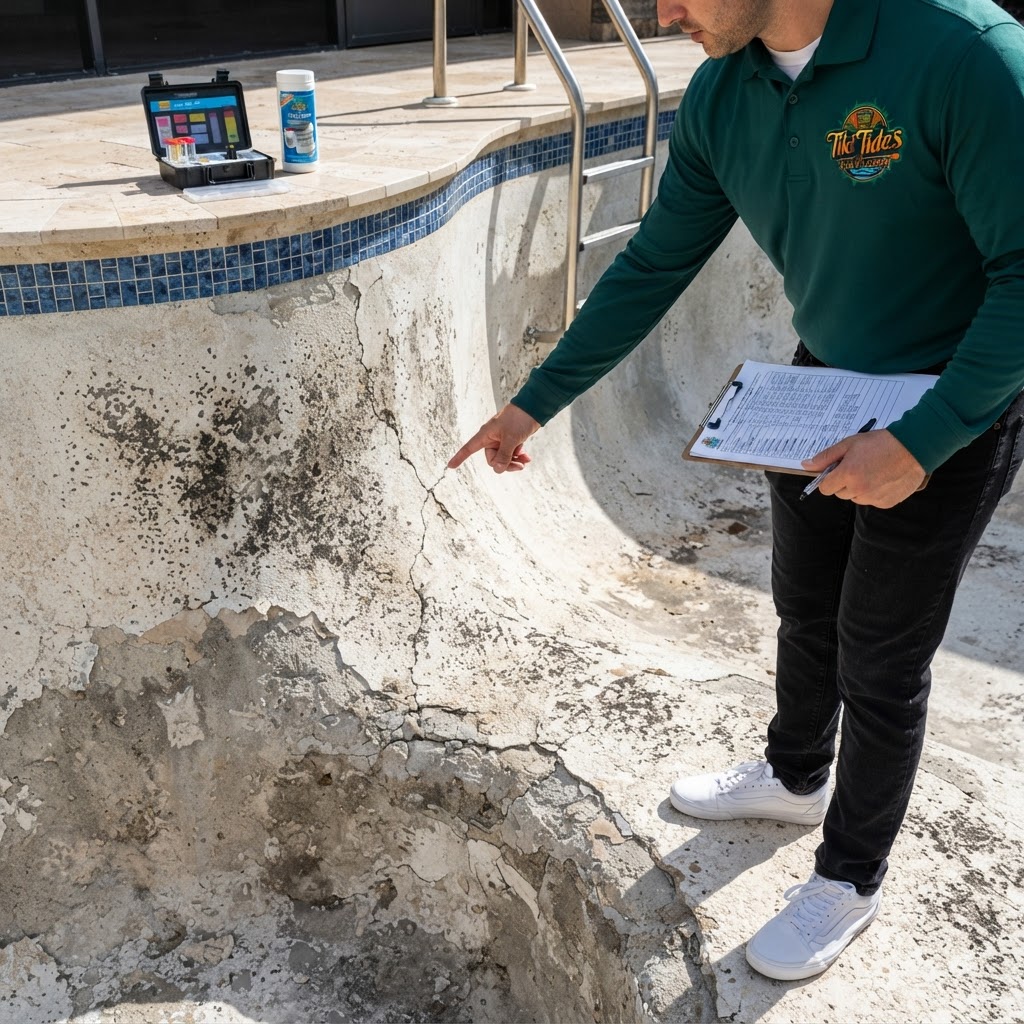
Not every stain requires an acid wash. Before resorting to this process, it is important to identify if the issue is merely surface debris or deep-set staining. You may need an acid wash if you notice:
- Persistent Staining: Stains that do not respond to How to Remove Pool Stains: A Expert Guide to Organic and Metal Stain Removal.
- Heavy Mineral Deposits: Rough, white, or colored scale buildup that feels like sandpaper.
- Dull/Discolored Plaster: A generally "dingy" look that persists after Master Pool Skimming and Surface Cleaning: The Ultimate Guide to a Sparkling Pool.
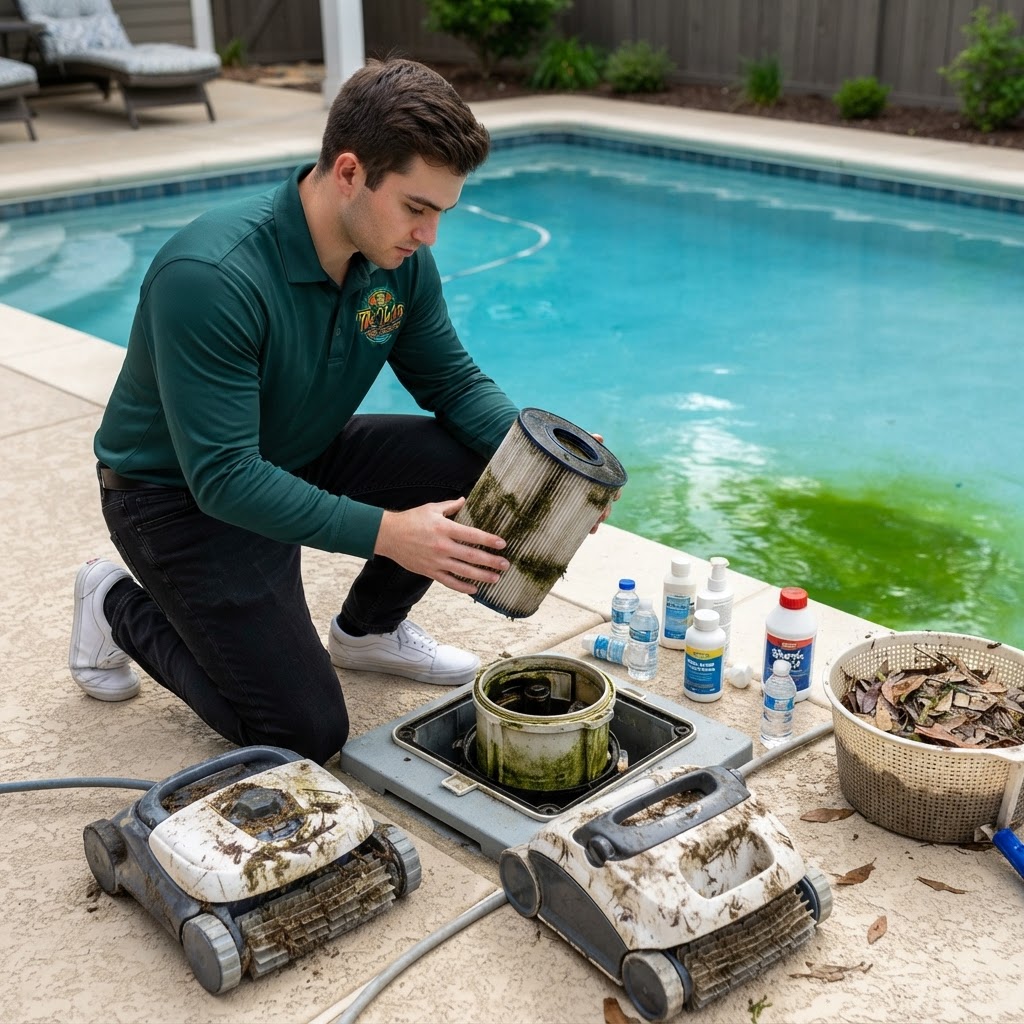
- Algae Etching: Small pits or deep stains left behind after severe algae blooms.
The Professional Acid Wash Process
At Tiki Tides Pools, we treat every acid wash as a delicate restoration project. Here is the standard professional workflow:
- Draining: The pool is drained completely using a submersible pump.
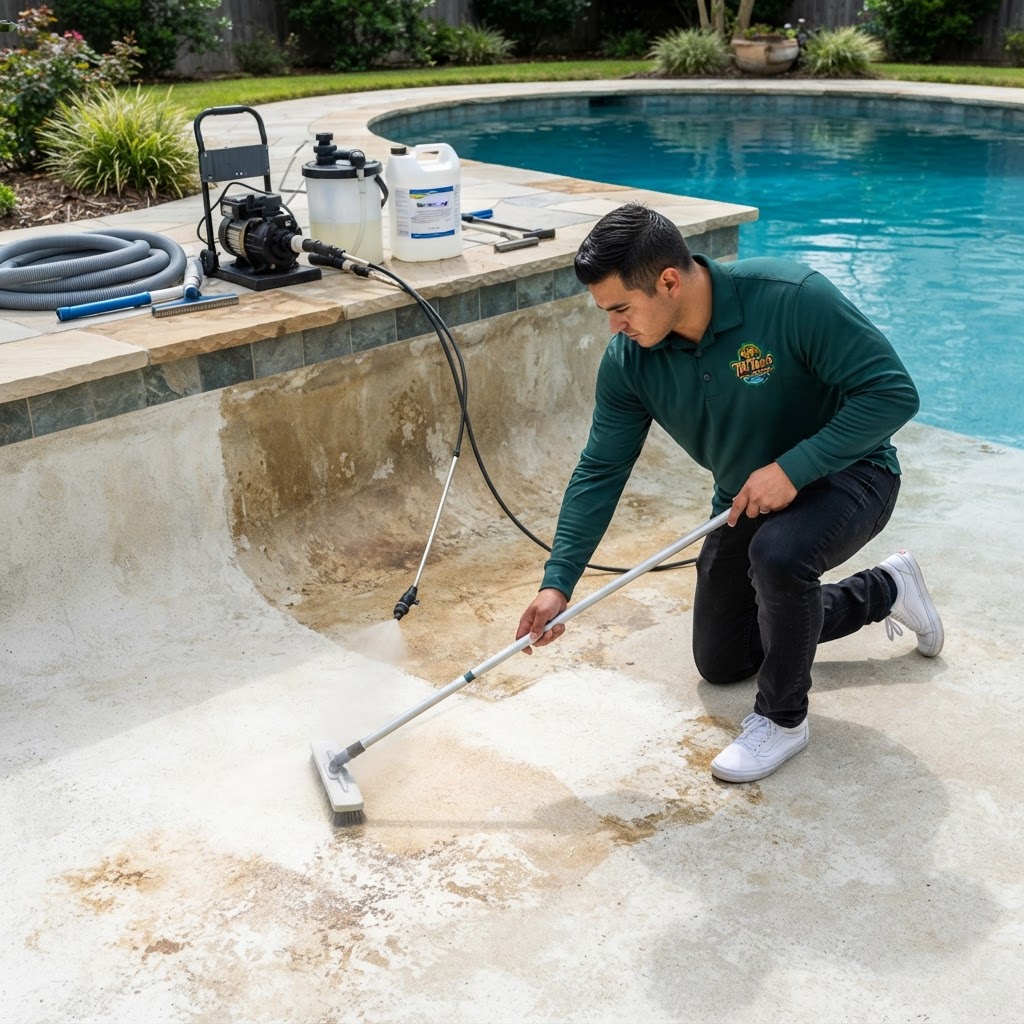
- Surface Prep: We clear all debris and perform a preliminary rinse.
- Acid Application: A diluted muriatic acid solution is applied to the plaster walls in sections. The acid reacts with the plaster to "eat away" the surface layer.
- Neutralization: This is the most critical step. We immediately neutralize the acid with soda ash (sodium carbonate) and rinse the pool thoroughly to stop the chemical reaction.
- Refilling and Balancing: The pool is refilled, and we immediately begin the process of balancing the water chemistry to industry-standard levels.
Essential Water Chemistry Targets
Once the pool is refilled, you must maintain the following levels to prevent new stains and protect your freshly exposed plaster:
- Free Chlorine: 1.0–3.0 ppm (CDC standard)
- pH: 7.2–7.8 (CDC standard)
- Total Alkalinity: 80–120 ppm
- Calcium Hardness: 200–400 ppm
- Cyanuric Acid (CYA): 30–50 ppm
Pro Tip: Never perform an acid wash more than once every 3–5 years. Each treatment removes a layer of plaster; doing it too frequently will significantly shorten the lifespan of your pool surface and lead to premature re-plastering needs.
Safety Notes
Acid washing involves handling highly corrosive materials. If you choose to attempt this, or are observing a professional, prioritize the following safety protocols:
- Personal Protective Equipment (PPE): Always wear chemical-resistant gloves, goggles, a respirator, and protective clothing.
- Proper Mixing: Always add acid to water, never water to acid, to prevent dangerous splashing.
- Ventilation: Ensure the area is well-ventilated, especially if working in an enclosed space or near equipment.
- Environmental Protection: Ensure that the acidic rinse water is neutralized and disposed of according to local EPA regulations to prevent damage to surrounding landscaping and the storm drain system.
When to Call a Professional
Acid washing is not a DIY-friendly project. It carries risks not only to the person performing the task but also to the pool surface itself. Improper technique can lead to uneven "streaking" or "burning" of the plaster, resulting in costly damage.
We recommend calling Tiki Tides Pools if:
- You have a specialized finish (such as quartz or pebble) which requires specific acid concentrations.
- Your pool has structural cracks that could be worsened by drainage.
- You are uncomfortable handling concentrated industrial chemicals.
For ongoing peace of mind, consider enrolling in our maintenance services. Learn more about what we do by reading What Does Weekly Pool Service Include? A Professional Maintenance Guide.
Summary
An acid wash is a powerful restorative tool that can make an aging pool look brand new. By removing the top, stained layer of plaster, you can extend the beauty and life of your pool surface. However, it requires a careful balance of chemical expertise and physical technique. If you suspect your pool is due for a deep clean, contact the experts at Tiki Tides Pools to ensure the job is done safely and correctly.
Related Reading
- How to Keep Your Pool Clean Between Service Visits
- Top Pool Maintenance Mistakes Homeowners Make (And How to Fix Them)
- What Does Weekly Pool Service Include? A Professional Maintenance Guide
- Master Pool Skimming and Surface Cleaning: The Ultimate Guide to a Sparkling Pool
- How to Remove Pool Stains: A Expert Guide to Organic and Metal Stain Removal