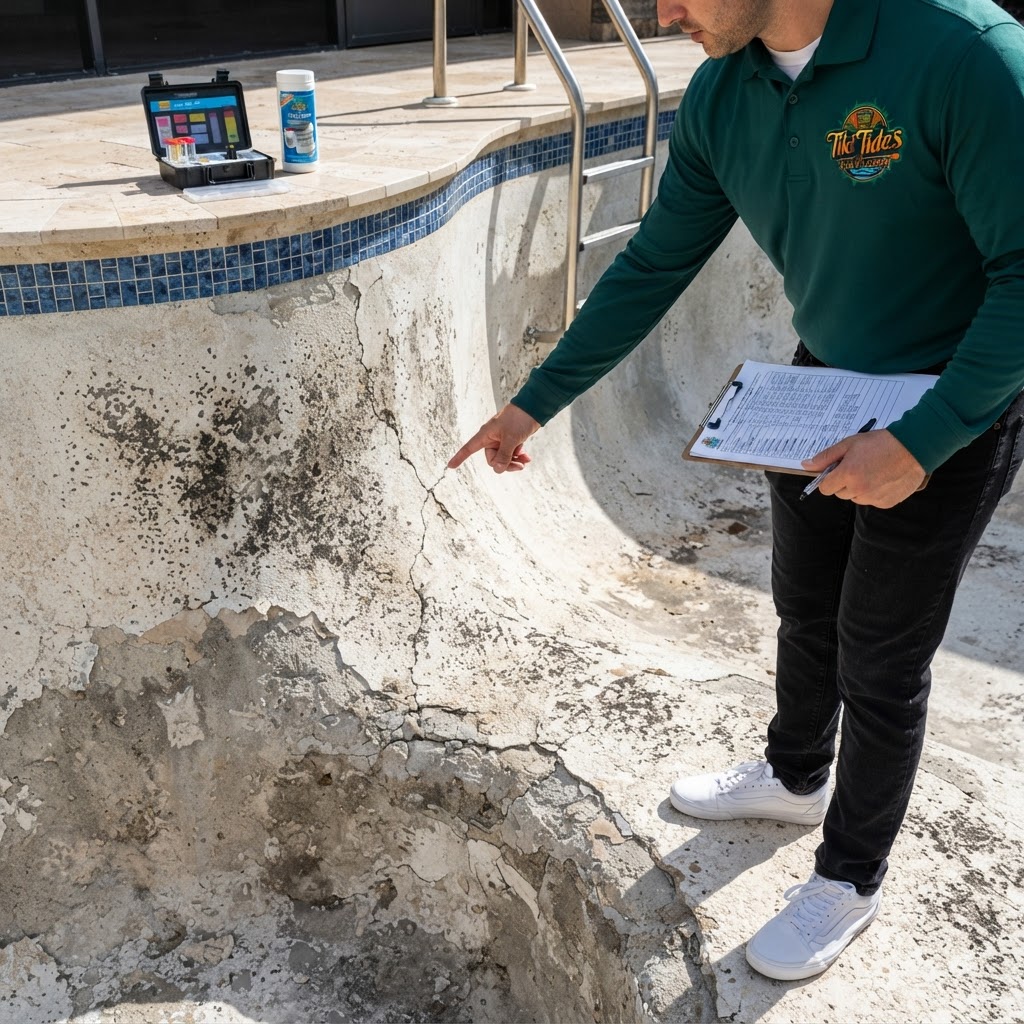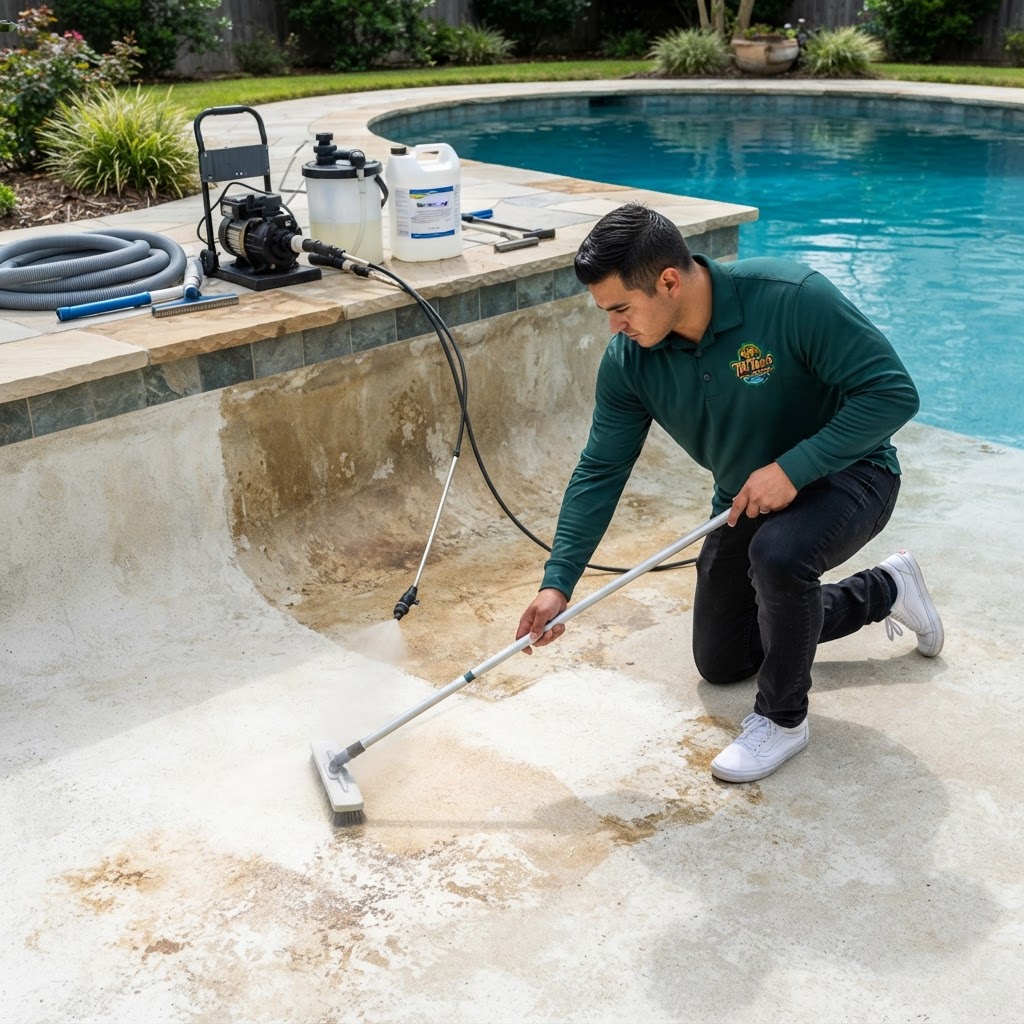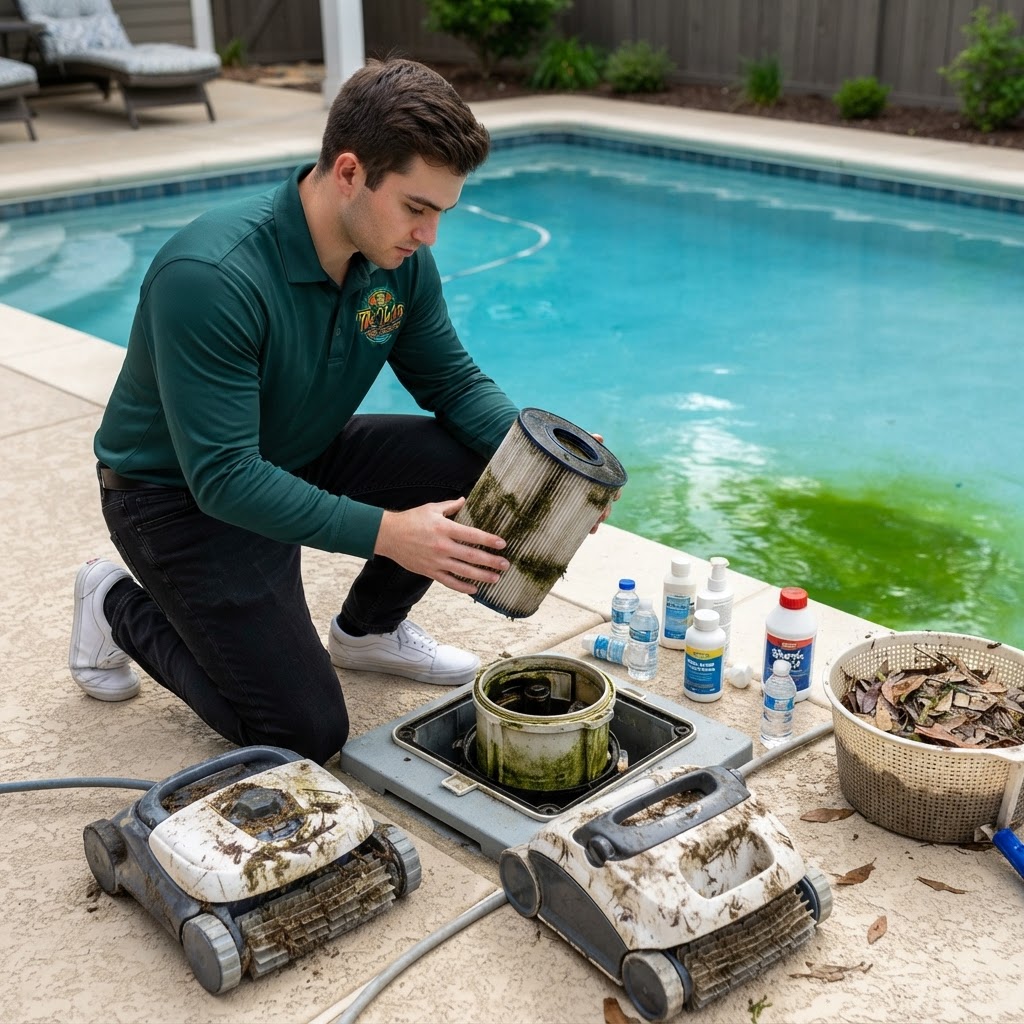
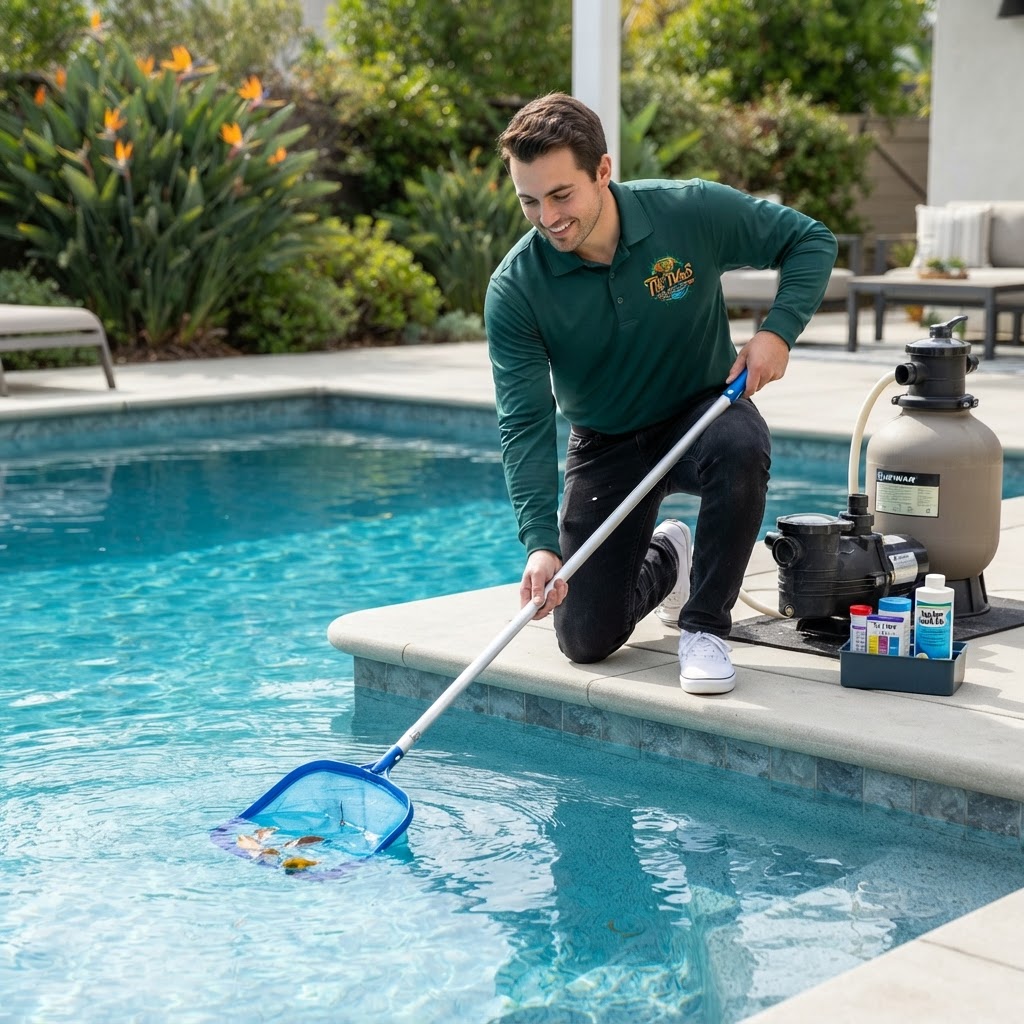
Professional pool maintenance ensures your water is sanitized, properly balanced, and mechanically sound. However, a swimming pool is an open, dynamic ecosystem exposed to wind, heat, rain, and active swimmers every single day. Waiting an entire week without intervening can turn minor debris into tough algae blooms or strained equipment.
Learning how to keep your pool clean between service visits doesn't mean taking over your technician's job. Instead, it is about light, proactive housekeeping that preserves water balance, protects your filtration system, and ensures your pool is swim-ready all week long.
By spending just 5 to 10 minutes every couple of days, you protect your backyard investment and reinforce the hard work performed during each visit. To better understand the scope of technician appointments, read What Does Weekly Pool Service Include? A Professional Maintenance Guide.
Quick Reference: The Inter-Service Tool Kit
Having the right gear within arm's reach makes intermittent pool maintenance effortless:
- Telescopic pole with quick-connect attachment points
- Leaf rake or skim net with fine mesh netting
- Nylon pool brush (or stainless-steel blend for unpainted concrete/plaster)
- Reliable test strips or DPD liquid test kit
- Pool thermometer
- Clean garden hose with a hose-end filter for topping off water levels
1. Clear Surface Debris Before It Sinks
Windblown leaves, pollen, and insects float on the surface before becoming waterlogged and dropping to the floor. When organic matter sits on the pool floor, it decomposes, consumes free chlorine, and can leave stubborn organic tannins. Check out our guide on Master Pool Skimming and Surface Cleaning: The Ultimate Guide to a Sparkling Pool for targeted surface tips.
- Skim every 1-2 days: Run a deep-pocket leaf rake across the water surface.
- Prevent staining: Organic debris that rests on plaster or vinyl can stain quickly. If discoloration has already started, consult How to Remove Pool Stains: An Expert Guide to Organic and Metal Stain Removal.
Pro Tip: Position your return eyeballs slightly upward and in a consistent circular direction around the perimeter of the pool. This creates a gentle whirlpool effect that guides floating debris directly into the skimmer mouth before it has the opportunity to sink.
2. Empty Skimmer and Pump Strainer Baskets
Your skimmer weir door and basket are your system's first line of defense. When a skimmer basket packs full of leaves, twigs, and debris, water flow is severely choked. Restricted flow creates pump cavitation, overheats internal seals, and halts proper filtration.
- Empty skimmer baskets: Check them two to three times per week, especially after heavy winds or storms.
- Inspect the pump strainer basket: If you see debris slipping past the skimmer into the pump strainer basket, shut the pump off at the breaker, relieve system pressure, open the strainer lid, empty the basket, and reseat the O-ring with pool-grade silicone lubricant before restarting.
For a structured daily and weekly schedule, review The Ultimate Pool Maintenance Checklist: Daily, Weekly, and Monthly Tasks.
3. Brush Dead Zones and High-Traffic Steps
Circulation patterns often miss pool steps, swim-outs, corners, and behind ladders. These "dead zones" are prime breeding grounds for algae biofilms. Brushing mechanically disrupts microscopic algae colonies before they take root.
- Use a wide nylon bristle brush for plaster, fiberglass, or vinyl liners.
- Brush downward toward the main drain on the floor so the filtration system can capture suspended particulates.
- Give high-sunlight shallow areas (tanning ledges and top steps) a 2-minute scrub midway between technician visits.
Avoiding this step is common among homeowners; discover more pitfalls in Top Pool Maintenance Mistakes Homeowners Make (And How to Fix Them).
4. Monitor Water Level and Filtration Run-Time
Even the best chemical sanitizers fail if water cannot circulate. Evaporation, splashing, and backwashing lower water levels during hot summer days.
- Water height: The waterline must sit precisely at the midpoint of your skimmer opening. If it drops below, your pump will suck air, lose prime, and run dry, potentially melting equipment seals.
- Circulation duration: Ensure your automated timer runs the pump for 8 to 12 hours per day during peak swimming seasons to achieve at least one complete water turnover.
- Check the pressure gauge: Note the clean baseline filter pressure established by your technician. If the gauge spikes 8 to 10 PSI above baseline between visits, water flow is impaired, and you should notify your service professional.
5. Midweek Chemistry Spot Checks
Your weekly service professional establishes the chemical foundation for your water, but environmental factors like heavy bather loads, rainstorms, and intense UV rays can deplete sanitizers rapidly midweek.
Industry standards from the CDC, APSP/PPA, and EPA require keeping your chemistry within these safe parameters:
- Free Chlorine: 1.0–3.0 ppm (CDC standard)
- pH: 7.2–7.8 (CDC standard)
- Total Alkalinity: 80–120 ppm
- Calcium Hardness: 200–400 ppm
- Cyanuric Acid (CYA): 30–50 ppm
If you host a pool gathering between visits, test the water using reliable test strips. If Free Chlorine drops below 1.0 ppm, or if pH climbs above 7.8, communicate with your pool pro or add an approved emergency maintenance dose following product instructions.
Safety Notes
- Never mix chemicals: Never mix different types of chlorine (such as granular cal-hypo and trichlor pucks), or combine chlorine with acid; doing so causes violent reactions or toxic gas.
- Store chemicals safely: Store pool products in cool, dry, ventilated areas away from children, pets, and direct sunlight.
- PPE required: Always wear chemical-resistant gloves, eye protection, and closed-toe shoes when handling pool chemicals.
- Power down equipment: Turn off all power at the main breaker before inspecting or servicing any pump, motor, or electrical component.
When to Call a Professional
While light skimming, brushing, and basket emptying are straightforward DIY tasks, stop and contact your Tiki Tides Pools technician if you notice:
- Rapidly dropping water levels indicating a possible structural or plumbing leak.
- Grinding, shrieking, or humming noises coming from the pump motor.
- Pressure gauge readings surging dangerously high or dropping to zero while the pump is on.
- Sudden, severe water cloudiness or a sudden green bloom that does not clear within 24 hours.
- Strong chemical odors or repeated burning eyes despite normal test readings, indicating chloramine buildup or an advanced imbalance.
Summary
Keeping your pool pristine between service visits is straightforward: skim debris, empty baskets, brush circulation dead spots, monitor the waterline, and perform occasional test checks. These short habits preserve water sanitation, keep your pump running smoothly, and make every swim safe and crystal clear.
Related Reading
- Top Pool Maintenance Mistakes Homeowners Make (And How to Fix Them)
- What Does Weekly Pool Service Include? A Professional Maintenance Guide
- Master Pool Skimming and Surface Cleaning: The Ultimate Guide to a Sparkling Pool
- How to Remove Pool Stains: A Expert Guide to Organic and Metal Stain Removal
- The Ultimate Pool Maintenance Checklist: Daily, Weekly, and Monthly Tasks