Understanding When Your Pool Needs Resurfacing
Owning a swimming pool is a significant investment that provides years of enjoyment, but even the most well-maintained surfaces eventually reach the end of their lifespan. Over time, exposure to water, sunlight, and pool chemicals causes the finish—whether it is plaster, quartz, or pebble—to degrade. Recognizing the early warning signs of surface failure is crucial for preventing structural damage and maintaining a safe, comfortable swimming environment.
At Tiki Tides Pools, we often see homeowners attempt to patch surface issues that actually require a full renovation. While minor maintenance is part of pool ownership, understanding the difference between a cosmetic fix and a structural necessity can save you thousands of dollars in the long run. If you are noticing changes in your pool's finish, it is time to evaluate whether you need a professional resurfacing project.
Top Signs Your Pool Needs Resurfacing
Not all surface damage is created equal. Here are the most common indicators that your pool finish has reached the end of its life:
- Rough or Uneven Texture: If the pool floor or walls feel sandpaper-like, bumpy, or abrasive to the touch, the finish has likely eroded. This roughness not only irritates skin but also provides a perfect breeding ground for algae, making it harder to keep your water clean.
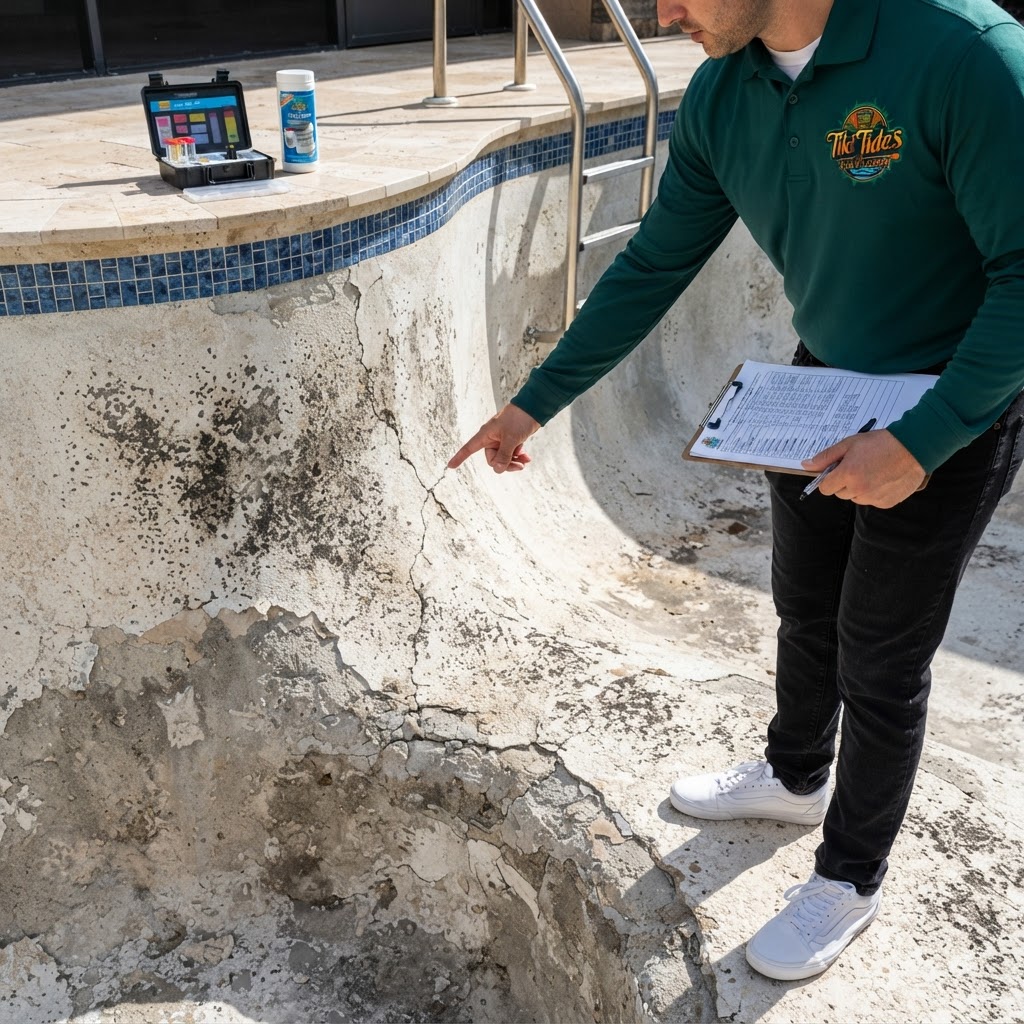
- Peeling or Flaking Plaster (Spalling): This is a clear sign of chemical degradation. When plaster begins to lift or flake off in layers, it is often due to long-term exposure to aggressive water with low pH or low calcium levels. Once spalling begins, spot patching is rarely effective.
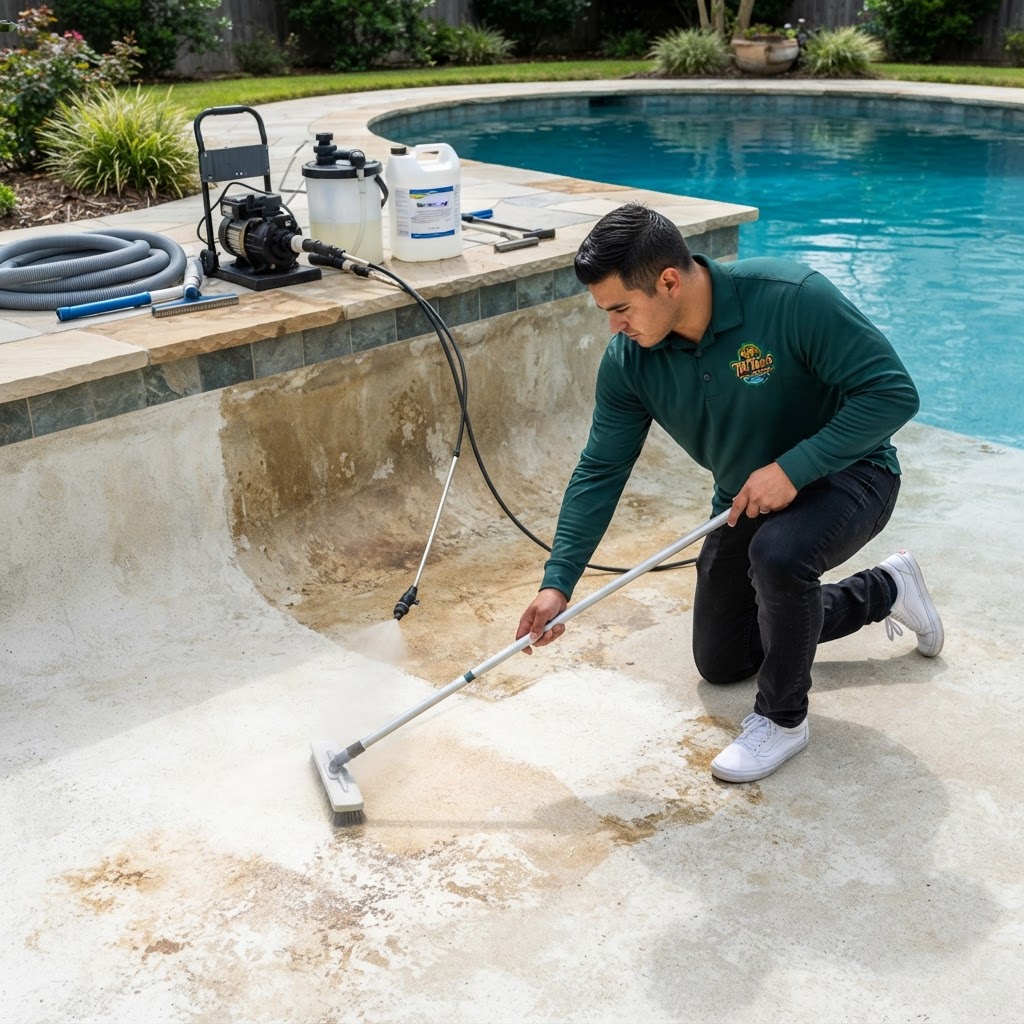
- Persistent Staining: While some stains can be removed with an What Is an Acid Wash? A Professional Guide to Surface Restoration, stains that return repeatedly or are deeply embedded in the finish suggest the surface is porous and compromised.
- Cracks and Leaks: Hairline cracks can sometimes be cosmetic, but cracks that return after being patched or those located at the waterline/floor-to-wall transition often indicate structural movement or hydrostatic pressure issues.
- Frequent Water Loss: If you find yourself constantly topping off the water level, you may have hidden leaks caused by a failing surface or compromised shell integrity.
Pro Tip: If you are unsure if a crack is structural or cosmetic, monitor it closely. If you have patched the same area for two consecutive seasons and the crack returns, the underlying surface is likely too degraded to hold a patch, and a full resurfacing is the most cost-effective long-term solution.
Maintaining Your Surface Chemistry
To extend the life of your current finish, you must maintain proper water balance. Aggressive water—specifically water with low pH or low calcium hardness—will actively dissolve your pool's finish. Always aim for these industry-standard ranges:
- Free Chlorine: 1.0–3.0 ppm
- pH: 7.2–7.8
- Total Alkalinity: 80–120 ppm
- Calcium Hardness: 200–400 ppm
- Cyanuric Acid (CYA): 30–50 ppm
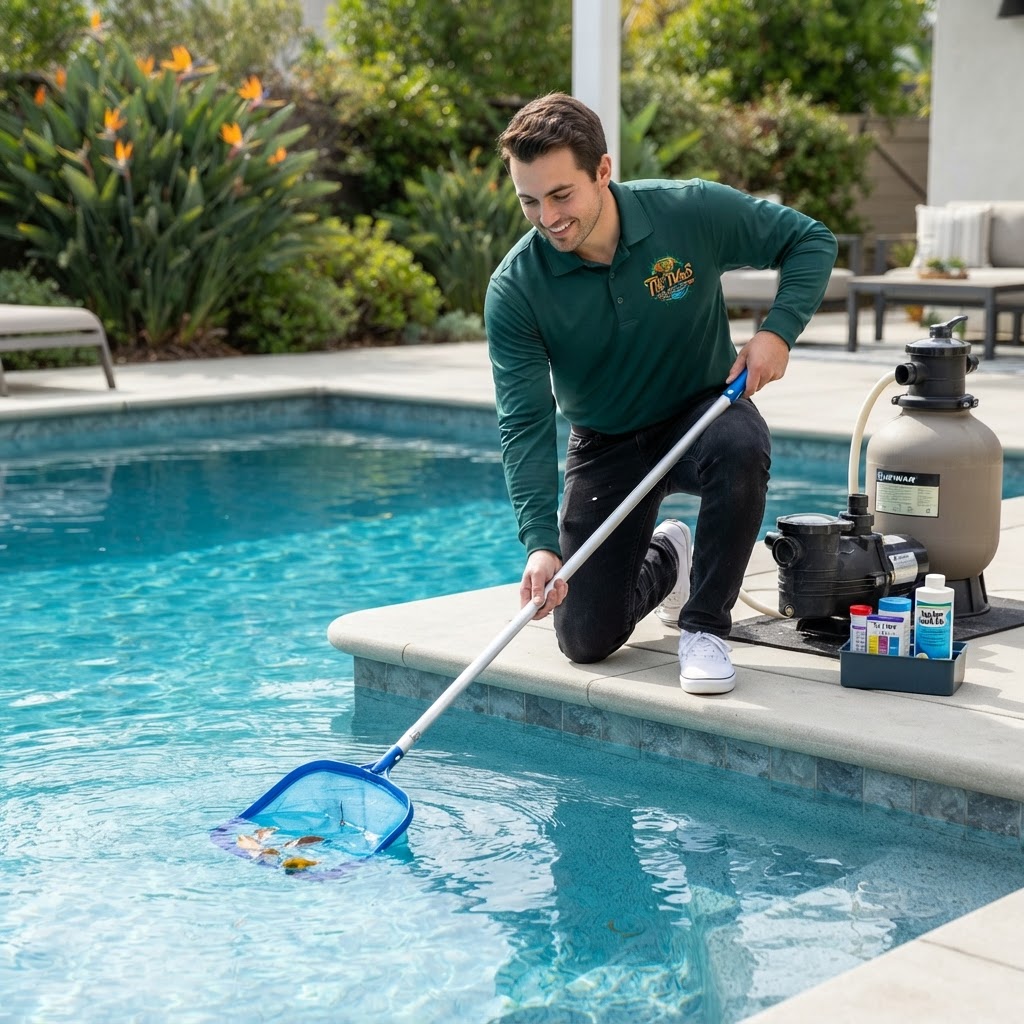
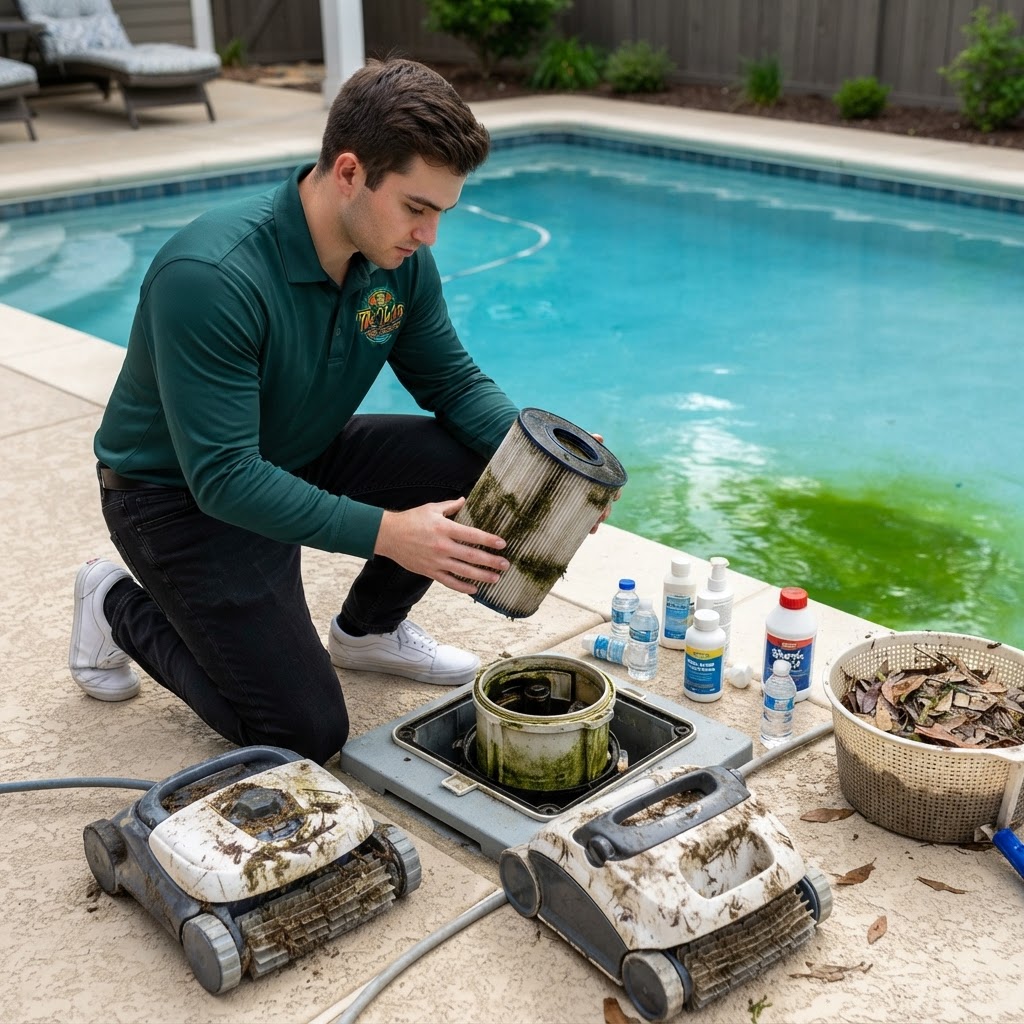
For more tips on daily upkeep, check out our guide on How to Keep Your Pool Clean Between Service Visits.
Safety Notes
When inspecting your pool for damage, never enter the water if you suspect a structural leak or if the surface is so rough that it poses a risk of injury. Always use a pole-mounted mirror or a camera to inspect deep-end cracks. If you are handling pool chemicals to test your water, always wear protective eyewear and gloves, and never mix different chemicals together.
When to Call a Professional
If you notice deep, structural cracks, significant water loss, or widespread peeling, it is time to call a professional. Attempting to DIY a major resurfacing project can lead to improper bonding, leaks, and safety hazards. A professional assessment will determine if you are dealing with a simple surface issue or a more complex structural problem that requires specialized repair techniques.
Summary
Pool resurfacing is an essential part of long-term pool ownership. By keeping an eye out for rough textures, persistent stains, and recurring cracks, you can address issues before they become major repairs. Remember to keep your water chemistry balanced to protect your investment and ensure your pool remains a safe, beautiful oasis for your family.
Related Reading
- What Is an Acid Wash? A Professional Guide to Surface Restoration
- How to Keep Your Pool Clean Between Service Visits
- Top Pool Maintenance Mistakes Homeowners Make (And How to Fix Them)
- What Does Weekly Pool Service Include? A Professional Maintenance Guide
- Master Pool Skimming and Surface Cleaning: The Ultimate Guide to a Sparkling Pool