Maintaining a swimming pool is about more than just skimming leaves and vacuuming the floor; it is a delicate dance of science. At the heart of this science is pH balance. For many pool owners, chemistry can feel like a daunting return to high school lab class, but understanding pH is the single most important step in ensuring your pool remains a safe, sparkling oasis. At Tiki Tides Pools, we believe that every pool owner can master their water chemistry with the right guidance.
pH is a measure of how acidic or basic your water is on a scale of 0 to 14. In the world of pool maintenance, the "sweet spot" is incredibly narrow. When your pH is out of alignment, your chlorine stops working, your equipment begins to corrode, and your swimmers end up with itchy skin and burning eyes. This guide will walk you through the professional process of testing and balancing your pool’s pH levels to keep your water pristine all season long.
Why pH Balance Matters
The pH level of your pool water affects every other chemical component. When the pH is too high (alkaline) or too low (acidic), the consequences are immediate and costly. According to the CDC and industry standards, the ideal pH range for a swimming pool is 7.2 to 7.8.
The Risks of Low pH (Below 7.2)
- Corrosion: Acidic water eats away at metal components, including heaters, ladders, and pump seals.
- Plaster Damage: Low pH can cause etching and pitting in the plaster or pebble finish of your pool.
- Bather Discomfort: Swimmers will experience stinging eyes and dry, itchy skin because the water is more acidic than the human eye (which has a pH of about 7.4).
- Chlorine Dissipation: While chlorine is very active at low pH, it also dissipates much faster, leaving you unprotected.
The Risks of High pH (Above 7.8)
- Scaling: High pH leads to calcium deposits on your tile line and inside your plumbing, which can restrict water flow.
- Cloudy Water: Calcium carbonate precipitates out of the water, making it look milky or dull.
- Ineffective Chlorine: This is the most dangerous risk. At a pH of 8.0, your chlorine is only about 20-30% effective. You might have plenty of chlorine in the water, but it isn't killing bacteria or algae.
The Essential Tool Kit
Before you start adjusting chemicals, you need the right tools. Accuracy is paramount in water chemistry.
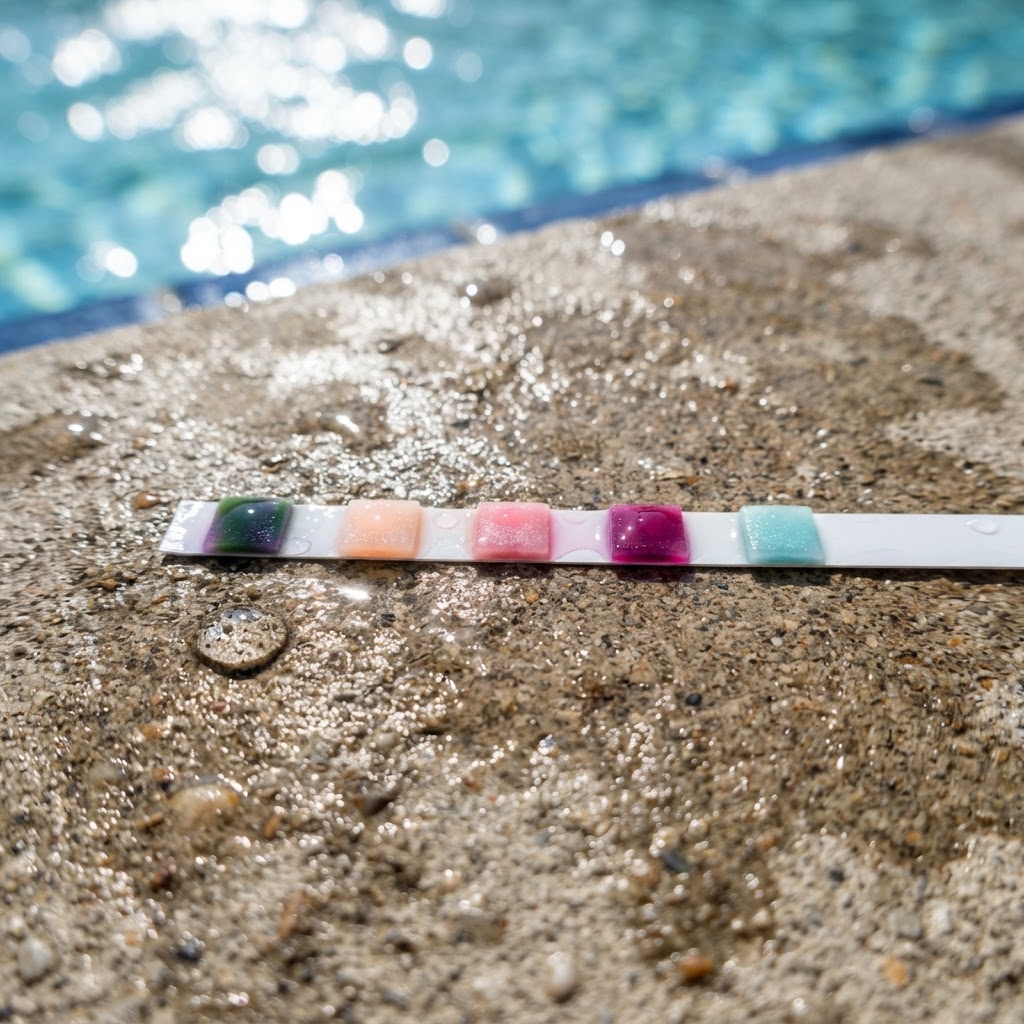
- Professional Test Kit: Use a liquid DPD test kit (like the Taylor K-2006) or high-quality test strips.
- Chemicals to Lower pH: Muriatic Acid (Liquid) or Sodium Bisulfate (Dry Acid).
- Chemicals to Raise pH: Soda Ash (Sodium Carbonate).
- Measuring Cup: A dedicated plastic measuring cup for pool chemicals only.
- Safety Gear: Chemical-resistant gloves and safety goggles.
Step 1: Test Your Water
Always test your water before adding any chemicals. Ensure your pump has been running for at least 4-8 hours to ensure the water is well-circulated.
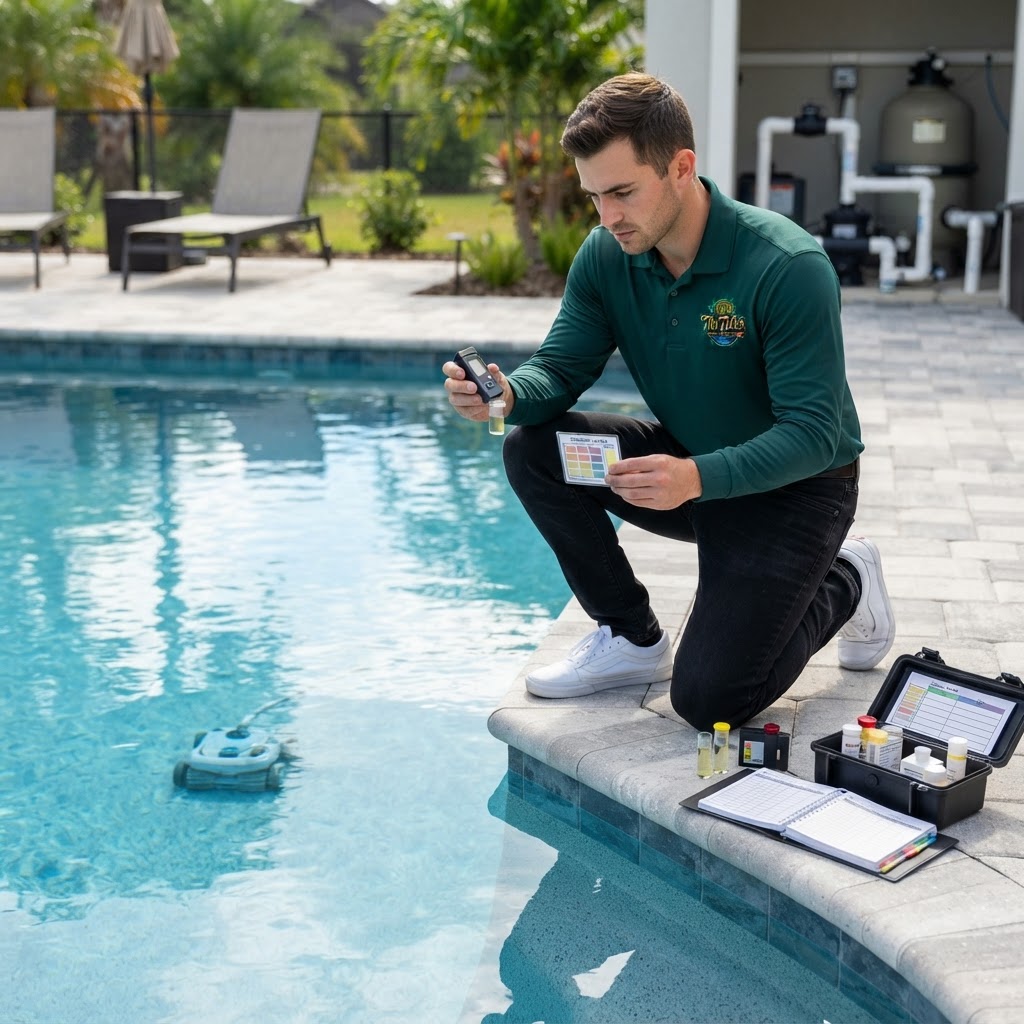
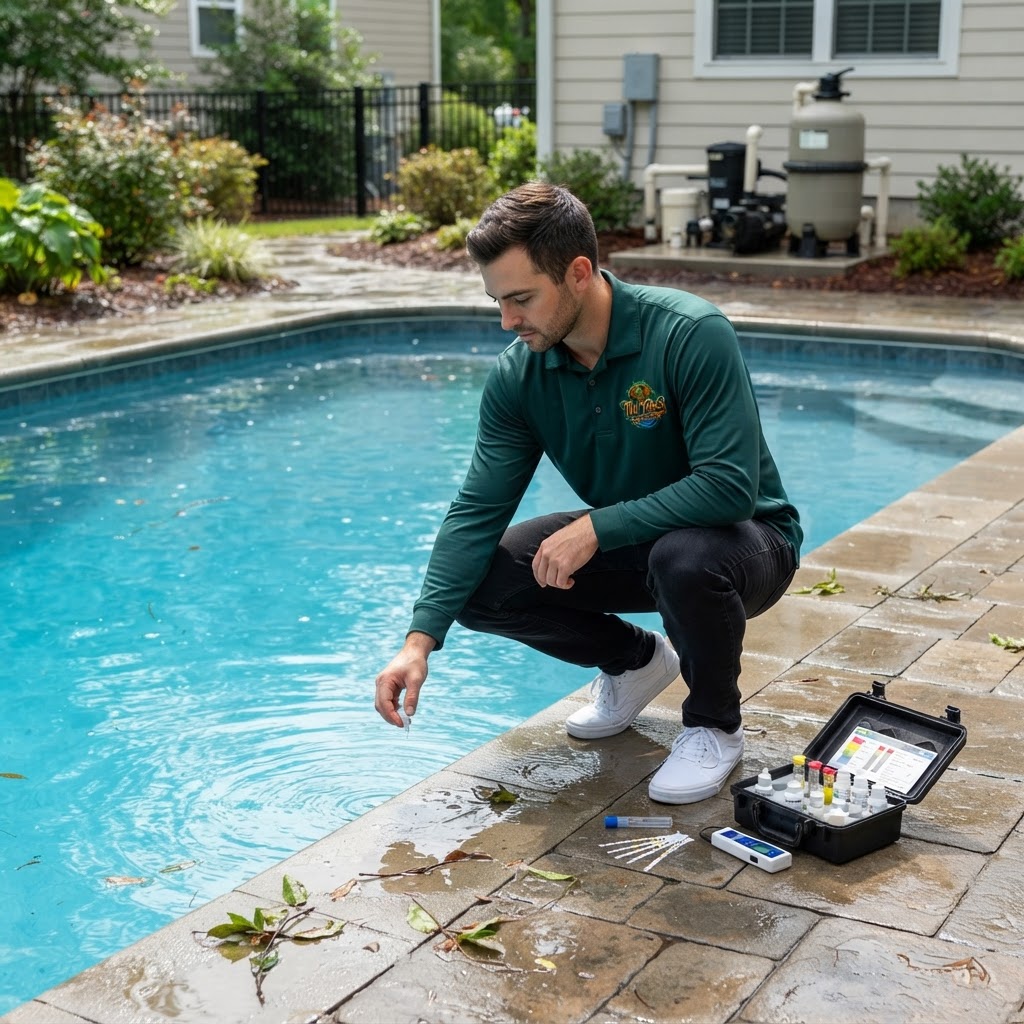
- Collect a Sample: Reach down about 12-18 inches (elbow deep) away from return jets to get a representative sample of the pool water.
- Run the Test: Follow the instructions on your specific kit. If using a liquid kit, ensure the vials are clean and you are holding the reagent bottles vertically to ensure uniform drop size.
- Check Total Alkalinity (TA) First: This is a professional secret. Total Alkalinity acts as a "buffer" for your pH. If your TA is not between 80–120 ppm, your pH will "bounce" or be extremely difficult to change. Always balance TA before fine-tuning your pH.
Pro Tip: Never test your pool water immediately after a heavy rain or a large pool party. Wait at least 12 hours for the chemistry to stabilize after significant environmental changes or heavy bather loads.
Step 2: How to Lower pH (High pH Levels)
If your test reveals a pH above 7.8, you need to add an acid. Most professionals prefer Muriatic Acid, though Sodium Bisulfate is a safer, dry alternative for beginners.
- Calculate the Dosage: Refer to the dosing chart on the chemical container or a pool calculator app. You need to know your pool's total volume in gallons.
- Dilute (If using Muriatic Acid): Fill a plastic bucket with pool water first, then add the acid to the water. NEVER add water to acid.
- Add to Pool: With the pump running on high, pour the mixture slowly around the perimeter of the deep end, or directly in front of a return jet to help it disperse.
- Wait: Allow the water to circulate for at least 4 hours before retesting.
Step 3: How to Raise pH (Low pH Levels)
If your pH is below 7.2, you need to add a base. Soda Ash (Sodium Carbonate) is the most common chemical for this task. Note: While Baking Soda (Sodium Bicarbonate) raises pH slightly, it is primarily used to raise Total Alkalinity.
- Calculate the Dosage: Determine how much Soda Ash is needed based on your current reading and pool volume.
- Pre-Dissolve: Soda Ash can cloud the water if dumped in directly. Mix it in a bucket of pool water until dissolved.
- Distribute: Walk around the pool and pour the solution into the water.
- Wait: Let the pump circulate the water for 4-6 hours before retesting.
Safety Notes
Working with pool chemicals requires respect and caution.
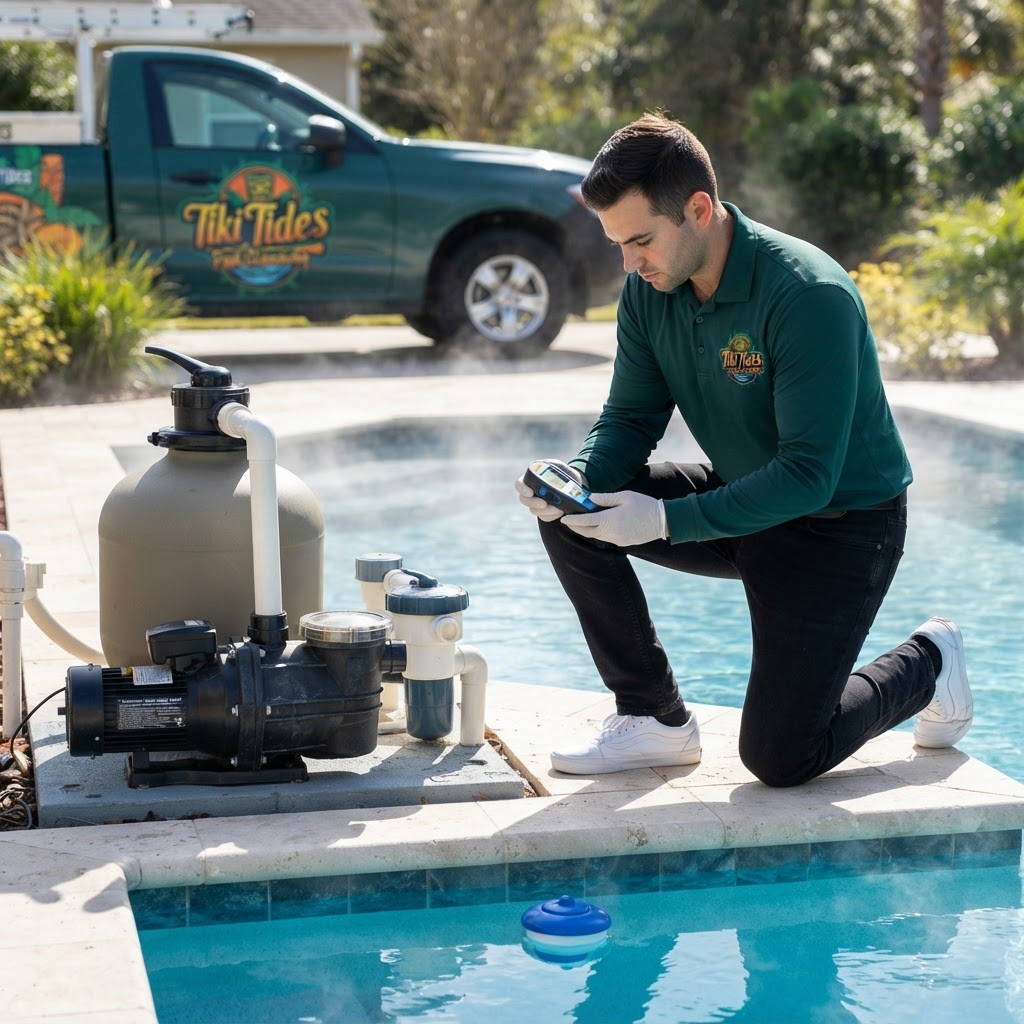
- PPE is Mandatory: Always wear safety goggles and gloves. Muriatic acid fumes are caustic; avoid inhaling them.
- Order of Operations: Always add chemicals to water, never water to chemicals. Adding water to a concentrated acid can cause a violent exothermic reaction (splashing).
- No Mixing: Never mix different chemicals together in the same bucket. Even different types of chlorine can cause an explosion.
- Storage: Keep all chemicals in a cool, dry, well-ventilated area, out of reach of children and pets.
Safe Industry Standards
To keep your pool in peak condition, aim for these ranges:
- pH: 7.2–7.8
- Free Chlorine: 1.0–3.0 ppm
- Total Alkalinity: 80–120 ppm
- Calcium Hardness: 200–400 ppm
- Cyanuric Acid (CYA): 30–50 ppm
When to Call a Professional
While balancing pH is a standard DIY task, some situations require an expert touch. You should call Tiki Tides Pools if:
- The pH is Unstable: If you find yourself adding chemicals constantly but the levels won't stay in range (this usually indicates a Total Alkalinity or Total Dissolved Solids issue).
- Extreme Scaling: If your pool walls feel like sandpaper or you see thick white deposits on your tile.
- Persistent Cloudiness: If your chemicals are balanced but the water remains murky.
- Metal Staining: If your water turns a tea-color or green (but clear) after adding pH increasers, you likely have metals in the water that require professional sequestering agents.
Summary
Balancing your pool's pH is the cornerstone of effective water maintenance. By keeping your levels between 7.2 and 7.8, you protect your investment, ensure your sanitizer works at peak efficiency, and provide a comfortable environment for your family. Remember to always check your Total Alkalinity first, use the proper safety gear, and follow the "low and slow" approach when adding chemicals. With a little practice, you'll have the best-looking water in the neighborhood!