For many pool owners, a summer rainstorm seems like a convenient way to top off the water level for free. However, as certified pool professionals at Tiki Tides Pools, we know that rainwater is far from pure. In reality, every drop of rain that hits your pool brings with it a cocktail of environmental pollutants, acidic compounds, and organic debris that can throw your water chemistry into a tailspin.
Understanding how rain affects pool chemistry is the first step in preventing a crystal-clear oasis from turning into a swampy mess. When a storm rolls through, it doesn't just add volume; it initiates a series of chemical reactions that can deplete your sanitizer, swing your pH, and invite algae to take root. This guide will walk you through the science of storm impact and provide a step-by-step recovery plan to keep your water safe and inviting.
The Science of Rainwater and Your Pool
Rainwater is naturally acidic. As it falls through the atmosphere, it picks up carbon dioxide, sulfur dioxide, and nitrogen oxides, typically resulting in a pH level between 5.0 and 5.5. When this acidic water enters your pool, which should ideally be maintained at a pH of 7.2–7.8 (CDC standard), it immediately begins to neutralize your pool's alkaline buffers.
Beyond acidity, rain acts as a transport system for contaminants. Wind-blown dust, pollen, bird droppings, and even fertilizers from your lawn are washed into the water. These materials are high in phosphates and nitrates, which serve as the primary food source for algae. To understand how these changes fit into the bigger picture, check out our guide on What Are Ideal Pool Chemical Levels? A Guide to Balanced Water.
How Rain Dilutes Your Sanitizer
The most immediate threat after a storm is the dilution of your Free Chlorine. Chlorine is your pool's primary defense against bacteria and organic pathogens. Heavy rainfall dilutes the concentration of chlorine, but the problem is compounded by "chlorine demand."
As organic debris enters the pool, your existing chlorine immediately goes to work trying to oxidize those contaminants. This double-whammy—dilution plus high demand—can cause your Free Chlorine levels to drop well below the safe range of 1.0–3.0 ppm in a matter of hours. If you find your sanitizer levels bottoming out, you might be wondering Why Does My Pool Lose Chlorine So Quickly? 5 Common Causes & Fixes.
The pH and Alkalinity Seesaw
Total Alkalinity (TA) acts as a stabilizer for your pH. Think of it as an anchor that prevents your pH from drifting wildly. Because rainwater has near-zero alkalinity, heavy storms will dilute your TA levels. Once your Total Alkalinity drops below the recommended 80–120 ppm, your pH becomes "bouncy," meaning even small additions of chemicals can cause massive, unpredictable swings in pH levels.
Low pH (acidic water) is particularly dangerous because it is corrosive. It can etch pool plaster, degrade vinyl liners, and eat away at metal components in your heater and pump. Conversely, if runoff from a deck or yard enters the pool, it may actually carry minerals that cause the pH to spike, leading to cloudy water and scale formation.
Quick Reference: Storm Impact Thresholds
| Rainfall Amount | Primary Effect | Recommended Action | | :--- | :--- | :--- | | Under 0.5 inch | Minor dilution, slight pH shift | Test within 24 hours; adjust as needed. | | 0.5 to 1.0 inch | Noticeable chlorine loss, debris entry | Skim, brush, and rebalance sanitizer. | | 1.0 to 2.0 inches | Significant dilution, phosphate load | Shock the pool and check stabilizer (CYA). | | Over 2.0 inches | Overflow risk, heavy runoff | Drain excess water, full chemical reset. |
Pro Tip: Always test your water after the rain has stopped and the pump has circulated the water for at least 2–4 hours. Testing stagnant water immediately after a storm will give you inaccurate readings because the rainwater hasn't yet mixed with the deeper pool water.
Step-by-Step Post-Storm Recovery Plan
- Drain Excess Water: If the water level has risen above the midpoint of your skimmer opening, the skimmer cannot effectively pull debris from the surface. Use your filter's "waste" or "backwash" setting to bring the level back down.
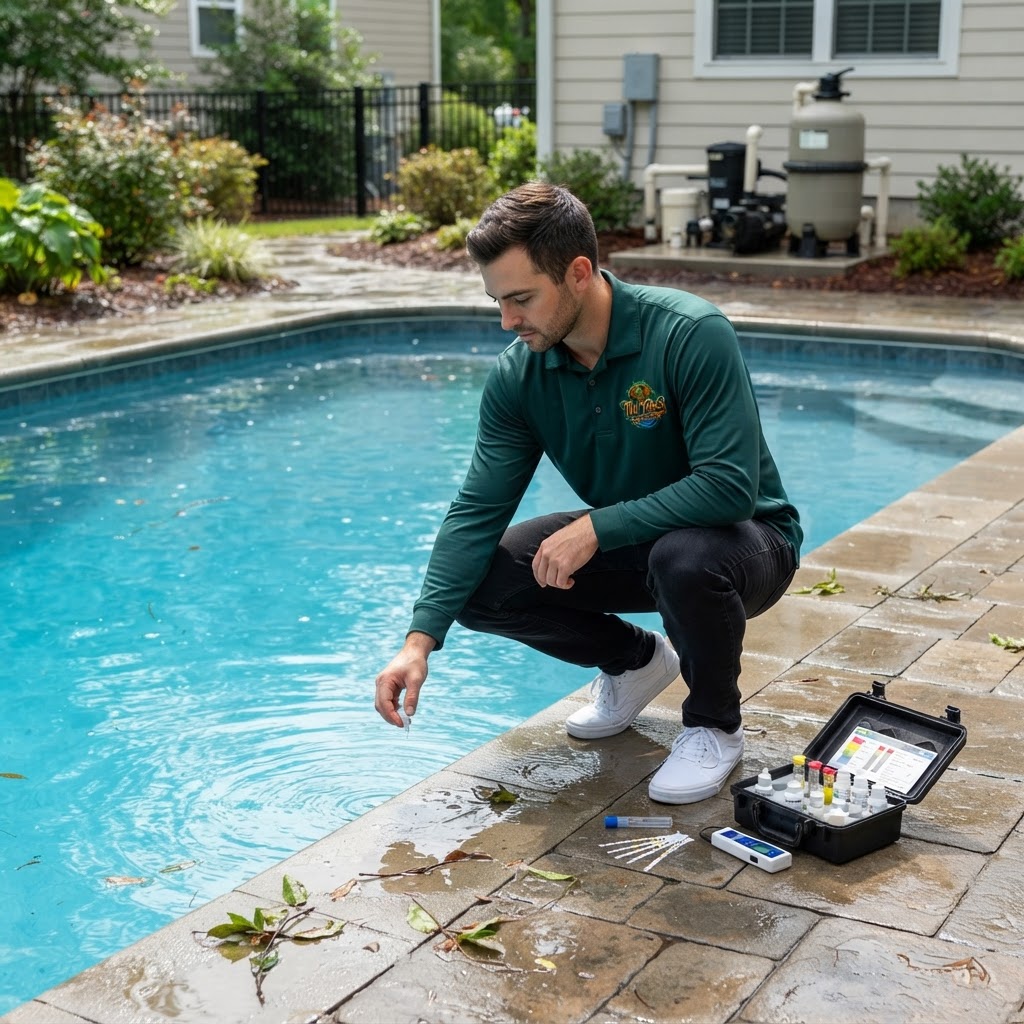
- Clean the Debris: Skim the surface for leaves and branches. Empty your skimmer and pump baskets. Brush the walls and floor to knock loose any algae spores that may have settled.
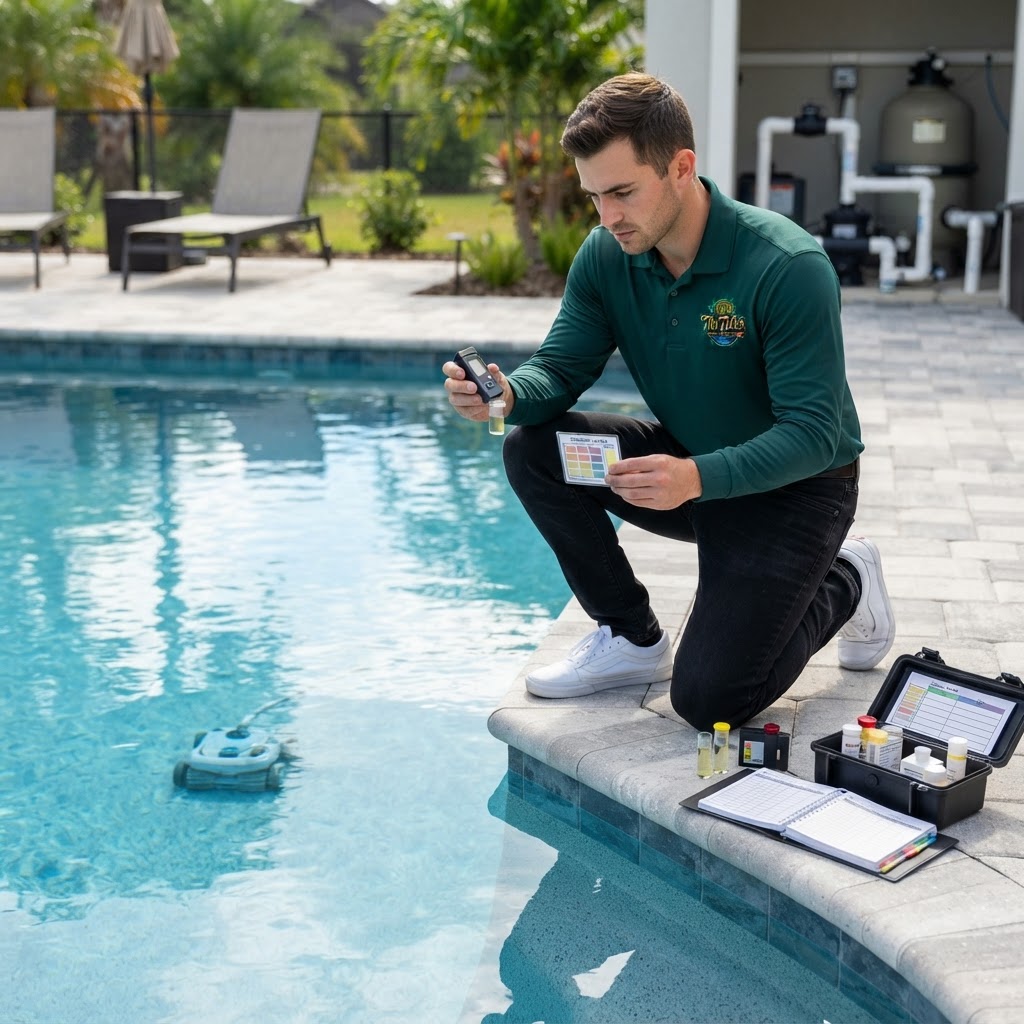
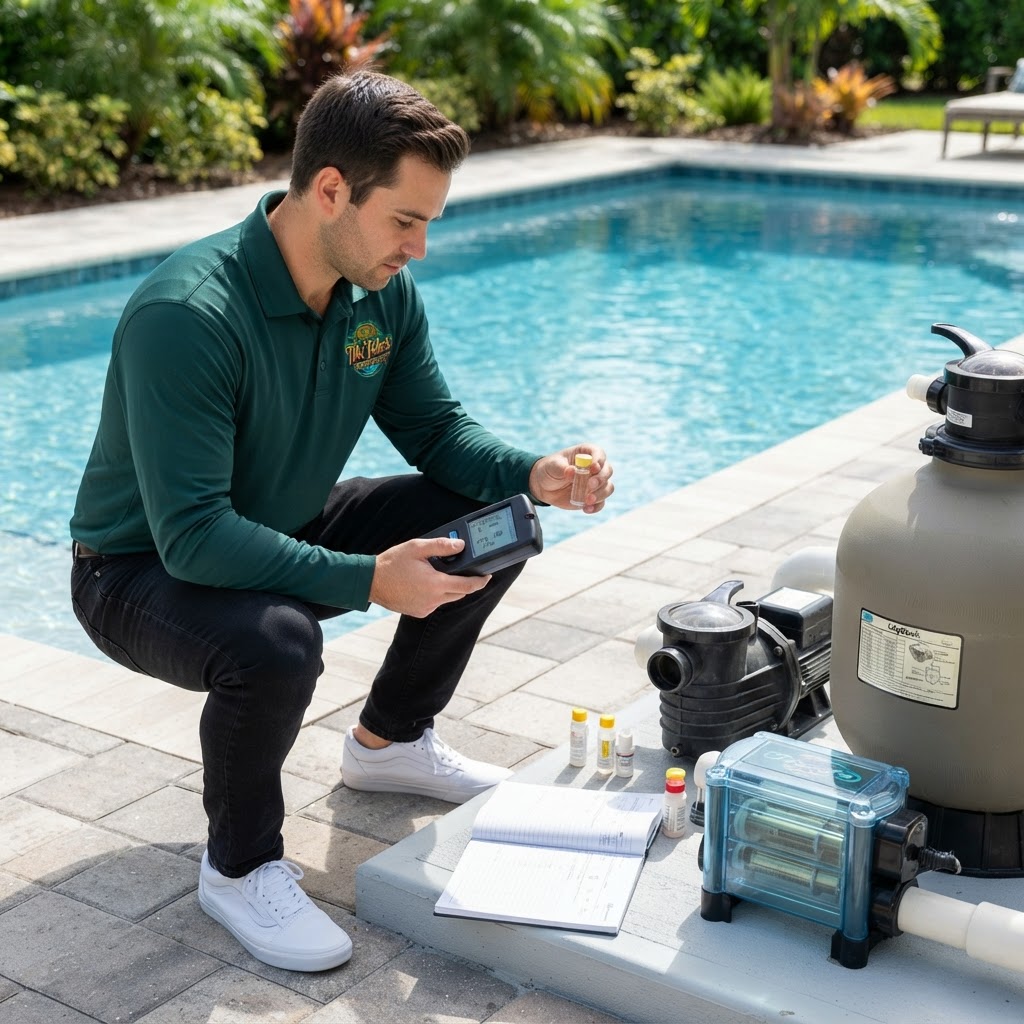
- Test the Water: Use a high-quality liquid test kit or digital tester. Check Free Chlorine, pH, Total Alkalinity, and Calcium Hardness.
- Balance Alkalinity First: Always adjust Total Alkalinity (target 80–120 ppm) before touching the pH. This ensures the pH stays stable once you adjust it.
- Adjust pH: Once TA is set, bring your pH into the safe 7.2–7.8 range.
- Shock the Pool: For heavy storms, you will likely need to Master the Art of Pool Shocking: The Ultimate Guide to Crystal Clear Water. This "super-chlorination" kills off the bacteria and algae spores introduced by the rain.
- Check Cyanuric Acid (CYA): Rain dilutes your stabilizer. Ensure CYA is between 30–50 ppm to protect your new chlorine from being burned off by the sun.
Safety Notes
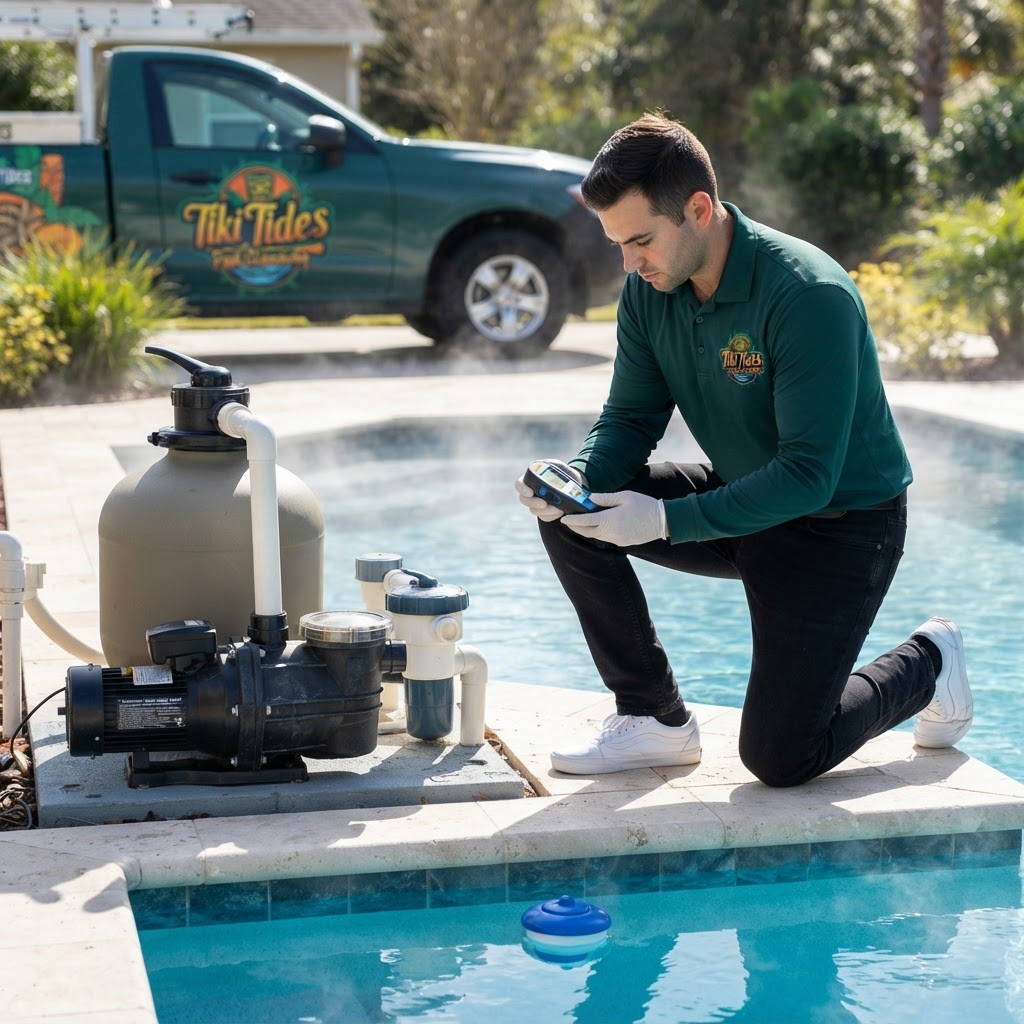
- Electrical Safety: Never touch your pool pump or electrical timer box while standing in water or during an active lightning storm. If your equipment area has flooded, turn off the power at the main breaker before approaching.
- Chemical Handling: Always add chemicals to water, never water to chemicals. Wear protective eyewear and gloves when handling acid or chlorine shock.
- Swimming Safety: Do not allow swimmers back into the pool until the water is clear, the Free Chlorine is between 1.0–3.0 ppm, and the pH is balanced. Cloudy water is a drowning hazard because it obscures the bottom of the pool.
When to Call a Professional
While most post-rain maintenance can be handled by a diligent homeowner, some situations require the expertise of Tiki Tides Pools:
- Submerged Equipment: If your pump or heater was submerged in floodwater, do not attempt to turn it on. It needs to be professionally inspected and dried to avoid a fire hazard.
- Persistent Cloudiness: If the water remains cloudy for more than 48 hours after shocking and balancing, you may have a filtration issue or a heavy phosphate load.
- Mud and Silt: If a mudslide or heavy runoff filled your pool with dirt, a professional vacuuming and filter deep-clean are necessary to prevent permanent staining.
Summary
Rain is an inevitable part of pool ownership, but it doesn't have to result in a green pool. By understanding that rain dilutes your chemicals and introduces organic "food" for algae, you can take proactive steps to protect your investment. Remember to maintain your Free Chlorine at 1.0–3.0 ppm and your pH at 7.2–7.8. A little bit of testing and balancing after the clouds clear will ensure your Tiki Tides pool remains the highlight of your summer.
Related Reading
- Why Does My Pool Smell Like Chlorine? The Truth About Pool Odors
- Why Does My Pool Lose Chlorine So Quickly? 5 Common Causes & Fixes
- What Are Ideal Pool Chemical Levels? A Guide to Balanced Water
- How to Lower pH in a Pool: A Step-by-Step Guide to Balanced Water
- Master the Art of Pool Shocking: The Ultimate Guide to Crystal Clear Water