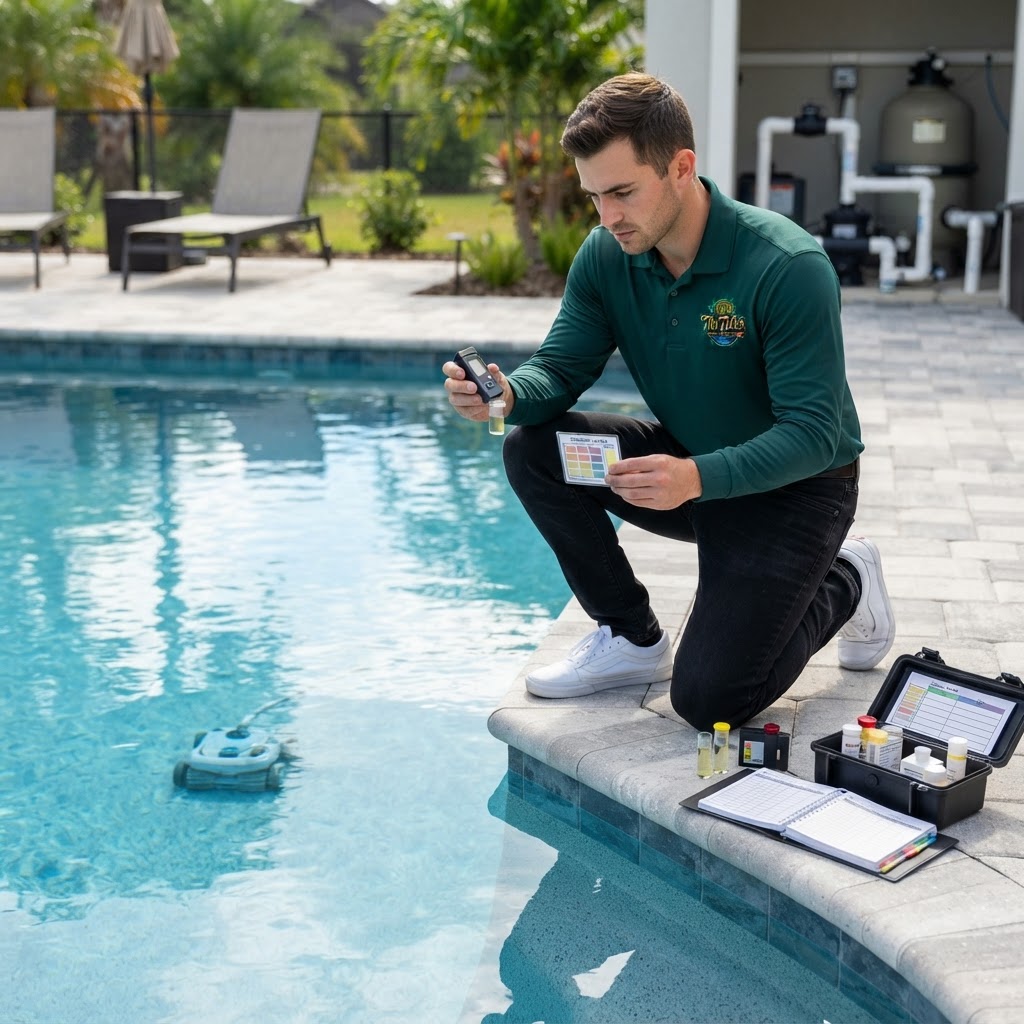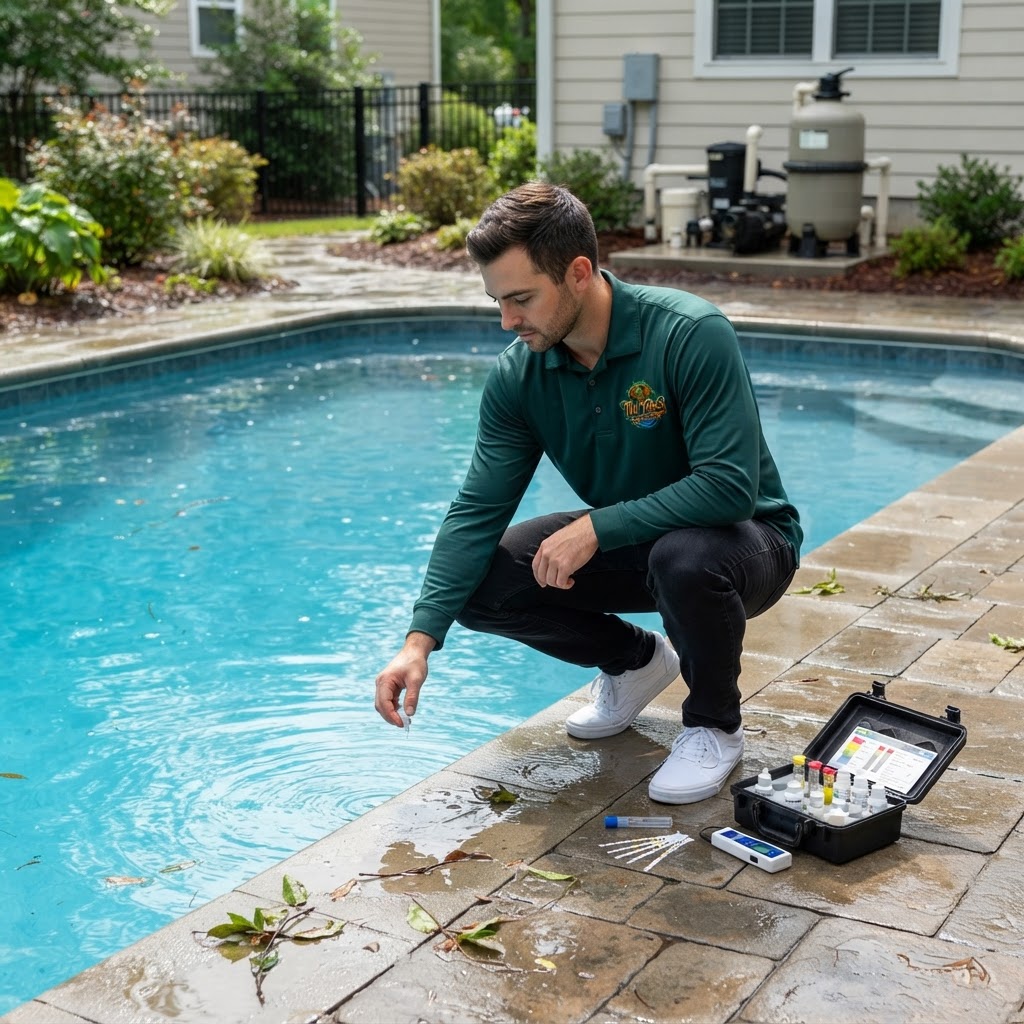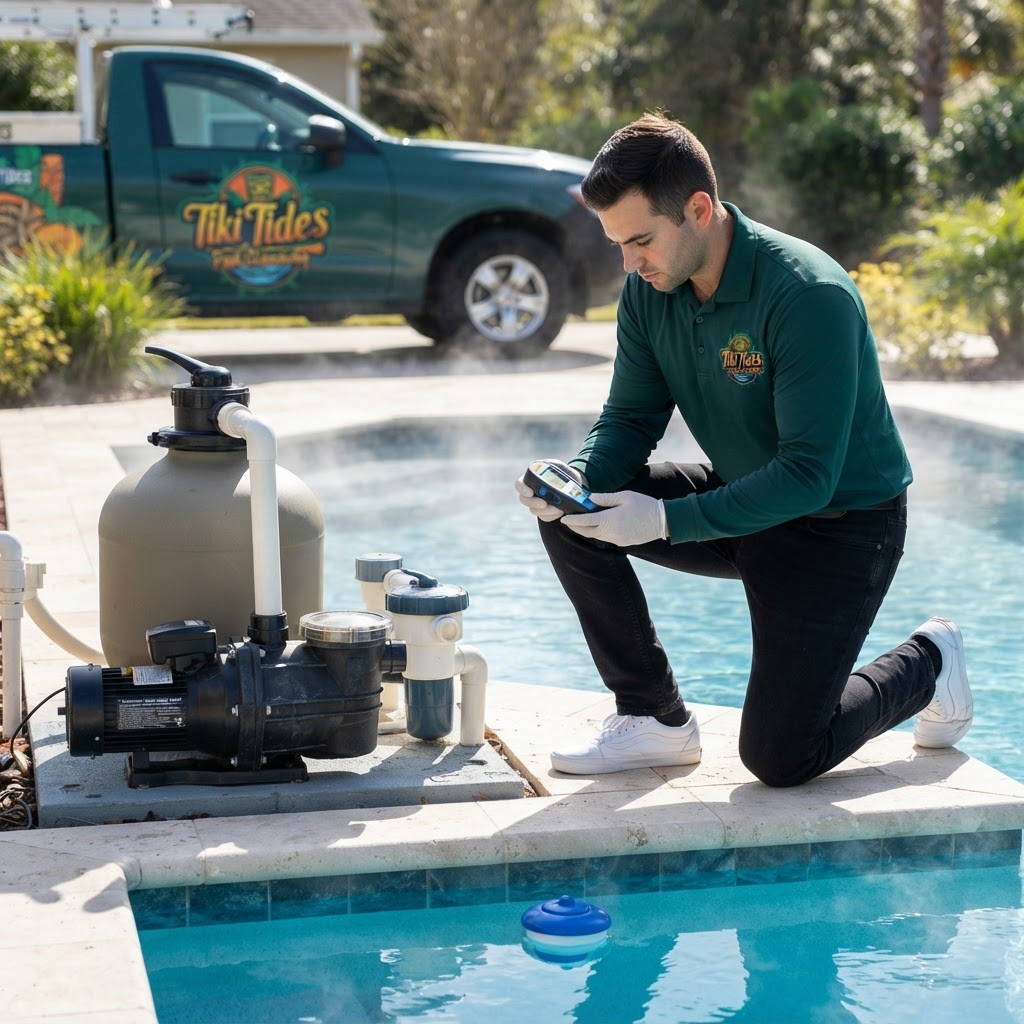
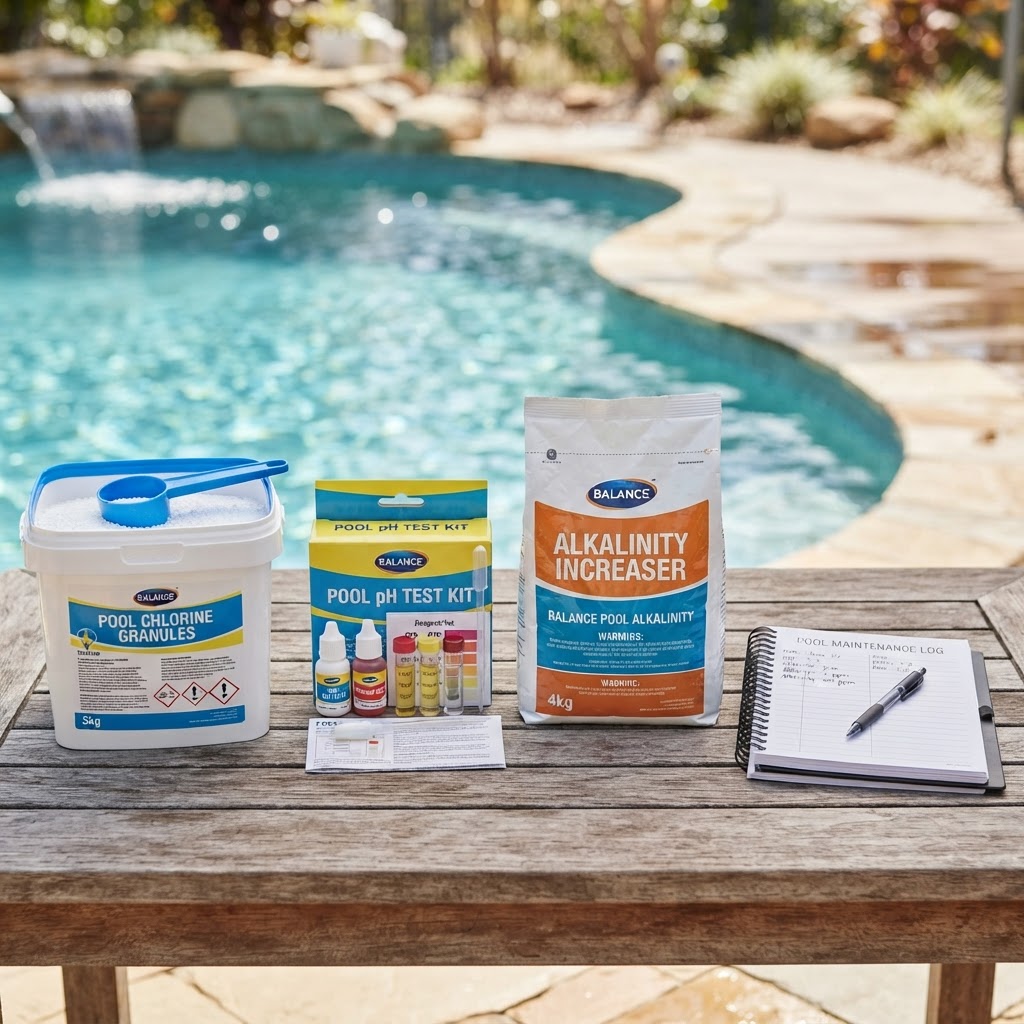
Welcome to Pool School by Tiki Tides Pools. For many new pool owners, opening the back gate to a sparkling blue oasis is a dream come true. However, maintaining that crystal-clear water requires more than just a skimmer net and a prayer. It requires a fundamental understanding of pool chemistry.
Water chemistry is the science of keeping your swimming environment safe, sanitary, and sustainable. Without the proper balance, your pool can quickly become a breeding ground for bacteria, algae, and even viruses. Furthermore, imbalanced water can wreak havoc on your pool equipment, leading to costly repairs for your pump, heater, and filtration system. This guide will break down the complex world of chemicals into actionable steps you can master today.
Why Pool Chemistry Matters
Pool chemistry isn't just about aesthetics; it is about safety and longevity. According to the CDC, maintaining proper disinfectant levels is the primary defense against recreational water illnesses (RWIs) like Cryptosporidium and Giardia. Beyond health, balanced water protects your investment. Acidic water can etch plaster and corrode metal components, while "hard" water can lead to scaly deposits that clog pipes and ruin heaters. By mastering the "Big Five" chemical levels, you ensure a better swimming experience for your family and a longer life for your pool.
The Big Five: Essential Chemical Levels
To keep your pool in top shape, you must monitor five primary levels. Following the industry standards set by the CDC and the APSP (Association of Pool & Spa Professionals), here are the target ranges every owner should know:
1. Free Chlorine (1.0–3.0 ppm)
Chlorine is your primary sanitizer. It kills bacteria, destroys organic contaminants (like sweat and oils), and prevents algae growth. The "Free" in Free Chlorine refers to the amount of chlorine currently available to actively sanitize the water.
- Too Low: Risk of algae blooms and bacterial growth.
- Too High: Skin and eye irritation, and potential damage to swimwear.
2. pH (7.2–7.8)
The pH level measures how acidic or basic your water is on a scale of 0 to 14. For pools, the "sweet spot" is 7.4, which mimics the pH of the human eye.
- Too Low (Acidic): Causes eye stinging, corrodes metal ladder rails and heater elements, and can etch pool surfaces.
- Too High (Basic): Leads to cloudy water, scale buildup, and significantly reduces the effectiveness of your chlorine.
3. Total Alkalinity (80–120 ppm)
Think of Total Alkalinity (TA) as an "anchor" or a buffer for your pH. It prevents the pH from swinging wildly up and down when chemicals are added or when it rains.
- Too Low: pH "bounce" (unstable readings) and rapid corrosion.
- Too High: Makes it extremely difficult to adjust your pH level and can lead to persistently cloudy water.
4. Calcium Hardness (200–400 ppm)
This measures how much calcium is dissolved in your water. Water naturally seeks a balance; if it doesn't have enough calcium, it will "eat" it out of your pool's plaster or grout.
- Too Low: Pitting and etching of concrete and plaster surfaces.
- Too High: Rough, "sandpaper" like deposits on the walls and calcification of the salt cell or heater.
5. Cyanuric Acid (30–50 ppm)
Often called "pool sunscreen," Cyanuric Acid (CYA) protects your chlorine from being destroyed by the sun's UV rays. Without CYA, the sun can deplete your chlorine levels by up to 90% in just two hours.
- Too Low: Chlorine vanishes almost instantly in sunlight.
- Too High: Leads to "chlorine lock," where the chlorine is so protected it can no longer effectively kill bacteria.
Quick Reference: Signs of Imbalance
Keep an eye out for these red flags that indicate your chemistry is off:
- Green or Cloudy Water: Usually indicates low chlorine or high pH/Alkalinity.
- Strong "Chlorine" Smell: This is actually "chloramines" (used-up chlorine). You likely need to add more chlorine or shock the pool.
- Burning Eyes/Itchy Skin: Often caused by improper pH levels, not too much chlorine.
- Slimy Walls: The early stages of an algae bloom.
Pro Tip: Always balance your Total Alkalinity before attempting to adjust your pH. Because TA acts as a buffer, trying to fix pH while TA is out of range is like trying to steer a car with no wheels—you won't get where you want to go.
The Beginner’s Tool Kit
To manage these levels, you will need a few essential tools:
- Reliable Test Kit: We recommend a DPD liquid test kit for accuracy, though high-quality test strips are acceptable for daily checks.
- Chemicals for Adjustment:
- To Raise: Sodium Bicarbonate (Alkalinity), Soda Ash (pH), Calcium Chloride (Hardness).
- To Lower: Muriatic Acid or Sodium Bisulfate (pH and Alkalinity).
- A Pool Log: Record your readings to track trends over time.
Step-by-Step: How to Balance Your Pool
- Test the Water: Collect a sample from elbow-depth, away from the return jets.
- Adjust Alkalinity First: Use sodium bicarbonate to raise it or muriatic acid to lower it until it hits the 80–120 ppm range.
- Adjust pH Second: Once TA is stable, bring your pH into the 7.2–7.8 range.
- Sanitize: Ensure your Free Chlorine is between 1.0 and 3.0 ppm. If you use a salt-water generator, check your salt levels as well.
- Check Calcium and CYA: These levels change slowly, so testing them once a month is usually sufficient.
Safety Notes
Handling pool chemicals requires extreme caution to prevent injury or chemical reactions.
- Never mix chemicals: Even different types of chlorine can explode if mixed.
- Add chemical to water, never water to chemical: When diluting acid, fill a bucket with water first, then pour the chemical in slowly.
- Store in a cool, dry place: Keep chemicals away from direct sunlight and out of reach of children and pets.
- Wear PPE: Use gloves and eye protection when handling concentrated acids or chlorine.
When to Call a Professional
While most day-to-day maintenance can be handled by a homeowner, some situations require the expertise of a Tiki Tides Pools technician:
- Black Algae: This is a stubborn, invasive species that requires professional-grade treatment and scrubbing.
- Persistent Cloudiness: If your chemicals are balanced but the water won't clear, you may have a filtration or hardware issue.
- Major Chemical Spills: If a large amount of chemical is mishandled, call a pro for safe cleanup.
- Post-Storm Recovery: Heavy rains can introduce massive amounts of contaminants that require specialized "flocking" or heavy shocking.
Summary
Pool chemistry doesn't have to be intimidating. By focusing on the "Big Five"—Free Chlorine, pH, Total Alkalinity, Calcium Hardness, and Cyanuric Acid—you can maintain a safe and inviting swimming environment. Remember the order of operations: Alkalinity first, then pH, then sanitizer. Keep your test kit handy, follow safety protocols, and you'll enjoy a summer of crystal-clear water. If you ever feel overwhelmed, Tiki Tides Pools is just a phone call away to help you get your water back in balance.