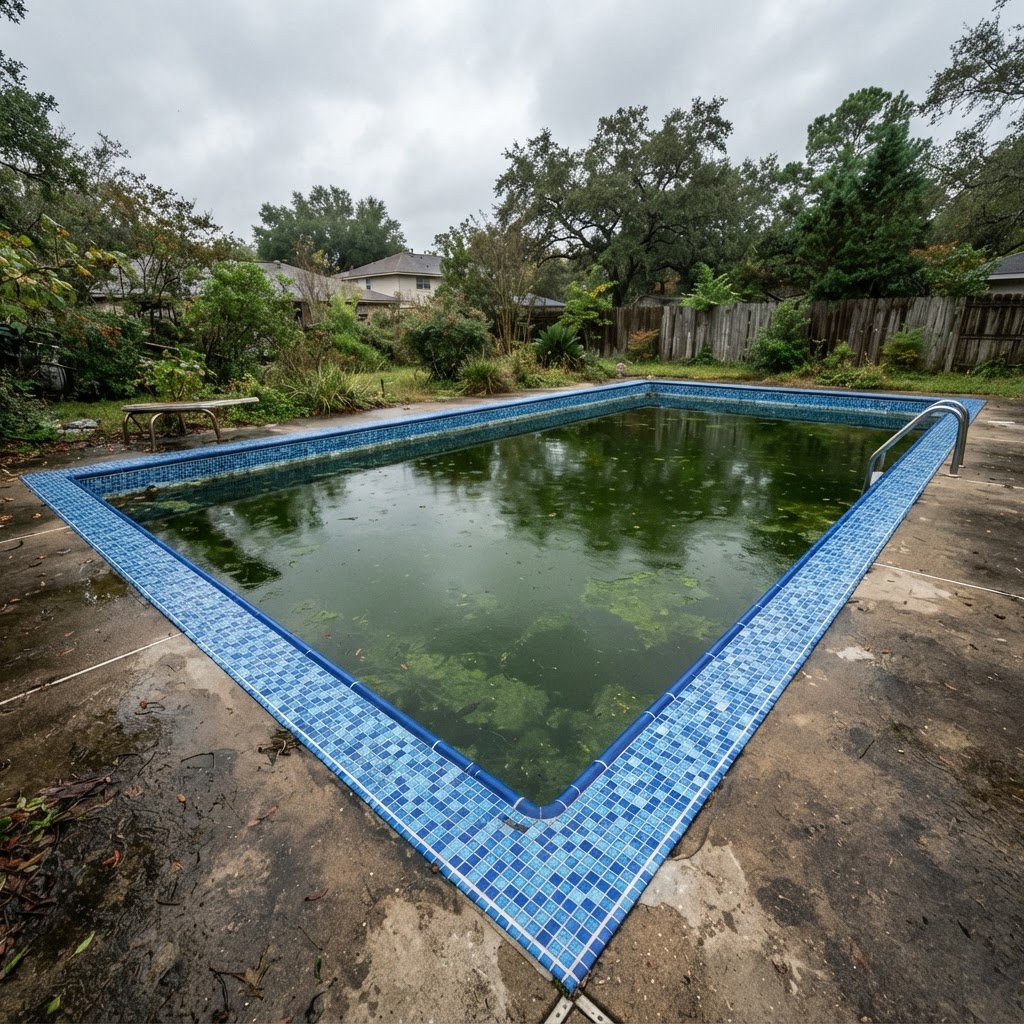
There is nothing quite as discouraging for a homeowner as walking out to your backyard to find your sparkling blue oasis has transformed into a murky green swamp. At Tiki Tides Pools, we see this often, and we know exactly how frustrating it can be. Green pool water is not just an aesthetic issue; it is a signal that your water chemistry is out of balance and may be unsafe for swimmers.
Understanding the root cause is the first step toward a solution. Whether you are dealing with a light lime tint or a dark forest-green soup, the fix requires a systematic approach. This guide will walk you through the primary causes of green water and provide the professional steps needed to reclaim your pool.
1. Low Chlorine Levels
Chlorine is your pool's primary defense against organic contaminants. When free chlorine levels drop below the recommended range of 1.0–3.0 ppm (as set by the CDC), there is nothing to prevent algae spores from colonizing. Even a few hours of zero chlorine on a hot day can trigger a massive bloom.
2. Algae Blooms
Algae are the most common reason for green water. While there are thousands of species, pool owners usually deal with three main types:
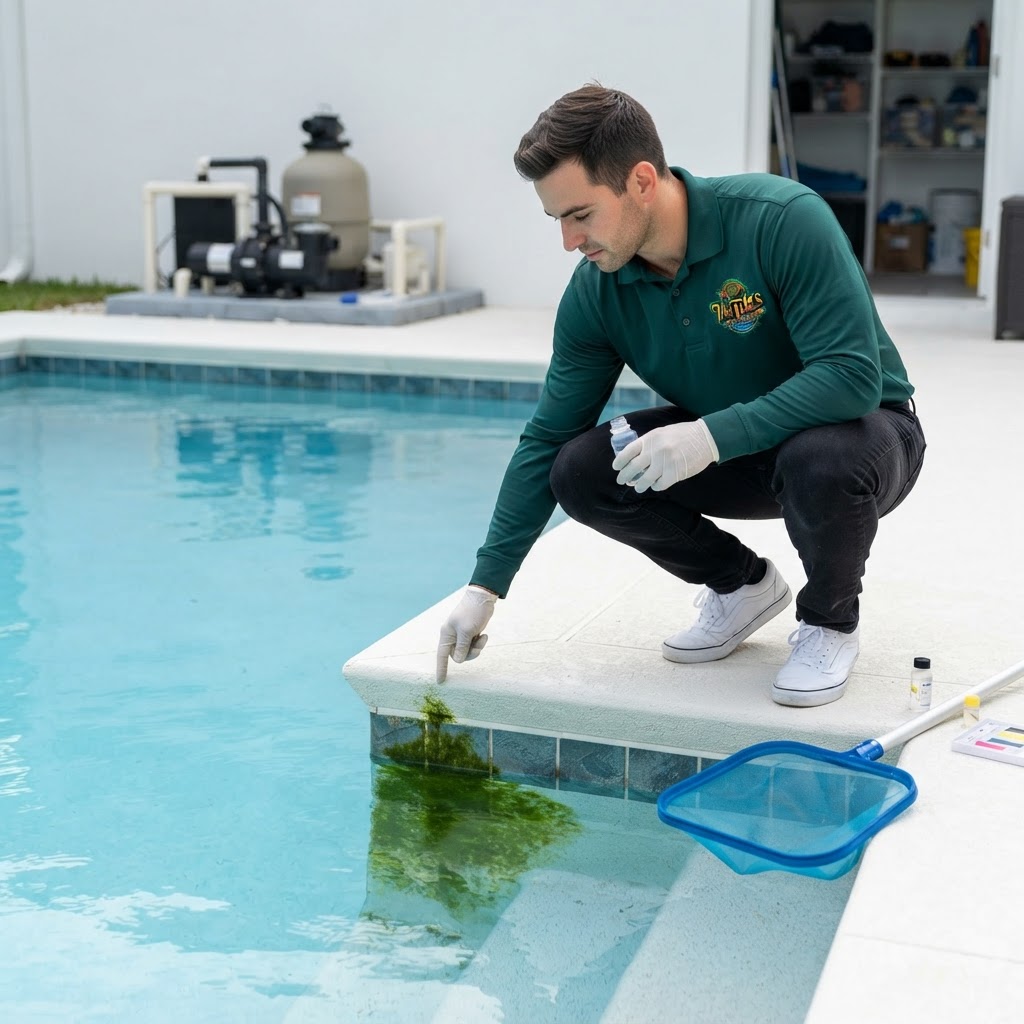
- Green Algae: The most common variety, which floats in the water and clings to walls.
- Mustard Algae: Often mistaken for sand or pollen, this yellowish-green algae is chlorine-resistant and requires a higher shock level.
- Black Algae: Appearing as dark spots on the pool surface, this type is incredibly hardy and requires deep scrubbing.
3. Poor Filtration and Circulation
Your pump and filter are the heart and lungs of your pool. If the water isn't moving, it becomes stagnant, creating the perfect breeding ground for algae. Common issues include a dirty filter, a clogged pump basket, or not running your pump long enough (typically 8–12 hours a day during summer).
4. High pH Levels
If your pH is above the recommended 7.2–7.8 range, your chlorine becomes significantly less effective. At a pH of 8.0, your chlorine is only about 20-30% effective. This means even if you have chlorine in the water, it cannot kill algae effectively because the high pH is "locking" it up.
5. High Cyanuric Acid (CYA) Levels
Cyanuric Acid, or stabilizer, acts as sunblock for your chlorine. However, if levels exceed 50 ppm, it can cause "chlorine lock." In this state, the CYA binds so tightly to the chlorine that the sanitizer cannot do its job. If your CYA is over 100 ppm, the only solution is often to partially drain and refill the pool with fresh water.
6. High Phosphates
Phosphates are the primary food source for algae. They enter your pool through lawn fertilizer runoff, decaying leaves, and even some city water sources. While phosphates don't turn the water green themselves, they act as a super-fuel that makes algae grow at an uncontrollable rate.
7. Metal Oxidation (The Clear Green Mystery)
Is your water bright green but perfectly clear? This is likely not algae, but metal oxidation—usually copper. This happens when the pH drops too low and corrodes your pool heater's copper heat exchanger, or if you use cheap, copper-based algaecides. The copper turns the water a transparent green, similar to a stained-glass window.
Pro Tip: To tell the difference between algae and metals, feel the pool wall. If it is slimy, it is algae. If it is smooth, it is likely metal oxidation.
Quick Reference: Ideal Chemical Ranges
To prevent and fix green water, maintain these industry-standard levels:
- Free Chlorine: 1.0–3.0 ppm
- pH: 7.2–7.8
- Total Alkalinity: 80–120 ppm
- Calcium Hardness: 200–400 ppm
- Cyanuric Acid (CYA): 30–50 ppm
How to Fix a Green Pool: Step-by-Step
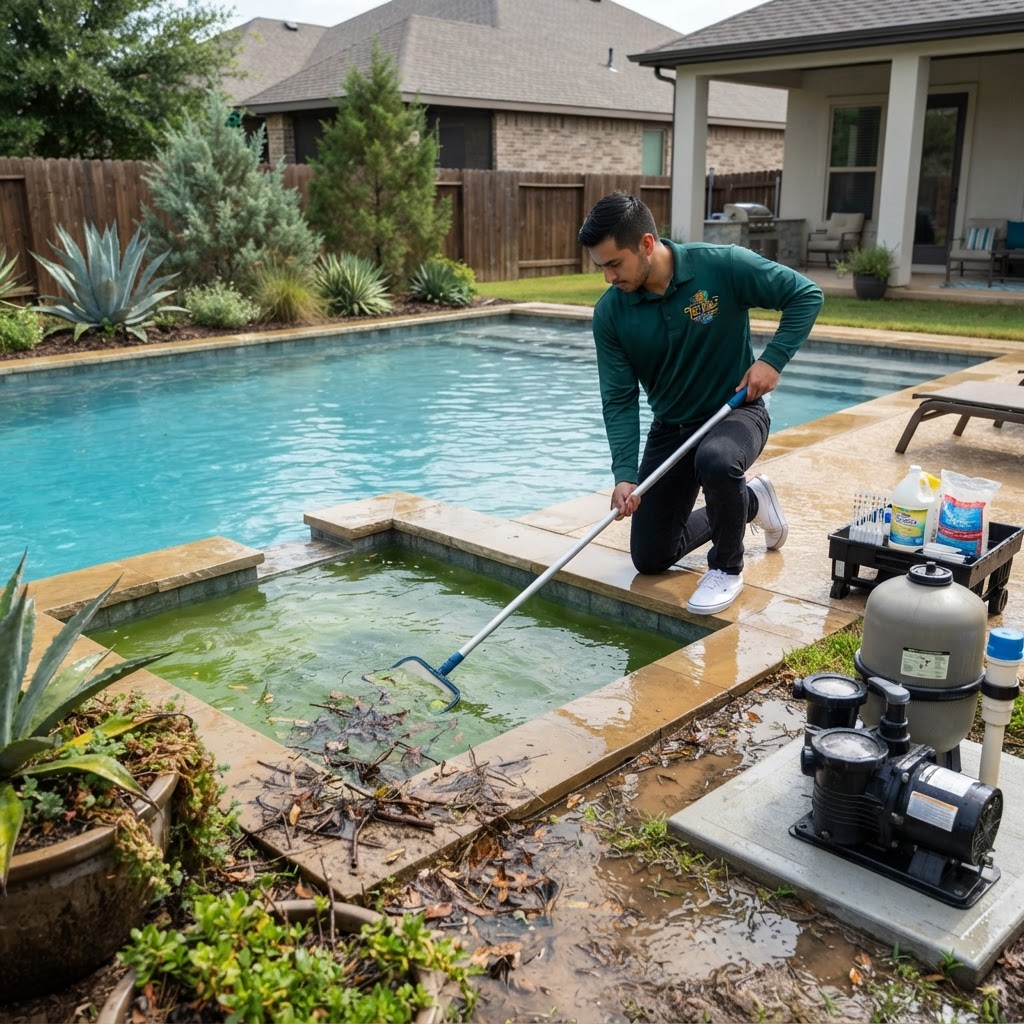
- Clean the Pool: Remove all large debris with a leaf net. If you can't see the bottom, do not vacuum, as you may clog the pipes.
- Test the Water: Use a high-quality liquid test kit or take a sample to a professional.
- Balance the pH: Adjust your pH to 7.2 before shocking. Chlorine is most effective at this slightly lower range.
- Shock the Pool: Use Calcium Hypochlorite (Cal-Hypo) shock. For dark green pools, you may need a triple dose (3 lbs per 10,000 gallons). Do this at night to prevent the sun from burning off the chlorine.
- Brush Everything: Use a pool brush to scrub the walls and floor, breaking the algae's protective membrane.
- Run the Filter: Keep the pump running 24/7 until the water is clear. Clean or backwash your filter at least twice a day during this process.
- Add Algaecide or Flocculant: Once the algae is dead (the water will turn a milky gray), use a clarifier or flocculant to help the filter catch the dead particles.
Safety Notes
- PPE: Always wear gloves and eye protection when handling pool chemicals, especially concentrated chlorine and acid.
- Mixing: NEVER mix chemicals together. Add each chemical separately to the pool water. If diluting, always add the chemical to water, never water to the chemical.
- Storage: Store chemicals in a cool, dry place away from children and pets.
When to Call a Professional
While many green pools can be fixed by the homeowner, you should call Tiki Tides Pools if:
- The water remains green after two rounds of shocking.
- You suspect metal contamination or staining.
- Your equipment (pump/filter) is not operating at full pressure.
- You have a heavy infestation of Black Algae.
- You are uncomfortable handling large amounts of concentrated chemicals.
Summary
Green pool water is a common hurdle, but with the right knowledge and a bit of elbow grease, it is entirely reversible. By maintaining a Free Chlorine level of 1.0–3.0 ppm and a pH of 7.2–7.8, you can prevent most issues before they start. Remember, the key to a clear pool is consistency in testing and filtration. If the task feels overwhelming, your friends at Tiki Tides Pools are always here to help you get back to swimming!