Understanding the Green-to-Clean Process
Finding your pool water turned a murky, swampy green is a nightmare for any pool owner. A "green-to-clean" treatment is a comprehensive, multi-step restoration process designed to eliminate algae blooms, rebalance water chemistry, and restore clarity without the need to drain your pool [6]. Whether you are using a specialized product like Green to Clean® or performing a professional-grade shock treatment, the goal is to kill the live algae and filter out the debris [5, 6].
Algae typically thrives when chlorine levels drop too low, allowing organic contaminants to multiply [2, 3, 9]. While it may look intimidating, most green pools can be restored to a sparkling state within 2 to 7 days, depending on the severity of the infestation [4, 6].
Signs Your Pool Needs a Green-to-Clean Treatment
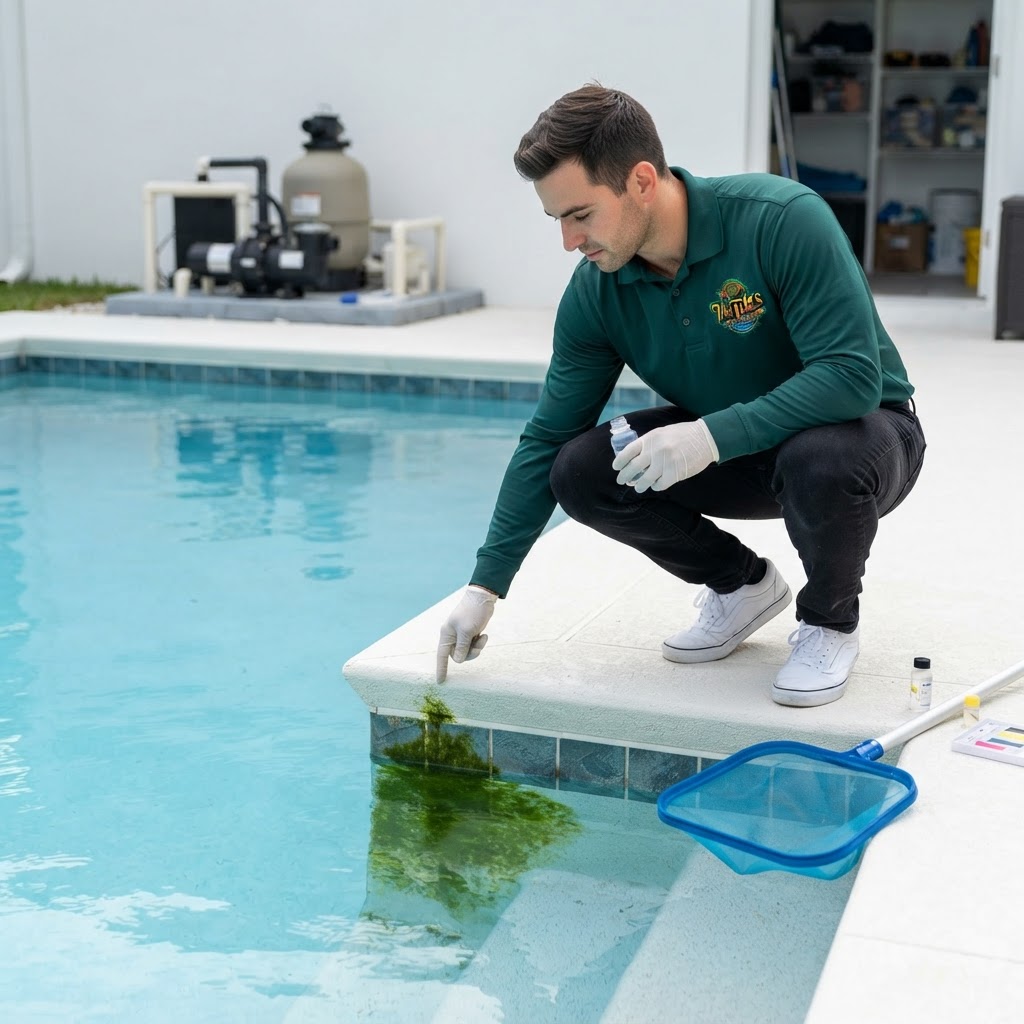
Before starting, it is important to distinguish between algae and metal staining. Algae-infested water is usually cloudy, green, and the pool walls will feel slick or slimy [9]. If your water turned green immediately after adding chemicals or fresh fill water but remains clear and non-slimy, you may be dealing with metals, which require a sequestrant rather than a shock treatment [9].
Tools and Supplies Needed
- Stiff-bristle pool brush: Essential for scrubbing algae off surfaces [4, 8].
- Leaf net or skimmer: To remove organic debris [10].
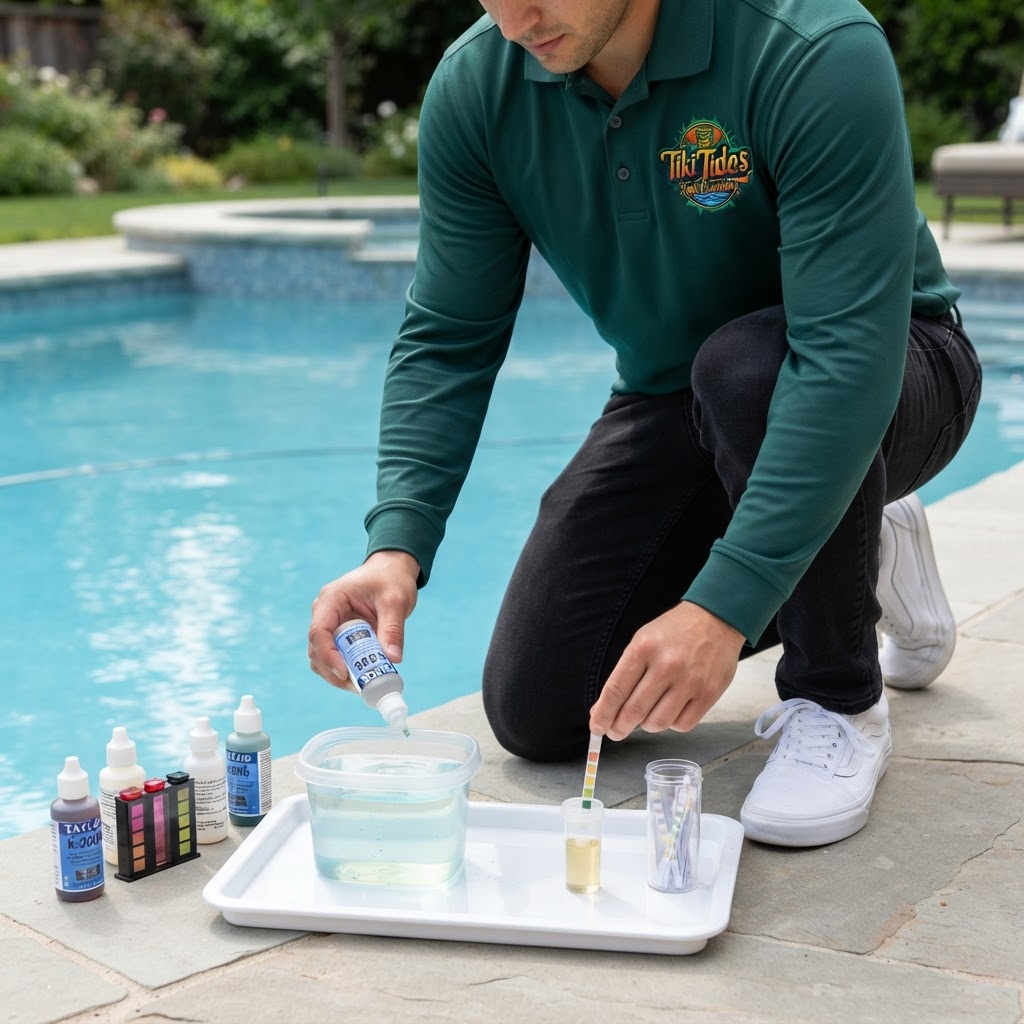
- Water testing kit: Pool Water Testing: Test Strips vs. Liquid Test Kits for accuracy.
- Pool shock: Calcium hypochlorite is often recommended for green water [3, 10].
- Muriatic acid or pH decreaser: To balance pH levels [10].
Step-by-Step Restoration Guide
- Test and Balance: Before adding shock, test your water. Aim for a pH between 7.2–7.8 and ensure your alkalinity is between 80–120 ppm [2, 4]. Proper balance ensures your chlorine works efficiently [8].
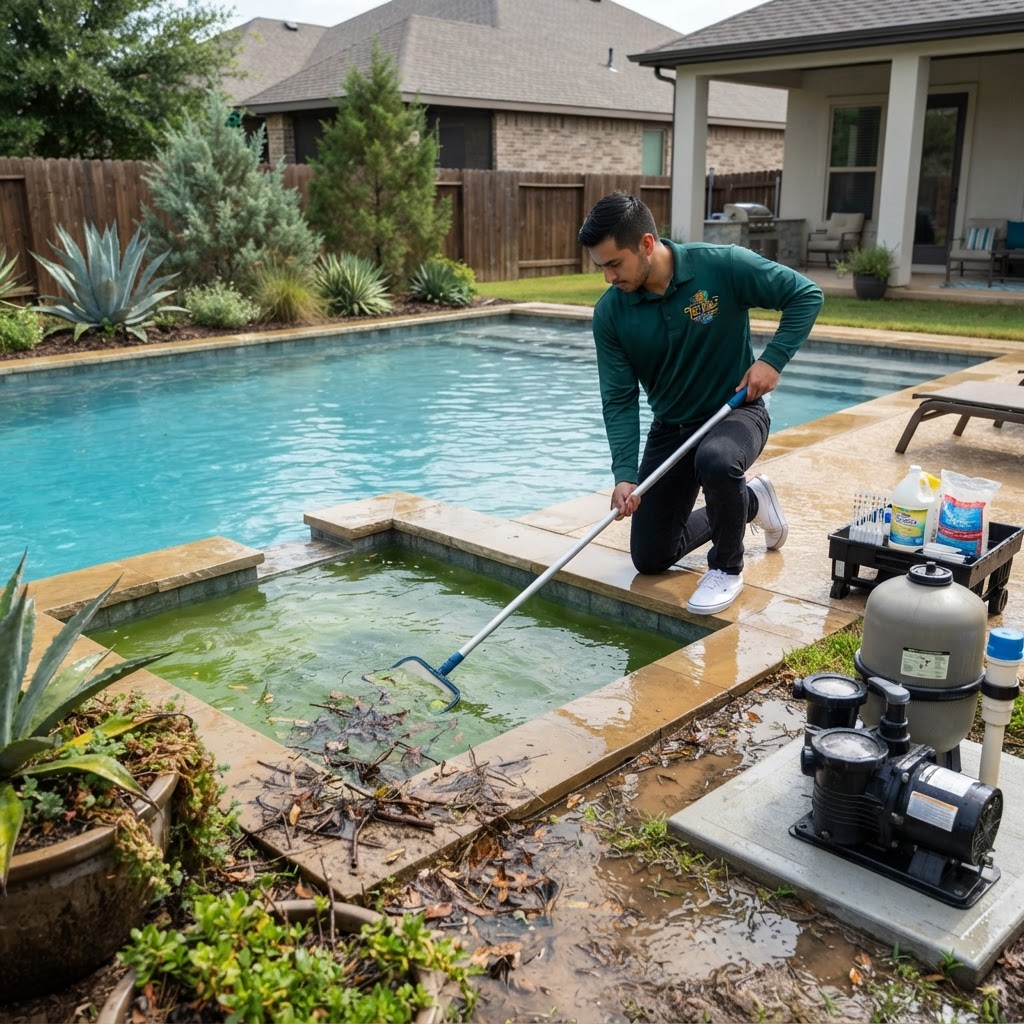
- Remove Debris: Use a leaf net to remove as much organic matter as possible. Decaying leaves provide food for algae [10].
- Scrub Surfaces: Use a stiff brush to scrub the walls, floor, and steps. This breaks the algae's protective layer and puts it into suspension, making it easier for the chlorine to kill [4, 8].
- Shock the Pool: Apply a high dose of chlorine shock. For severe green pools, you may need to double or triple the normal dose [4]. Always add shock at dusk to prevent UV rays from burning off the chlorine too quickly [4].
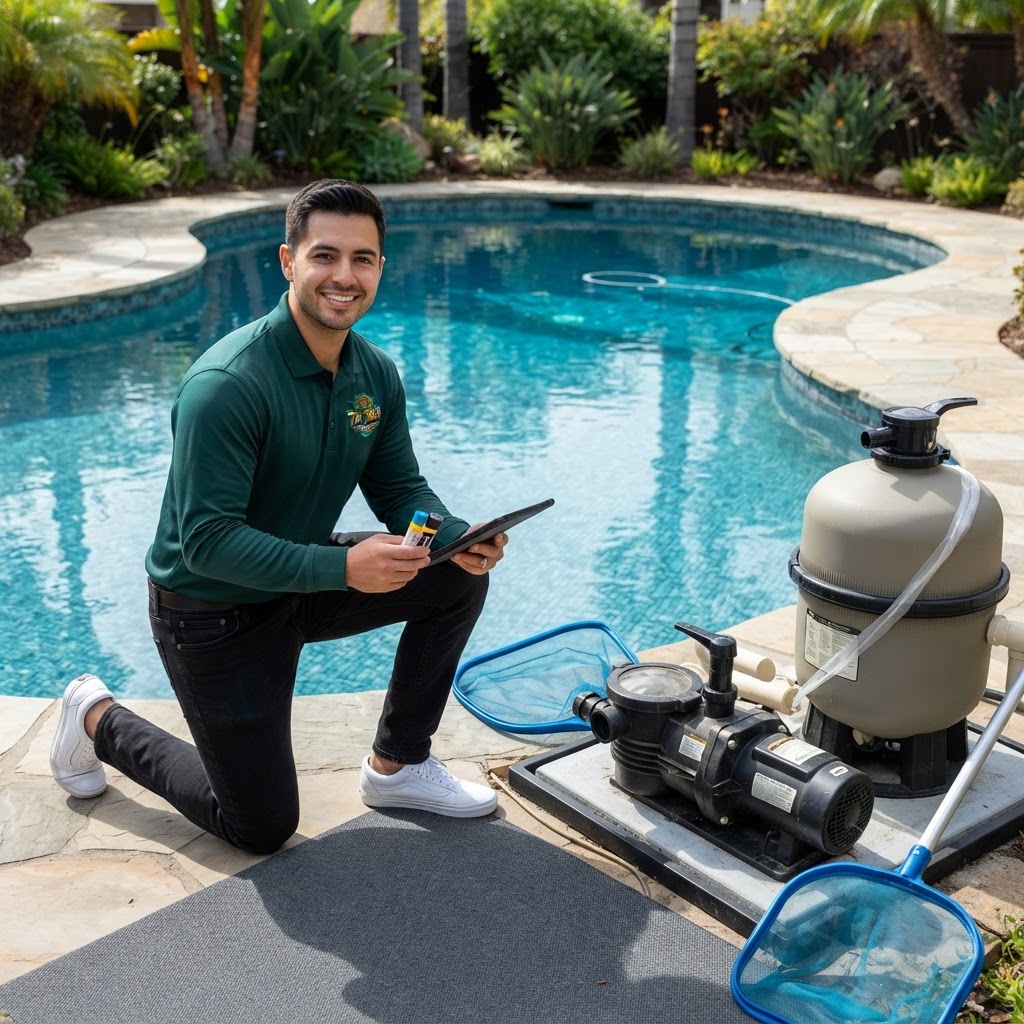
- Continuous Filtration: Run your pump 24/7 until the water clears. Monitor your filter pressure and backwash or clean the cartridges as needed [4, 6].
Pro Tip: Never add shock or algaecide through the skimmer basket. Always broadcast it evenly around the pool, starting at the deep end, to prevent damage to your plumbing and equipment [3, 5].
Safety Notes
Handling pool chemicals requires caution. Always wear eye protection and gloves when handling muriatic acid or concentrated chlorine [10]. Never mix different chemicals together in a bucket, as this can cause dangerous reactions [5]. Ensure your pool area is well-ventilated and keep children and pets away during the treatment process.
When to Call a Professional
While many algae issues can be handled by the homeowner, you should contact a professional if:
- The pool remains green after 7 days of consistent treatment [6].
- You suspect a major equipment failure, such as a broken pump or a filter that is no longer catching debris [2].
- The water is so dark you cannot see the bottom, which poses a significant safety risk for anyone attempting to clean it [2].
For more information on preventing future outbreaks, check out our guide on Why Does My Pool Have Algae? Expert Guide to Prevention and Treatment.
Summary
Clearing a green pool is a test of patience and chemistry. By following a structured approach—testing, scrubbing, shocking, and filtering—you can restore your pool to a safe, swimmable condition. Remember that consistency is key; keep your chlorine between 1.0–3.0 ppm and your CYA between 30–50 ppm to prevent the algae from returning.
Related Reading
- Why Does My Pool Have Algae? Expert Guide to Prevention and Treatment
- Pool Water Testing: Test Strips vs. Liquid Test Kits
- Phosphates in Pool Water: The Hidden Algae Fuel
- Foamy Pool Water: Causes, Solutions, and How to Get Your Clarity Back
- Pink Algae and Pool Slime: How to Identify and Remove It Fast