Why Texas Pools Turn Green After Rain
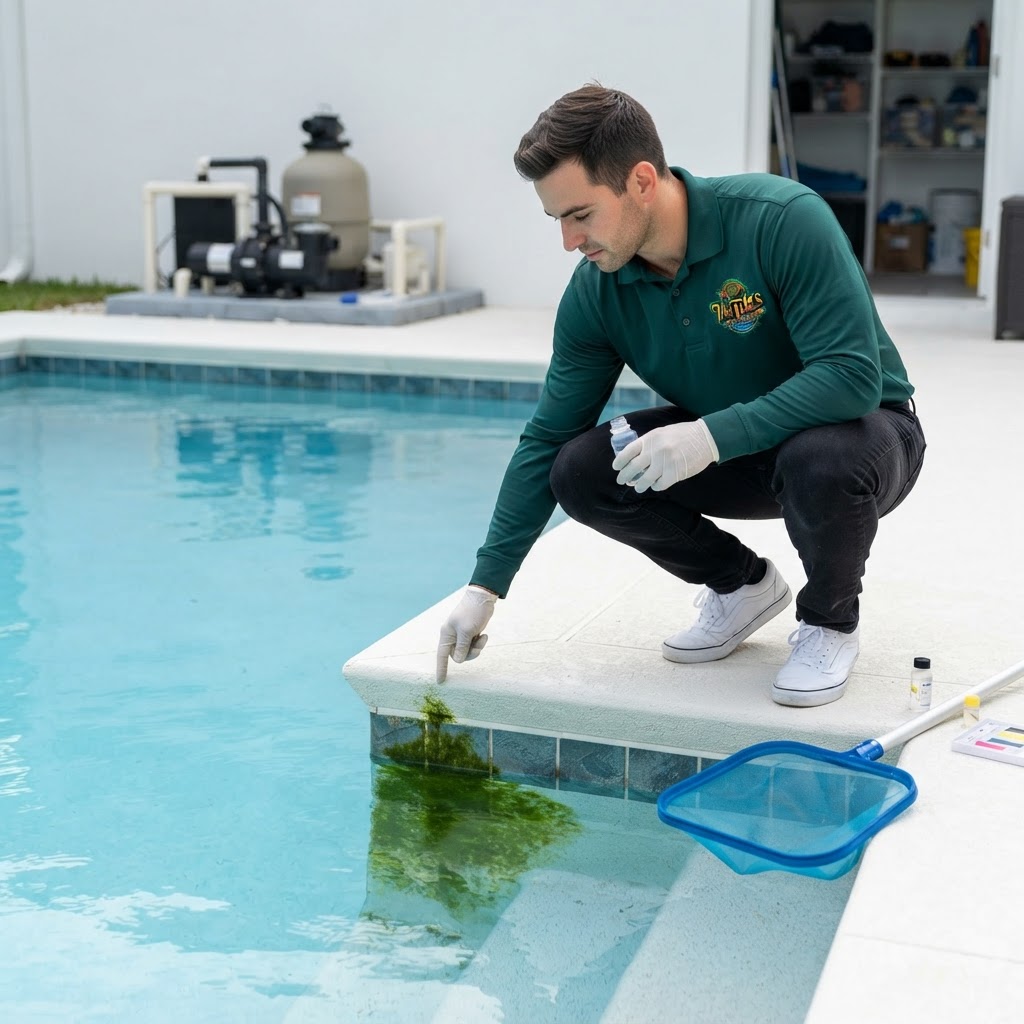
If you have ever walked out to your backyard after a heavy Texas storm only to find your crystal-clear water has turned a murky, swampy green, you are not alone. In our climate, a pool can shift from pristine to problematic in as little as 24 to 48 hours. Understanding why this happens is the first step toward preventing it and keeping your water safe for swimming.
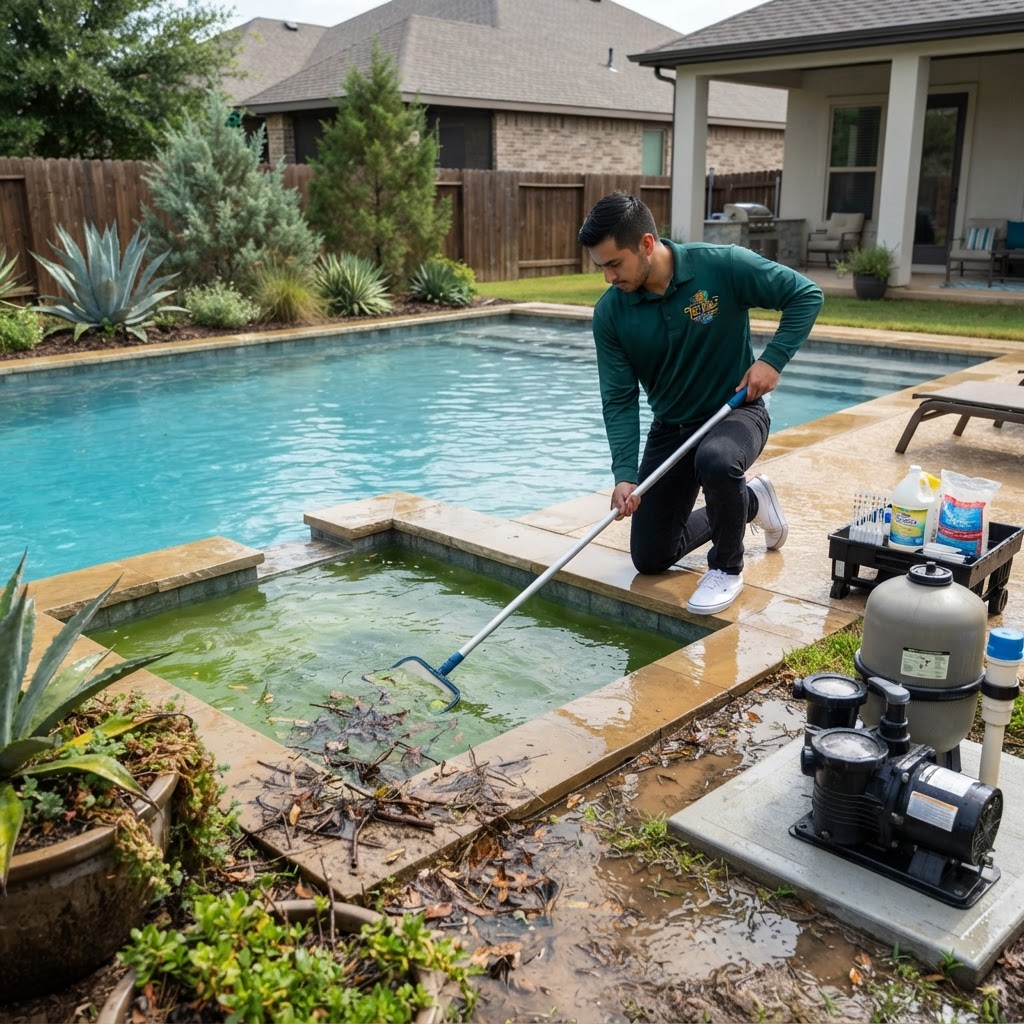
Rainwater is rarely just pure H2O. As it falls, it collects dust, pollen, and organic debris from the atmosphere. Once it hits your deck, it washes fertilizers, soil, and lawn clippings directly into your pool. This influx of organic material acts as a buffet for algae spores, which are naturally present in the environment. When your sanitizer levels are already stressed by the Texas heat, this sudden nutrient load gives algae the perfect opening to bloom.
The Science of the Post-Rain Bloom
An algae bloom after a storm is usually the result of a "perfect storm" of chemical imbalances. When heavy rain enters your pool, it triggers three primary issues:
- Dilution: Rainwater dilutes your existing chemical levels, often pushing your Free Chlorine below the CDC-recommended 1.0–3.0 ppm range.
- pH and Alkalinity Shifts: Rainwater is naturally acidic (pH 5.5–6.0). A heavy downpour can quickly drop your pool's pH below the ideal 7.2–7.8 range, making your chlorine significantly less effective at killing bacteria and algae.
- Nutrient Loading: Runoff introduces phosphates, which serve as a primary food source for algae. You can learn more about managing these levels in our guide on Phosphates in Pool Water: The Hidden Algae Fuel.
Steps to Restore Your Pool
If your pool has already turned green, don't panic. Follow this systematic approach to get back to blue:
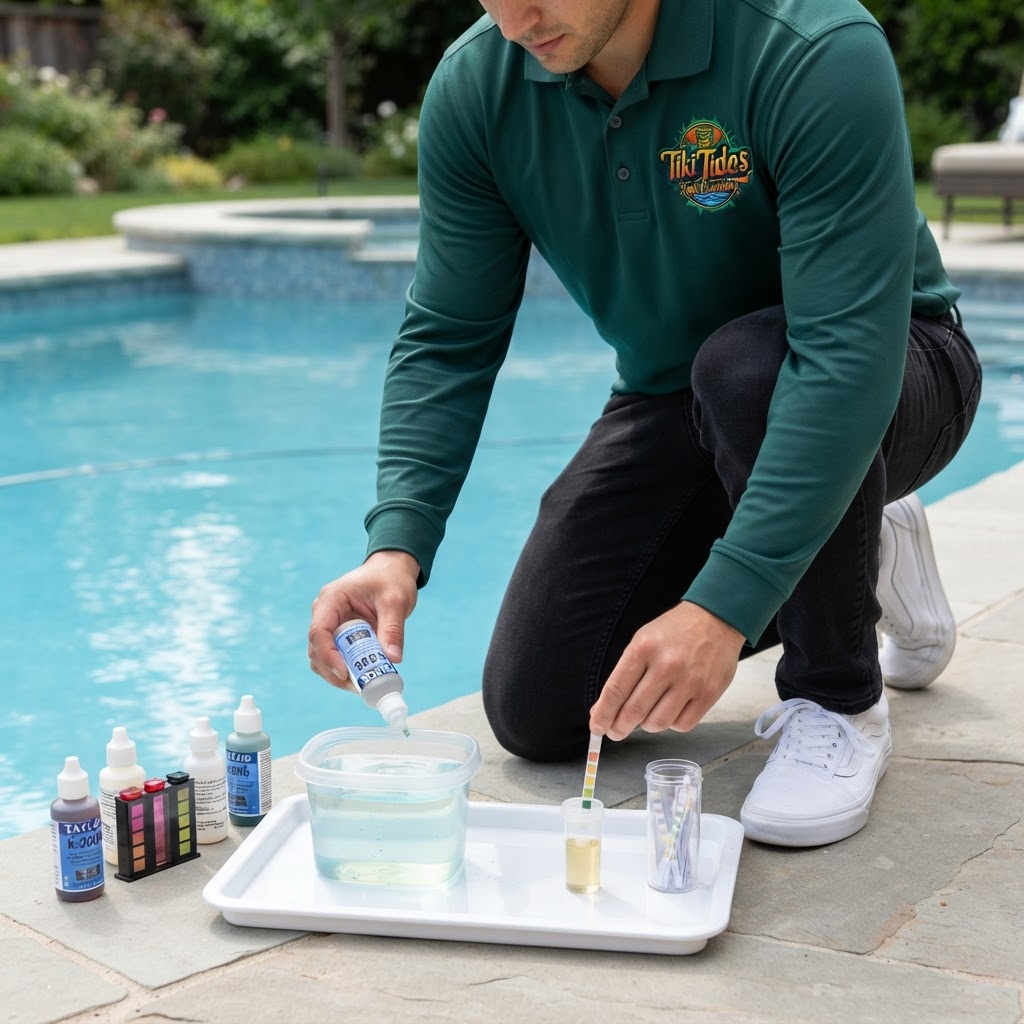
- Test Your Water: Use a reliable testing method to see exactly where your levels stand. For the most accurate results, we recommend using a liquid test kit rather than strips. See our comparison in Pool Water Testing: Test Strips vs. Liquid Test Kits.
- Balance the Basics: Before shocking, ensure your pH is between 7.2 and 7.8 and your Total Alkalinity is between 80–120 ppm. Chlorine cannot do its job if the pH is too high or too low.
- Shock the Pool: You will need to perform a heavy oxidation treatment to kill the active algae. For detailed instructions on this process, refer to What Is a Green-to-Clean Pool Treatment? Expert Guide to Clearing Algae.
- Brush and Filter: Brush the walls and floor to dislodge algae, then run your pump 24/7 until the water clears.
Pro Tip: After a heavy rain, don't wait for the water to turn green. Test your chemistry immediately. If your chlorine has dropped, adding a maintenance dose of sanitizer early can prevent an algae bloom before it starts.
Safety Notes
Always handle pool chemicals with extreme caution. Never mix different types of chlorine or chemicals in the same bucket, as this can cause dangerous reactions. Ensure your pump is running when adding chemicals to ensure proper distribution, and always keep chemicals stored in a cool, dry place out of reach of children and pets. Always wear protective eyewear and gloves when handling concentrated sanitizers.
When to Call a Professional
While many algae issues can be managed by the homeowner, you should contact a professional if:
- The water remains cloudy or green after 48 hours of consistent treatment.
- You suspect your filtration system is damaged or clogged with debris.
- You are struggling to maintain chemical balance despite following standard procedures.
- You notice staining on the pool surfaces that does not brush away, which may indicate metal issues rather than algae.
Summary
Texas weather is tough on pools, but with regular testing and proactive maintenance, you can keep your water clear year-round. Remember that rain is a major disruptor of pool chemistry; by testing your water after every significant storm, you can catch imbalances early and keep your pool safe, clean, and ready for a swim.
Related Reading
- What Is a Green-to-Clean Pool Treatment? Expert Guide to Clearing Algae
- Why Does My Pool Have Algae? Expert Guide to Prevention and Treatment
- Pool Water Testing: Test Strips vs. Liquid Test Kits
- Phosphates in Pool Water: The Hidden Algae Fuel
- Foamy Pool Water: Causes, Solutions, and How to Get Your Clarity Back