There is nothing quite as disheartening for a pool owner as pulling back the cover to find a murky, pea-soup green mess where a sparkling blue oasis should be. Green algae blooms can happen with startling speed—often overnight—transforming your backyard retreat into a breeding ground for bacteria and mosquitoes. Whether it was triggered by a heatwave, a heavy rainstorm, or a simple lapse in your chemical routine, the "Green Monster" is a problem that requires immediate and decisive action.
At Tiki Tides Pools, we know that a green pool is more than just an eyesore; it is a sign that your water is not safe for swimming. By the time you see visible green water, the algae bloom is already mature, meaning the chlorine levels have likely been inadequate for several days. To fix this, you need more than just a single bag of shock. You need a systematic approach to kill the algae at its source and filter it out of your system. For a deeper look at the origins of this issue, check out our guide on Why Is My Pool Water Green? 7 Common Causes and Fixes.
In this comprehensive guide, we will walk you through the industry-standard SLAM method (Shock, Level, And Maintain) to clear your pool fast while adhering to the highest safety and chemical standards.
Quick Reference: The Green Pool Checklist
Before you begin, ensure you have the following tools and supplies on hand:
- Test Kit: A high-quality DPD-FAS liquid test kit (like the Taylor K-2006) is essential. Test strips are often inaccurate at the high chlorine levels required for treatment.
- Sanitizer: Liquid chlorine (sodium hypochlorite) is preferred as it does not add Cyanuric Acid or Calcium to your water.
- Balancing Chemicals: Muriatic acid or dry acid to lower pH, and baking soda to raise alkalinity.
- Cleaning Tools: A heavy-duty nylon pool brush and a telescopic pole.
- Safety Gear: Chemical-resistant gloves and safety goggles.
Step 1: Preparation and Debris Removal
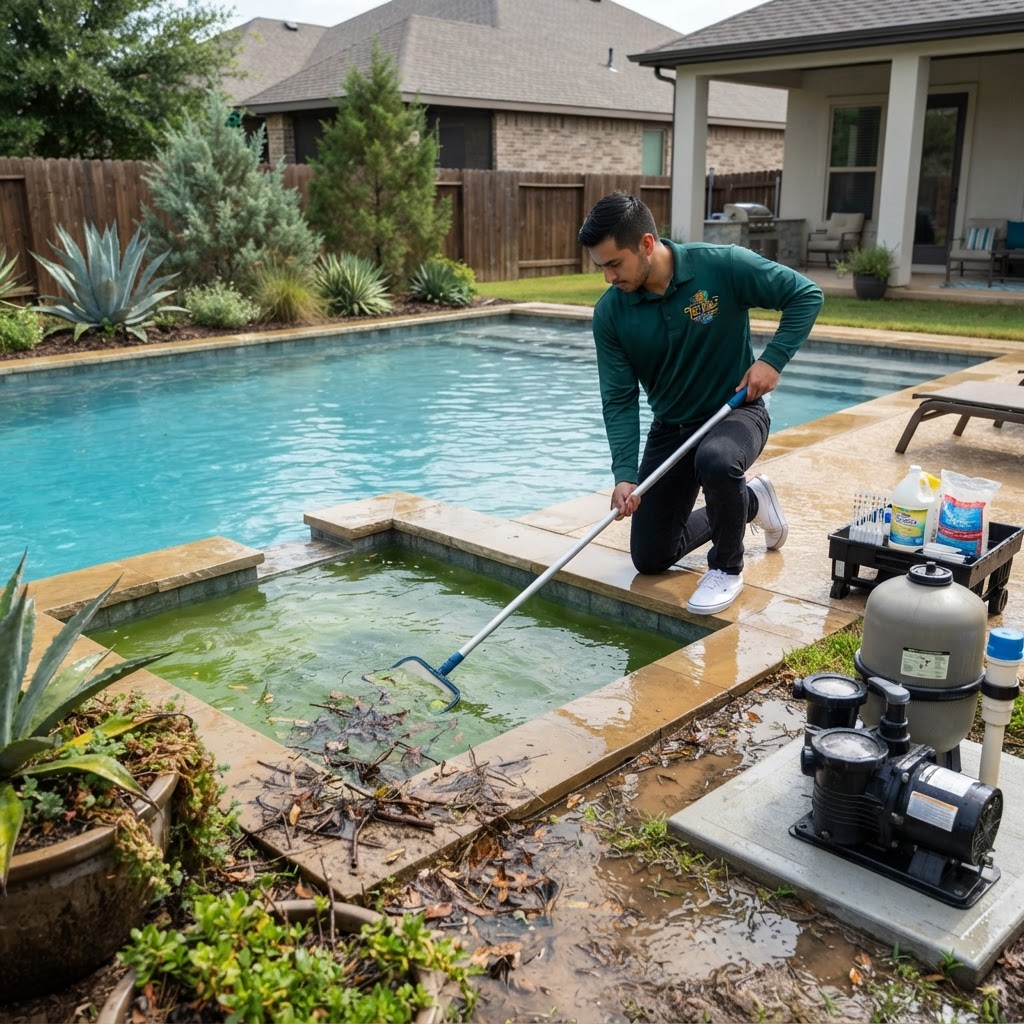
Before adding a single drop of chlorine, you must physically prepare the pool. Algae thrives on organic matter, so removing leaves, twigs, and dead bugs is critical. Use a leaf rake to scoop out as much debris as possible from the bottom. If you cannot see the bottom, move the rake slowly to avoid stirring up the sediment.
Next, check your filtration system. Clean or backwash your filter to ensure maximum flow. A clogged filter will significantly slow down the clearing process. Ensure your pump is set to run 24/7 throughout the entire treatment process.
Step 2: Balance the Water Chemistry
Chlorine is your primary weapon against algae, but its effectiveness is heavily dependent on your water's pH level. According to CDC standards, the ideal pH for a swimming pool is between 7.2 and 7.8. However, when fighting algae, you should aim for the lower end of that range (7.2–7.4). At a pH of 8.0, chlorine is only about 25-30% as effective as it is at 7.2.
Target Chemical Ranges:
- Free Chlorine (FC): 1.0–3.0 ppm (Standard maintenance range)
- pH: 7.2–7.4 (For treatment phase)
- Total Alkalinity: 80–120 ppm
- Cyanuric Acid (CYA): 30–50 ppm
- Calcium Hardness: 200–400 ppm
Pro Tip: Check your Cyanuric Acid (CYA) level before shocking. If your CYA is above 70 ppm, your chlorine will be "locked" and ineffective. You may need to partially drain and refill the pool to bring CYA back to the 30–50 ppm range before the algae treatment will work.
Step 3: The SLAM Method (Shock, Level, And Maintain)
Most pool owners make the mistake of "shocking" the pool once and waiting. To clear a green pool fast, you must follow the SLAM method. This involves raising your Free Chlorine to a "shock level" (typically 12–20 ppm depending on your CYA) and maintaining that level until the algae is dead.
- Calculate the Dose: Determine how much liquid chlorine is needed to reach your shock level based on your pool's gallonage.
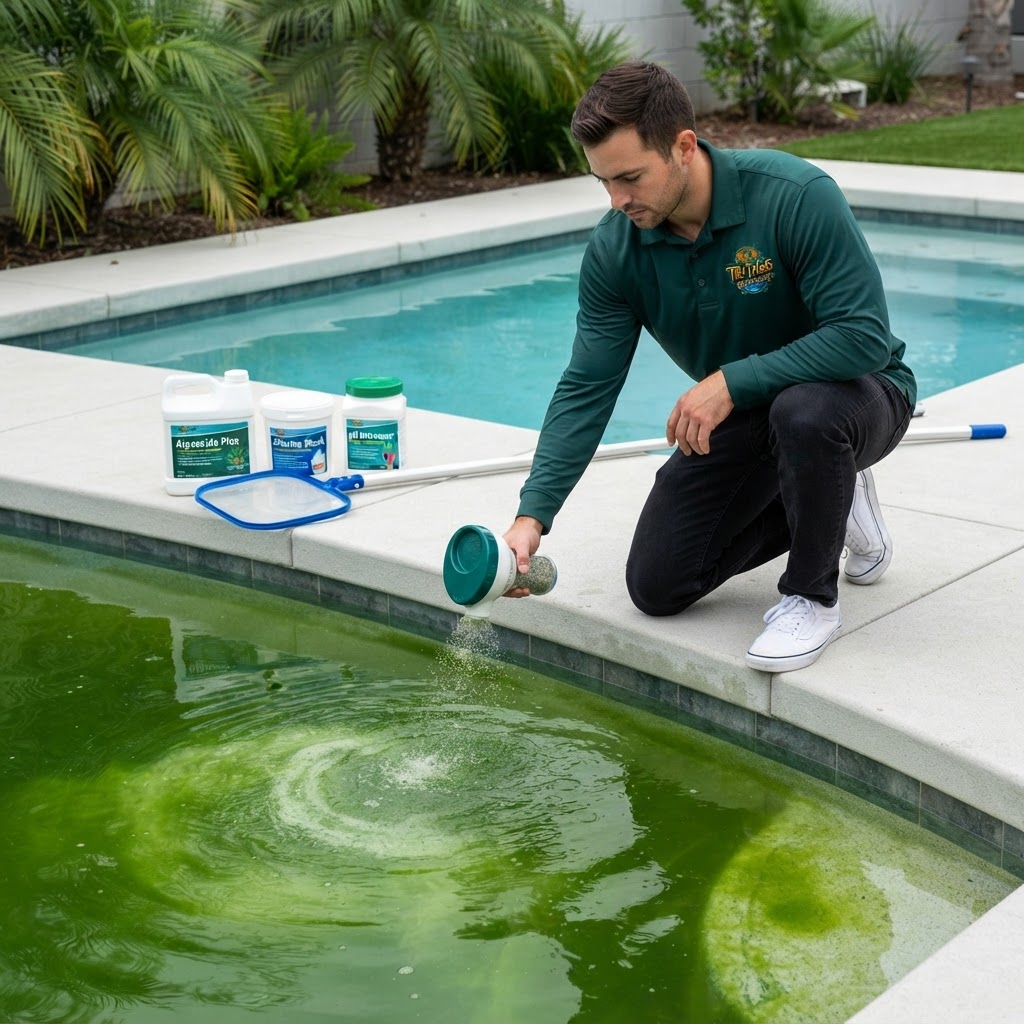
- Add Chlorine: Pour the liquid chlorine slowly in front of a return jet while the pump is running.
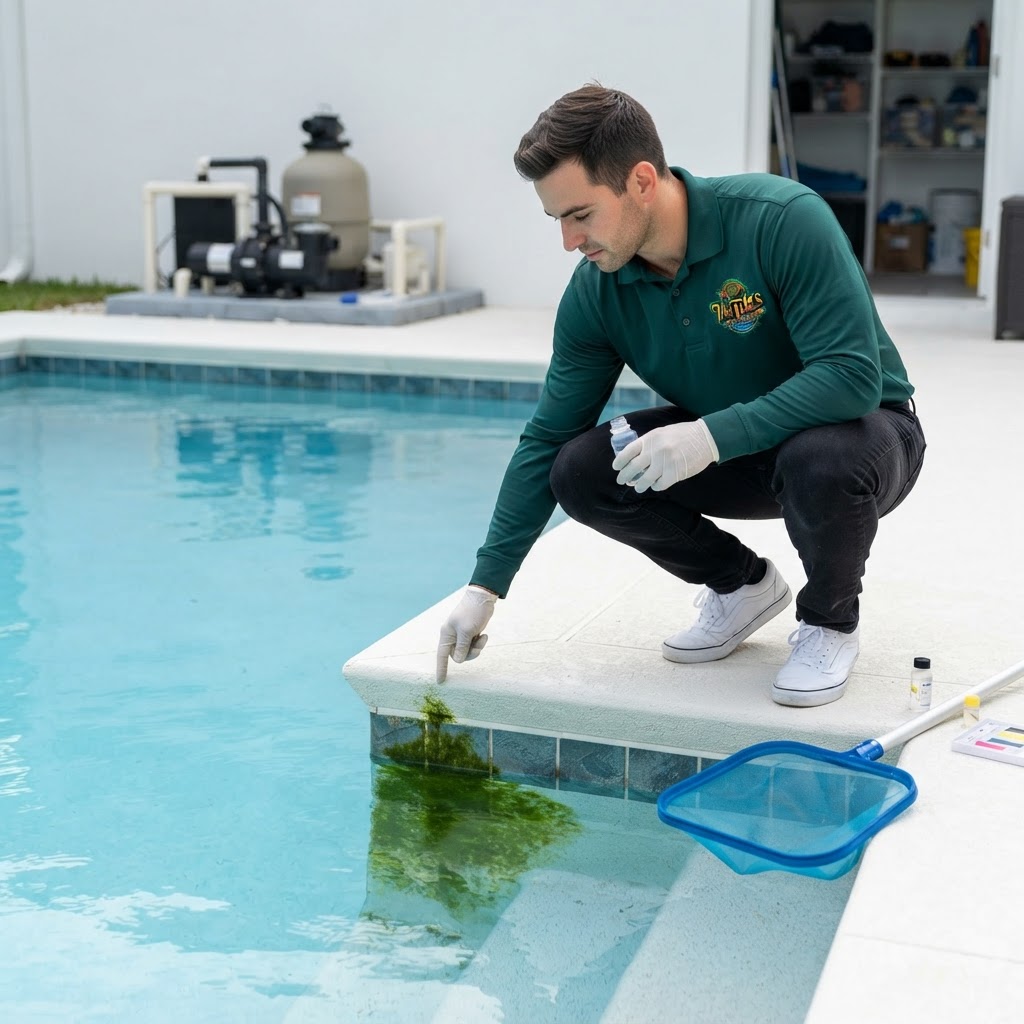
- Brush Aggressively: This is the most important physical step. Algae creates a protective biofilm that prevents chlorine from reaching the core of the organism. Use your pool brush to scrub the walls, floor, steps, and behind ladders. You must break this film to let the sanitizer work.
- Test and Re-Dose: Test your water every 4–6 hours. If the Free Chlorine has dropped below the shock level, add more chlorine to bring it back up. You must keep the pressure on the algae until it is completely gone.
Step 4: Filtration and Final Cleanup
As the chlorine kills the algae, your water will turn from green to a cloudy, milky blue. This is a good sign—it means the algae is dead. Now, your filter must do the heavy lifting.
- Run the Pump: Keep the pump running 24/7.
- Backwash Frequently: Monitor your filter's pressure gauge. When it rises 8–10 PSI above the clean starting pressure, backwash or clean the cartridges to remove the dead algae.
- Vacuum to Waste: If you have a sand or DE filter with a multiport valve, vacuum the dead algae sediment directly to "waste" to bypass the filter and speed up the process.
Safety Notes
Handling pool chemicals requires extreme caution. Always follow these safety guidelines:
- Never Mix Chemicals: Never mix different types of chlorine (e.g., mixing liquid chlorine with tablets) as this can cause explosions or toxic gas.
- Add Chemical to Water: If pre-dissolving chemicals, always add the chemical to a bucket of water, never water to the chemical.
- PPE: Wear eye protection and gloves when handling muriatic acid or concentrated chlorine.
- Storage: Store chemicals in a cool, dry, well-ventilated area out of reach of children and pets.
When to Call a Professional
While most green pools can be handled by a diligent homeowner, some situations require expert intervention. You should call Tiki Tides Pools if:
- The water is dark brown or black (indicating severe organic load or metal issues).
- You cannot see the bottom of the shallow end after 72 hours of continuous treatment.
- Your filtration system is leaking or making unusual noises.
- You are uncomfortable handling high volumes of hazardous chemicals.
Summary
Clearing a green pool fast is a matter of chemistry and persistence. By balancing your pH to 7.2, aggressively brushing the surfaces, and maintaining a consistent shock level through the SLAM method, you can transform a swamp back into a sanctuary. Remember to keep your Free Chlorine between 1.0–3.0 ppm once the pool is clear to prevent the algae from returning. With the right approach, you'll be back in the water in no time!