When you dive into your swimming pool, you expect the water to be crystal clear. While chemical balance—maintaining a Free Chlorine level of 1.0–3.0 ppm and a pH of 7.2–7.8—is vital for sanitation, your pool filter is responsible for the physical clarity of the water. Think of your filter as the kidneys of your pool; it constantly strains out dirt, debris, and microscopic particles that would otherwise turn your water cloudy or green.
Choosing the right filter system is one of the most important decisions a pool owner can make. The type of filter you choose affects your electricity bill, your water consumption, and how much time you spend on weekend maintenance. In this guide, we will compare the three industry standards: Sand, Cartridge, and Diatomaceous Earth (DE) filters, so you can decide which is the best fit for your lifestyle and budget.
To understand how these filters fit into your overall system, it helps to know How Does a Pool Pump Work? The Heart of Your Swimming Pool Explained, as the pump and filter must be properly sized to work in tandem.
1. Sand Filters: The Low-Maintenance Workhorse
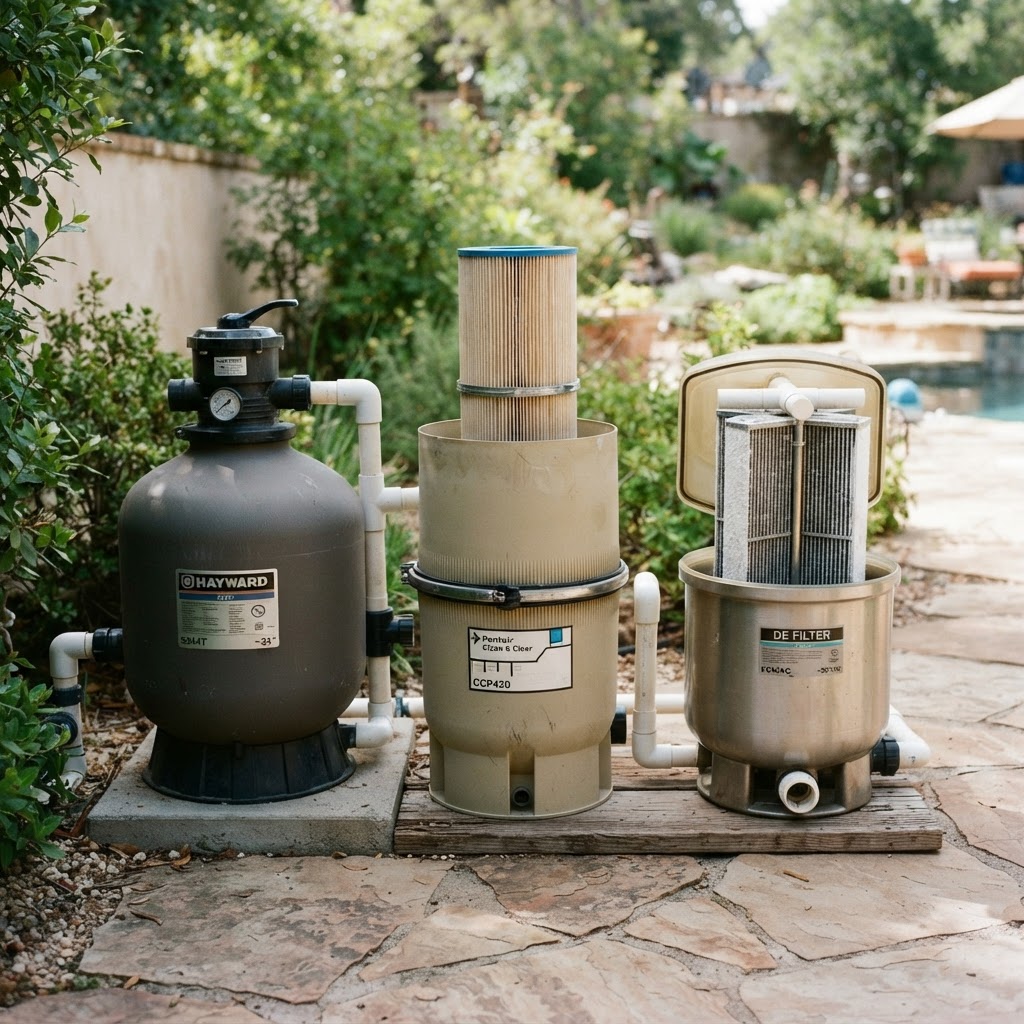
Sand filters are the oldest and most common form of pool filtration. They consist of a large tank filled with #20 silica sand. As water is pushed through the tank, the sharp edges of the sand grains trap debris.
How It Works
Water enters the top of the tank and trickles down through the sand bed. The dirt and debris get stuck in the top few inches of sand, and the clean water exits through "laterals" at the bottom to return to the pool. Over time, as the sand traps more dirt, the pressure inside the tank rises.
- Filtration Level: 20–40 microns (a human hair is about 50 microns).
- Lifespan: The sand itself usually lasts 5–7 years before the edges wear down and it needs replacement.
Pros and Cons
- Pros: Easiest to maintain; lowest upfront cost; sand is inexpensive.
- Cons: Least effective at filtering very fine particles; uses a lot of water during "backwashing."
2. Cartridge Filters: The Eco-Friendly Middle Ground
Cartridge filters have exploded in popularity recently, especially in drought-prone areas, because they do not require backwashing. They use a pleated polyester element (the cartridge) to screen out contaminants.
How It Works
Water passes through the fibrous surface of the cartridge. Because the surface area of the pleats is so large, these filters can operate at lower pressures than sand filters, putting less strain on your pump and saving electricity.
- Filtration Level: 10–15 microns.
- Lifespan: Cartridges typically last 2–5 years depending on how well they are cleaned.
Pros and Cons
- Pros: Better filtration than sand; no backwashing (saves water and chemicals); works well with variable speed pumps.
- Cons: Higher upfront cost for replacement cartridges; cleaning the cartridges manually can be time-consuming and messy.
3. DE (Diatomaceous Earth) Filters: The Gold Standard for Clarity
If you want "bottled water" clarity, DE is the way to go. These filters use a powder made from the fossilized remains of tiny aquatic organisms called diatoms. This powder acts like a microscopic sponge.
How It Works
Inside the tank are several "grids" covered in a fabric mesh. You add DE powder through the pool skimmer, which then coats the grids. As water passes through the DE-coated grids, it traps even the smallest particles.
- Filtration Level: 3–5 microns (the finest filtration available).
- Lifespan: The grids can last 7–10 years, but the DE powder must be replenished every time you clean the filter.
Pros and Cons
- Pros: Unmatched water clarity; traps algae spores and very fine dust.
- Cons: Most expensive upfront; high maintenance; DE powder can be hazardous if inhaled; many municipalities have restrictions on where you can dump DE waste.
Quick Reference Comparison
| Feature | Sand Filter | Cartridge Filter | DE Filter | | :--- | :--- | :--- | :--- | | Filtration Quality | Good (20-40 microns) | Better (10-15 microns) | Best (3-5 microns) | | Initial Cost | Lowest | Moderate | Highest | | Maintenance Task | Backwash weekly | Hose off 2-4x per year | Backwash & Re-coat | | Water Waste | High | None | Moderate | | Ease of Use | Very Easy | Moderate | Complex |
Pro Tip: No matter which filter you choose, always watch your pressure gauge. A rise of 8–10 PSI over your "clean" starting pressure indicates it's time to clean or backwash the unit. Ignoring high pressure can lead to cracked internal components or a burnt-out pump motor.
Safety Notes
When working with pool filtration equipment, safety is paramount. High-pressure vessels can be dangerous if handled incorrectly.
- Relieve Pressure: Always turn off the pump and open the manual air relief valve on top of the filter tank before opening any clamps or bolts.
- Chemical Handling: When recharging a DE filter, wear a mask. The silica in DE powder is a respiratory irritant.
- Water Chemistry: Filtration is only half the battle. If your water is cloudy, check your chemical levels first. Ensure Total Alkalinity is 80–120 ppm and Calcium Hardness is 200–400 ppm to prevent scaling or filter clogging.
When to Call a Professional
While routine cleaning is a DIY task for many, some filter issues require a certified technician:
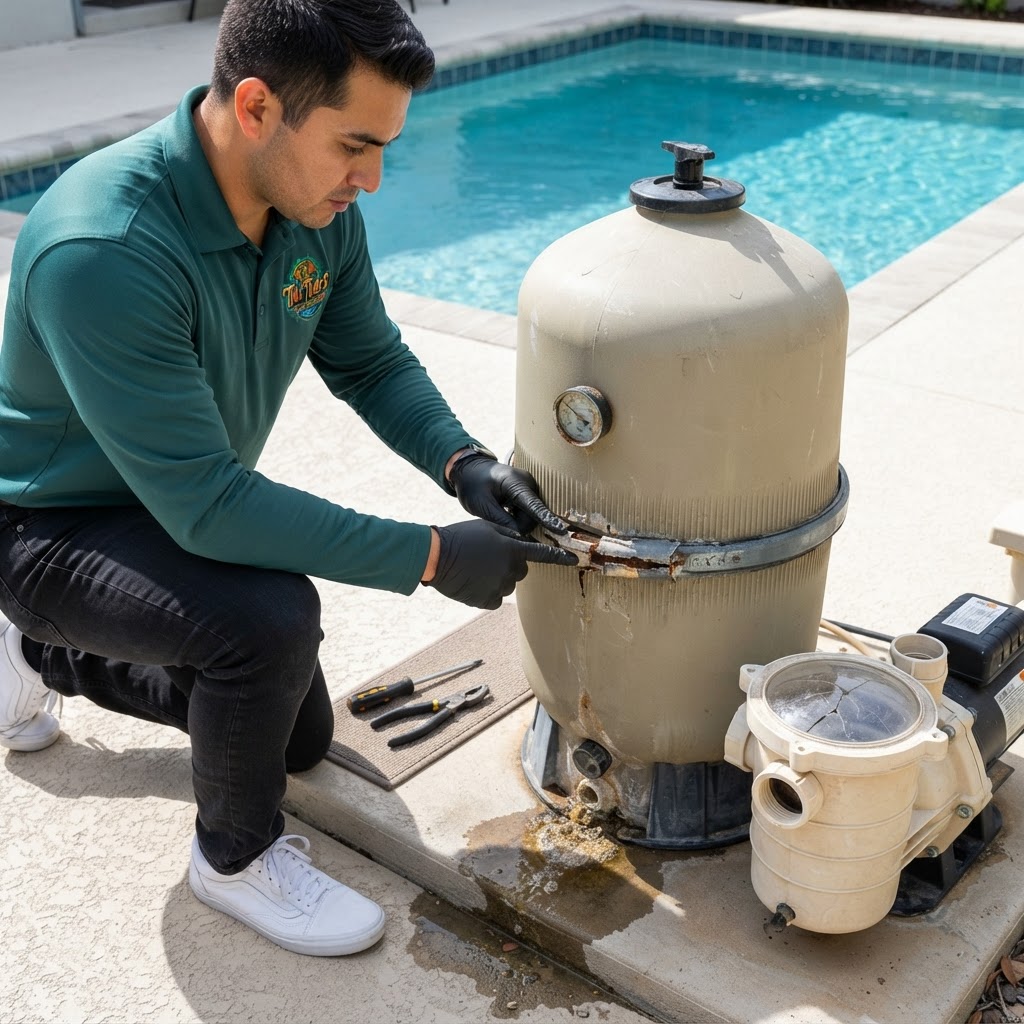
- Cracked Tank: If you see any structural cracks in the filter body, shut the system off immediately. These cannot be repaired and require a full tank replacement.
- Leaking Multiport Valve: If water is constantly leaking out of your backwash line, the internal spider gasket likely needs replacement.
- Sand/DE in the Pool: If you find filter media returning to the pool, you likely have a broken lateral or a torn grid that needs professional repair.
- Persistent Cloudiness: If your chemicals are balanced (CYA at 30–50 ppm) and the filter is clean, but the water remains cloudy, you may have a flow rate or sizing issue.
Summary
Selecting the right pool filter depends on your priorities. If you want the easiest possible maintenance, go with a Sand filter. If you want to save water and energy while achieving great clarity, a Cartridge filter is the modern standard. For the absolute clearest water possible and for those who don't mind a bit of extra work, the DE filter remains the champion of performance.
Keep your filter clean, your pump running efficiently, and your chemistry balanced, and you’ll enjoy a beautiful, healthy swimming environment all season long.