Your pool pump is the heart of your entire filtration system. It is responsible for circulating water, distributing chemicals, and pushing debris through the filter to keep your swimming environment safe and clear. When the pump stops working, your pool quickly becomes a stagnant pond. Without proper circulation, your Free Chlorine levels (which should stay between 1.0–3.0 ppm) will plummet, and algae will begin to bloom within hours, especially in warmer climates.
Troubleshooting a pool pump can feel intimidating, but many common issues are caused by simple mechanical blocks or electrical trips that you can handle yourself. Whether you are dealing with a pump that won't turn on, a motor that hums but doesn't spin, or a system that refuses to prime, this guide will walk you through the professional diagnostic process used by the team at Tiki Tides Pools.
Understanding how your pump operates is the first step toward fixing it. The system draws water from the pool (suction side), passes it through the pump basket, pushes it through the filter (pressure side), and returns it to the pool. If any part of this cycle is interrupted, the whole system fails. Let's break down the most common pool pump problems and their solutions.
Quick Reference: Signs of Pump Trouble
- Total Silence: The pump won't respond to the switch or timer.
- Humming or Buzzing: The motor is receiving power but the internal parts aren't moving.
- Screeching or Grinding: High-pitched metal-on-metal sounds indicating bearing failure.
- Air Bubbles in the Return: Large amounts of air entering the system through a suction-side leak.
- No Water in the Pump Lid: The pump has lost its prime and is running dry.
1. The Pump Won't Turn On (No Power)
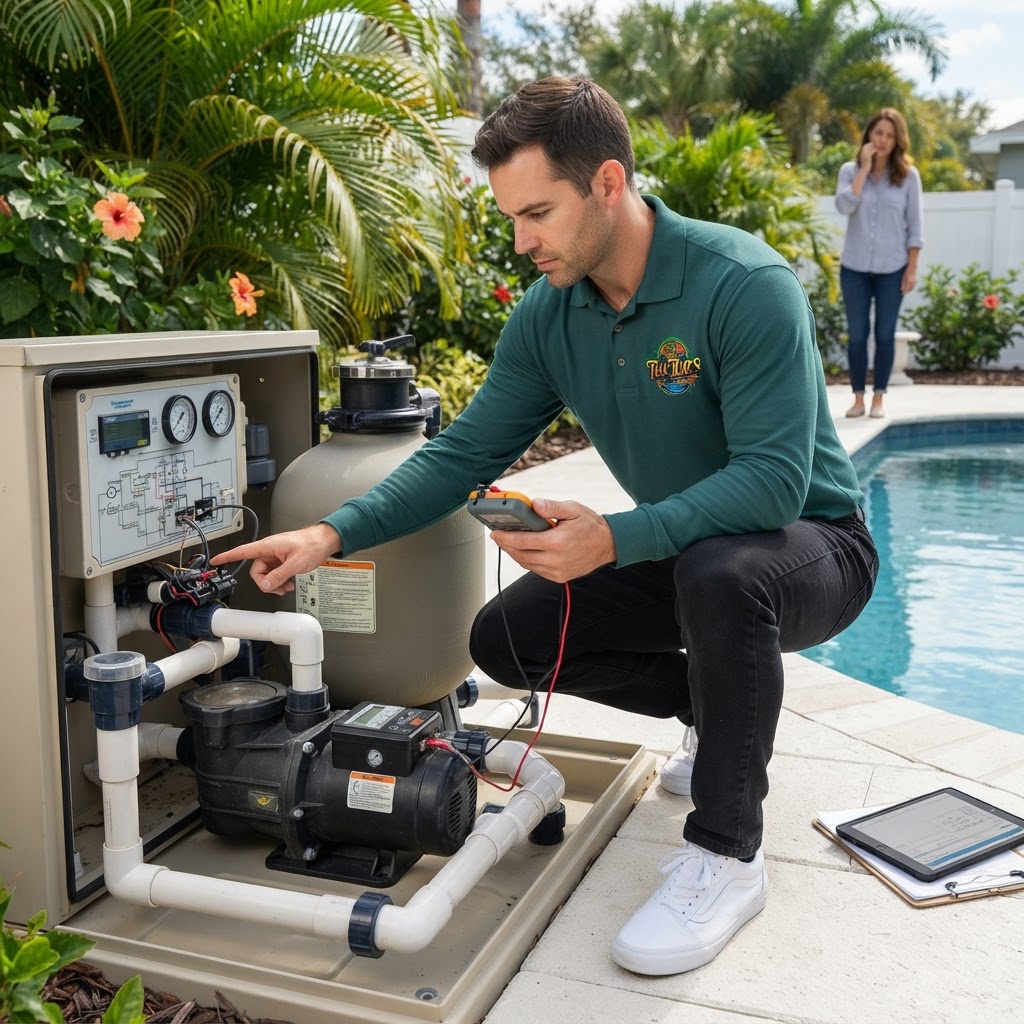
If your pump is completely dead and making no sound at all, the issue is likely electrical. Before you assume the motor is fried, check the following:
- Check the Breaker: Go to your main electrical panel and the sub-panel near the pool. If the breaker has tripped, flip it completely to 'Off' and then back to 'On.'
- Inspect the Timer: Ensure the trippers on your mechanical timer haven't loosened or that your digital controller hasn't encountered a programming error.
- Test the GFCI Outlet: If your pump is plugged into a GFCI outlet, press the 'Reset' button. Moisture is a common cause for these to trip.
- Wiring Connections check: After turning off all power, inspect the wiring at the back of the motor for signs of corrosion or loose leads.
2. The Motor Hums but Won't Start
If you hear a low humming sound coming from the motor, it means power is reaching the unit, but the shaft is unable to spin. This is usually caused by two things: a bad capacitor or a jammed impeller.
- The Capacitor: The capacitor acts like a battery that gives the motor the 'kick' it needs to start. If it is blown (often indicated by a bulging top or leaking fluid), the motor will hum and eventually trip the thermal overload. This part is easily replaced by a professional.
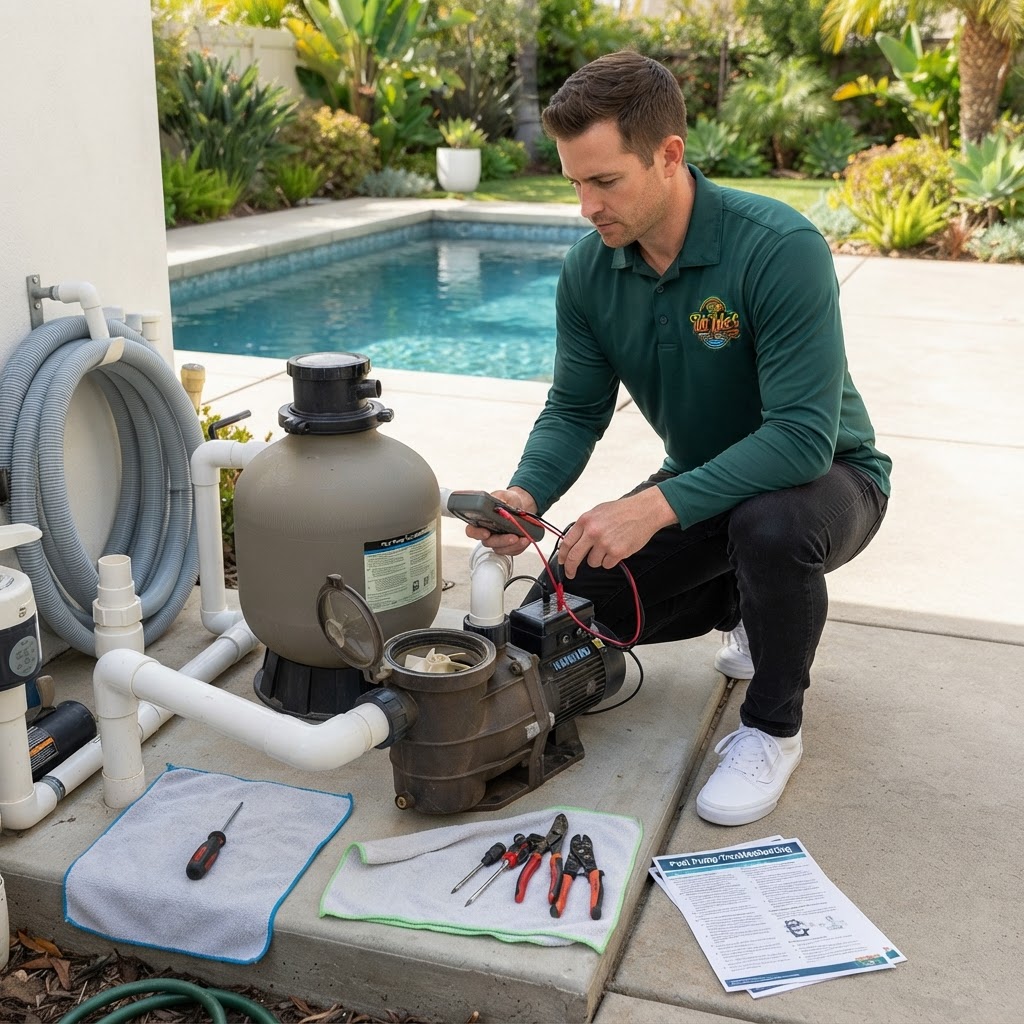
- The Impeller: Debris like small pebbles, pine needles, or twigs can bypass the pump basket and jam the impeller. With the power completely off, you can often reach into the pump housing (through the basket area) and feel if the impeller spins freely. If it's stuck, you may need to disassemble the pump housing to clear the blockage.
Pro Tip: If your pump hums, don't let it sit in that state for more than a few seconds. The motor will overheat quickly. Turn it off immediately to prevent permanent damage to the motor windings.
3. The Pump Isn't Priming (Low Water Flow)
'Priming' is the process of the pump creating enough vacuum to pull water from the pool. If the pump is full of air, it cannot move water. Running a pump 'dry' for too long will melt the internal seals.
- Check Water Level: If the water level in your pool is below the midpoint of the skimmer opening, the pump will suck in air instead of water.
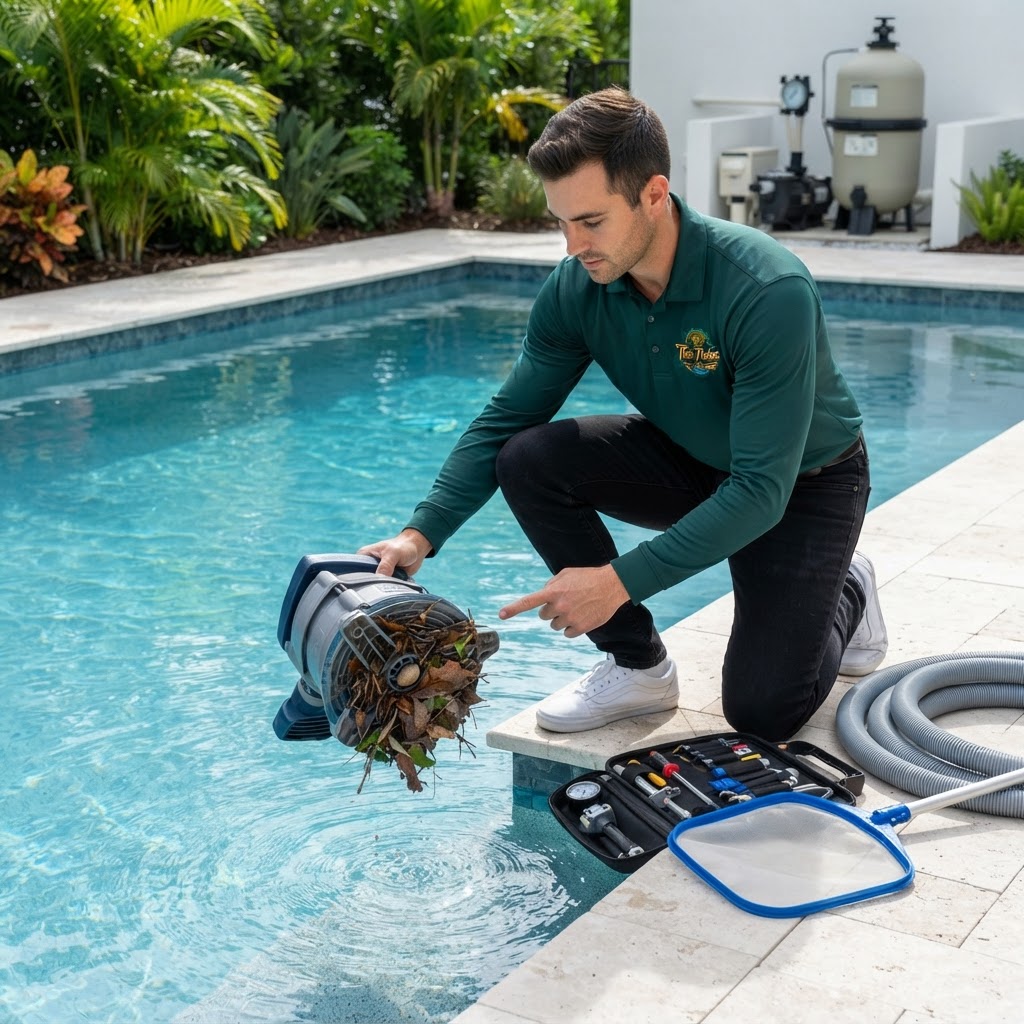
- Clean the Baskets: A clogged skimmer or pump basket will starve the pump of water. Empty them daily.
- Check the Pump Lid O-Ring: This is the most common cause of priming issues. If the large o-ring under the clear pump lid is dry, cracked, or dirty, it will leak air. Clean it and apply a silicone-based lubricant.
- Inspect for Suction Leaks: If you see air bubbles in the pump lid or coming out of the return jets, you have a leak on the suction side. For more help identifying these types of leaks, see our guide on Why Is My Pool Losing Water? The Ultimate Leak Detection Guide.
4. The Pump Is Leaking Water
Water leaking from the bottom of the pump usually indicates a failed mechanical shaft seal. This seal prevents water from entering the motor. If you see a steady drip where the motor meets the plastic pump housing (the 'wet end'), the seal must be replaced immediately. Allowing water to sit in this area will lead to bearing failure and a destroyed motor.
5. The Motor Is Overheating and Shutting Off
Most pool motors have a thermal overload switch that shuts the power off if the internal temperature gets too high. This prevents the motor from catching fire.
- Lack of Airflow: Ensure there are no weeds, leaves, or covers blocking the vents on the motor.
- High Ambient Temperature: In extreme heat, try running your pump during the cooler night hours.
- Incorrect Voltage: If the motor is wired for 230v but receiving 115v (or vice versa), it will overheat and fail.
Safety Notes
Working with pool equipment involves the combination of water and high-voltage electricity, which can be lethal. Always follow these safety protocols:
- Turn off power at the breaker before opening the motor canopy or touching any wiring.
- Never run the pump dry. If the pump hasn't moved water within 2 minutes of starting, turn it off and re-prime it manually by filling the basket with a garden hose.
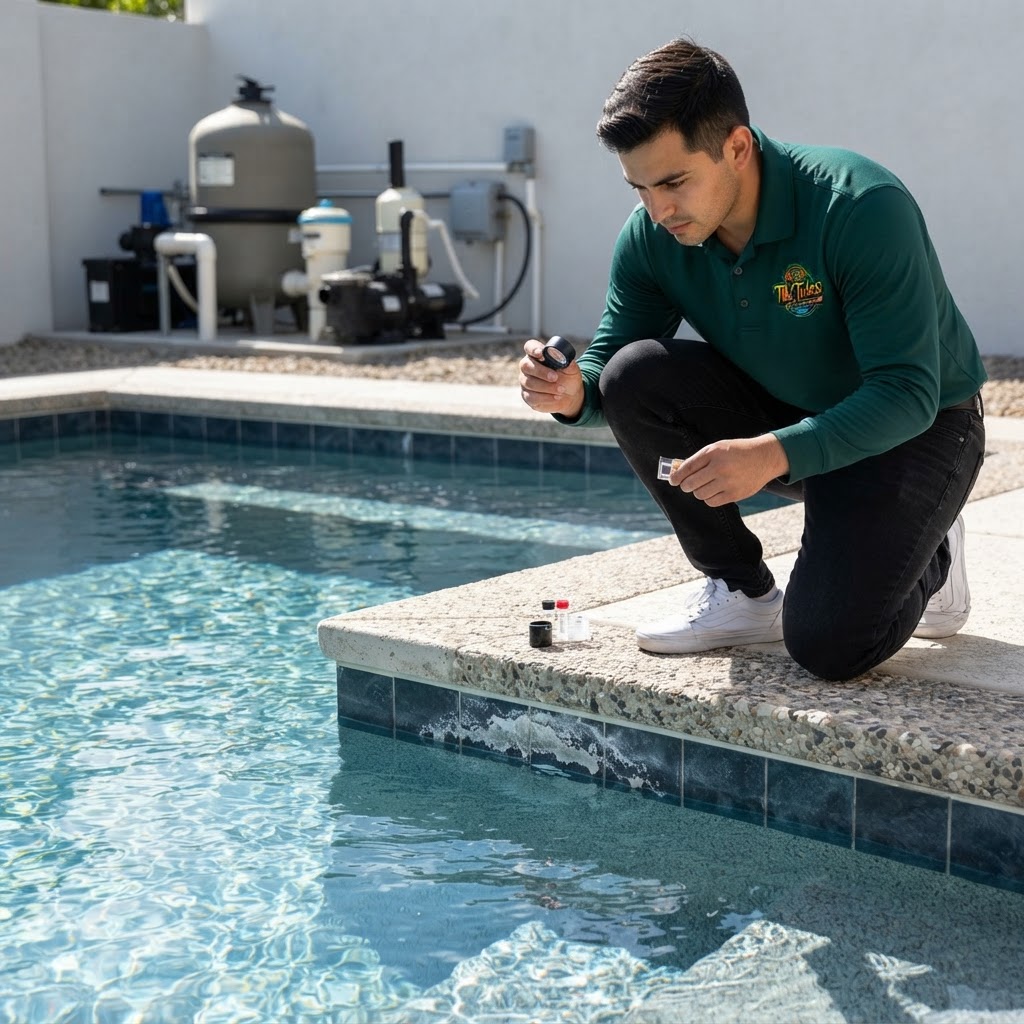
- Maintain Chemical Balance. If your pump is down for more than 24 hours, manually stir your water to prevent pH (7.2–7.8) or Total Alkalinity (80–120 ppm) from fluctuating wildly in stagnant areas.
When to Call a Professional
While cleaning a basket or resetting a breaker is a DIY task, some repairs require professional expertise. Contact Tiki Tides Pools if:
- You suspect a faulty capacitor or internal electrical failure.
- The motor is making a loud, high-pitched screeching sound (indicating the need for new bearings).
- You need to replace the mechanical shaft seal.
- The breaker continues to trip immediately after being reset (indicating a short circuit).
Summary
A functioning pool pump is essential for maintaining the clarity and safety of your water. By checking for power issues, clearing debris from the impeller, and ensuring your suction side is airtight, you can resolve the majority of pump failures yourself. Remember to monitor your water chemistry closely while the pump is offline to ensure you stay within the safe Free Chlorine range of 1.0–3.0 ppm and Cyanuric Acid levels of 30–50 ppm. If the fix isn't simple, don't risk damaging your expensive equipment—call a certified technician to get your pool back in rhythm.