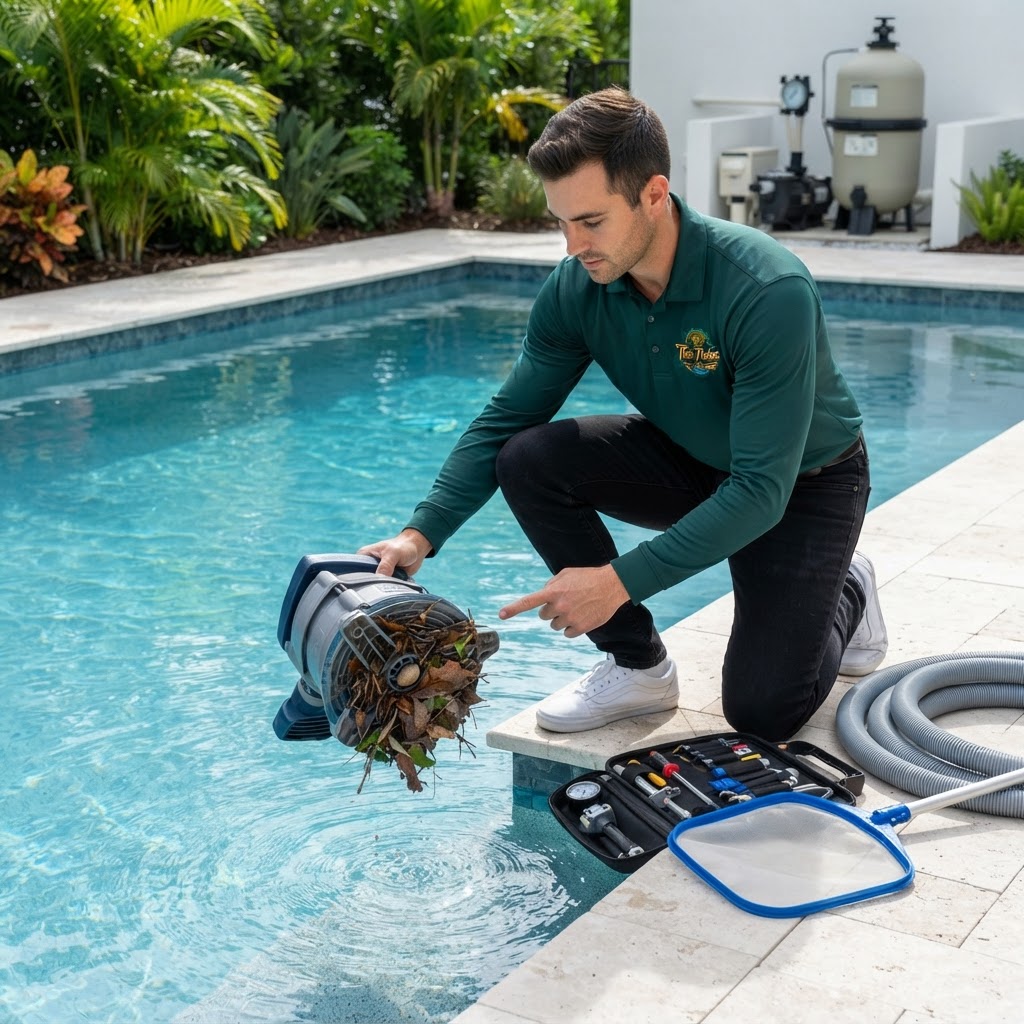
Owning a swimming pool is a rewarding experience, but it comes with the responsibility of maintaining a complex mechanical and chemical system. While many routine tasks like skimming debris or testing water chemistry can be managed by the homeowner, there are moments when the complexity of the issue exceeds DIY capabilities. Knowing when to call a professional is essential for protecting your equipment, ensuring swimmer safety, and maintaining water quality.
At Tiki Tides Pools, we believe that proactive maintenance is the best way to avoid costly repairs. However, ignoring warning signs—such as strange noises from your pump or persistent water chemistry imbalances—can lead to significant damage. This guide will help you distinguish between routine maintenance and situations that require expert intervention.
Understanding Your Pool's Vital Signs
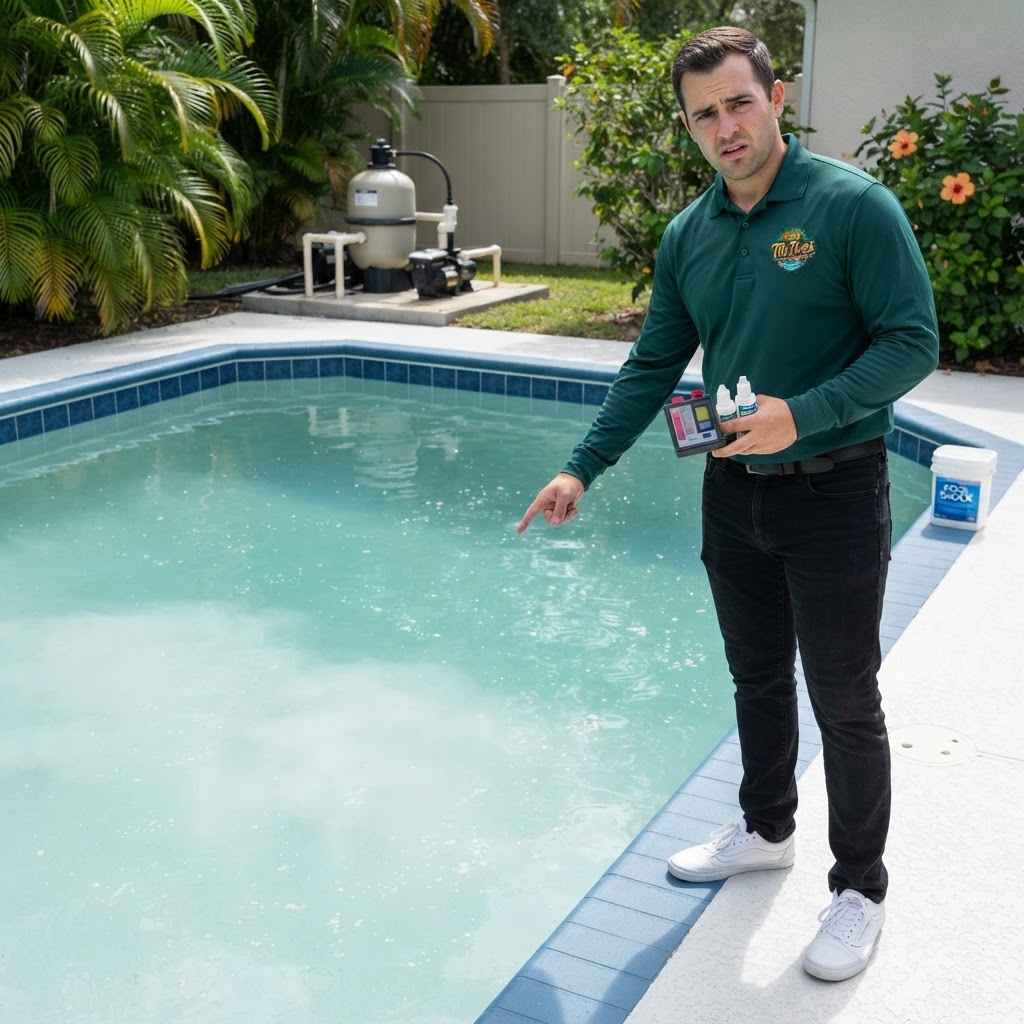
Your pool communicates its health through water clarity, equipment performance, and chemical stability. When these systems deviate from the norm, it is often a sign of an underlying issue. For instance, if you notice your water is not crystal clear, it may indicate a filtration problem. You can learn more about diagnosing these issues in our guide on Cloudy Pool Water After Shocking: Why It Happens and How to Fix It.
Key Indicators of Equipment Trouble
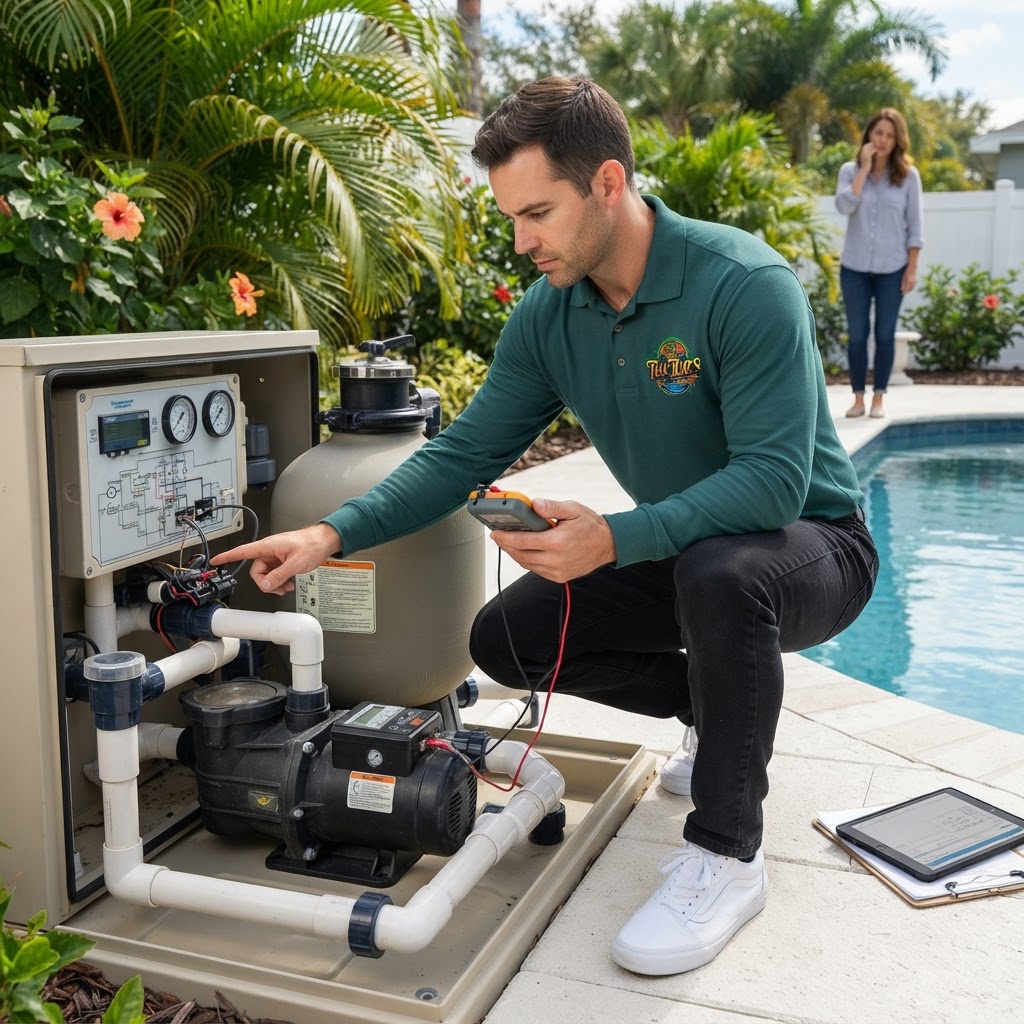
Mechanical equipment, such as pumps, filters, and heaters, requires specific technical knowledge to repair. Common signs that your equipment needs professional attention include:
- Unusual Noises: Grinding, screeching, or rattling sounds from your pump motor often indicate failing bearings or internal mechanical failure.
- Leaks: Any water escaping from the pump housing, valves, or plumbing joints should be addressed immediately. See our guide on Pool Pump Leaking Water: The Ultimate Guide to Troubleshooting and Repair for more details.
- Pressure Issues: If your filter pressure gauge is consistently high or low, it may signal a clog, a damaged filter element, or a flow restriction.
- Heater Failure: If your pool is not reaching the desired temperature, it could be a sensor, ignition, or gas line issue. Refer to Pool Heater Not Heating: The Ultimate Troubleshooting Guide for diagnostic steps.
Pro Tip: Never attempt to open or repair electrical components of your pool equipment if you are not trained to do so. High-voltage electricity and water are a dangerous combination; always defer to a licensed professional for electrical repairs.
When to Call a Professional
While you can handle weekly maintenance, certain scenarios demand the expertise of a certified technician. You should call a professional if:
- Electrical or Motor Issues: Any problem involving the pump motor, control panel, or wiring requires a professional to prevent injury or fire hazards.
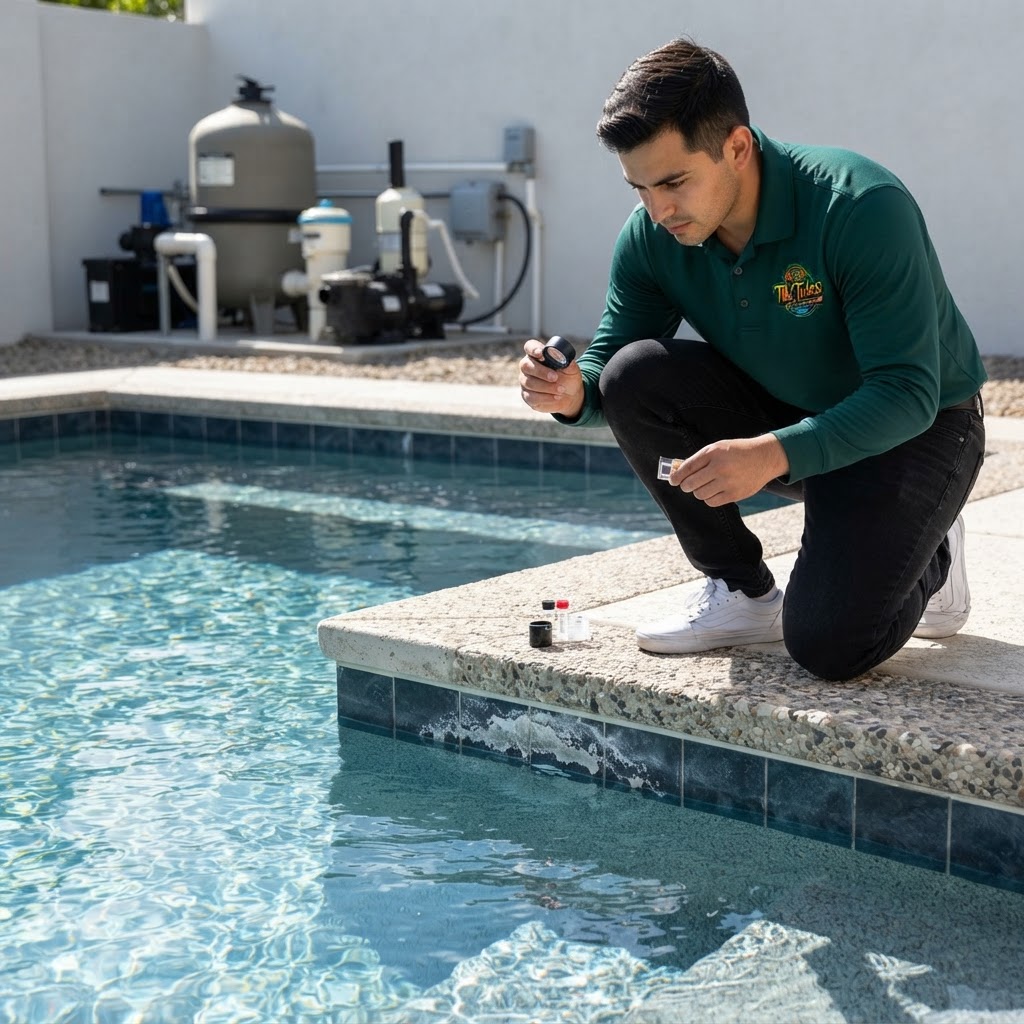
- Persistent Chemical Imbalance: If you cannot stabilize your water despite following proper dosing, you may have a deeper issue like high Cyanuric Acid (CYA) or a biofilm buildup.
- Structural Damage: Cracks in the pool shell, tile damage, or leaks in the plumbing lines require specialized repair techniques.
- Equipment Replacement: Installing new pumps, heaters, or salt cells requires precise plumbing and electrical work to ensure warranty compliance and system efficiency.
Safety Notes
Safety is the top priority in pool maintenance. Always follow these industry-standard chemical ranges to keep your water safe:
- Free Chlorine: 1.0–3.0 ppm
- pH: 7.2–7.8
- Total Alkalinity: 80–120 ppm
- Calcium Hardness: 200–400 ppm
- Cyanuric Acid (CYA): 30–50 ppm
Always store chemicals in a cool, dry, and well-ventilated area, and never mix different chemicals together. If you are unsure about a chemical dosage or a repair procedure, stop immediately and contact a professional.
Summary
Maintaining a pool is a balance of routine care and knowing when to call in the experts. By monitoring your equipment for strange noises, leaks, or performance drops, and keeping your water chemistry within the recommended ranges, you can enjoy a pristine pool all season long. When in doubt, reach out to the team at Tiki Tides Pools to ensure your backyard oasis remains safe and functional.
Related Reading
- Why Is My Pool Cleaner Not Moving? A Troubleshooting Guide
- Why Does My Pool Have White Flakes? Troubleshooting Calcium Scale
- Cloudy Pool Water After Shocking: Why It Happens and How to Fix It
- Pool Pump Leaking Water: The Ultimate Guide to Troubleshooting and Repair
- Pool Heater Not Heating: The Ultimate Troubleshooting Guide