Understanding White Flakes in Your Pool
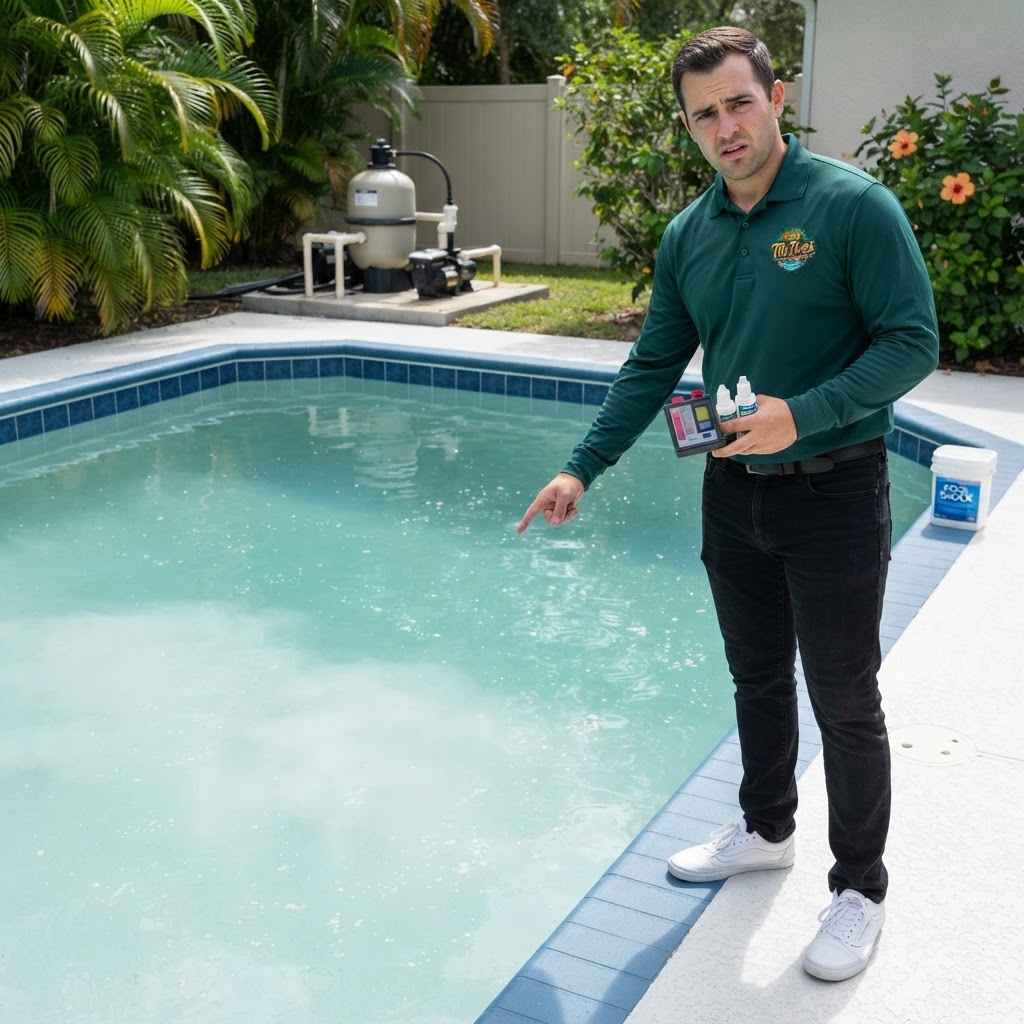
Finding white flakes floating in your pool or settling on the floor can be alarming, but it is a common issue that most pool owners encounter at some point. These flakes are typically calcium carbonate—a mineral deposit that has broken free from your pool equipment or surfaces. While they may look like debris, they are actually a sign that your water chemistry is out of balance, specifically regarding the Langelier Saturation Index (LSI).
For owners of saltwater pools, this is a frequent occurrence. The salt chlorine generator creates a high-pH environment inside the salt cell during the electrolysis process. This localized spike in pH can cause calcium to precipitate out of the water and form scale on the cell blades. When the cell reverses polarity to clean itself, these hardened flakes break off and are pushed into your pool through the return jets.
Common Causes of White Flakes
Beyond salt cell scaling, white flakes can stem from several other factors. Identifying the source is the first step toward a permanent fix:
- Salt Cell Scaling: As mentioned, the natural byproduct of chlorine generation in salt systems can lead to calcium buildup on the electrodes.
- High LSI (Saturation): If your pH, alkalinity, or calcium hardness levels are too high, the water becomes "oversaturated," forcing minerals to drop out of the solution and form solid flakes.
- Improper Chemical Dosing: Adding dry chemicals like calcium hypochlorite or soda ash too quickly without proper dilution can cause localized precipitation.
- Filter Issues: In some cases, what looks like white flakes may actually be degraded DE filter media if a grid is torn, though this is distinct from mineral-based calcium carbonate.
How to Fix and Prevent White Flakes
To stop the flakes, you must bring your water chemistry back into the recommended ranges. Consistent testing is your best defense.
1. Test and Balance Your Water
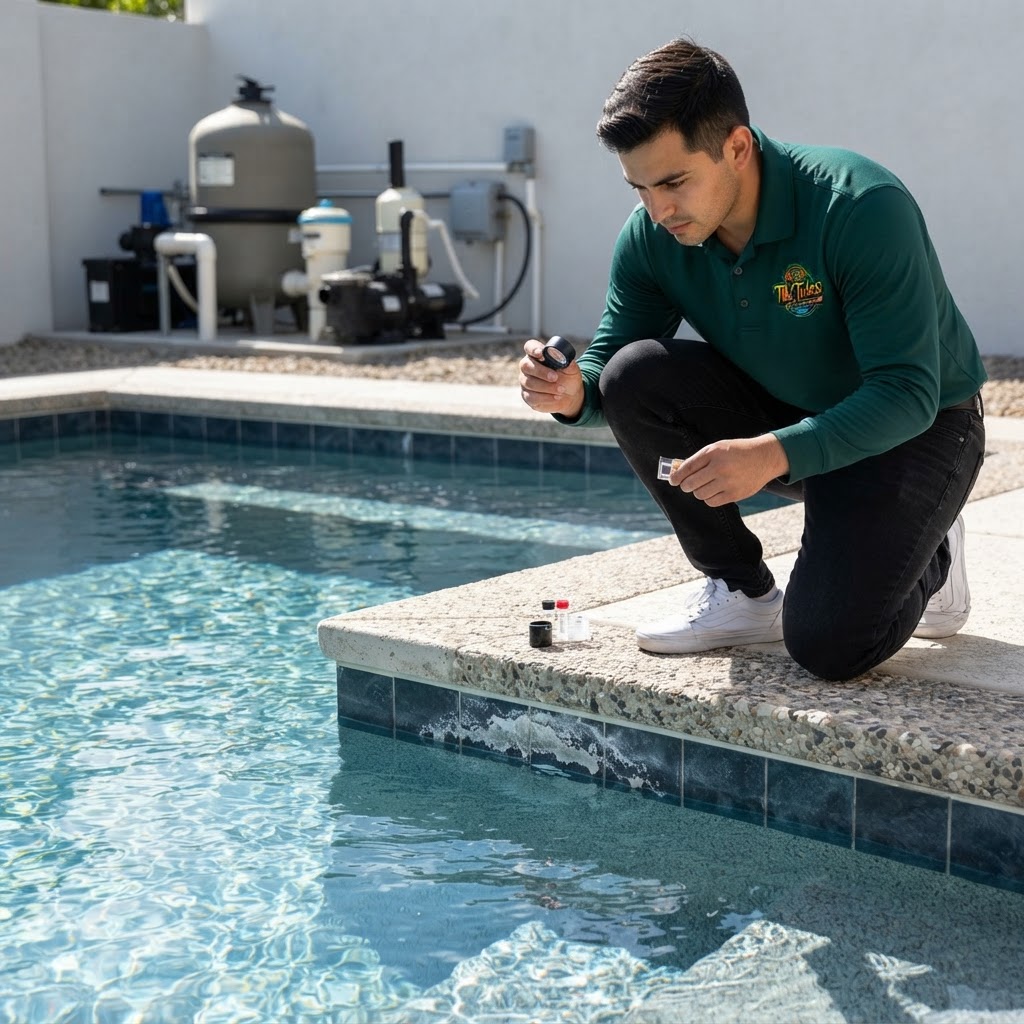
Use a reliable test kit to check your levels against these industry-standard ranges:
- Free Chlorine: 1.0–3.0 ppm
- pH: 7.2–7.8
- Total Alkalinity: 80–120 ppm
- Calcium Hardness: 200–400 ppm
- Cyanuric Acid (CYA): 30–50 ppm
2. Inspect and Clean Your Salt Cell
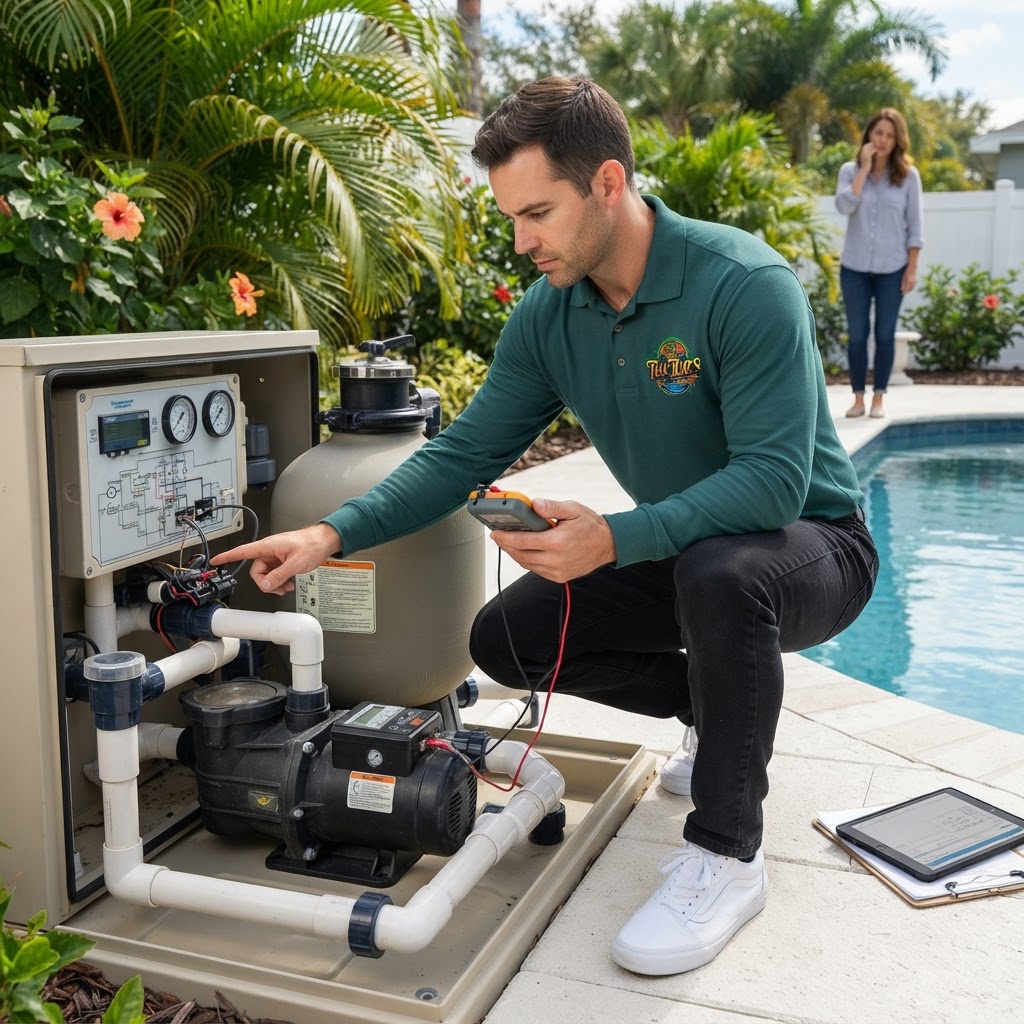
If you have a saltwater pool, inspect your salt cell every 2–3 months. If you see white, crusty buildup on the metal blades, it is time to clean the cell using a manufacturer-approved acid solution. Regular cleaning prevents the scale from hardening to the point where it breaks off into the pool.
Pro Tip: If you notice your pool water is cloudy after adding chemicals to balance these levels, check out our guide on Cloudy Pool Water After Shocking: Why It Happens and How to Fix It to ensure you aren't over-correcting.
Safety Notes
When handling pool chemicals, always prioritize safety. Wear protective gloves and eyewear, and never mix different chemicals together. When cleaning a salt cell with acid, always add acid to water—never water to acid—to prevent dangerous splashing. Ensure your pool pump is turned off and the power to the salt chlorinator is disconnected before performing any equipment maintenance.
When to Call a Professional
While balancing water chemistry is a manageable DIY task, you should contact the team at Tiki Tides Pools if:
- You have cleaned the salt cell and the flakes persist.
- You suspect your salt cell is damaged or nearing the end of its lifespan.
- You are struggling to keep your pH and alkalinity stable despite regular adjustments.
- You notice Low Water Flow in Your Pool? Fix Weak Pressure Like a Pro which could indicate a blockage in your plumbing caused by scale buildup.
Summary
White flakes in your pool are almost always a symptom of calcium carbonate scale, often originating from your salt cell or imbalanced water chemistry. By maintaining your pH, alkalinity, and calcium hardness within the recommended ranges and performing routine salt cell inspections, you can keep your pool water clear and your equipment running efficiently. If you need assistance, Tiki Tides Pools is here to help you get back to enjoying your backyard oasis.
Related Reading
- Cloudy Pool Water After Shocking: Why It Happens and How to Fix It
- Pool Pump Leaking Water: The Ultimate Guide to Troubleshooting and Repair
- Pool Heater Not Heating: The Ultimate Troubleshooting Guide
- Low Water Flow in Your Pool? Fix Weak Pressure Like a Pro
- How to Fix High Pool Filter Pressure: A Complete Troubleshooting Guide