Have you ever noticed a steady stream of bubbles shooting out of your pool's return jets, or perhaps a gurgling sound coming from your pump? While a few bubbles during the initial startup of your system are perfectly normal, a constant flow of air into your pool is a sign that something is wrong. At Tiki Tides Pools, we call this a "suction-side leak."
Air in the pool system is more than just a cosmetic nuisance. When air enters the plumbing, it reduces the efficiency of your filtration, puts undue stress on your pump motor, and can even cause the pump to lose its prime entirely. If left unaddressed, a dry-running pump can overheat, leading to melted internal components and costly repairs. Understanding how to diagnose and fix these leaks is a critical skill for every pool owner.
Understanding the Suction Side vs. Pressure Side
To troubleshoot air in your returns, you must first understand the two halves of your pool's circulatory system.
- The Suction Side: This is the part of the system that pulls water from the pool to the pump. It includes the skimmers, the main drain, the plumbing lines underground, and the pump basket. If air is getting into your return jets, the leak is almost certainly located on this side of the equipment.
- The Pressure Side: This is the part of the system that pushes filtered water back to the pool. It starts at the pump's impeller and includes the filter, heater, chlorinator, and the return jets themselves. Leaks on this side usually result in water leaking out of the system, not air being pulled in.
Because the suction side is under negative pressure (a vacuum), it will suck air into even the tiniest gap. This is why you see bubbles in the pool but don't see water leaking on the ground near the pump.
Quick Reference: Signs of a Suction Side Leak
- Visible Bubbles: A steady stream of air bubbles coming out of the return jets in the pool.
- Clear Pump Lid: You see large air pockets or "churning" water through the transparent pump basket lid.
- Low Filter Pressure: Air in the system prevents the pump from building full pressure.
- Spitting Jets: The return jets sporadically blast air and water.
- Loss of Prime: The pump struggles to move water or loses water flow completely after being turned off.
Step 1: Check the Water Level and Skimmer
The most common cause of air in pool returns is also the simplest to fix: the water level. If your pool water is too low, the skimmer will start to draw in air along with the water, creating a mini-whirlpool (vortex).
What to look for:
- Ensure the water level is at the midpoint of the skimmer opening.
- Check the skimmer weir door (the floating flap). If it is stuck in the upward position, it can block water flow and cause the skimmer to suck air.
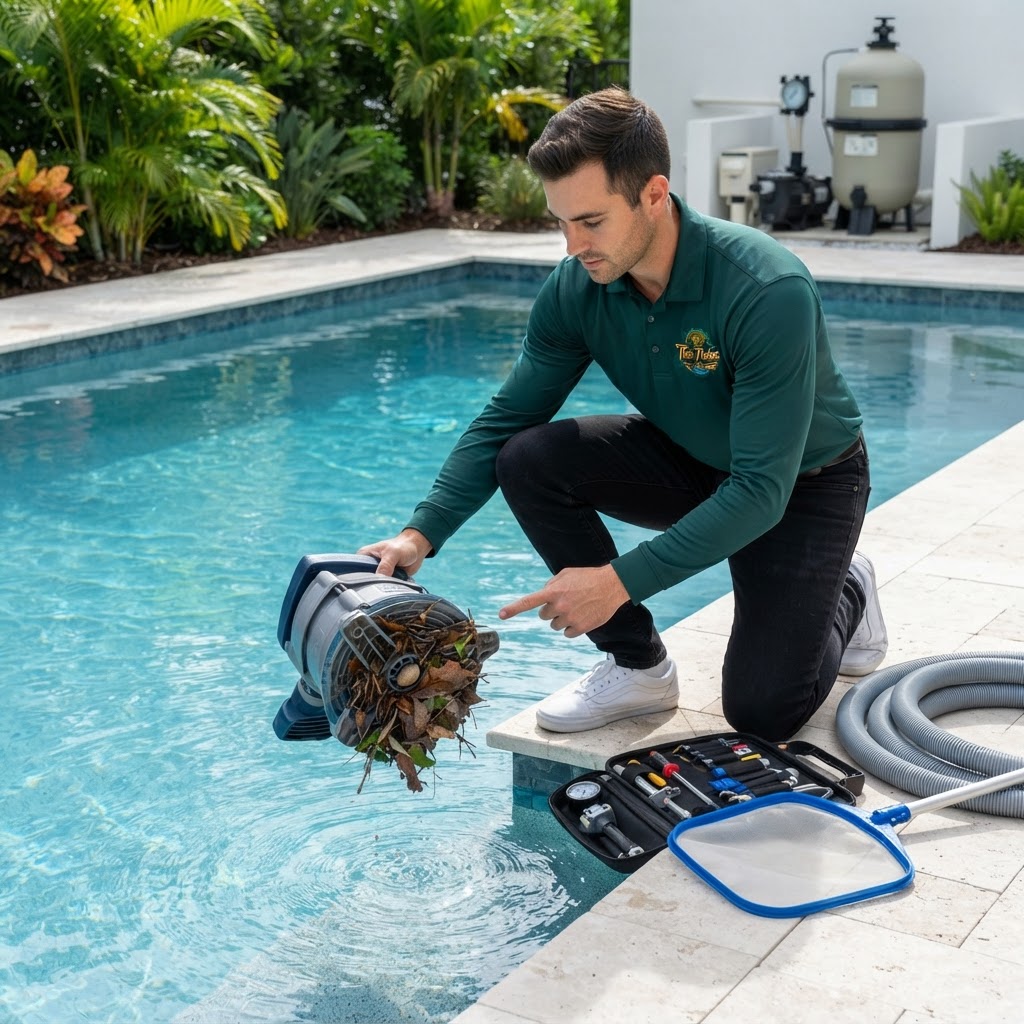
- Check for debris in the skimmer basket that might be causing a restriction.
Step 2: Inspect the Pump Lid and O-Ring
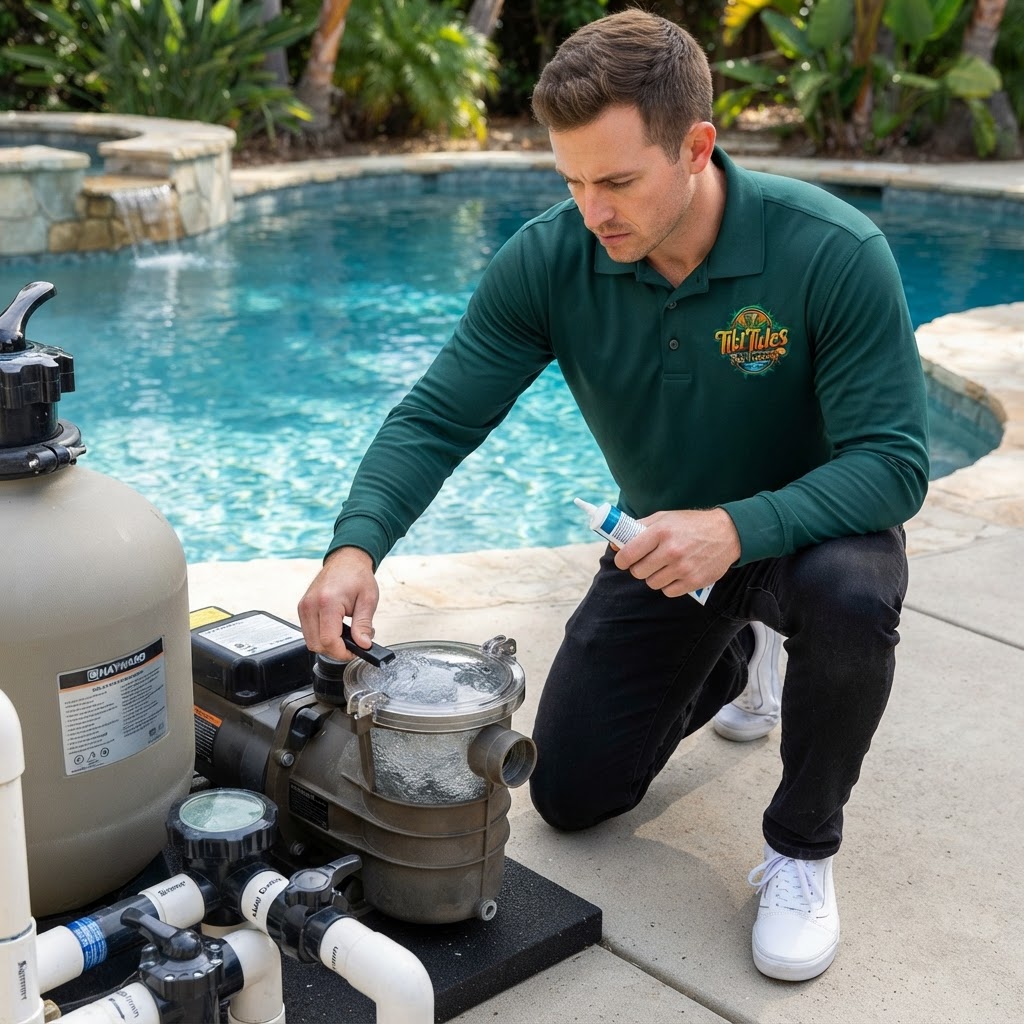
The pump basket lid is the #1 culprit for suction-side leaks. The lid relies on a rubber O-ring to create an airtight seal. Over time, these O-rings can dry out, crack, or become flattened.
How to fix it:
- Turn off the pump and bleed the pressure at the filter.
- Remove the pump lid and inspect the O-ring for cracks or debris.
- Clean the O-ring and the groove it sits in thoroughly.
- Apply a silicone-based pool lubricant to the O-ring. Never use petroleum jelly (Vaseline), as it will cause the rubber to degrade and swell.
- Ensure the lid is seated correctly and tightened firmly by hand.
Pro Tip: If the O-ring looks flat rather than round, it has lost its "memory" and will no longer seal properly. Replace it immediately with the specific part number for your pump model.
Step 3: Check Pump Drain Plugs and Unions
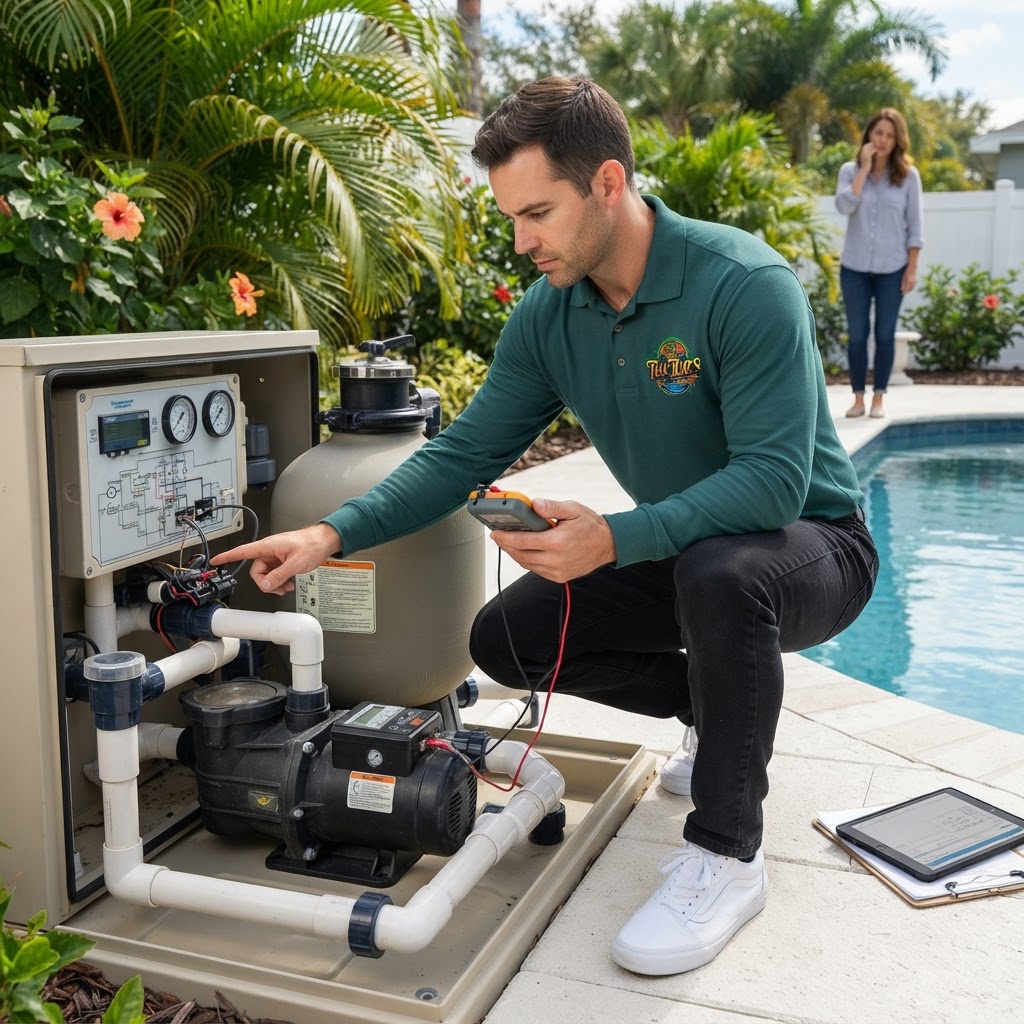
Most pool pumps have two small drain plugs located at the bottom of the pump housing (volute). If these are loose or the O-rings on the plugs are missing, air will enter the system here.
Additionally, check the plumbing unions (the large threaded nuts) that connect the pipes to the pump. Vibrations from the pump can cause these to loosen over time.
The "Water Hose Test": If you aren't sure where the leak is, turn on the pump and slowly run a garden hose over the pump lid, then the drain plugs, and then the unions. Watch the pump basket. If the air bubbles suddenly disappear while the water is running over a specific spot, you have found your leak.
Step 4: Examine Valve Stems and Fittings
If you have multi-port valves or Jandy-style valves on the suction side, the internal O-rings or the stem seals can fail. If you see "bubbling" or hear a hissing sound near a valve when the pump is running, the valve may need to be rebuilt with a fresh seal kit.
If your pump is older, you may have developed a leak at the "male adapter"—the threaded fitting that goes into the front of the pump. Heat and vibration can cause the threads to shrink or the PVC glue to fail. If you suspect this, you may need to re-plumb that section using high-temperature unions.
If your pump is having trouble moving water even after checking these seals, consult our Pool Pump Not Working? The Complete DIY Troubleshooting Guide.
Safety Notes
- Power Safety: Always turn off the circuit breaker to the pool pump before opening the pump basket or performing maintenance on the plumbing.
- Pressure Hazards: Before opening the pump lid, always open the air relief valve on top of your filter to release built-up pressure. Failure to do so can cause the lid to blow off with dangerous force.
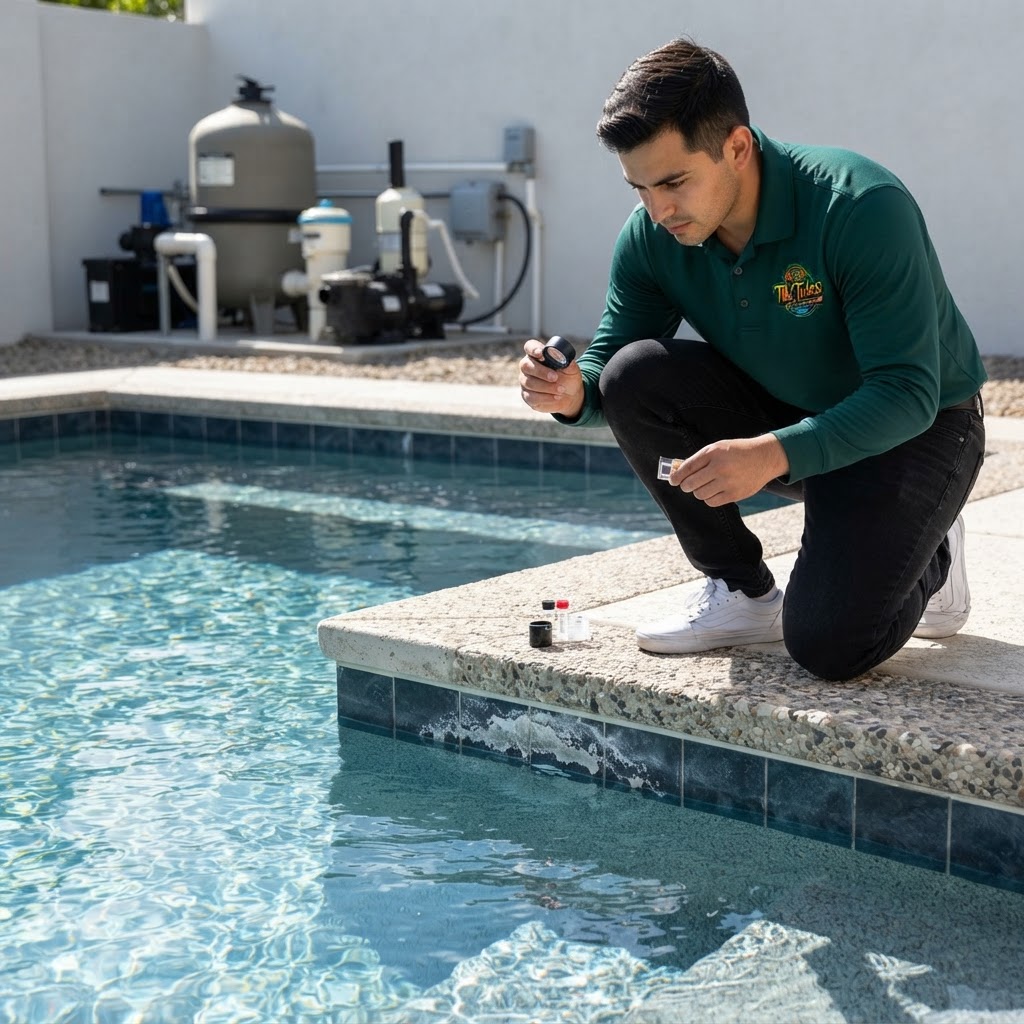
- Chemical Balance: Air in the system can lead to poor circulation, which affects your water chemistry. Ensure you maintain safe ranges to prevent algae growth or equipment corrosion:
- Free Chlorine: 1.0–3.0 ppm
- pH: 7.2–7.8
- Total Alkalinity: 80–120 ppm
- Calcium Hardness: 200–400 ppm
- Cyanuric Acid (CYA): 30–50 ppm
When to Call a Professional
While most suction-side leaks are at the equipment pad, some are more serious. If you have checked the water level, the pump lid, the drain plugs, and the unions, and you still have air in your returns, the leak may be underground. Ground shifting or tree root growth can cause PVC pipes to crack beneath the pool deck.
If you suspect an underground leak, or if you notice your pool is losing water significantly while the pump is off, please refer to Why Is My Pool Losing Water? The Ultimate Leak Detection Guide or contact a professional leak detection service. Specialized sonar and pressure-testing equipment are required to locate and repair subterranean plumbing failures.
Summary
Air in your pool returns is a clear signal from your filtration system that it's struggling to maintain a vacuum. Start with the basics: check your water level and skimmer weir. Move on to the pump lid O-ring and apply a quality silicone lubricant. Use the water hose test to narrow down stubborn leaks at unions or valves. By maintaining an airtight suction side, you protect your pump, save on energy costs, and keep your pool water crystal clear and bubble-free all summer long.