Understanding Pool Water Chemistry
Maintaining proper pool water chemistry is the most important task for any pool owner. It is not just about keeping the water clear; it is about creating a safe, sanitary environment for your family and protecting your expensive pool equipment from corrosion or scaling. When water is out of balance, it can cause skin and eye irritation, cloudy water, and long-term damage to your pool's surface and plumbing.
At Tiki Tides Pools, we believe that every pool owner can master the basics. By understanding the relationship between your sanitizer, pH, and alkalinity, you can move from reactive troubleshooting to proactive maintenance. This guide outlines the industry-standard levels you need to maintain for a healthy, sparkling pool.
The Essential Chemical Levels
To keep your pool in top shape, you must monitor these five core parameters. Keeping these within their target ranges ensures your sanitizer works efficiently and your water remains comfortable.
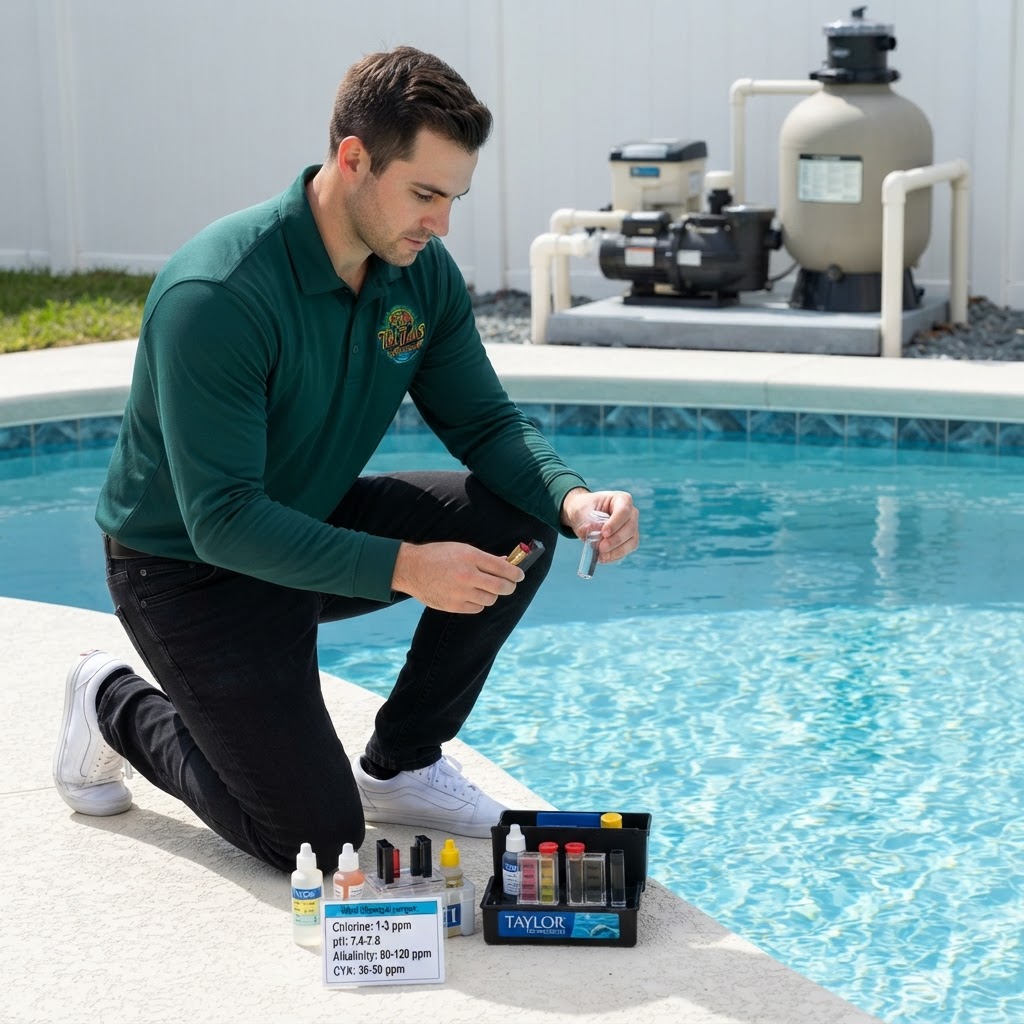
| Parameter | Ideal Range | | :--- | :--- | | Free Chlorine | 1.0–3.0 ppm | | pH | 7.2–7.8 | | Total Alkalinity | 80–120 ppm | | Calcium Hardness | 200–400 ppm | | Cyanuric Acid (CYA) | 30–50 ppm |
1. Free Chlorine
Chlorine is your primary defense against bacteria and pathogens. The CDC recommends a minimum of 1.0 ppm for pools, though 2.0–4.0 ppm is often preferred for outdoor pools to account for UV degradation. If your levels drop too low, your pool becomes a breeding ground for algae and bacteria. If you are struggling with persistent green water, check out our guide on Master the Art of Pool Shocking: The Ultimate Guide to Crystal Clear Water.
2. pH Level
Your pH level determines how acidic or basic your water is. A range of 7.2–7.8 is ideal. If the pH is too low, the water becomes corrosive, which can etch plaster and damage metal components. If it is too high, chlorine becomes ineffective, and you may notice scale buildup. For help adjusting this, see our guide on How to Lower pH in a Pool: A Step-by-Step Guide to Balanced Water.
3. Total Alkalinity (TA)
Think of Total Alkalinity as the "shock absorber" for your pH. It prevents your pH from swinging wildly. When TA is in the 80–120 ppm range, your pH will remain stable, making your maintenance routine much easier.
4. Calcium Hardness
Calcium hardness prevents your water from becoming "aggressive." If the level is too low (below 200 ppm), the water will pull calcium from your pool's plaster or grout, leading to pitting. If it is too high, you will see white, crusty scale deposits. Learn more in our article on Calcium Hardness: Preventing Scale and Etching in Your Pool.
5. Cyanuric Acid (CYA)
Often called "pool stabilizer," CYA acts like sunscreen for your chlorine. Without it, the sun burns off your chlorine in hours. However, too much CYA (over 50 ppm) can "lock" your chlorine, making it ineffective. For more details, read Cyanuric Acid Explained: Are You Over-Stabilizing Your Pool?.
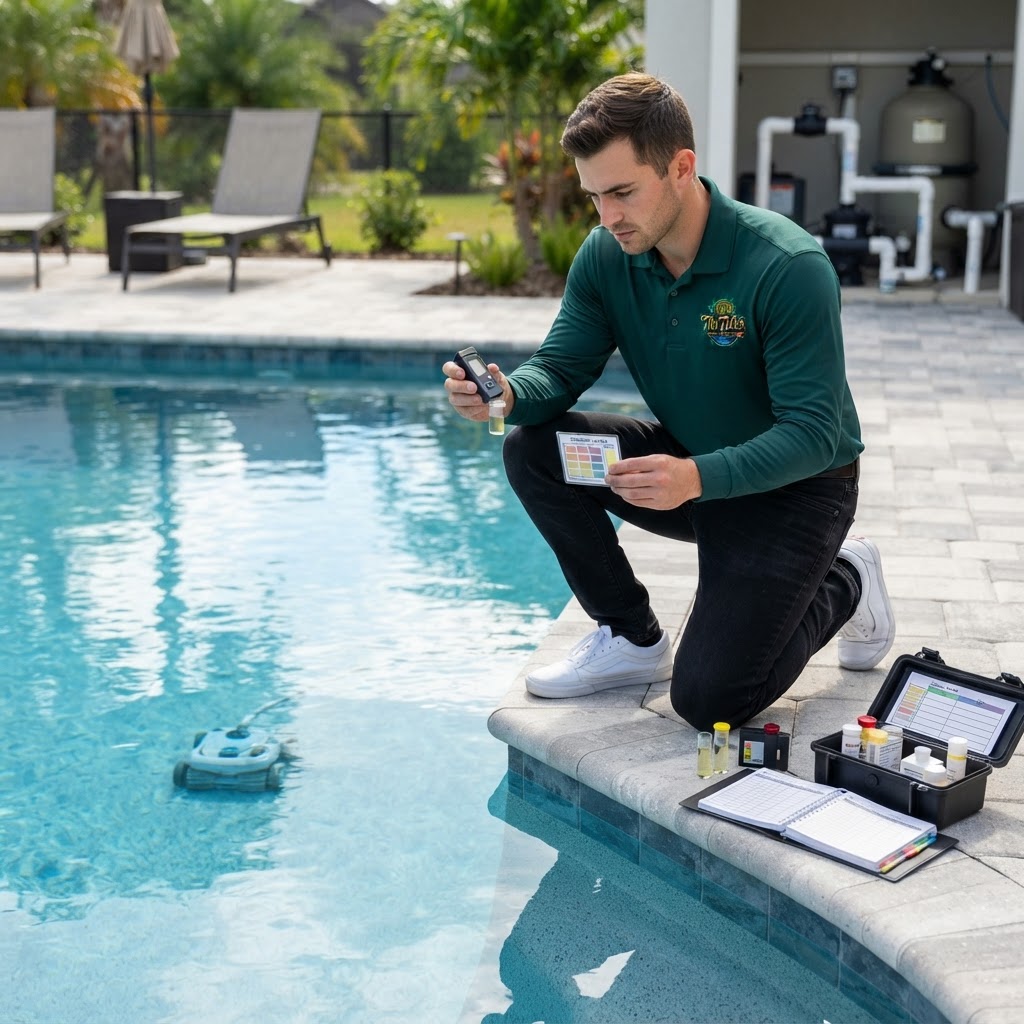
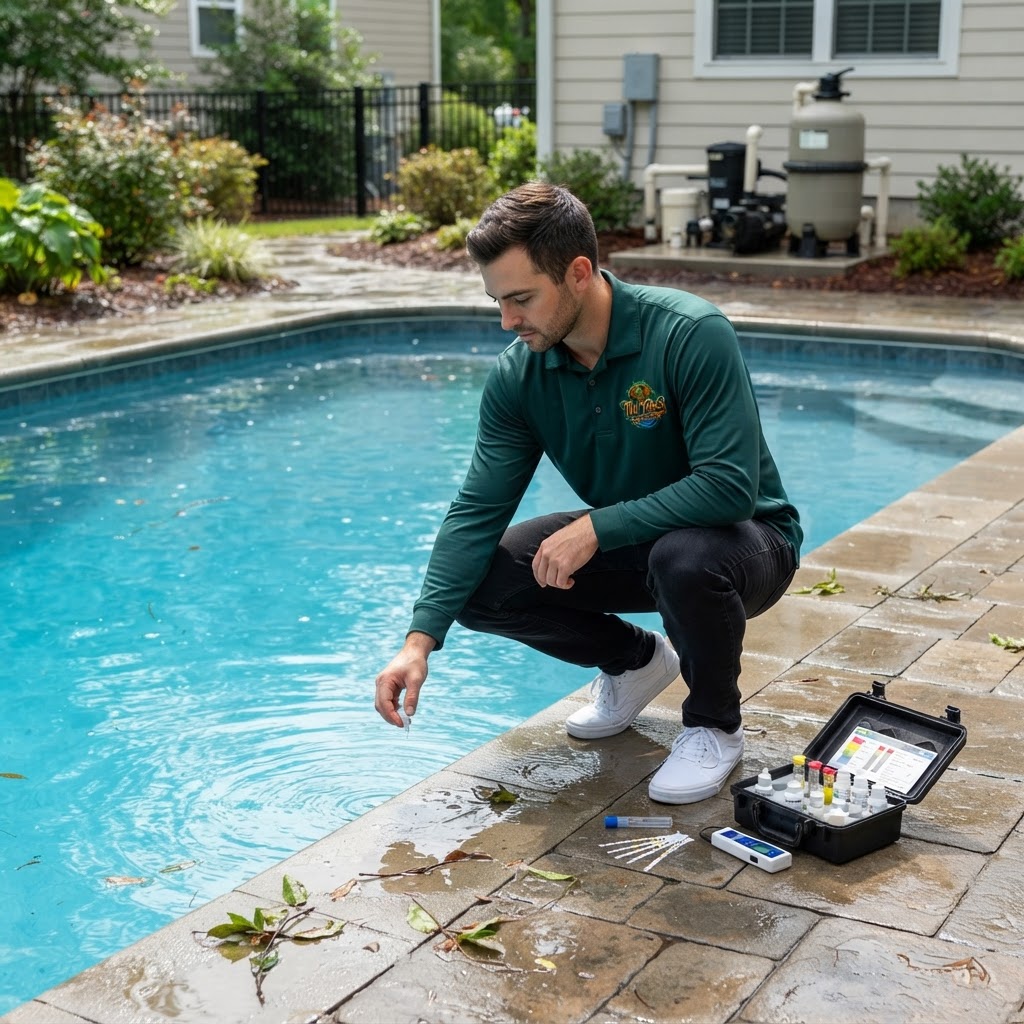
Pro Tip: Always test your water using a high-quality liquid DPD test kit rather than relying solely on test strips. Liquid kits provide significantly more accurate readings, which is crucial for making precise chemical adjustments.
Safety Notes
Handling pool chemicals requires caution to prevent injury:
- Never mix chemicals: Mixing different types of chlorine or other chemicals can cause dangerous reactions, including toxic gas release or explosions.
- Add chemicals to water, not water to chemicals: Always add the chemical to the pool water, never pour water into a concentrated chemical container.
- Storage: Store chemicals in a cool, dry, well-ventilated area away from direct sunlight and out of reach of children and pets.
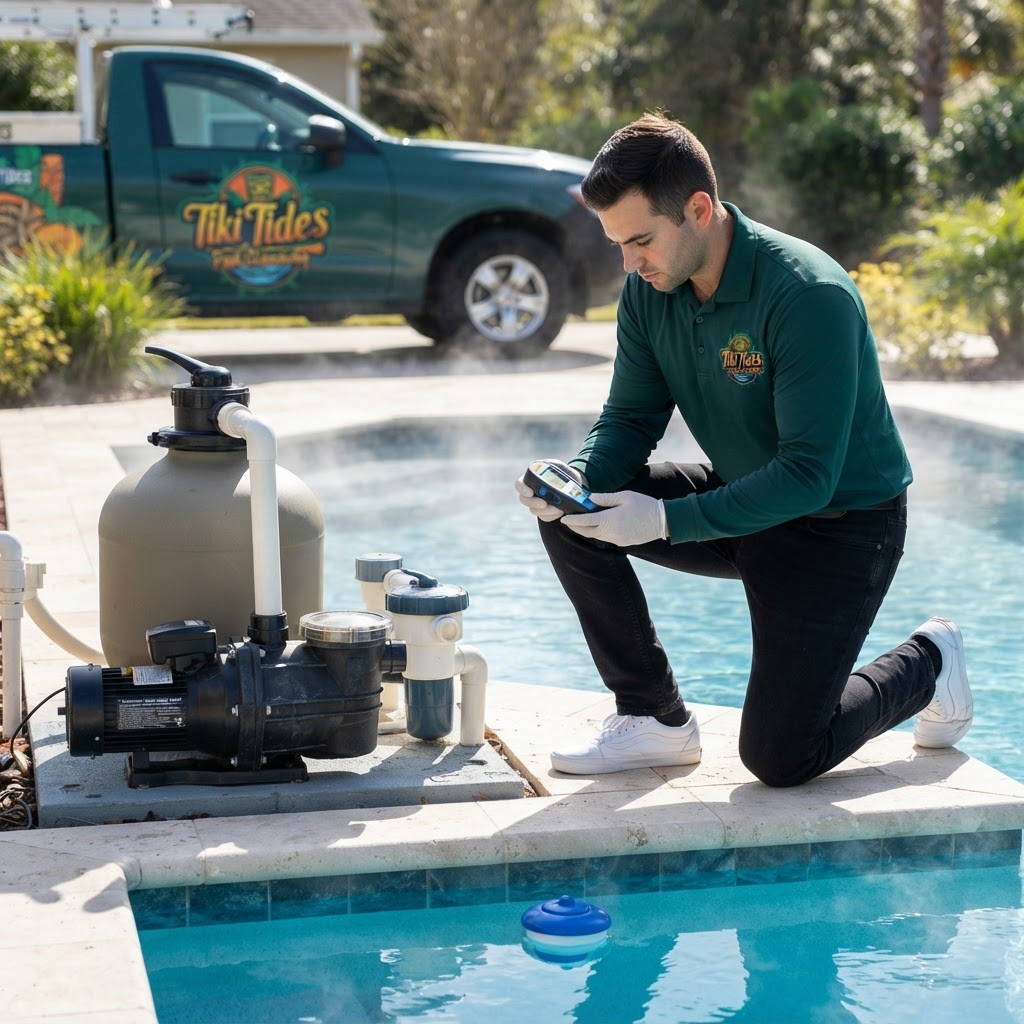
- Personal Protective Equipment (PPE): Wear gloves and safety goggles when handling concentrated chemicals to prevent skin and eye irritation.
When to Call a Professional
While routine maintenance is manageable, some situations require an expert touch. You should contact a professional if:
- Your water remains cloudy or green despite proper chemical levels.
- You suspect a leak in your plumbing or equipment.
- You are dealing with persistent staining that won't clear with standard balancing.
- You are unsure how to handle a major chemical imbalance or need to perform a partial drain and refill.
Summary
Maintaining your pool doesn't have to be a mystery. By keeping your Free Chlorine, pH, Alkalinity, Calcium Hardness, and CYA within the recommended ranges, you ensure a safe and enjoyable swimming season. Consistent testing and small, calculated adjustments are the keys to success. If you ever feel overwhelmed, the team at Tiki Tides Pools is here to help you keep your water perfect.
Related Reading
- How to Lower pH in a Pool: A Step-by-Step Guide to Balanced Water
- Master the Art of Pool Shocking: The Ultimate Guide to Crystal Clear Water
- Salt Water Pool Conversion: Everything You Need to Know
- Calcium Hardness: Preventing Scale and Etching in Your Pool
- Cyanuric Acid Explained: Are You Over-Stabilizing Your Pool?