Maintaining a swimming pool is a delicate balancing act of chemistry. Among all the levels you monitor, pH is arguably the most critical for both swimmer comfort and equipment longevity. When your pH climbs too high, your pool water becomes alkaline, leading to a host of problems from scale buildup to ineffective sanitation.
At Tiki Tides Pools, we see many homeowners struggle with rising pH levels, especially during the heat of the summer or after heavy pool usage. Understanding how to lower pH in a pool is not just about dumping chemicals into the water; it is about precision, safety, and understanding the relationship between different chemical components. In this guide, we will walk you through the professional process of bringing your pH back into the ideal range.
Why High pH is a Problem
When your pool's pH rises above the recommended range of 7.2 to 7.8, it signifies that the water has become too basic (alkaline). This imbalance causes several immediate and long-term issues:
- Reduced Chlorine Effectiveness: High pH drastically reduces the ability of Free Chlorine to kill bacteria and algae. At a pH of 8.0, your chlorine is only about 20-30% effective. This is why you might find yourself needing to Master the Art of Pool Shocking more often if your pH is left unchecked.
- Cloudy Water: Alkaline water often leads to mineral precipitates, giving the water a dull, milky appearance.
- Scaling and Calcium Deposits: High pH promotes the formation of calcium scale on pool walls and inside plumbing. Over time, this can lead to expensive repairs, similar to the issues discussed in our guide on Calcium Hardness: Preventing Scale and Etching in Your Pool.
- Physical Irritation: Contrary to popular belief, red eyes and itchy skin are more often caused by improper pH levels than by high chlorine.
Quick Reference: The Ideal Chemistry Ranges
Before you adjust your pH, you must ensure you are aiming for the industry-standard targets:
- pH: 7.2 – 7.8 (Targeting 7.4 to 7.6 is ideal)
- Free Chlorine: 1.0 – 3.0 ppm
- Total Alkalinity: 80 – 120 ppm
- Calcium Hardness: 200 – 400 ppm
- Cyanuric Acid (CYA): 30 – 50 ppm
Tools and Chemicals Needed
To lower your pH, you will need the following supplies:
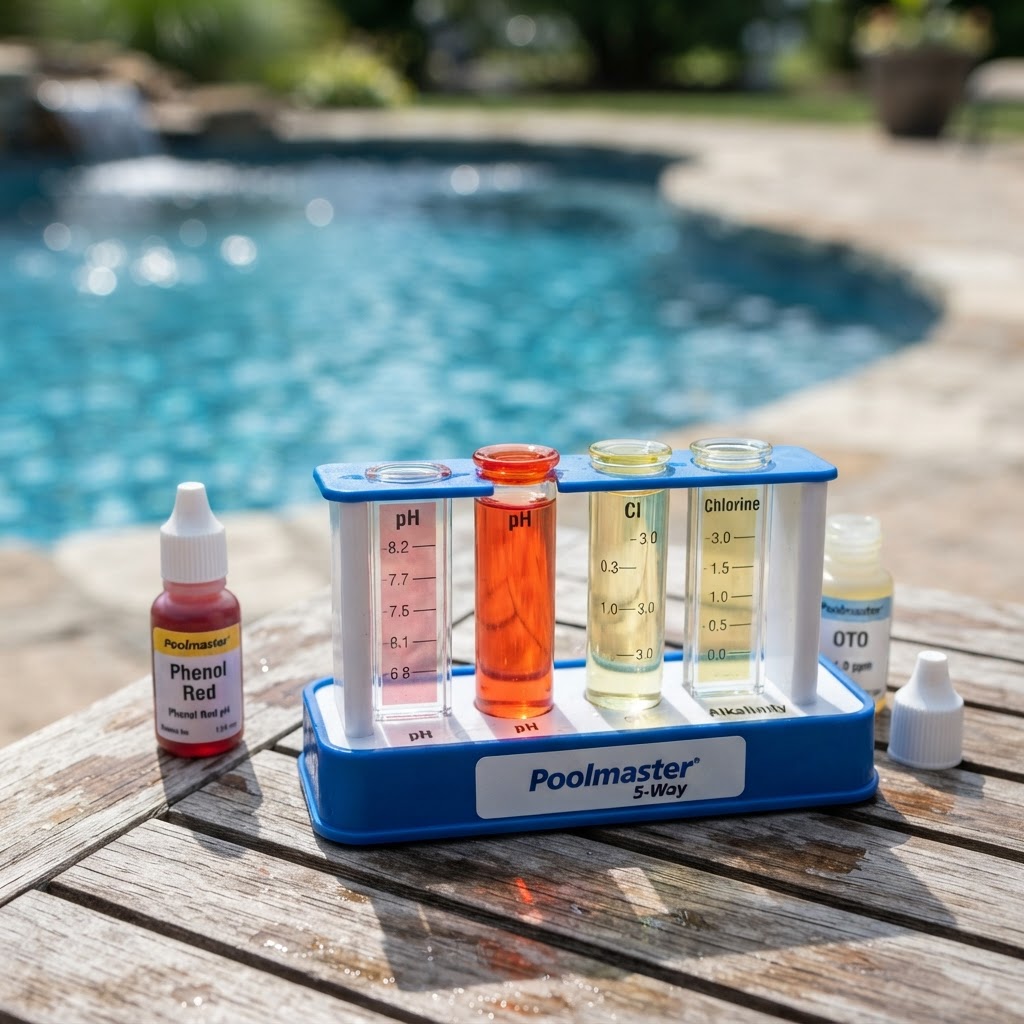
- A High-Quality Test Kit: Liquid DPD or FAS-DPD kits are more accurate than test strips.
- pH Decreaser: You have two primary choices:
- Muriatic Acid (Liquid): Highly effective and fast-acting, but requires careful handling.
- Sodium Bisulfate (Dry Acid): A granular powder that is easier to store and slightly safer to handle.
- Safety Gear: Chemical-resistant gloves and safety goggles are non-negotiable.
- Plastic Bucket: For diluting liquid acid (if required by the manufacturer).
Step 1: Test Your Pool Water
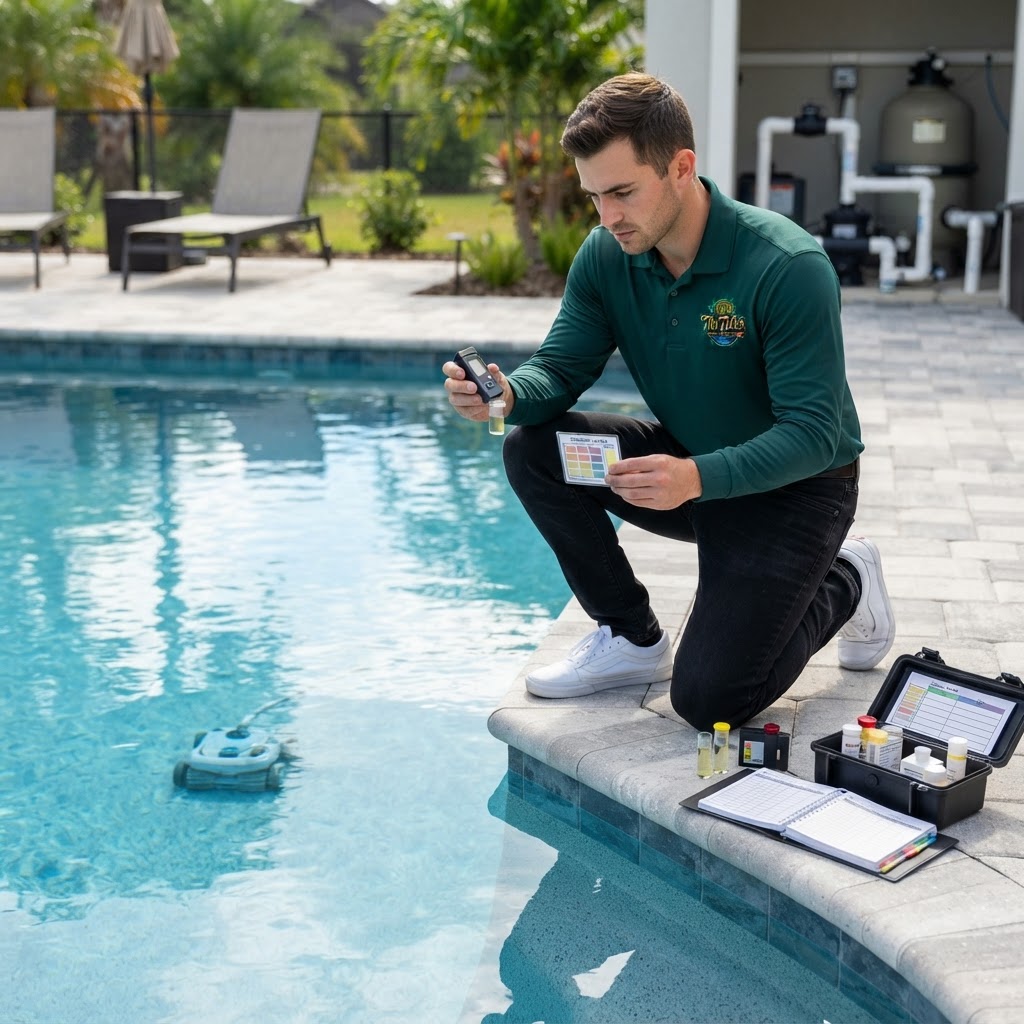
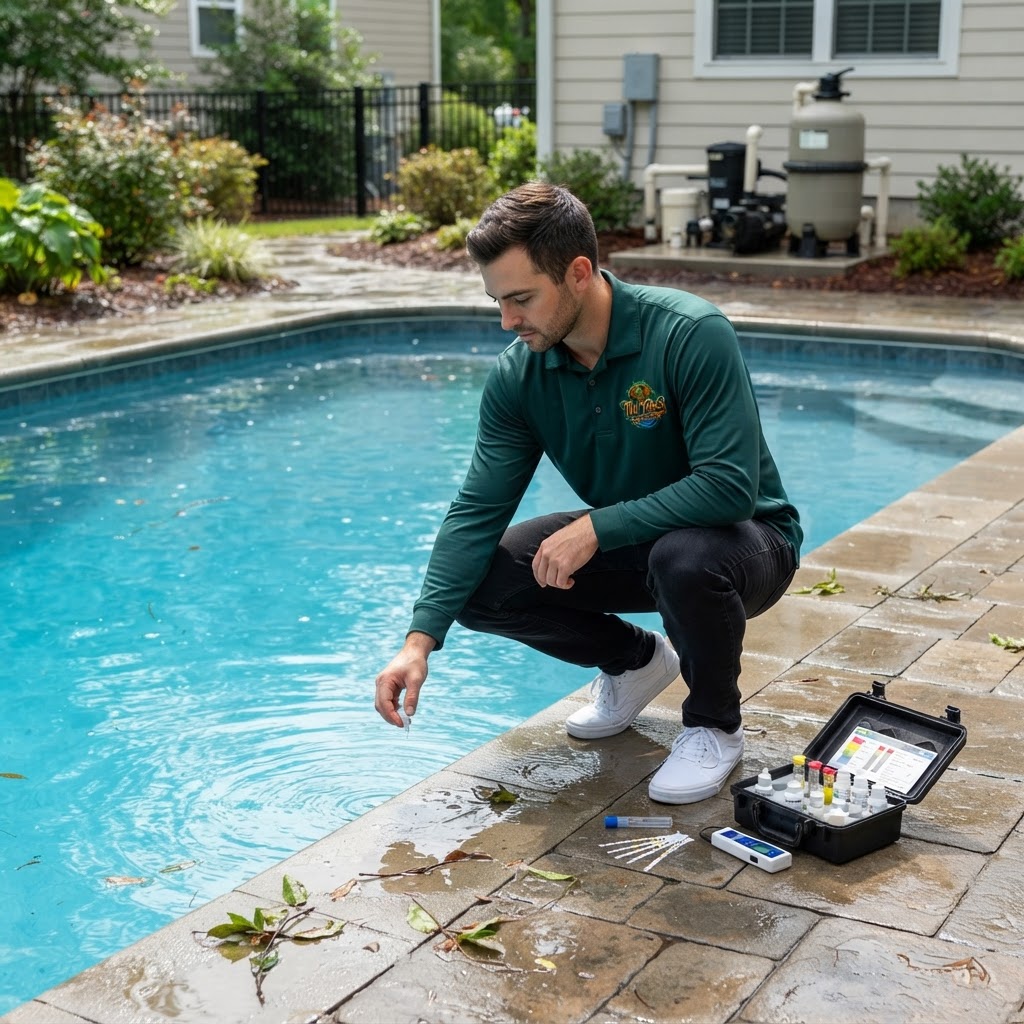
Never add chemicals based on a guess. Use your test kit to determine your current pH level. If the reading is "off the charts" (usually above 8.2 on most color-matching kits), you should also test your Total Alkalinity (TA). High TA acts as a buffer, making it very difficult to move the pH level. If your TA is above 120 ppm, you will likely need more acid than the standard dosage charts suggest.
Step 2: Calculate the Required Dosage
Consult the packaging of your pH decreaser or use a reputable pool chemistry calculator. The amount of acid needed depends on two factors: the current pH level and the total volume of your pool in gallons.
Pro Tip: Always start by adding only three-quarters of the calculated dose. It is much easier to add a little more acid later than it is to raise the pH back up if you overshoot and make the water too acidic.
Step 3: Adding the Chemical
Using Muriatic Acid (Liquid)
- Check the Wind: Always stand upwind when pouring acid to avoid inhaling fumes.
- Dilution (Optional but Recommended): While some professionals pour directly into the deep end, it is safer for your pool surface to dilute the acid in a bucket of pool water first. Always add acid to water, never water to acid.
- Distribution: With the pump running on its highest setting, slowly pour the mixture around the perimeter of the deep end of the pool, or directly over the return jets to ensure rapid dispersal.
Using Sodium Bisulfate (Dry Acid)
- Measure: Weigh out the granular powder.
- Dissolve: Most manufacturers recommend dissolving the granules in a bucket of water before adding them to the pool to prevent the concentrated granules from sitting on the pool floor and etching the finish.
- Apply: Pour the dissolved solution around the deep end while the pump is running.
Step 4: Circulation and Re-Testing
Allow the pool pump to circulate the water for at least 4 to 6 hours. This ensures the acid is fully integrated and that you get an accurate reading when you re-test. Do not allow swimmers back into the water until the circulation period is complete and you have verified the pH is within the 7.2–7.8 range.
Safety Notes
Handling pool chemicals requires strict adherence to safety protocols:
- PPE: Always wear eye protection and gloves. Acid can cause severe chemical burns.
- Storage: Store muriatic acid in a cool, dry place, away from chlorine. Mixing acid and chlorine creates a deadly mustard gas.
- The AAA Rule: Remember "Always Add Acid." When diluting, fill the bucket with water first, then add the acid. Adding water to a bucket of acid can cause a violent exothermic reaction and splashing.
- Inhalation: Avoid breathing in the fumes from muriatic acid; they are highly corrosive to the respiratory system.
When to Call a Professional
While lowering pH is a standard part of pool maintenance, some situations require expert intervention:
- The "Bounce" Effect: If your pH levels are constantly swinging wildly despite your efforts, you may have a fundamental alkalinity or mineral imbalance.
- Staining: If you notice new metallic stains appearing as you adjust your pH, you may have high metal content in your water that requires professional sequestering agents.
- Persistent Cloudiness: If the water remains cloudy for more than 48 hours after balancing pH, there may be a filtration or biological issue.
Summary
Lowering the pH in your pool is essential for maintaining clear water, protecting your equipment, and ensuring a comfortable swim. By testing regularly, using the correct chemicals (Muriatic Acid or Sodium Bisulfate), and following strict safety guidelines, you can keep your water in the ideal 7.2 to 7.8 range. Remember that water chemistry is dynamic; heavy rain, high bather loads, and even the type of sanitizer you use can influence your pH levels over time. Consistent monitoring is the key to a stress-free pool season.
Related Reading
- Master the Art of Pool Shocking: The Ultimate Guide to Crystal Clear Water
- Salt Water Pool Conversion: Everything You Need to Know
- Calcium Hardness: Preventing Scale and Etching in Your Pool
- Cyanuric Acid Explained: Are You Over-Stabilizing Your Pool?
- Chlorine vs Bromine: Which Sanitizer Is Right for Your Pool?