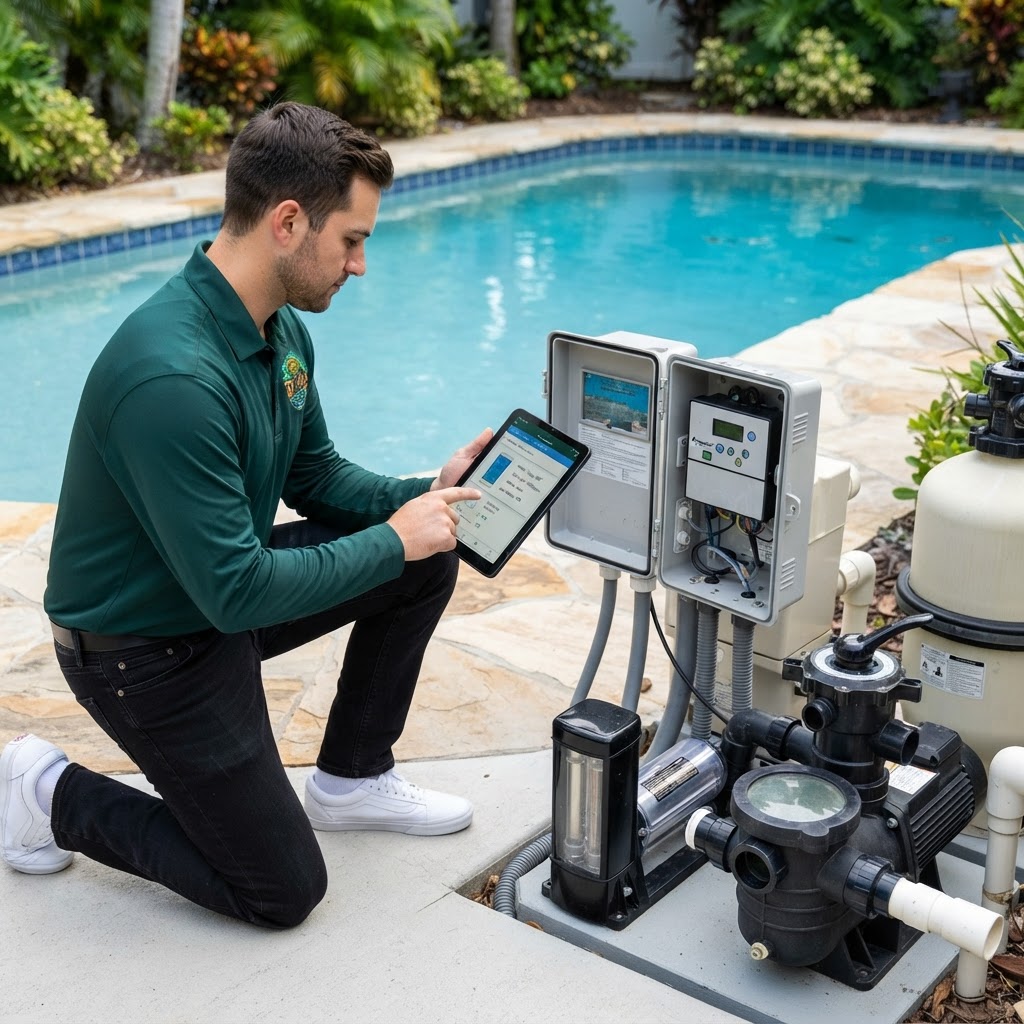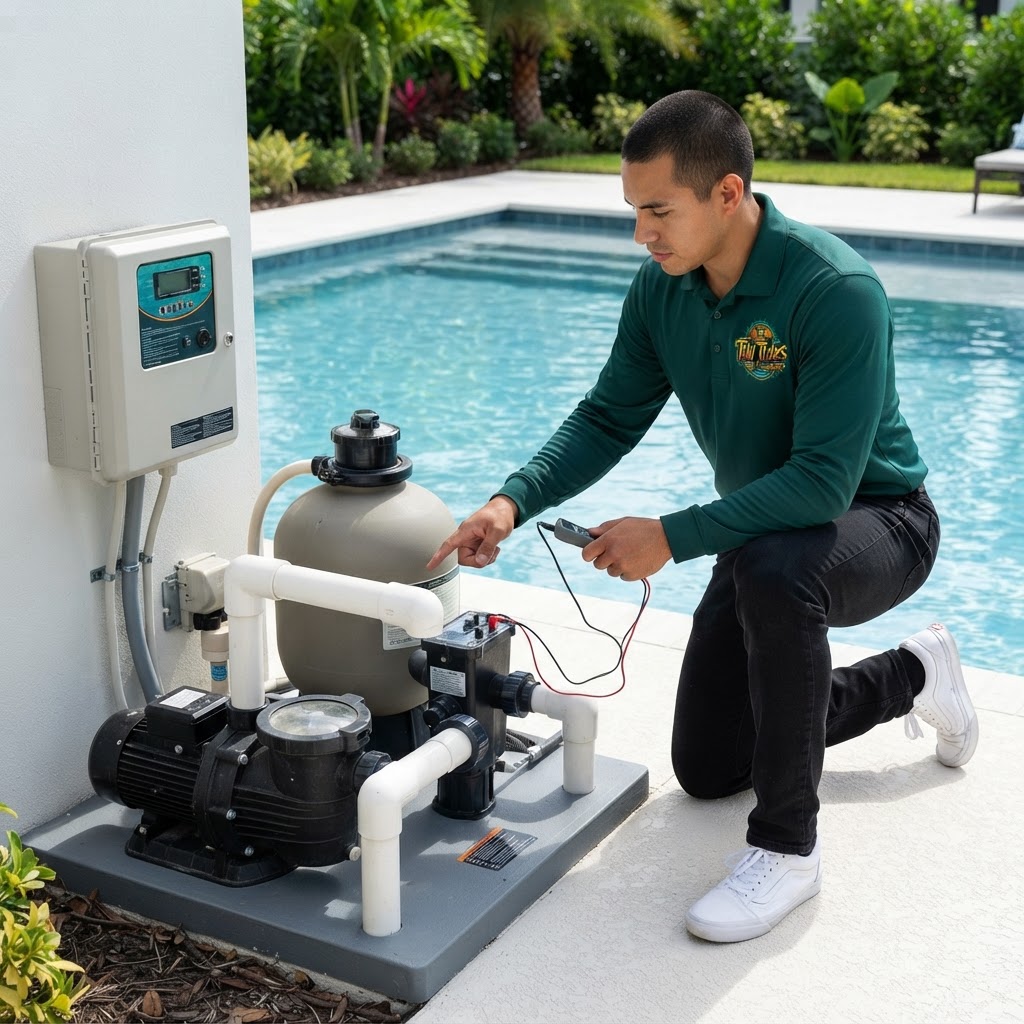
Your swimming pool's filtration system is its most vital line of defense against contaminants. Think of your filter as the kidneys of your pool; it tirelessly strains out dirt, organic matter, and microscopic debris to keep your water sparkling. However, as the filter traps more material, it eventually becomes clogged, leading to poor circulation and potential water quality issues. This is where backwashing comes in.
Backwashing is the process of reversing the flow of water through your filter to flush out the trapped debris into a waste line. For owners of sand and Diatomaceous Earth (DE) filters, mastering this maintenance task is non-negotiable. In this guide, we will walk you through the signs that your filter needs attention and provide a step-by-step tutorial on how to perform a backwash safely and effectively.
Understanding the Need for Backwashing
Every pool owner should understand that a filter actually becomes more efficient at catching small particles as it gets slightly dirty. However, there is a tipping point. Once the filter is too loaded with debris, the resistance to water flow increases. This puts undue stress on your equipment. If you've ever wondered How Does a Pool Pump Work?, you'll know that the pump relies on a steady, unobstructed flow of water to cool its motor and circulate chemicals.
When is it Time to Backwash?
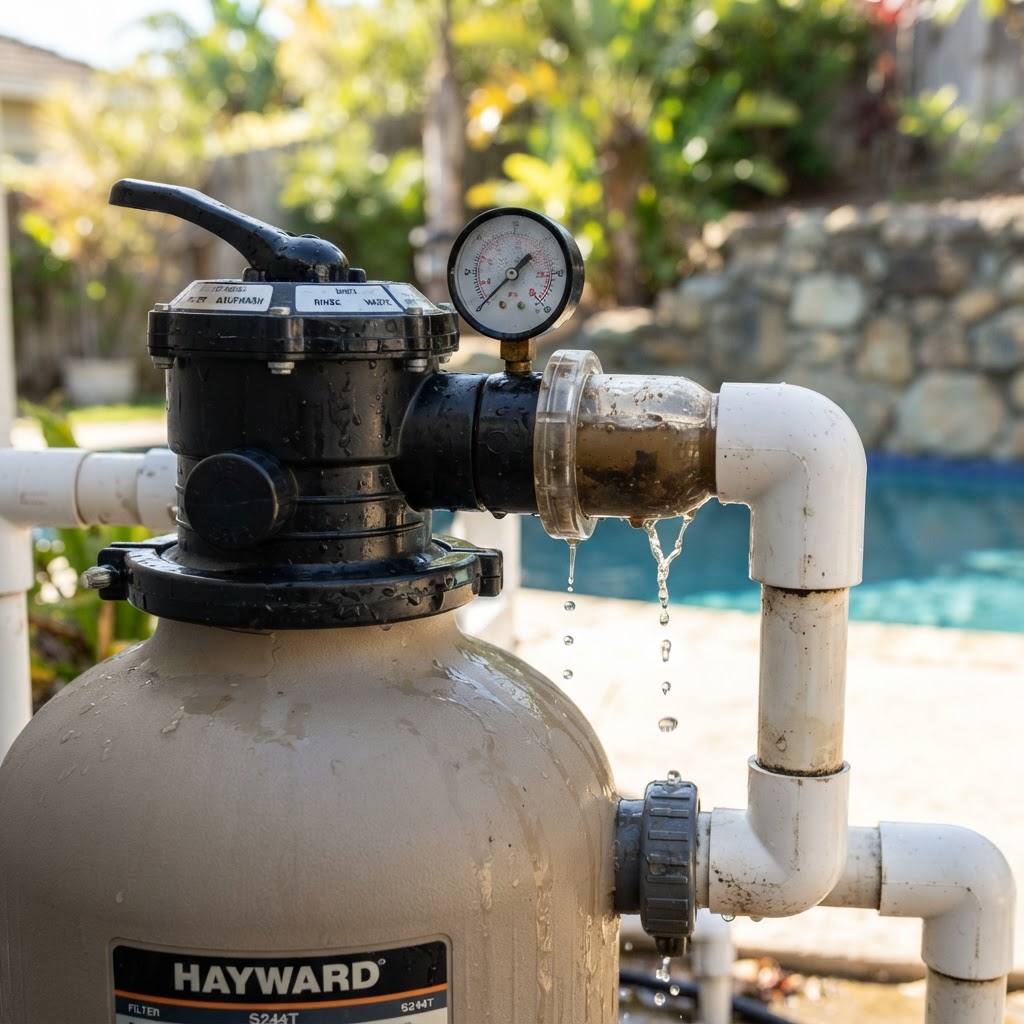
The most reliable way to tell if your filter needs cleaning is by monitoring your pressure gauge.
- The 8-10 PSI Rule: Note the pressure reading immediately after a fresh backwash (this is your "clean pressure"). When the gauge rises 8 to 10 pounds per square inch (PSI) above that baseline, it is time to backwash.
- Visual Cues: If your return jets feel weak or your pool water is starting to look dull despite balanced chemicals, a dirty filter is the likely culprit.
- After Major Events: Always backwash after a heavy storm, a heavy bather load (like a pool party), or after a significant algae bloom treatment.
Pro Tip: Write your "clean pressure" reading in permanent marker directly on the filter tank or on a piece of tape nearby. This eliminates the guesswork during your weekly maintenance checks.
How to Backwash a Sand Filter
Sand filters are the most common systems that require backwashing. While they are low maintenance, doing the process in the wrong order can damage your multi-port valve or blow sand back into your pool.
Step-by-Step Sand Filter Backwash:
- Turn off the pump: NEVER move the multi-port valve handle while the pump is running. This can tear the internal spider gasket.
- Set to 'Backwash': Depress the handle and rotate it to the Backwash position. Ensure your waste hose is rolled out to a proper drainage area.
- Run the pump: Turn the pump back on. Watch the sight glass (the small clear vial on the side of the valve). The water will initially look cloudy or dirty. Run it for 2–3 minutes or until the water in the sight glass runs clear.
- Turn off the pump: Stop the flow again.
- Set to 'Rinse': Move the handle to the Rinse position. This is a critical step that many homeowners skip. Rinsing reseals the sand bed.
- Run the pump: Run on Rinse for about 30–60 seconds.
- Turn off the pump: Stop the flow one last time.
- Return to 'Filter': Set the handle back to the normal Filter position and turn the pump back on.
How to Backwash a DE Filter
Backwashing a DE filter is similar to a sand filter, but with one major difference: you are washing out the "filter cake" (the DE powder) along with the dirt. Because DE filters provide superior clarity, they require a bit more precision. If you are debating which system is right for you, check out our comparison on Which Pool Filter is Best? Sand vs. Cartridge vs. DE Filters Compared.
Step-by-Step DE Filter Backwash:
- Turn off the pump: Ensure the system is powered down.
- Set to 'Backwash': Move the valve to the Backwash setting.
- Run the pump: Run for about 2 minutes until the sight glass is clear.
- The 'Bumping' Technique: For DE filters, it is often helpful to turn the pump off and back on (Backwash mode) a few times to "jiggle" the internal grids and knock loose more debris.
- Rinse: Turn the pump off, move to the Rinse setting, and run for 30 seconds.
- Recharge the filter: Return the valve to Filter and turn the pump on. You MUST now add fresh DE powder through the skimmer. Refer to your filter’s manual for the exact amount (usually measured in 1lb scoops).
Safety Notes and Chemical Balance
Backwashing removes water from your pool. Depending on the size of your filter, you may lose several inches of water. This can significantly impact your chemical balance.
- Refill Promptly: Use a garden hose to bring the water level back to the middle of the skimmer opening.
- Re-test Water: After refilling, always test your water. Aim for these industry-standard ranges:
- Free Chlorine: 1.0–3.0 ppm
- pH: 7.2–7.8
- Total Alkalinity: 80–120 ppm
- Cyanuric Acid (CYA): 30–50 ppm
- Electrical Safety: Always ensure your hands are dry when touching the pump switch or timer box.
Quick Reference: Signs of Filter Trouble
| Symptom | Potential Cause | | :--- | :--- | | High Pressure (>30 PSI) | Severely clogged filter or closed return valve | | Low Pressure (<5 PSI) | Blocked skimmer basket or pump suction issue | | Sand in Pool | Broken lateral or standpipe inside the filter | | DE Powder in Pool | Torn internal grid or faulty manifold | | Short Cycles | Filter needs deep cleaning (degreasing) or replacement |
When to Call a Professional
While backwashing is a standard DIY task, some equipment issues require a certified technician. Contact Tiki Tides Pools if you experience:
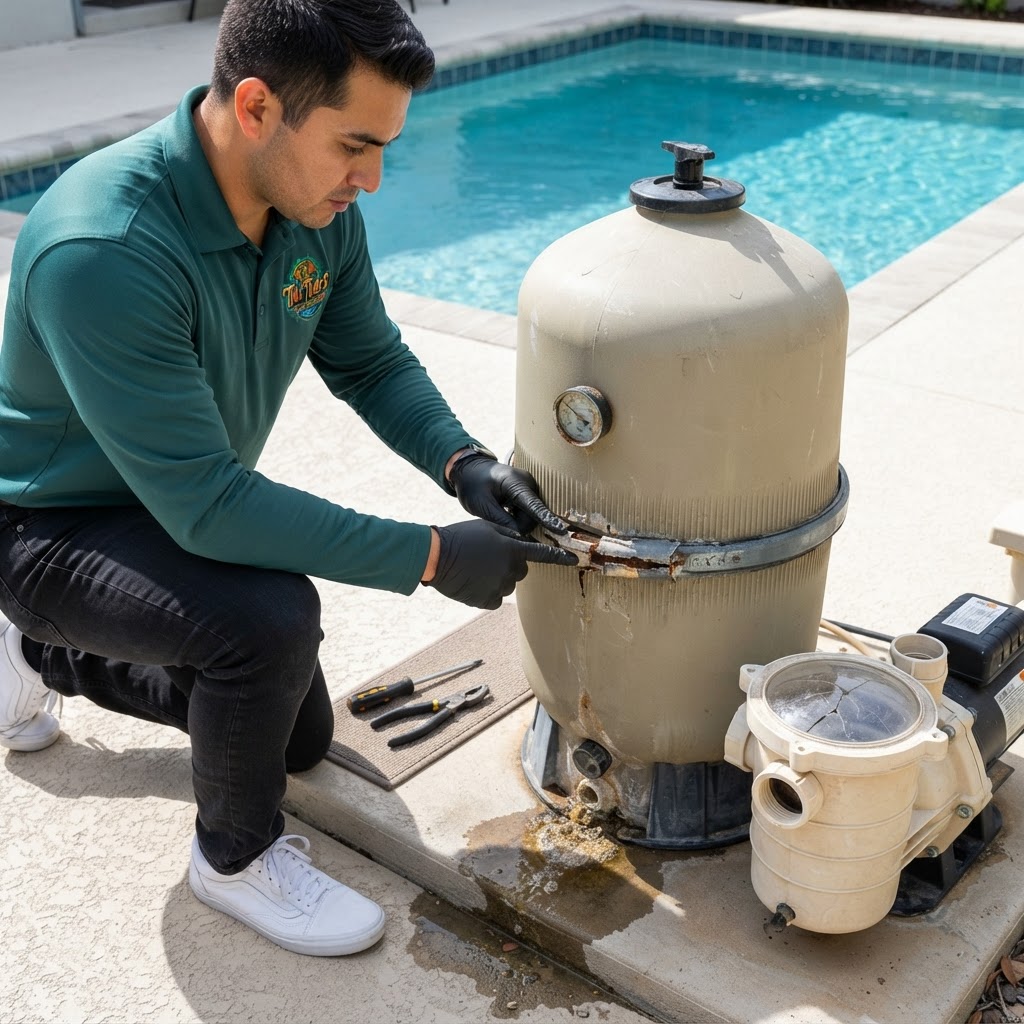
- Leaking Multi-port Valve: If water is constantly trickling out of the waste line while in "Filter" mode.
- Stuck Handle: If the valve handle becomes difficult to turn or feels "gritty."
- Persistent High Pressure: If the pressure remains high even after a thorough backwash.
- Visible Media: If you see sand or white DE powder returning to the pool floor.
Summary
Backwashing your pool filter is one of the simplest yet most effective ways to ensure your swimming environment remains healthy and clear. By monitoring your pressure gauge and following the proper "Off-Switch-On" sequence, you protect your pump and maintain the longevity of your filter media. Remember to always rinse after backwashing and re-balance your chemicals once the water level is restored. Happy swimming!