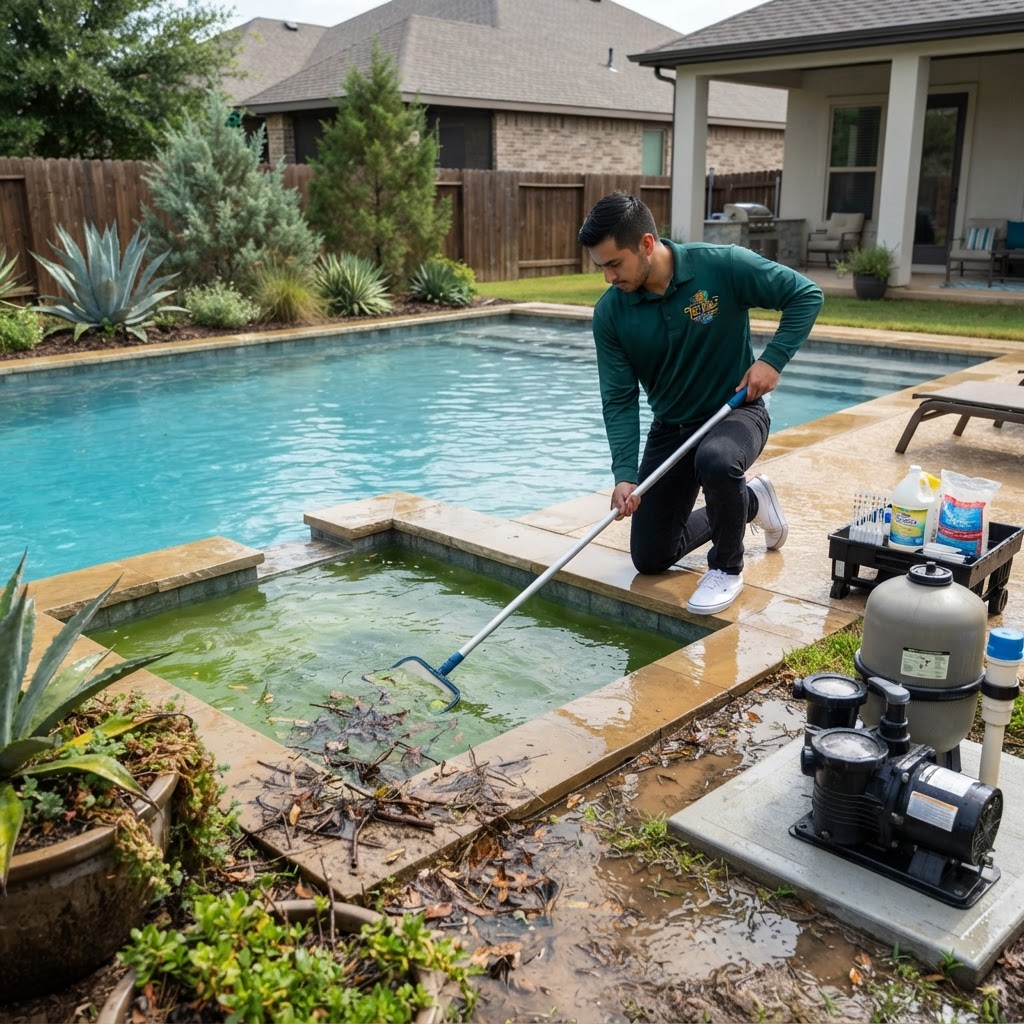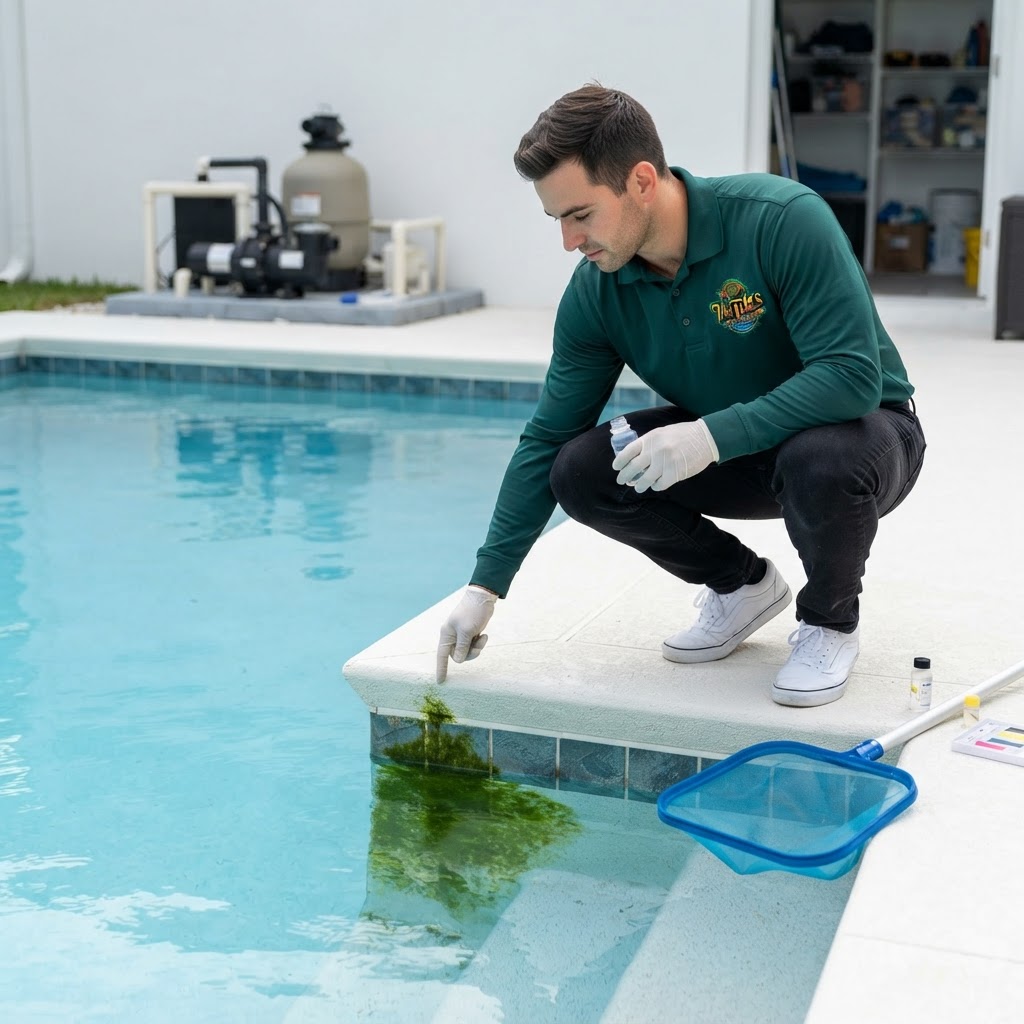
Mustard algae, scientifically known as yellow-green algae (Xanthophyceae), is the bane of many pool owners' existence. Unlike its cousin, the common green algae, mustard algae is notoriously chlorine-resistant and has a frustrating habit of returning just when you think you've won the battle. At Tiki Tides Pools, we often see homeowners mistake this stubborn invader for simple sand or pollen, leading to ineffective treatments and wasted chemicals.
Understanding how to identify and eliminate mustard algae is crucial for maintaining a healthy, inviting swimming environment. Because this species can survive in high-chlorine environments that would easily kill other algae types, a standard maintenance routine is rarely enough. You need a targeted, aggressive approach to reclaim your water and ensure the spores don't hitch a ride back into your pool on your equipment or swimwear.
If your pool is looking more emerald than gold, you might be dealing with a different issue; check out our guide on Green Algae Treatment: How to Clear Your Pool Fast. However, if you are seeing persistent yellow dust, read on to learn how to defeat this resilient foe.
How to Identify Mustard Algae
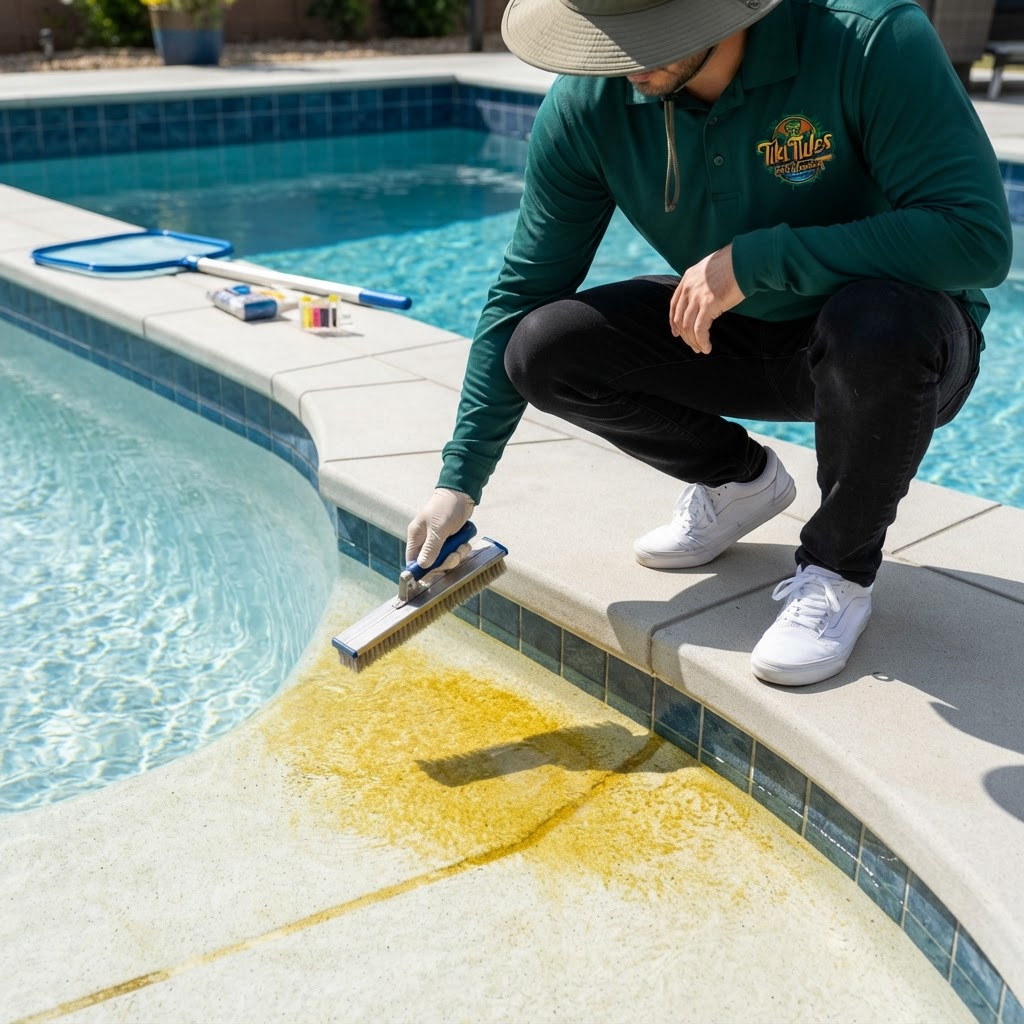
Mustard algae is often called "yellow algae" because of its distinct color, which ranges from a light turmeric yellow to a dark brownish-gold. It typically appears as a fine, dusty substance on the floor and walls of the pool. Unlike green algae, which floats and clouds the water, mustard algae is heavy and clings to surfaces.
The "Cloud" Test
One of the easiest ways to identify mustard algae is the brush test. When you run a pool brush over the affected area, mustard algae will puff up into a cloud and seemingly disappear into the water, only to settle back down in the same spot a few hours later.
Mustard Algae vs. Pollen
It is very common to mistake mustard algae for pollen or sand. Here is how to tell the difference:
- Location: Pollen usually floats on the surface or settles in swirls on the floor. Mustard algae prefers shaded areas, such as behind ladders, under steps, or in the shadows of the deep end.
- Texture: If you can feel the grains, it is likely sand. Mustard algae feels slimy or like very fine dust.
- Persistence: Pollen is seasonal and usually clears up with a fine-mesh filter bag. Mustard algae will grow and spread even if you vacuum it out, as the microscopic spores remain in the water.
Why Mustard Algae is So Difficult to Kill
The primary challenge with mustard algae is its resistance to chlorine. While the CDC recommends a maintenance level of 1.0–3.0 ppm for Free Chlorine, mustard algae can survive and even thrive at these levels. It has a protective outer layer that requires a much higher concentration of sanitizer to penetrate.
Furthermore, mustard algae is a "hitchhiker." The spores are microscopic and can survive on dry surfaces for long periods. If you treat your pool but don't clean your brushes, vacuum hoses, or even your swimsuits, you will likely re-introduce the algae the next time you use them. Understanding the root cause is essential; see Why Is My Pool Water Green? 7 Common Causes and Fixes for more on how different algae varieties behave.
Pro Tip: Mustard algae loves phosphates, which act as a primary food source. If you have recurring algae issues despite perfect chlorine levels, have your water tested for phosphates and use a phosphate remover if levels exceed 200 ppb.
Step-by-Step Guide to Eliminating Mustard Algae
To successfully eliminate mustard algae, you must follow a rigorous protocol. Skipping even one step can lead to a re-infestation within days.
1. Clean the "Hitchhikers"
Before you add a single chemical to the water, gather everything that has been in the pool: toys, floats, cleaning equipment, and vacuum hoses. Place them in the shallow end of the pool so they can be sanitized during the shock process. Wash all swimsuits in hot water and dry them thoroughly.
2. Balance the Water Chemistry
Chlorine is most effective when the water is properly balanced. Test your water and adjust to these ranges:
- pH: 7.2–7.4 (Chlorine is more active at the lower end of the safe range).
- Total Alkalinity: 80–120 ppm.
- Cyanuric Acid (CYA): 30–50 ppm. If CYA is above 50 ppm, the chlorine may be "locked" and unable to kill the algae.
3. Brush the Pool Thoroughly
You must physically break the algae's protective layer. Brush the walls, floor, and especially the shaded areas behind ladders and lights. Even if you don't see algae in a certain spot, brush it anyway to ensure no spores are hiding.
4. The Triple Shock Treatment
Standard shocking won't work here. You need to perform a "triple shock," which means adding 3 pounds of calcium hypochlorite (cal-hypo) shock per 10,000 gallons of water. This should bring your Free Chlorine levels to approximately 30 ppm.
5. Run the Filter 24/7
Keep your pump running continuously for at least 24 to 48 hours. This ensures the high concentration of chlorine circulates through every inch of the plumbing and filter media.
6. Final Cleanup
Once the water is clear and the chlorine levels begin to drop, brush the pool one last time. Vacuum any settled debris to waste (if your filter allows) to remove the dead algae from the system. Finally, clean or backwash your filter to ensure no spores remain trapped in the sand, D.E., or cartridge.
Quick Reference: Safe Water Ranges
| Parameter | Recommended Range | Source | | :--- | :--- | :--- | | Free Chlorine | 1.0–3.0 ppm | CDC Standard | | pH | 7.2–7.8 | CDC Standard | | Total Alkalinity | 80–120 ppm | Industry Standard | | Calcium Hardness | 200–400 ppm | Industry Standard | | Cyanuric Acid | 30–50 ppm | Industry Standard |
Safety Notes
Handling pool chemicals requires extreme caution. Always follow these safety guidelines:
- Protective Gear: Wear chemical-resistant gloves and safety goggles when handling shock or acid.
- No Mixing: Never mix different types of chlorine together. This can cause a violent chemical reaction or explosion.
- Chemical Storage: Store chemicals in a cool, dry, well-ventilated area out of reach of children and pets.
- No Swimming: Do not enter the pool during the triple-shock process. Wait until Free Chlorine levels have returned to the safe range of 1.0–5.0 ppm and the water is clear.
When to Call a Professional
Mustard algae can be incredibly resilient. You should contact Tiki Tides Pools if:
- You have completed the triple-shock process twice and the algae returns.
- Your water remains cloudy for more than 48 hours after treatment.
- You are uncomfortable handling high concentrations of chemicals.
- You suspect the algae is growing inside your light niches or plumbing where you cannot reach it with a brush.
Summary
Mustard algae is a frustrating but manageable problem. By correctly identifying the yellow dust, sanitizing your equipment, and performing a rigorous triple-shock treatment, you can eliminate this chlorine-resistant invader. Remember that prevention is the best medicine: maintain a consistent cleaning schedule, keep your water balanced within CDC guidelines, and keep an eye on those shaded corners of your pool. With a little diligence, you can keep your Tiki Tides pool crystal clear all season long.