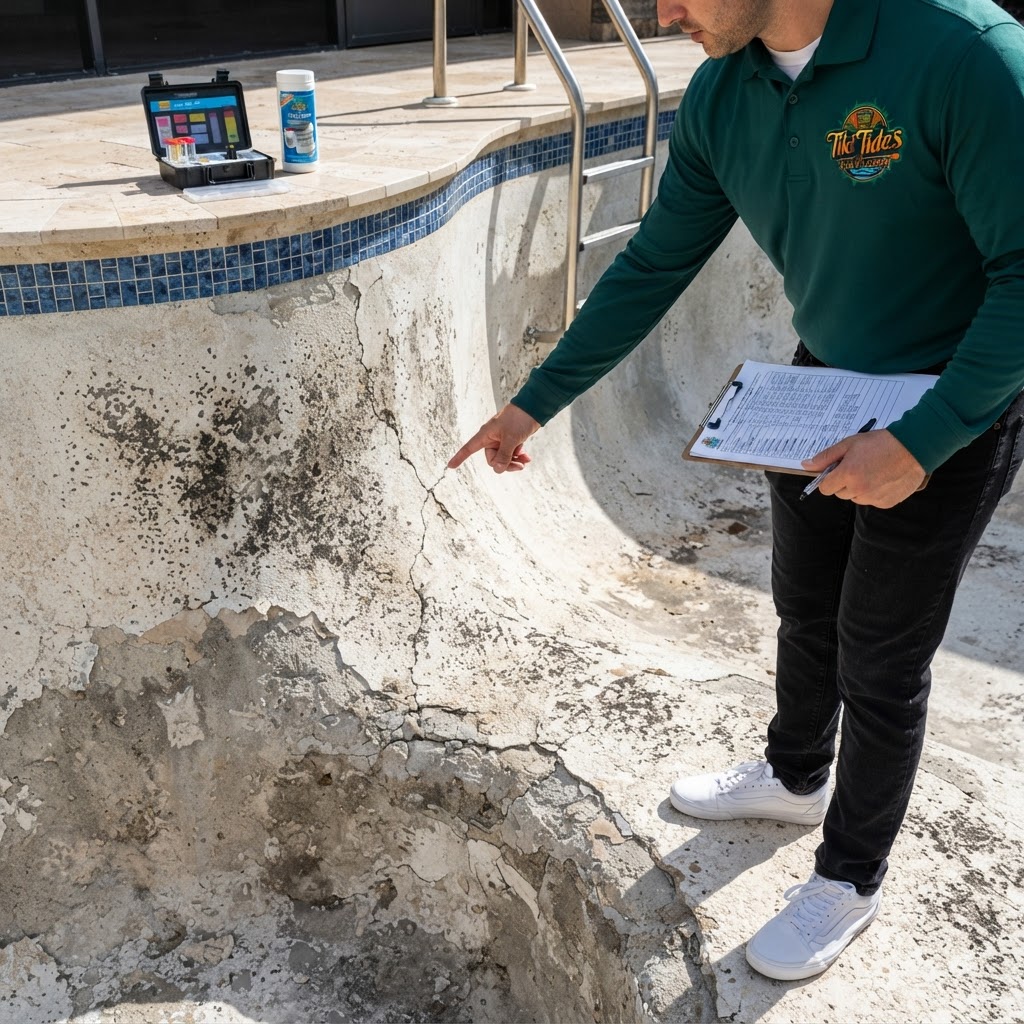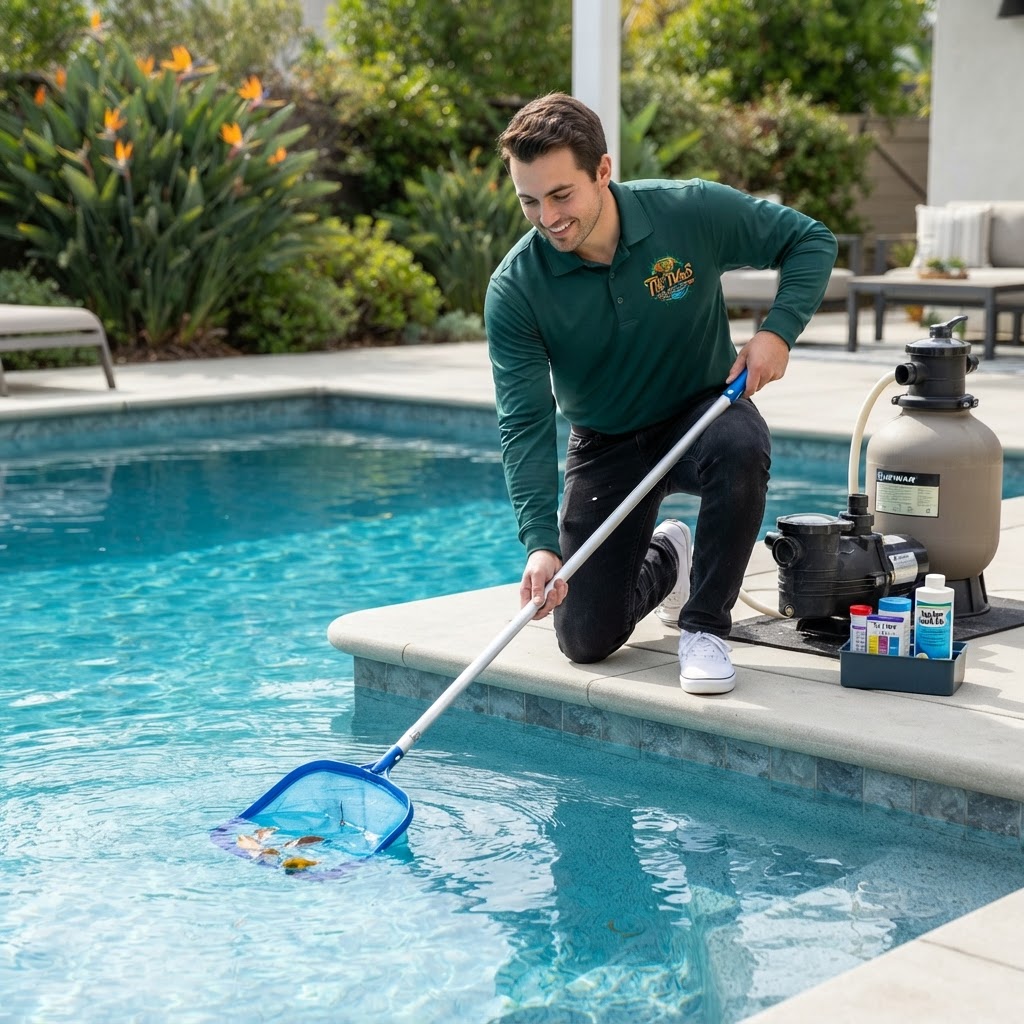
There is nothing quite as frustrating for a pool owner as looking out at a beautiful backyard oasis only to see a thick, white, crusty ring around the waterline. This unsightly buildup, known as pool scale, can make even the cleanest water look neglected. Beyond the aesthetics, calcium deposits can become a breeding ground for oils and organic debris, eventually leading to a much harder cleaning job if left unaddressed.
At Tiki Tides Pools, we know that pool tile cleaning is about more than just 'elbow grease.' It is a science that involves understanding water chemistry and using the right tools to protect your tile’s glaze. In this guide, we will walk you through the professional methods for identifying, removing, and preventing calcium scale so your pool stays as inviting as the day it was plastered.
Understanding Your Enemy: Carbonate vs. Silicate
Before you start scrubbing, you need to know what you are dealing with. Not all white crust is created equal. There are two primary types of calcium scale found in swimming pools:
- Calcium Carbonate: This is the most common type. It appears as a white, flaky, or powdery crust. The good news is that calcium carbonate is relatively easy to remove with a bit of acid-based cleaner or a pumice stone.
- Calcium Silicate: This is the 'final boss' of pool scale. It is usually grey-white and incredibly hard. It forms when calcium reacts with silicates in the water or the pool's construction materials. If you drop a bit of muriatic acid on it and it doesn't fizz, you likely have silicate. This often requires professional equipment to remove without damaging the tile.
Tools and Materials for the Job
To clean your pool tiles like a pro, you will need the following kit:
- A stiff pool brush: Essential for initial debris removal. Learn more about choosing the right brush in our guide: Master the Art of Pool Brushing: The Ultimate Guide to a Spotless Pool.
- Pumice stone or specialized tile scrubber: Safe for ceramic or porcelain tile (use caution on glass or stone).
- Commercial Tile Cleaner: Look for a non-phosphorous, acid-based cleaner.
- Muriatic Acid (diluted): For heavy carbonate deposits.
- Personal Protective Equipment (PPE): Rubber gloves, safety goggles, and old clothes.
- A plastic bucket: For mixing solutions.
Step-by-Step: Removing Calcium Carbonate
Step 1: Lower the Water Level
To get the best access to the scale, lower your pool's water level about 6 inches below the tile line. This allows you to work on the buildup without your cleaning agents immediately diluting into the pool water.
Step 2: Brush Away Loose Debris
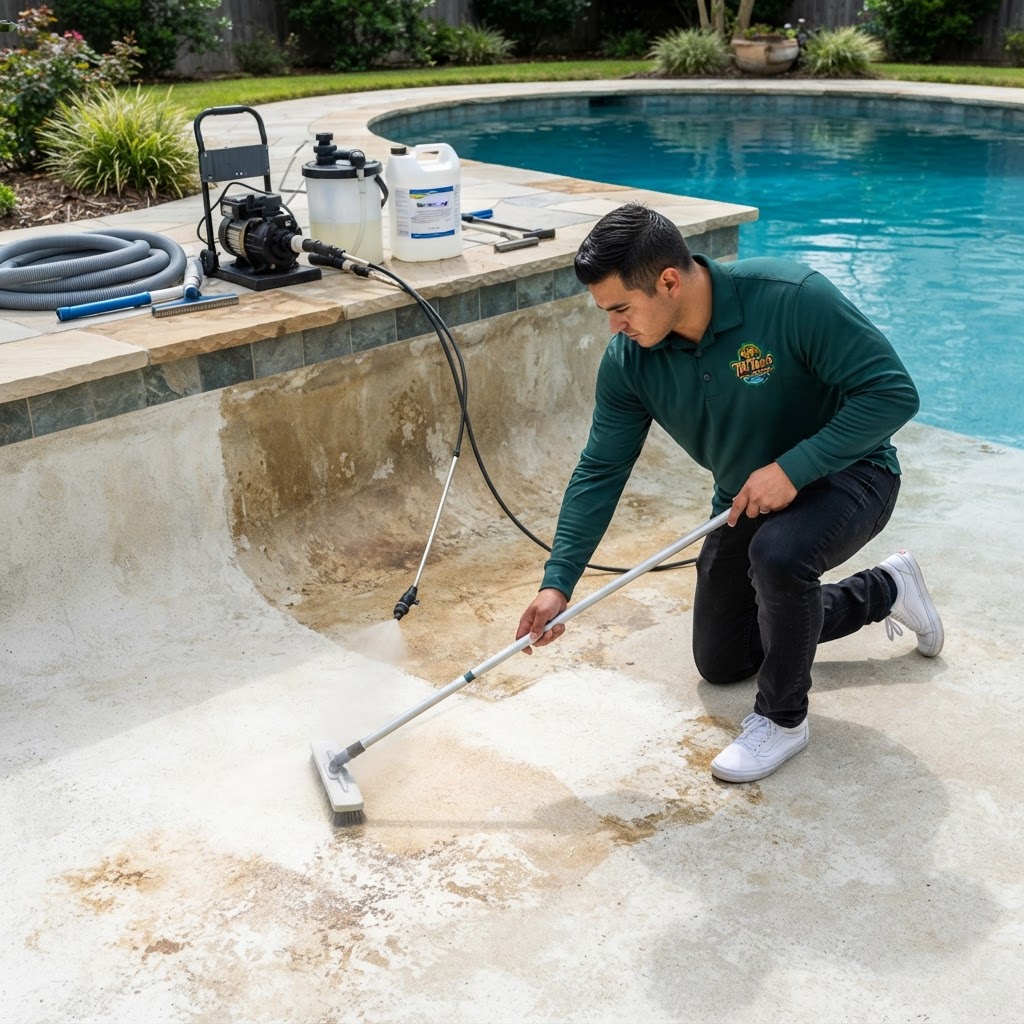
Use a stiff brush to remove any loose organic matter or algae. This ensures your cleaning solution can penetrate the calcium directly. Knowing how often a pool should be cleaned can help prevent this step from becoming a massive chore.
Step 3: Apply Your Cleaning Solution
If using a commercial tile cleaner, apply it according to the manufacturer's instructions. If you are using a DIY mixture of water and muriatic acid (usually a 4:1 ratio of water to acid), apply it carefully with a sponge or brush. Always add acid to water, never water to acid.
Step 4: Scrub and Rinse
Let the solution sit for 2–3 minutes (don't let it dry). Scrub in a circular motion with your pumice stone or scrubbing pad. You should see the calcium begin to dissolve or flake off. Once finished, rinse the area thoroughly with pool water.
Pro Tip: When using a pumice stone, keep both the stone and the tile wet at all times. A dry pumice stone can scratch the glaze off your tile, leading to faster algae growth and even more scale in the future.
The Role of Water Chemistry in Prevention
Removing scale is only half the battle; the real trick is keeping it from coming back. Scale forms when your water chemistry is out of balance, specifically when the Saturation Index (LSI) is too high. To prevent buildup, maintain these industry-standard ranges:
- pH: 7.2–7.8 (Keep it on the lower end, 7.2–7.4, to discourage scale).
- Total Alkalinity: 80–120 ppm.
- Calcium Hardness: 200–400 ppm.
- Free Chlorine: 1.0–3.0 ppm (per CDC guidelines).
If your Calcium Hardness exceeds 400 ppm, you may need to partially drain and refill your pool with fresh water to lower the mineral concentration.
Safety Notes
Working with pool chemicals and abrasive tools requires caution:
- Chemical Safety: Never mix different cleaning chemicals. If you use a commercial cleaner, don't follow it immediately with muriatic acid unless the area has been completely rinsed.
- Fumes: Muriatic acid produces strong fumes. Always work in an open, well-ventilated area and wear a mask if you are sensitive to smells.
- Tile Integrity: If you have glass tiles or delicate natural stone, do not use a pumice stone. Use a soft nylon brush and a cleaner specifically rated for those surfaces.
When to Call a Professional
While DIY cleaning works for mild to moderate carbonate buildup, some situations require a pro:
- Calcium Silicate: If the scale won't budge with acid or a pumice stone, you have silicate. Trying to remove this yourself often results in cracked tiles.
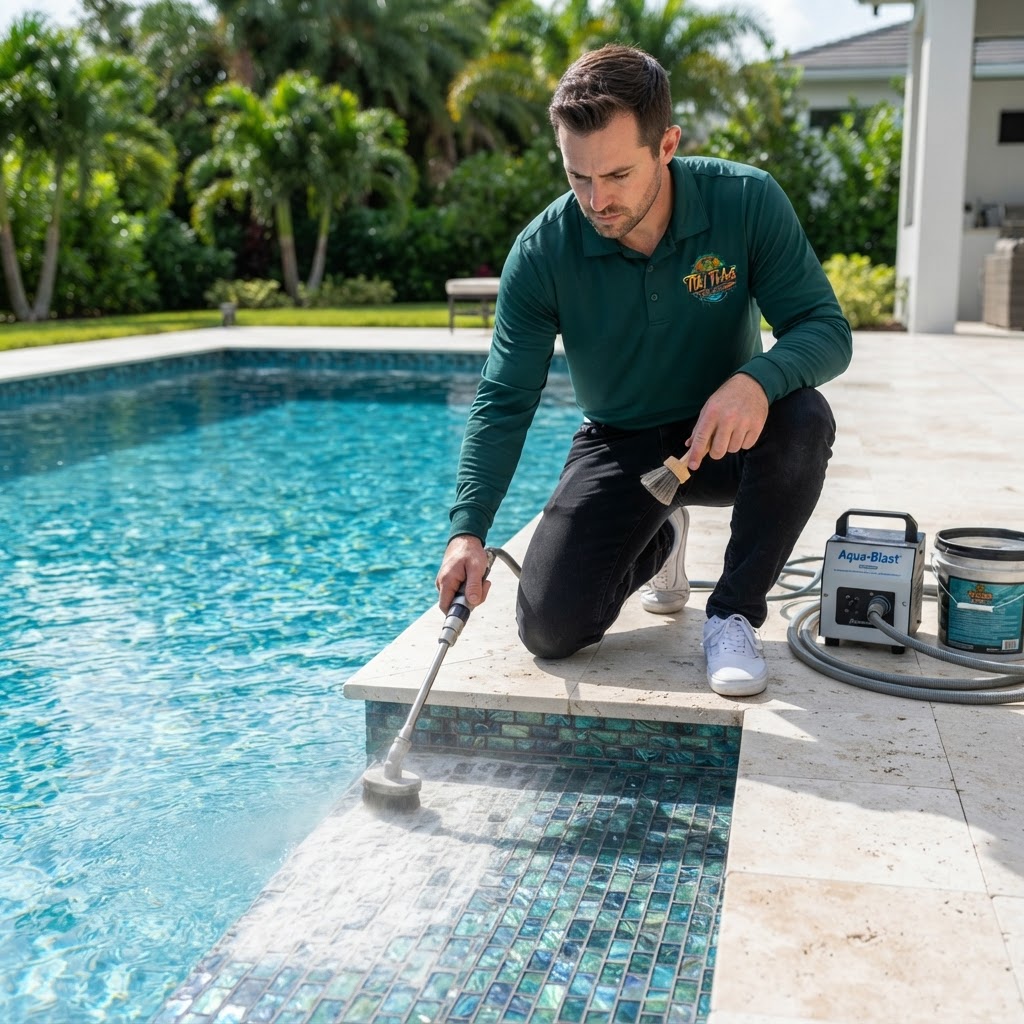
- Large Scale Projects: If the entire perimeter of a large pool is covered in thick scale, professional 'bead blasting' (using salt or glass beads) is the most efficient and safest way to restore the tile without damaging the grout.
- Structural Concerns: If tiles are falling off as you clean, it indicates a failing bond beam or grout issues that need professional repair.
Summary
Cleaning your pool tile doesn't have to be a weekend-long nightmare. By identifying the type of scale you have and using the right combination of chemical cleaners and physical scrubbing, you can restore your pool's shine. Remember, the best defense is a good offense—keep your pH and Calcium Hardness within the recommended ranges to ensure your tile stays crystal clear all season long.