When most pool owners think about water chemistry, their minds immediately jump to chlorine and pH. While those are vital, there is a silent partner working behind the scenes that determines whether your pool stays crystal clear or becomes a maintenance nightmare. That partner is Total Alkalinity (TA). Often referred to as a 'buffer,' Total Alkalinity acts as the bodyguard for your pool's pH level, shielding it from rapid fluctuations that can cause scale, corrosion, and irritation.
Understanding Total Alkalinity is the key to moving from a reactive pool owner to a proactive one. Instead of constantly chasing your pH levels up and down, mastering TA allows you to lock in your chemistry, saving you money on chemicals and extending the life of your pool’s plaster and equipment. In this guide, we will dive deep into what Total Alkalinity is, why it matters, and how to maintain the perfect balance for a safe and inviting swimming environment.
What is Total Alkalinity?
Total Alkalinity is a measurement of the concentration of alkaline substances in your pool water, primarily bicarbonates, carbonates, and hydroxides. In simpler terms, it measures the water's ability to resist changes in pH. If pH is the driver of the car, Total Alkalinity is the steering rack and the guardrails. Without enough alkalinity, your pH will 'bounce' wildly; with too much, your pH will become 'locked' and difficult to adjust.
It is important to distinguish TA from pH. While pH measures how acidic or basic the water is on a scale of 0 to 14, Total Alkalinity measures the quantity of alkaline materials present that can neutralize acid. For a comprehensive overview of how these pieces fit together, check out Master Your Water: The Ultimate Guide to Pool Chemistry for Beginners.
The Crucial Relationship Between TA and pH
The relationship between Total Alkalinity and pH is one of the most important concepts in pool maintenance. Because TA acts as a buffer, it absorbs changes that would otherwise cause the pH to spike or crash.
- Low Total Alkalinity: When TA falls below the recommended range, your water lacks buffering capacity. This leads to 'pH bounce,' where a small amount of rain, a few swimmers, or a dose of chlorine causes the pH to swing dramatically. This erratic behavior makes it nearly impossible to keep your water balanced.
- High Total Alkalinity: Conversely, when TA is too high, the pH becomes stubbornly resistant to change. This is known as 'pH lock.' You may find yourself adding large quantities of acid to lower the pH, only to see it remain high or drift right back up within hours.
To learn more about managing the other half of this duo, see our guide on Master Your Water Chemistry: How to Balance Your Pool's pH Levels Like a Pro.
The Golden Standard: Ideal Ranges
To keep your pool healthy and your swimmers comfortable, you must maintain specific chemical ranges. According to industry standards from the APSP and CDC, these are the targets you should aim for:
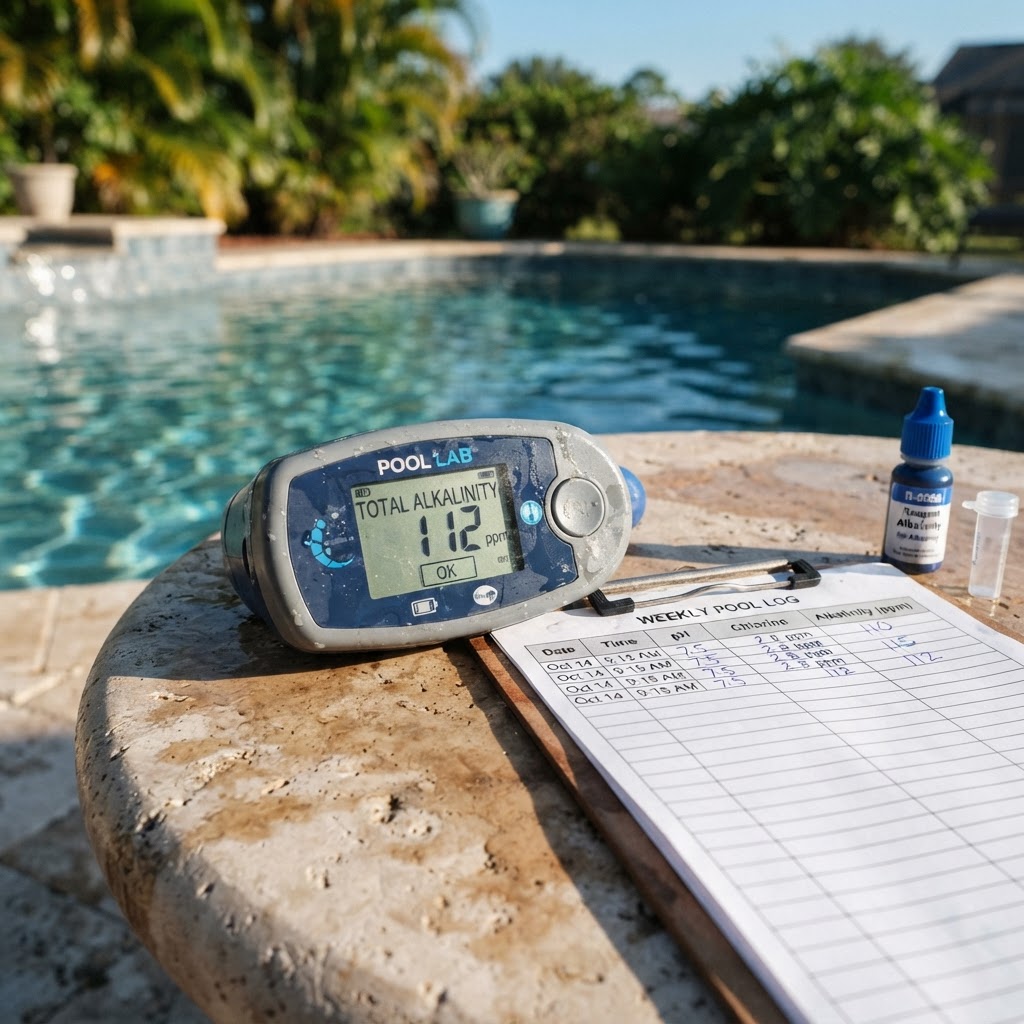
- Total Alkalinity: 80–120 ppm (parts per million)
- pH: 7.2–7.8
- Free Chlorine: 1.0–3.0 ppm
- Calcium Hardness: 200–400 ppm
- Cyanuric Acid (CYA): 30–50 ppm
Pro Tip: Always balance your Total Alkalinity BEFORE you attempt to balance your pH. Because TA affects how pH responds to chemicals, adjusting TA first often brings the pH into range automatically or makes it much easier to move.
Signs of Imbalanced Total Alkalinity
How do you know if your TA is off without a test kit? While testing is the only way to be sure, these symptoms are red flags:
Symptoms of Low TA (< 80 ppm)
- pH Bounce: Sudden, unpredictable shifts in pH readings.
- Corrosion: Pitting of pool heaters, ladders, and light fixtures.
- Staining: Etching on plaster surfaces or staining on vinyl liners.
- Eye Irritation: Swimmers complaining of burning eyes even if chlorine levels are normal.
Symptoms of High TA (> 120 ppm)
- Cloudy Water: High alkalinity often leads to calcium carbonate precipitating out of the water.
- Scale Formation: Crusty white deposits along the waterline and inside pipes.
- High pH Persistence: Constantly high pH that refuses to stay down.
- Reduced Chlorine Efficacy: Chlorine works less efficiently in high-pH/high-TA environments.
How to Test and Adjust Total Alkalinity
Step 1: Accurate Testing
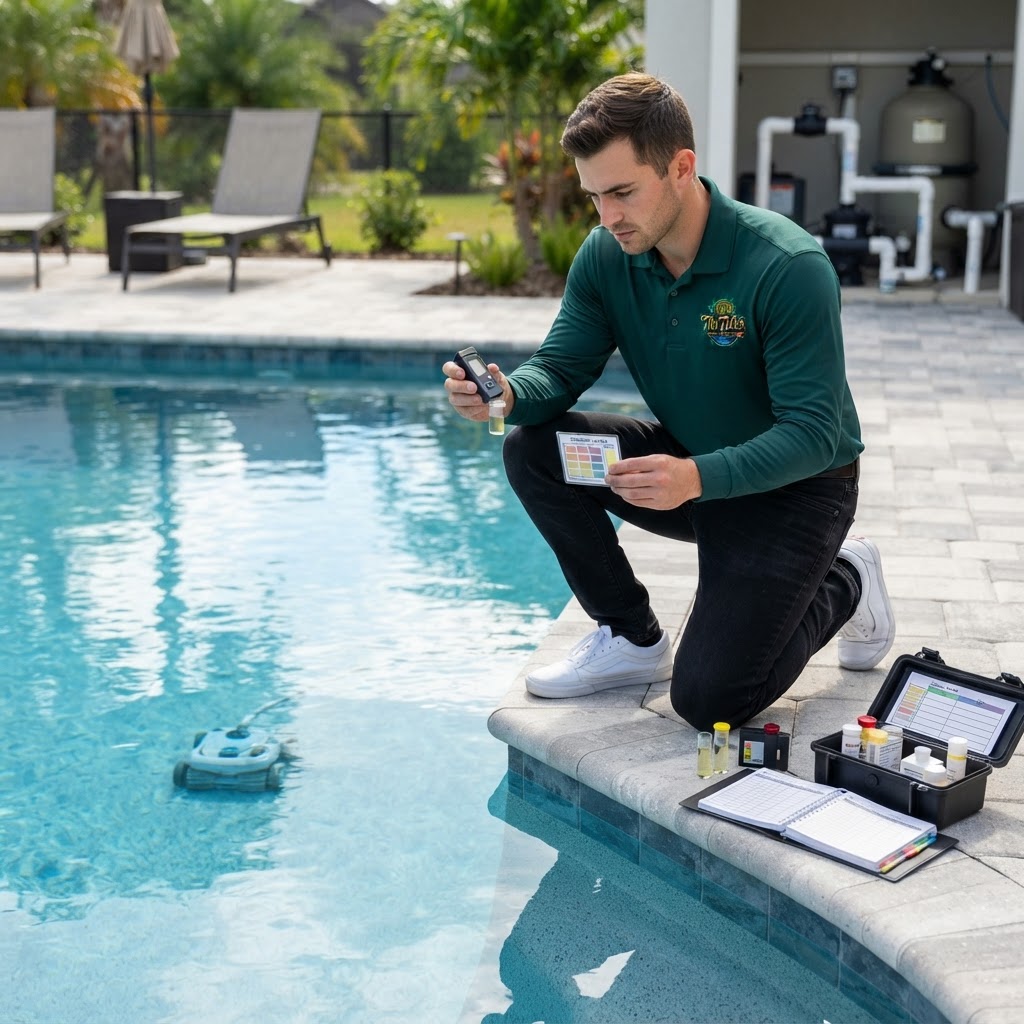
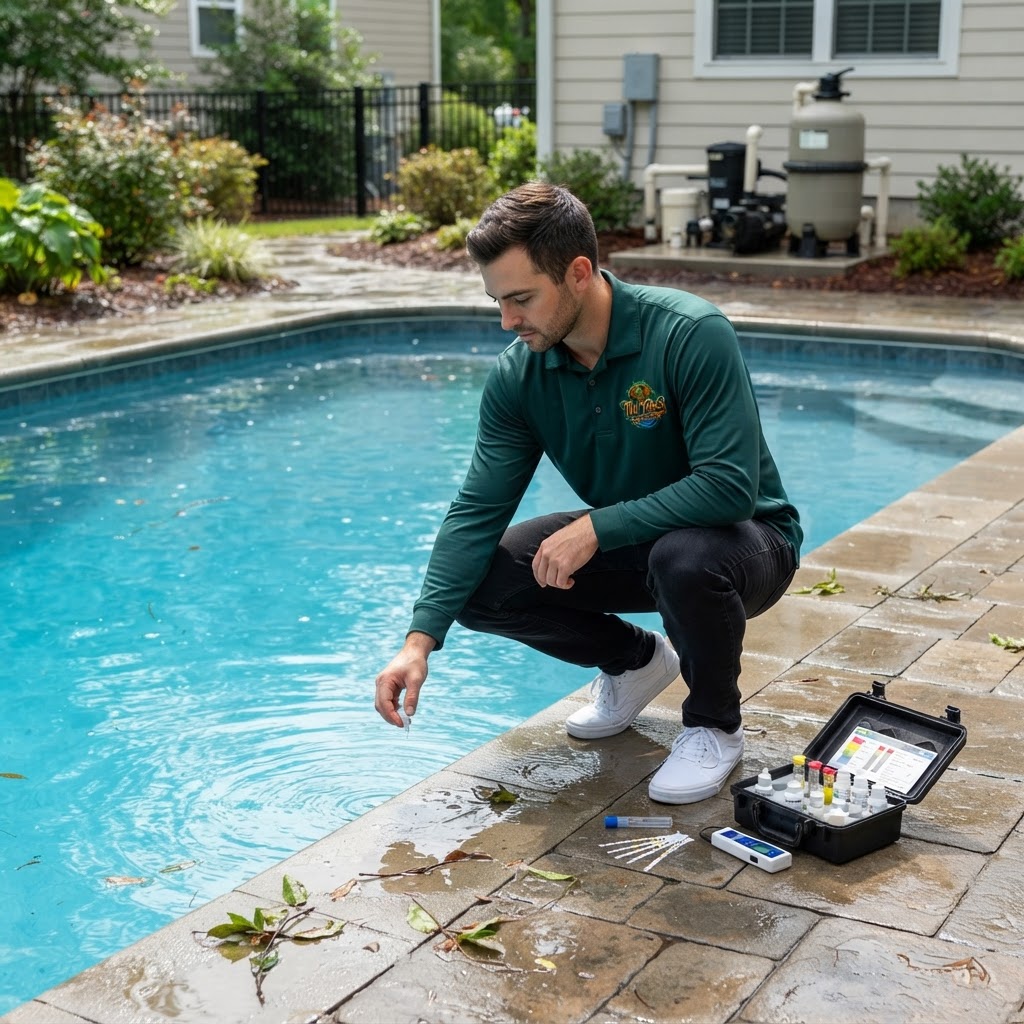
Use a high-quality liquid reagent test kit (like a DPD kit) rather than test strips for the most accurate results. Test your TA at least once a week during the peak swimming season.
Step 2: How to Raise Total Alkalinity
If your TA is below 80 ppm, you need to add an 'Alkalinity Increaser,' which is chemically known as Sodium Bicarbonate (essentially high-grade baking soda).
- Calculate the dosage: Generally, 1.5 lbs of sodium bicarbonate will raise the TA of 10,000 gallons of water by approximately 10 ppm.
- Dilute (Optional): While many products can be broadcast directly, diluting in a bucket of pool water helps prevent clumping.
- Spread: Pour the mixture around the perimeter of the deep end with the pump running.
- Wait: Allow the water to circulate for 6-8 hours before retesting.
Step 3: How to Lower Total Alkalinity
Lowering TA is a slower process. You will need Muriatic Acid or Sodium Bisulfate (Dry Acid).
- Calculate the dosage: Use a pool volume calculator to determine how much acid is needed to drop your TA to the 100 ppm midpoint.
- The 'Slug' Method vs. Aeration: The most effective way to lower TA without crashing your pH too low is to add acid in the deepest part of the pool with the pump off for 15 minutes (to concentrate the acid), OR add the acid and then use water features (fountains, aerators) to raise the pH back up without affecting the TA.
- Retest: Wait 24 hours before retesting, as the chemical reaction takes time to stabilize.
Safety Notes
Working with pool chemicals requires extreme caution. Muriatic acid, in particular, is highly corrosive and produces dangerous fumes.
- Protective Gear: Always wear chemical-resistant gloves, safety goggles, and closed-toe shoes when handling acid or chlorine.
- Order of Operations: Never add water to acid. Always add the chemical TO the water to prevent splashing and heat reactions.
- Storage: Keep chemicals in a cool, dry, well-ventilated area, away from children and pets. Never store acid and chlorine directly next to each other, as mixing their vapors can be lethal.
- Hand Washing: Thoroughly wash your hands after handling any pool chemicals.
When to Call a Professional
While most TA adjustments are DIY-friendly, some situations require an expert eye:
- Stubborn Imbalance: If you have added the recommended amount of chemicals multiple times and your levels haven't moved, there may be a measurement error or high levels of Total Dissolved Solids (TDS).
- Severe Scaling: If your pool walls feel like sandpaper, a professional acid wash or scale treatment may be necessary.
- Equipment Failure: If you suspect low TA has corroded your heater core or pump seals.
- New Pool Finish: Fresh plaster requires very specific chemistry balancing for the first 30 days. Don't risk your warranty—call Tiki Tides Pools to handle the start-up.
Summary
Total Alkalinity is the foundation upon which the rest of your pool chemistry is built. By keeping your TA between 80 and 120 ppm, you provide the necessary 'bodyguard' for your pH, ensuring it stays within the healthy 7.2–7.8 range. This simple act of balance protects your equipment, saves you money on sanitizers, and ensures every swim is a comfortable one. Keep your test kit handy, follow the safety protocols, and enjoy the peace of mind that comes with a perfectly balanced pool!