Owning a backyard pool is one of the greatest joys of homeownership, offering endless summer fun, relaxation, and relief from the heat. However, keeping pool water crystal clear and sanitary requires a consistent routine and an understanding of water dynamics. Too often, well-meaning DIY pool owners take shortcuts or overlook vital steps, turning their sparkling oasis into a cloudy, algae-ridden chore.
Understanding the most common pool maintenance mistakes homeowners make can save you thousands of dollars in equipment repairs, extend the life of your pool plaster or liner, and protect your family from unsafe swimming conditions. Even minor missteps—like shocking the pool under direct midday sunlight or neglecting circulation—can throw the entire ecosystem of your pool out of balance.
Whether you are a new pool owner or have cared for your pool for seasons, avoiding these critical errors will keep your maintenance routine smooth and your water pristine year-round.
1. Shocking Your Pool During the Day
One of the most frequent chemical blunders is shocking the pool while the sun is beating down. Most pool shock products consist of unstabilized chlorine (such as calcium hypochlorite or liquid sodium hypochlorite). When exposed to direct ultraviolet (UV) radiation from sunlight, unstabilized free chlorine can burn off at rates exceeding 1 ppm per hour. By mid-afternoon, up to 90% of the shock you just purchased could vanish without sanitizing the water.
The Fix: Always shock your pool at dusk or night. This allows the sanitizer to circulate and eliminate organic contaminants, bacteria, and combined chlorines for 8 to 12 uninterrupted hours without degradation from solar rays.
2. Adding Chemicals Directly into the Skimmer
Pouring concentrated chemicals directly into your pool's skimmer basket might seem convenient, but it is one of the fastest ways to destroy your pool equipment. When you dump granular shock, chlorine tablets, or acid into the skimmer, high-potency chemical slurries get drawn immediately through the suction lines into the pool pump, filter, and heater.
- Acid in the skimmer rapidly corrodes metal heat exchanger coils inside heaters and degrades rubber pump seals.
- Granular shock in the skimmer can create an explosive reaction if residual trichlor tablets or incompatible chemicals are present in the line.
The Fix: Pre-dissolve pool chemicals in a clean bucket of pool water (unless explicit manufacturer instructions say otherwise) and broadcast them slowly around the perimeter of the deep end with the pump running.
3. Ignoring pH and Total Alkalinity Balance
Many homeowners focus exclusively on chlorine, neglecting the baseline parameters that dictate how chlorine functions. pH and Total Alkalinity are inextricably linked:
- If your pH is below 7.2, the water turns acidic, eroding pool plaster, destroying heat exchangers, and causing severe eye irritation.
- If your pH climbs above 7.8, chlorine loses over 70% of its sanitizing efficacy, leading to cloudy water, scaling, and algae blooms.
- Total Alkalinity acts as a buffer for pH. Without proper alkalinity, your pH will swing erratically (known as "pH bounce").
Pro Tip: Always test and balance Total Alkalinity before adjusting your pH. Because alkalinity buffers pH fluctuations, fixing alkalinity first often brings pH naturally back into its target window.
Critical Water Chemistry Ranges (CDC & APSP Standards)
- Free Chlorine: 1.0–3.0 ppm
- pH: 7.2–7.8
- Total Alkalinity (TA): 80–120 ppm
- Calcium Hardness: 200–400 ppm
- Cyanuric Acid (CYA): 30–50 ppm
Keeping your pool in balance takes regular diligence; using The Ultimate Pool Maintenance Checklist: Daily, Weekly, and Monthly Tasks helps ensure these parameters never slip out of range.
4. Not Running the Pump Long Enough
Stagnant water invites algae and bacteria to flourish. In an effort to trim utility bills, some pool owners run their filtration systems for only two to four hours a day. However, every drop of water in your pool must pass through the filtration system at least once—and ideally twice—every 24 hours (known as the turnover rate).
The Fix: Run your pool pump between 8 and 12 hours a day during swimming season. If electricity consumption is a concern, invest in a variable-speed pump, which can run at lower, energy-efficient RPMs for longer cycles, using up to 70% less power than standard single-speed units.
5. Neglecting the Pool Filter and Pressure Gauge
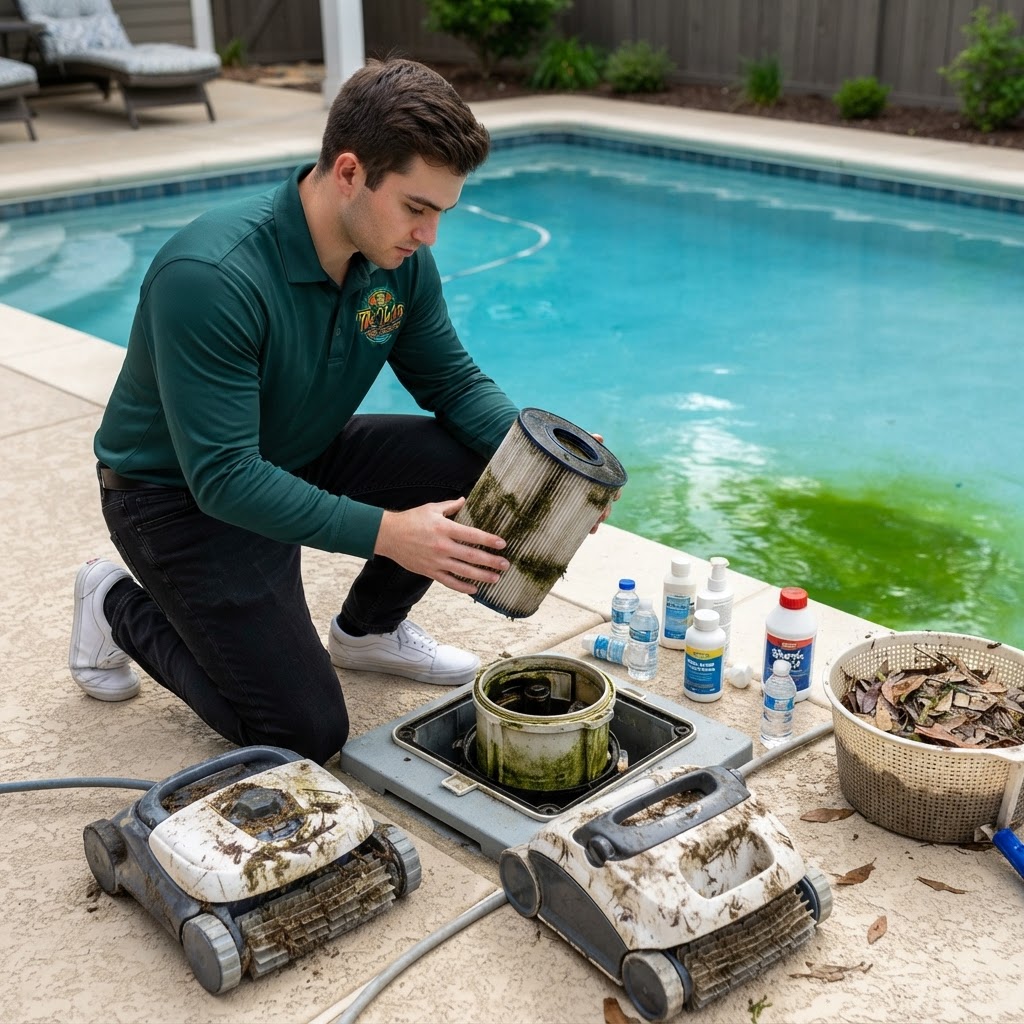
Your filter is your pool's primary defense against microscopic debris, pollen, and dead algae. When a filter becomes loaded with sediment, circulation plummets, head pressure rises, and your pump experiences extreme mechanical strain.
Ignoring your filter until the pool turns green or the pump sounds stressed is a serious error. Learn the baseline operational pressure of your filter (PSI) when clean. Once the gauge reads 8 to 10 PSI above the clean baseline, the filter must be backwashed or manually disassembled and cleaned. For comprehensive cleaning instructions for every filter type, read How to Clean a Pool Filter: The Ultimate Guide for DE, Cartridge, and Sand Filters.
6. Allowing Organic Debris to Settle on the Floor
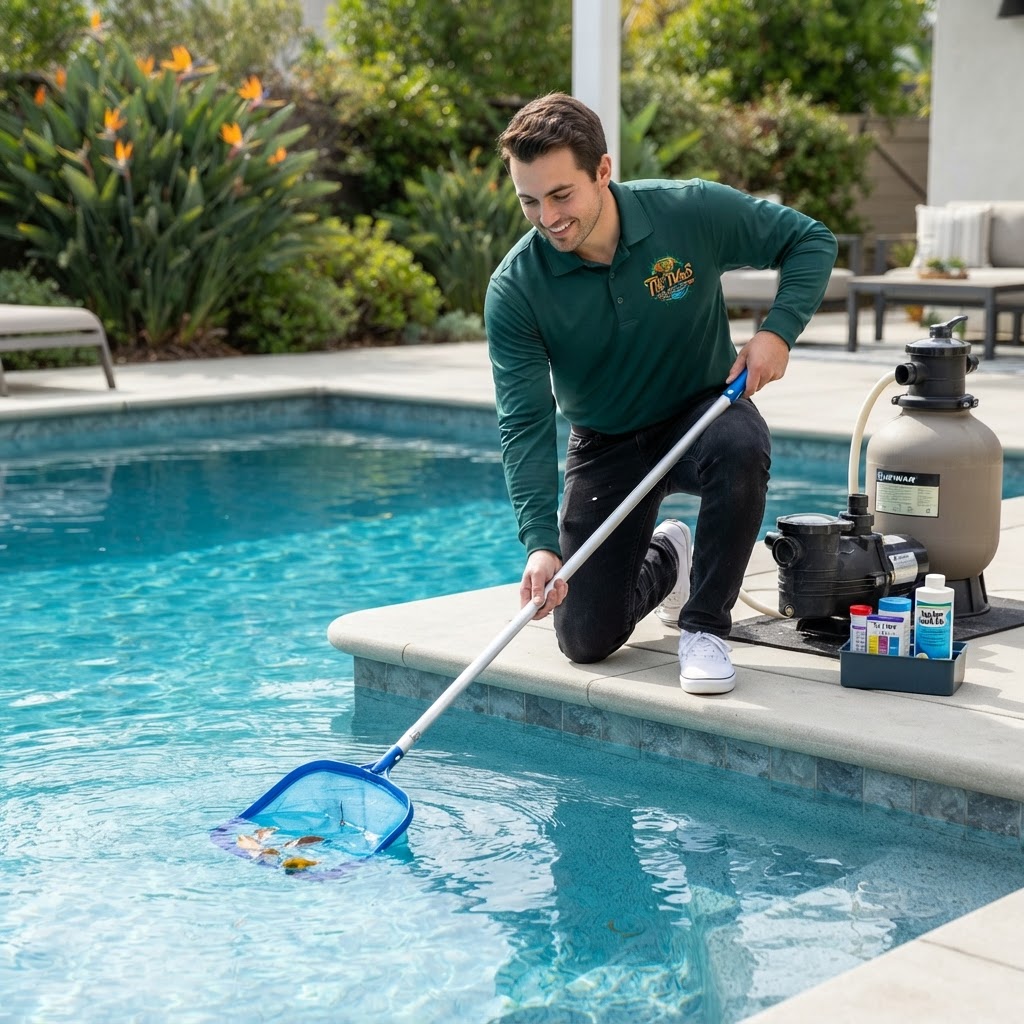
Failing to perform routine surface skimming allows floating leaves, blossoms, and insects to absorb water, sink to the bottom, and decay. Decomposing organic matter rapidly consumes free chlorine and releases tannins that cause stubborn black and brown stains on plaster and vinyl.
Mastering routine surface upkeep with our guide to Master Pool Skimming and Surface Cleaning: The Ultimate Guide to a Sparkling Pool prevents settled debris and reduces chemical demand substantially.
7. Believing a "Strong Chlorine Smell" Means Too Much Chlorine
When a pool emits a harsh, pungent chemical odor that burns your eyes, most swimmers assume the water has an overabundance of chlorine. In reality, the exact opposite is usually true.
That sharp smell comes from chloramines (combined chlorine), formed when free chlorine binds with nitrogen and ammonia compounds from sweat, urine, and cosmetics. Chloramines are ineffective sanitizers that cause irritation. To eliminate chloramines, you actually need to add more chlorine—typically shocking the pool to breakpoint chlorination (10 times the combined chlorine level) to break the molecular bonds and restore free, active sanitizer.
Quick Reference: Top Avoidable Mistakes
- Testing infrequently: Test sanitizer and pH at least twice weekly.
- Storing chemicals together: Never store acids and chlorinating compounds side-by-side.
- Brushing too rarely: Algae develops a protective biofilm; brushing walls weekly is mandatory.
- Ignoring Cyanuric Acid (CYA): High CYA (>100 ppm) locks up chlorine; low CYA (<30 ppm) lets UV burn off chlorine in minutes.
Safety Notes
Pool maintenance involves potent chemicals that demand strict adherence to CDC and EPA safety protocols:
- Never mix chemicals: Mixing chlorine types (such as cal-hypo with trichlor) or mixing chlorine with acid can trigger a violent explosion or produce toxic chlorine gas.
- Add chemical to water, NEVER water to chemical: When diluting granular or liquid compounds, always fill the bucket with pool water first, then slowly add the chemical to avoid severe splashing or thermal reactions.
- Wear proper PPE: Always wear chemical-resistant gloves and safety goggles when handling pool chemicals.
- Store in a cool, ventilated space: Keep all chemicals in original containers off the floor, away from moisture, direct sunlight, and heat sources.
When to Call a Professional
While most everyday pool maintenance can be managed by a dedicated homeowner, certain scenarios require certified equipment technicians and pool chemistry specialists:
- Persistent cloudy or green water that does not clear after multiple shock treatments and proper filtration.
- Mechanical issues such as air leaks in the suction line, leaking pump seals, noisy motor bearings, or heater ignition failures.
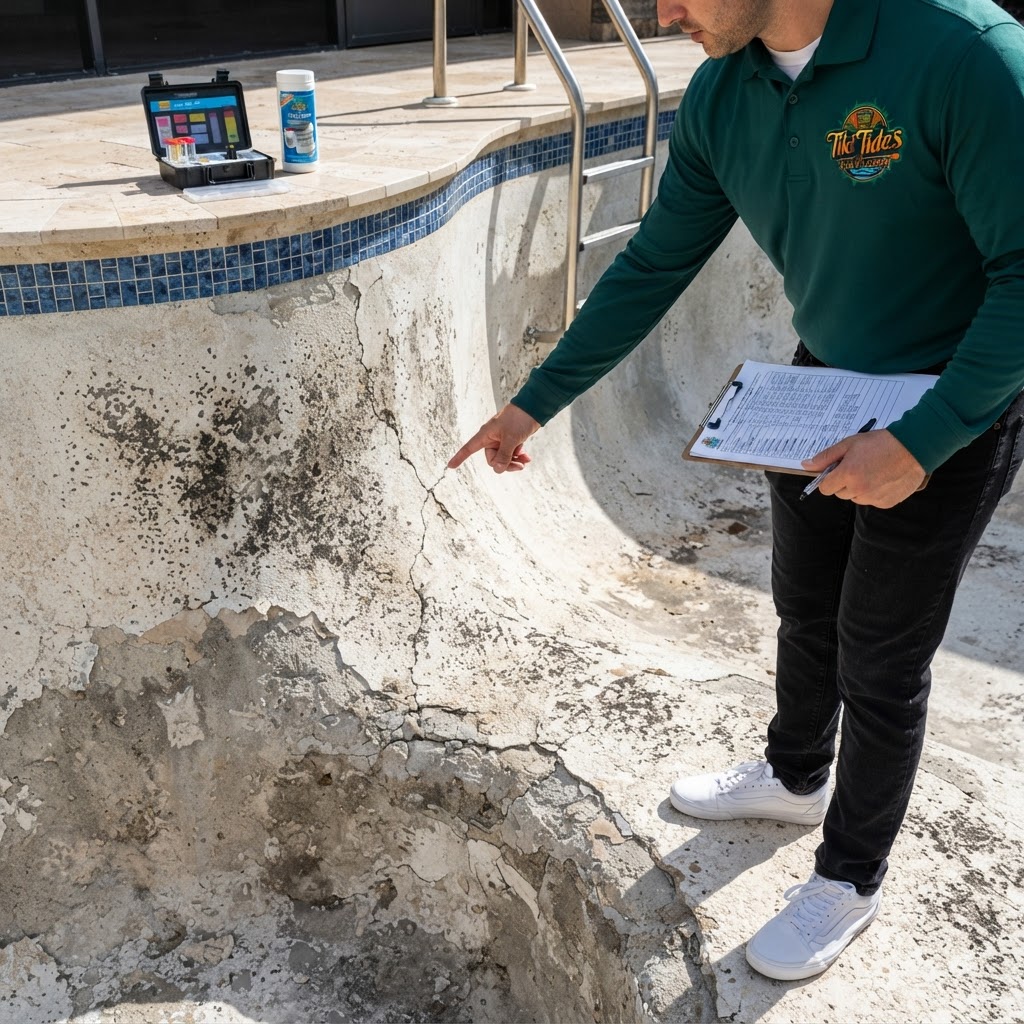
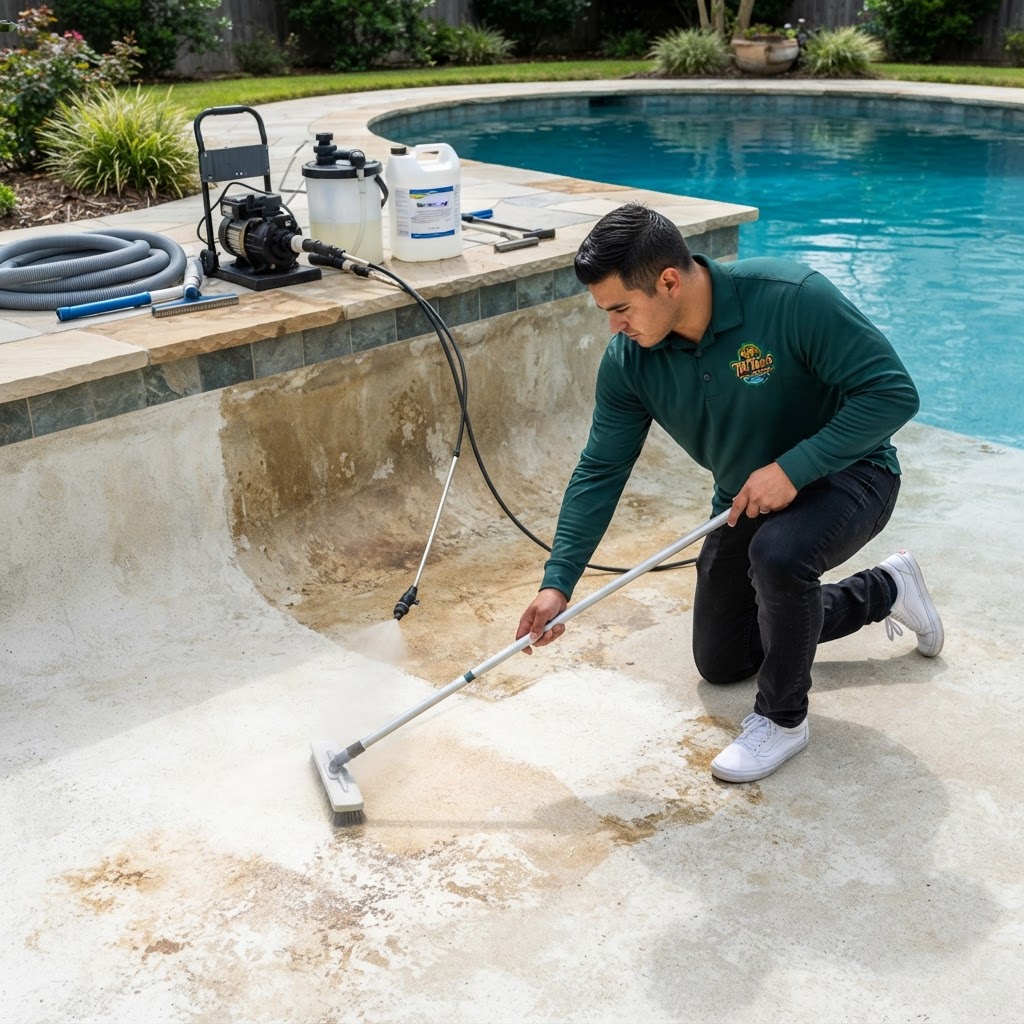
- Severe calcium scaling or complex metal staining that requires diagnostic acid washes or stain lifts.
- Overstabilization (CYA above 100 ppm), which frequently requires partial or complete draining and specialized refilling procedures.
Summary
Avoiding common pool maintenance mistakes doesn't require a chemistry degree—just consistency, correct dosing procedures, and respect for filtration and water balance. By running your equipment adequately, balancing your pH and alkalinity within CDC and APSP guidelines, and handling chemicals safely, your pool will remain a sparkling, refreshing centerpiece for your home all season long.
Related Reading
- What Does Weekly Pool Service Include? A Professional Maintenance Guide
- Master Pool Skimming and Surface Cleaning: The Ultimate Guide to a Sparkling Pool
- How to Remove Pool Stains: A Expert Guide to Organic and Metal Stain Removal
- The Ultimate Pool Maintenance Checklist: Daily, Weekly, and Monthly Tasks
- How to Clean a Pool Filter: The Ultimate Guide for DE, Cartridge, and Sand Filters