Owning a swimming pool is a dream for many homeowners, offering a private oasis for relaxation and exercise. However, that dream can quickly turn into a stressful chore if the water becomes cloudy or the equipment begins to fail. Maintaining a pool requires a delicate balance of chemistry, mechanical knowledge, and physical labor. This is why many owners turn to professional weekly pool service to ensure their investment remains a source of joy rather than a source of work.
Weekly pool service is more than just a quick skim of the surface. It is a comprehensive, multi-step process designed to protect your health, extend the life of your pool equipment, and maintain the structural integrity of your pool. By following a consistent schedule, professionals can catch minor issues before they escalate into expensive repairs, ensuring your water is always safe for your family to enjoy.
In this guide, we will break down exactly what a professional weekly pool service includes, from the technical aspects of water chemistry to the essential cleaning tasks that keep your pool sparkling.
The Core Components of Weekly Pool Service
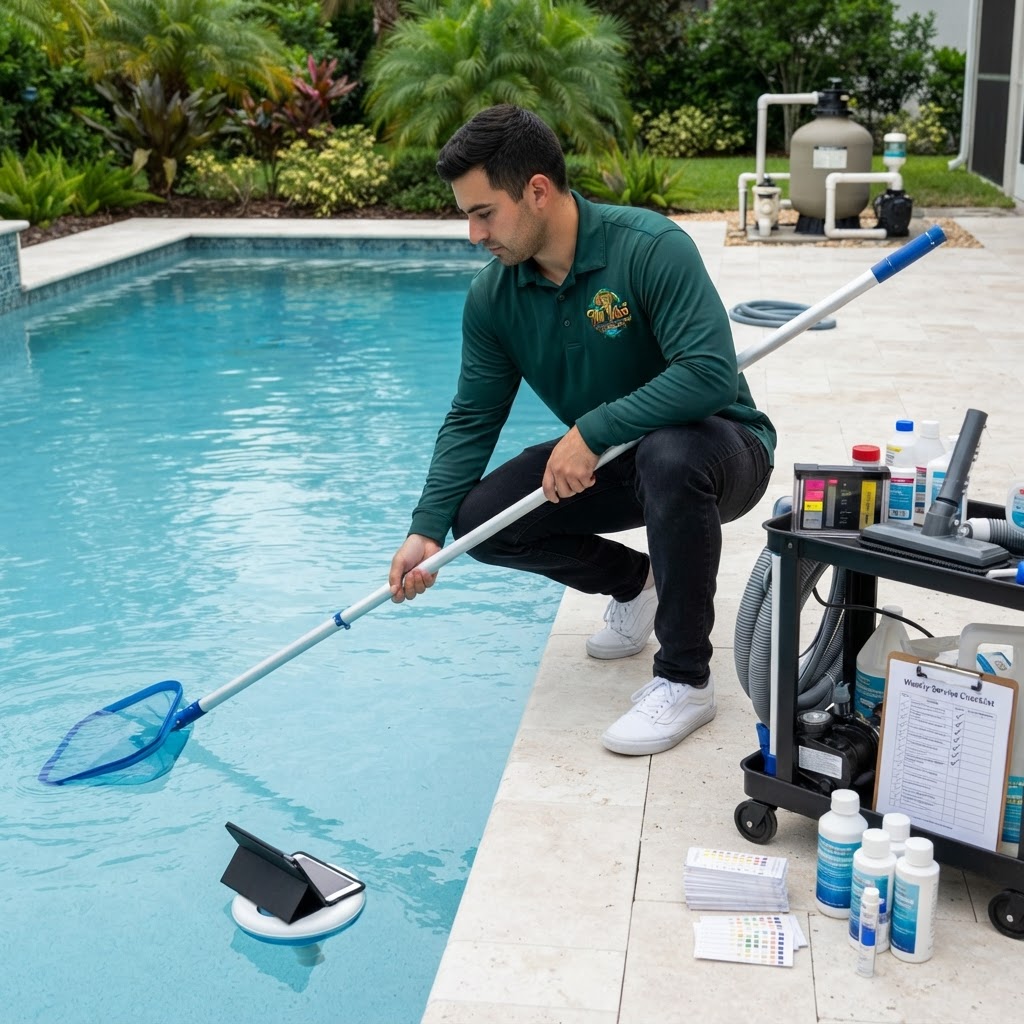
A professional service visit typically lasts between 30 to 60 minutes, depending on the size of the pool and the surrounding environment. During this time, a technician follows a rigorous checklist to ensure every aspect of the pool is addressed. The service generally falls into three main categories: physical cleaning, chemical balancing, and equipment inspection.
1. Physical Cleaning and Debris Removal
The most visible part of pool service is the removal of organic matter. Leaves, insects, and dirt not only look unsightly but also provide a food source for algae and bacteria.
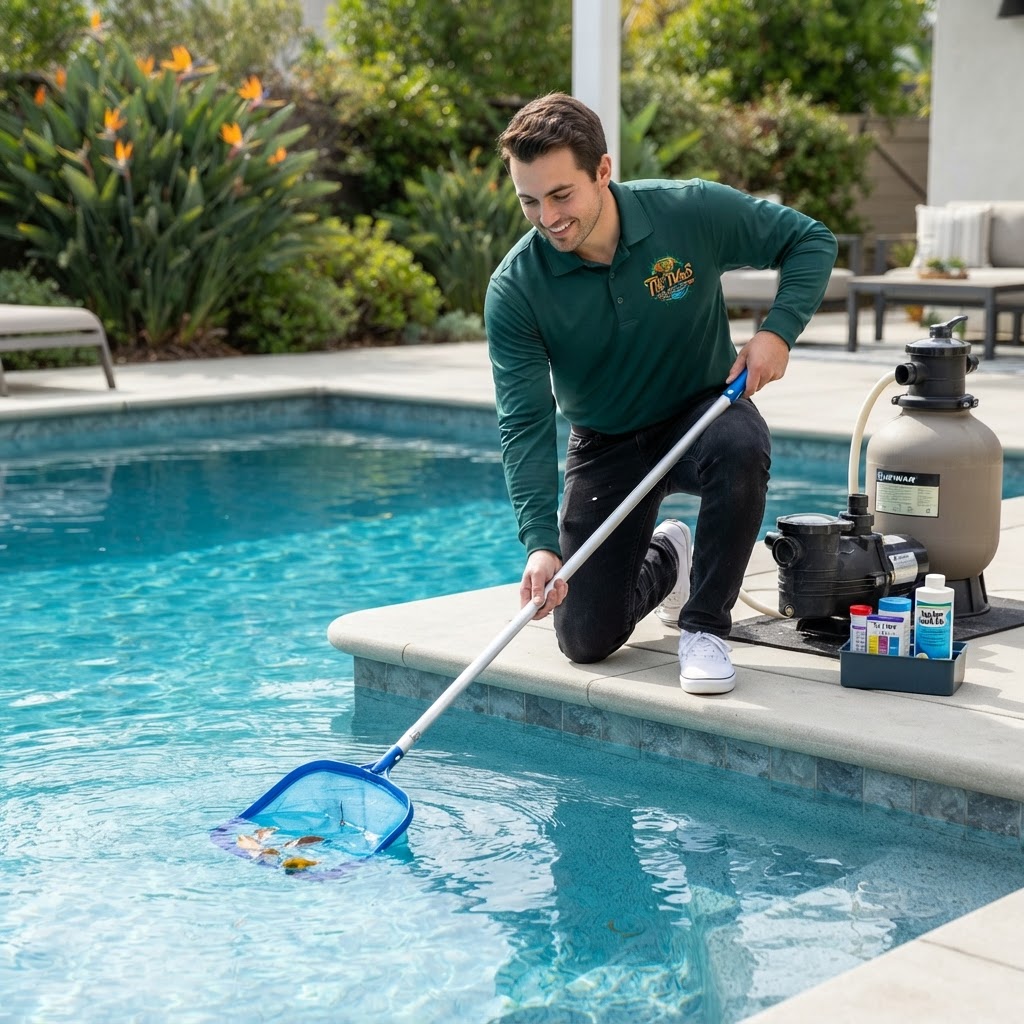
- Skimming the Surface: The technician uses a fine-mesh net to remove floating debris. This prevents leaves from sinking to the bottom, where they can cause organic stains. For more details on this process, see our guide on Master Pool Skimming and Surface Cleaning: The Ultimate Guide to a Sparkling Pool.
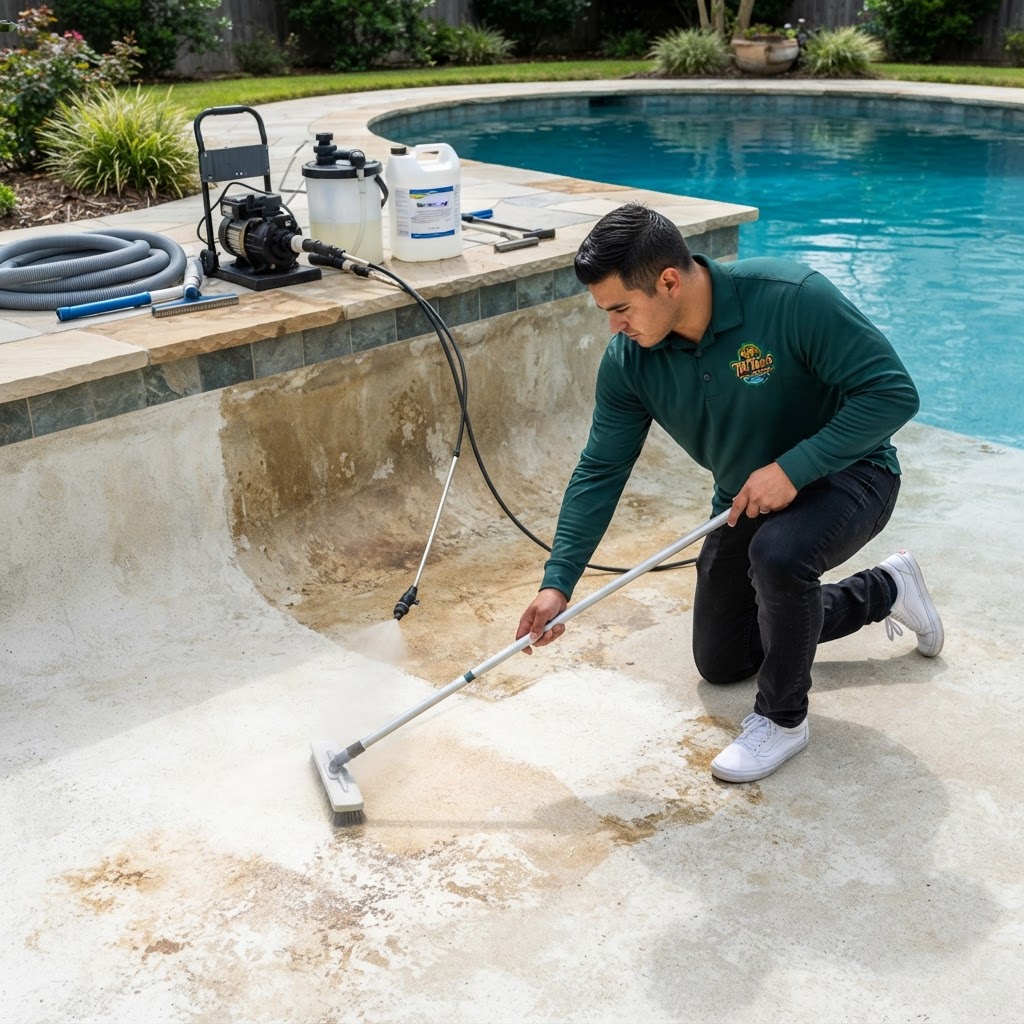
- Brushing Walls and Steps: This is a critical but often overlooked step. Brushing the walls, steps, and benches breaks up biofilm and prevents algae from taking hold in porous surfaces. Even if the pool looks clean, microscopic algae spores can be clinging to the plaster or tile.
- Vacuuming the Floor: Any debris that has settled on the floor is removed using a manual vacuum or by checking the operation of an automatic pool cleaner. This ensures that the pool floor remains free of silt and sand.
- Cleaning the Tile Line: Technicians often wipe down the tile line to remove oils and prevent the buildup of calcium scale.
2. Water Chemistry Testing and Balancing
Water chemistry is the heart of pool maintenance. Improperly balanced water can lead to skin irritation, cloudy water, and damage to the pool's surface and plumbing. A weekly service includes testing for several key parameters and adjusting them to meet industry standards.
According to the CDC and APSP, the following ranges are essential for a safe swimming environment:
- Free Chlorine: 1.0–3.0 ppm (This is the primary sanitizer that kills pathogens).
- pH Level: 7.2–7.8 (This ensures the water is comfortable for swimmers and that the chlorine works effectively).
- Total Alkalinity: 80–120 ppm (This acts as a buffer for the pH, preventing it from fluctuating wildly).
During the weekly visit, the technician will also monitor levels that change more slowly, such as Calcium Hardness (200–400 ppm) and Cyanuric Acid (30–50 ppm). If these levels drift outside the safe range, they will be addressed to prevent scaling or "chlorine lock."
Pro Tip: Always brush your pool walls even if the water looks crystal clear. Brushing disrupts the invisible biofilm that protects algae from chlorine, making your sanitizer much more effective.
3. Equipment and Circulation Checks
A pool is a closed-loop system that relies on circulation to stay clean. If the pump or filter isn't working correctly, the water will stagnate. A weekly service includes a thorough check of the mechanical system:
- Emptying Baskets: The technician will empty the skimmer baskets and the pump strainer basket. Clogged baskets restrict water flow, which can put undue stress on the pump motor.
- Filter Pressure Monitoring: The technician checks the pressure gauge on the filter tank. If the pressure is 8–10 PSI above the "clean" baseline, the filter may need backwashing or cleaning. For a deep dive into filter care, refer to How to Clean a Pool Filter: The Ultimate Guide for DE, Cartridge, and Sand Filters.
- Visual Inspection: The technician looks for leaks at the pump, heater, and filter valves. They also listen for unusual noises from the motor that might indicate a failing bearing or seal.
Quick Reference: Weekly Service Checklist
If you are managing your own pool or want to verify your service provider's work, use this quick checklist:
- Debris: Surface skimmed, floor vacuumed, and baskets emptied.
- Surfaces: Walls, steps, and tile line brushed.
- Chemistry: Chlorine (1.0-3.0 ppm), pH (7.2-7.8), and Alkalinity (80-120 ppm) tested and adjusted.
- Water Level: Checked and topped off if necessary (water should be at the midpoint of the skimmer opening).
- Equipment: Pump operating quietly, no visible leaks, and filter pressure within normal range.
For a broader view of all maintenance requirements, check out The Ultimate Pool Maintenance Checklist: Daily, Weekly, and Monthly Tasks.
Safety Notes
Safety is the top priority in pool maintenance. Handling pool chemicals requires care and precision.
- Chemical Storage: Always store chemicals in a cool, dry, well-ventilated area, away from children and pets. Never mix different types of chlorine together.
- Swimmer Safety: After adding chemicals, follow the manufacturer's instructions regarding wait times before swimming. Generally, it is safe to swim when the Free Chlorine level is between 1.0 and 3.0 ppm and the pH is balanced.
- Shocking: If the pool requires a "shock" treatment to kill algae or bacteria, this is best done at dusk to prevent the sun's UV rays from burning off the unstabilized chlorine.
When to Call a Professional
While weekly service covers the basics, some situations require a specialized repair technician. You should call for professional help if you notice:
- Persistent Green Water: If your chlorine levels are correct but the water remains green, you may have a high phosphate level or a filtration issue.
- Significant Water Loss: Losing more than 1/4 inch of water per day (beyond normal evaporation) may indicate a structural or plumbing leak.
- Equipment Failure: If the pump won't prime, the heater won't fire, or the filter is leaking sand or DE into the pool.
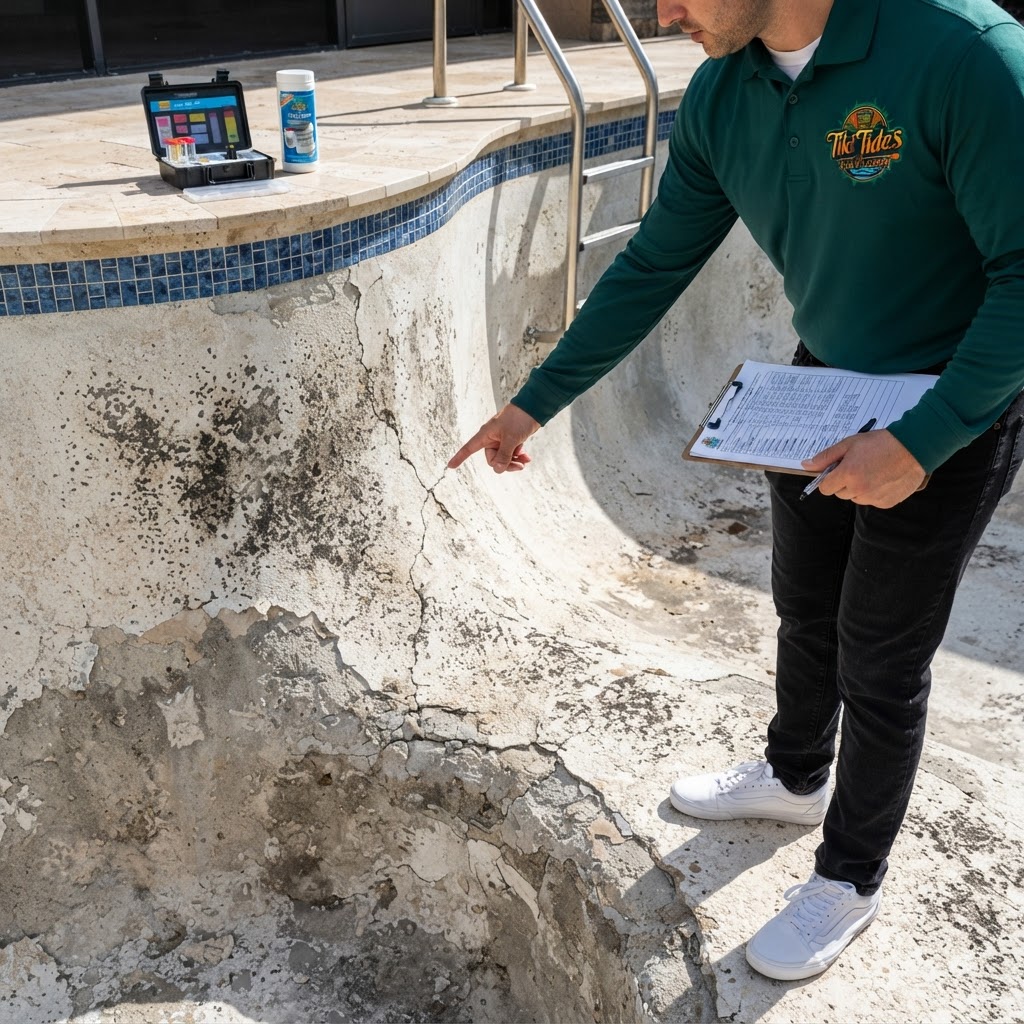
- Structural Damage: Cracks in the plaster or loose tiles should be addressed immediately to prevent further deterioration.
Summary
Weekly pool service is the foundation of a healthy, long-lasting swimming pool. By combining physical cleaning, precise chemical balancing, and proactive equipment inspections, you ensure that your pool remains a safe and beautiful asset to your home. Whether you choose to handle these tasks yourself or hire the experts at Tiki Tides Pools, consistency is the key to preventing the "green pool" nightmares that can ruin a summer. Stick to the schedule, monitor your levels, and enjoy the peace of mind that comes with a professionally maintained pool.
Related Reading
- Master Pool Skimming and Surface Cleaning: The Ultimate Guide to a Sparkling Pool
- How to Remove Pool Stains: A Expert Guide to Organic and Metal Stain Removal
- The Ultimate Pool Maintenance Checklist: Daily, Weekly, and Monthly Tasks
- How to Clean a Pool Filter: The Ultimate Guide for DE, Cartridge, and Sand Filters
- How to Clean Pool Tile: The Ultimate Guide to Removing Calcium Scale