Maintaining a pristine swimming pool starts at the surface. While your filtration system works hard behind the scenes, surface debris is the first line of defense against organic contamination and unsightly water. Skimming and surface cleaning are not just about aesthetics; they are critical components of a healthy pool ecosystem. When debris like leaves, insects, and pollen sit on the surface, they eventually sink, decay, and become a breeding ground for bacteria and algae, which can rapidly deplete your free chlorine levels.
At Tiki Tides Pools, we see many homeowners treat skimming as an optional chore. However, consistent surface maintenance reduces the strain on your pool pump and filter, extending the life of your equipment and ensuring your chemical balance remains stable. By mastering the art of skimming, you prevent organic stains from forming on your plaster or liner, making it an essential part of your routine alongside The Ultimate Pool Maintenance Checklist.
Why Surface Cleaning Is Essential
Every piece of debris that enters your pool introduces organic matter. This matter reacts with your chlorine, creating chloramines (combined chlorine) and reducing the amount of free chlorine available to kill pathogens. The CDC recommends maintaining free chlorine levels between 1.0 and 3.0 ppm. If your pool is filled with floating leaves, your chlorine is busy fighting that organic load instead of protecting your swimmers.
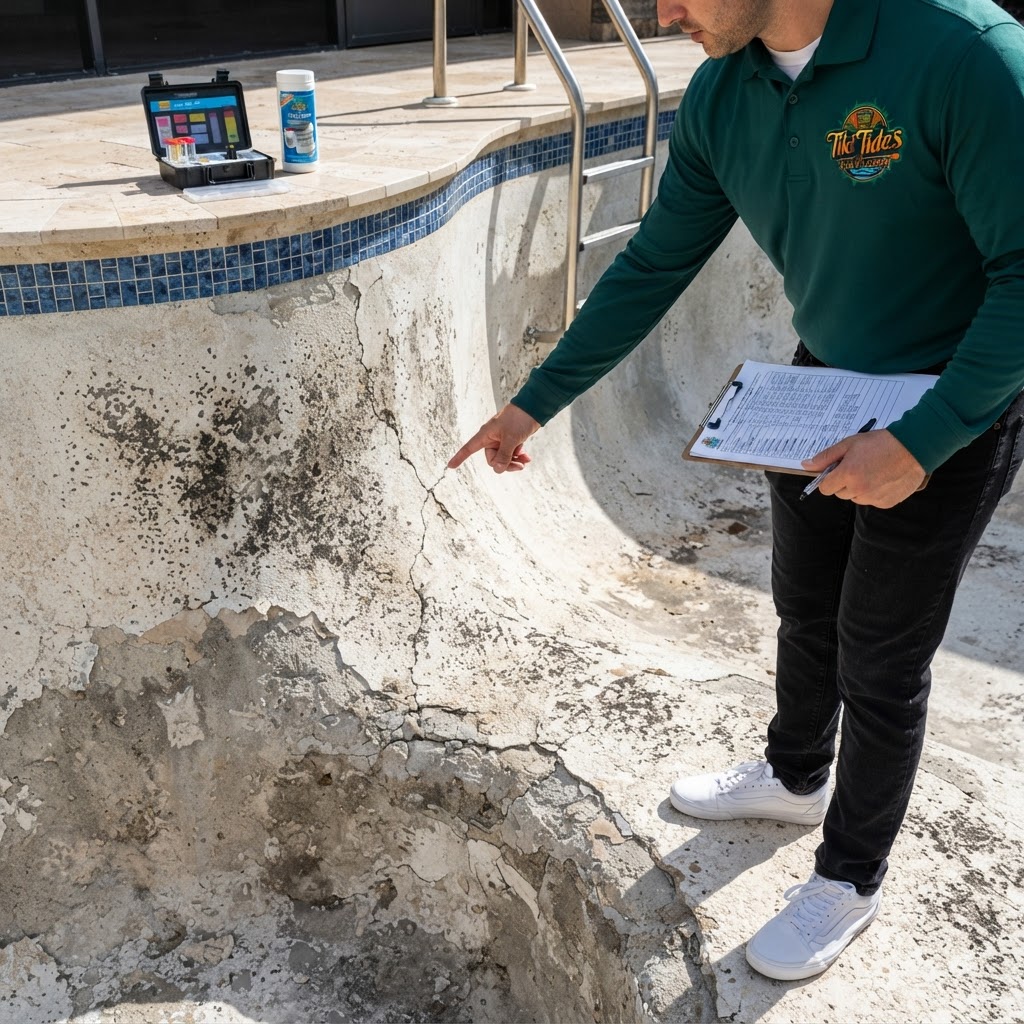
Furthermore, floating debris eventually becomes waterlogged and sinks. Once at the bottom, it can cause stubborn stains that are difficult to remove. For more on dealing with those issues, see our guide on How to Remove Pool Stains: A Expert Guide to Organic and Metal Stain Removal. Regular skimming keeps these materials out of the water column entirely.
Tools of the Trade
To clean your pool surface effectively, you need the right equipment. Using the wrong tool can make the job twice as hard and half as effective.
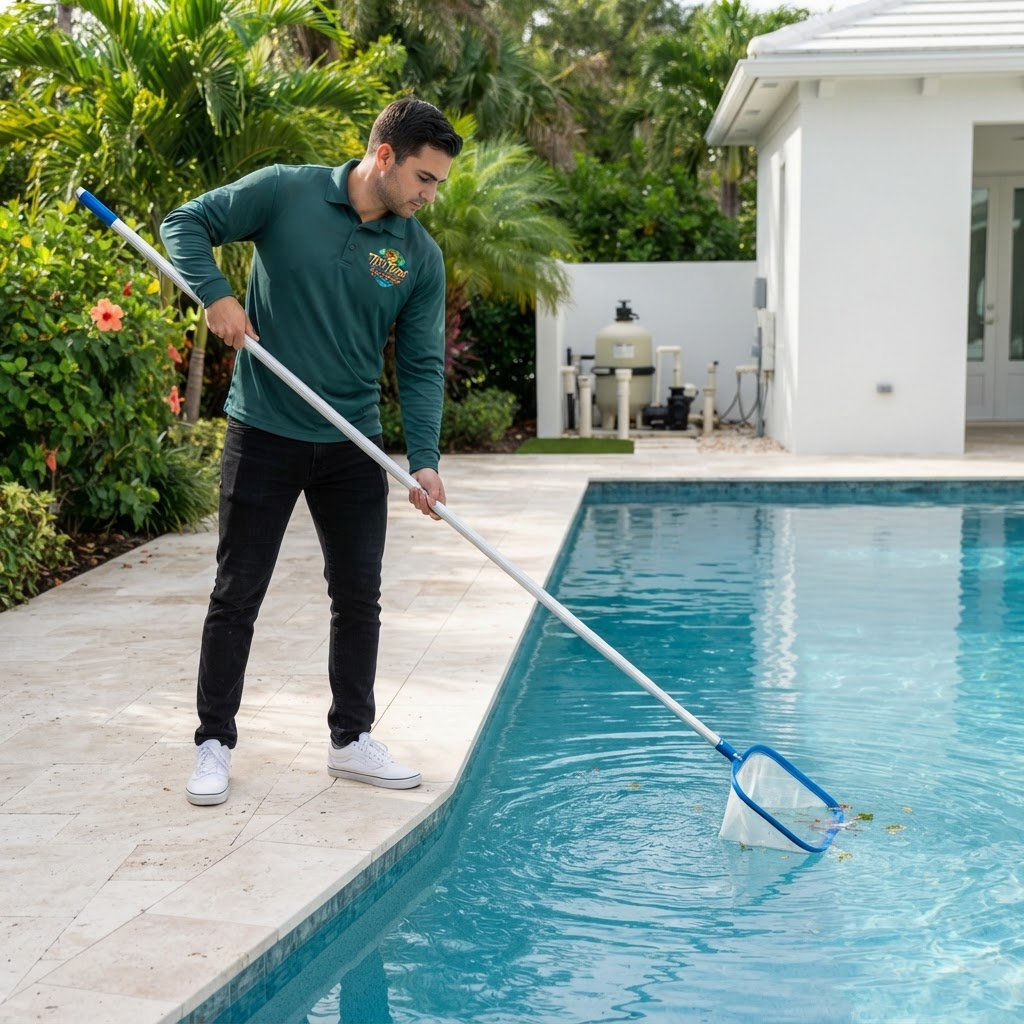
- Telescopic Pole: The foundation of all pool cleaning. Ensure yours is high-quality fiberglass or aluminum and extends long enough to reach the center of your pool.
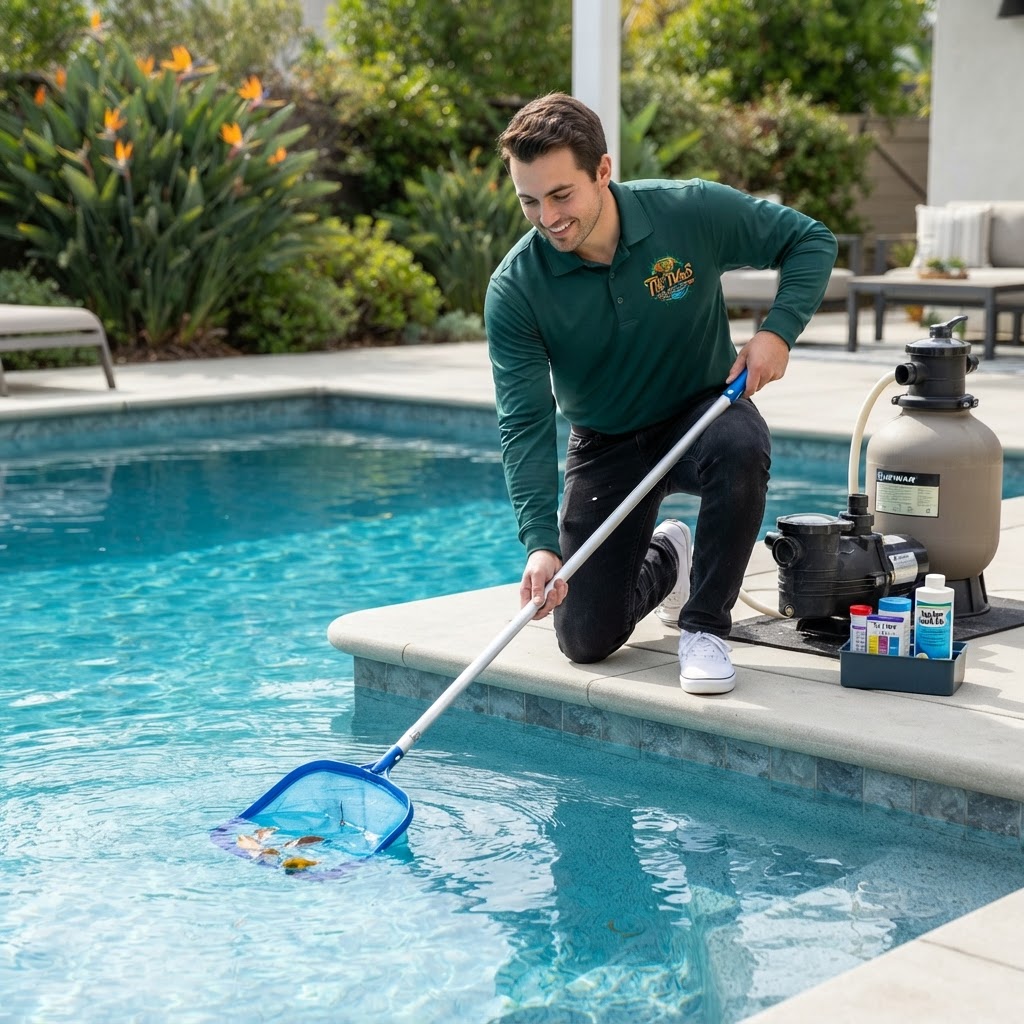
- Flat Skimmer Net: Best for light debris and quick daily sweeps. It is easy to maneuver and great for flicking bugs out of the water.
- Leaf Rake (Deep Bag): Unlike the flat skimmer, the leaf rake has a deep mesh bag. This is essential for heavy leaf fall and for scooping debris from the bottom if you miss it on the surface.
- Skimmer Baskets: These are built into your pool's deck. They catch debris pulled in by the pump. Ensuring these have functional 'weir gates' (the flapper door) is vital for surface tension.
Professional Skimming Techniques
There is a strategy to skimming that goes beyond random swiping. Follow these steps for maximum efficiency:
- Check the Wind: Start at the windward side of the pool. Wind naturally pushes debris toward one corner. By starting where the wind is coming from, you prevent debris from drifting back over areas you have already cleaned.
- The Arc Method: Extend your pole and move the net in a slow, wide arc. Avoid rapid movements that create turbulence, as this pushes debris underwater and away from your net.
- Edge Cleaning: Use the flat edge of the skimmer to gently scrape the tile line. This is where oils and fine particles often congregate.
- Empty Often: If using a leaf rake, empty the bag frequently. A heavy bag puts unnecessary stress on your pole and your wrist, and captured debris can leak back into the pool if the bag is overfilled.
Pro Tip: To catch fine particles like pollen or tiny gnats that pass through standard mesh, wrap a discarded pair of nylon stockings or a dedicated 'skimmer sock' around your net or inside your skimmer basket. This adds a layer of fine filtration that catches the smallest contaminants.
Maintaining Your Skimmer Baskets
Your pool's built-in skimmers are the 'mouths' of your filtration system. If they are clogged, your pump has to work harder, which can lead to overheating or cavitation.
- Daily Check: During high-debris seasons (Spring and Fall), check these daily. At a minimum, they should be emptied twice a week.
- The Weir Gate: Ensure the weir gate moves freely. This flapper door creates a 'waterfall' effect that increases surface tension, pulling debris into the basket more effectively and preventing it from floating back out when the pump turns off.
- Inspect for Damage: Look for cracks in the baskets. A cracked basket allows debris to enter your plumbing, which can clog the impeller in your pump and require professional repair.
Surface Cleaning and Water Chemistry
Surface cleaning is directly tied to your chemical balance. When debris decays, it lowers the pH of your water. To maintain the CDC-standard pH range of 7.2–7.8, you must minimize the organic load. High levels of decomposing leaves can also cause your Cyanuric Acid (CYA) to become less effective as the overall water quality degrades. Always aim for a CYA level of 30–50 ppm for optimal chlorine protection from the sun.
If you find yourself struggling with water clarity despite frequent skimming, it may be time to look at your filtration. Check out our resource on How to Clean a Pool Filter: The Ultimate Guide for DE, Cartridge, and Sand Filters to ensure your system is performing at its peak.
Safety Notes
- Pole Safety: Always be aware of your surroundings when using a long telescopic pole. Look up for power lines and behind you for people or pets.
- Chemical Handling: While skimming doesn't involve chemicals directly, always ensure your hands are clean of pool chemicals before handling equipment to prevent degradation of the plastics.
- Equipment Storage: Store your nets and poles in a shaded area. UV rays from the sun will make the mesh brittle over time, causing it to tear during use.
When to Call a Professional
Sometimes, surface issues indicate a deeper mechanical problem. You should contact Tiki Tides Pools if:
- Your skimmer has no suction even when the basket is clean.
- The skimmer housing is cracked or pulling away from the pool wall (a common source of leaks).
- You notice 'air bubbles' returning to the pool, which often indicates a suction-side leak at the skimmer.
- The debris is so overwhelming (after a major storm) that the system cannot keep up.
Summary
Skimming and surface cleaning are the simplest yet most effective ways to maintain a healthy, beautiful pool. By spending 10 minutes a day removing floating debris, you protect your pump, save money on chemicals, and prevent stains before they start. Remember to use the right tools, check your skimmer baskets regularly, and keep an eye on your water chemistry to ensure your pool remains a safe and refreshing oasis all season long.
Related Reading
- How to Remove Pool Stains: A Expert Guide to Organic and Metal Stain Removal
- The Ultimate Pool Maintenance Checklist: Daily, Weekly, and Monthly Tasks
- How to Clean a Pool Filter: The Ultimate Guide for DE, Cartridge, and Sand Filters
- How to Clean Pool Tile: The Ultimate Guide to Removing Calcium Scale
- Master the Art of Pool Brushing: The Ultimate Guide to a Spotless Pool