When the summer sun is at its peak, your swimming pool becomes the centerpiece of your home. It is the place where memories are made, from weekend barbecues to quiet afternoon dips. However, the very heat that makes the water so inviting also creates a perfect storm for pool problems. High temperatures, intense UV radiation, and increased bather loads can quickly turn a crystal-clear oasis into a cloudy, green headache.
At Tiki Tides Pools, we know that summer pool maintenance is about more than just skimming leaves. It is a science of balancing chemistry against the elements. If you followed The Ultimate Pool Opening Checklist: A Step-by-Step Spring Start-Up Guide, you likely started the season with a clean slate. Now, the challenge is maintaining that perfection through the hottest months of the year.
The Impact of High Temperatures on Pool Chemistry
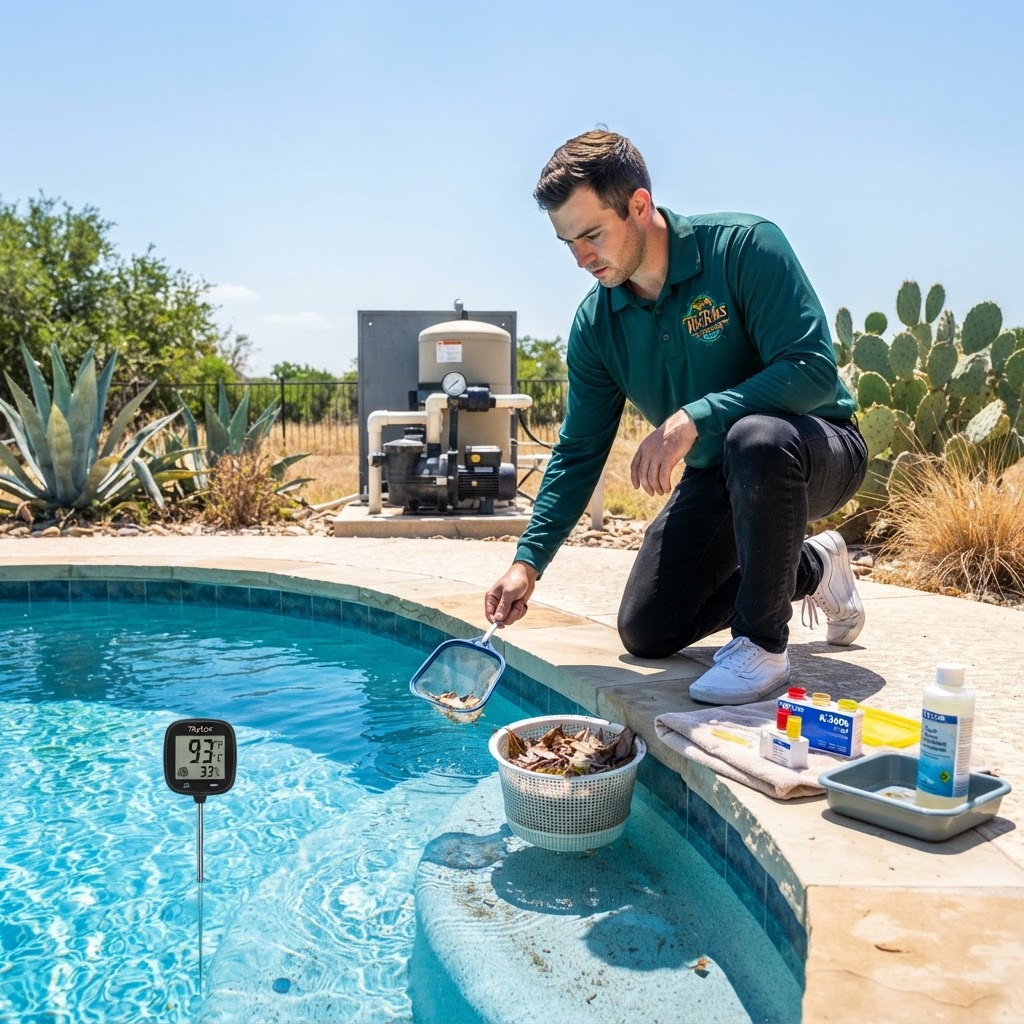
Heat is the primary catalyst for chemical depletion. As water temperatures rise, the rate of chemical reactions increases, and microorganisms like algae and bacteria can reproduce more rapidly. Research indicates that for every 10-degree Fahrenheit increase in water temperature, chlorine consumption can nearly double.
Furthermore, intense sunlight provides UV rays that naturally degrade free chlorine. Without proper stabilization, your sanitizer can vanish in a matter of hours, leaving your pool vulnerable to pathogens. This is why testing your water at least two to three times per week during a heatwave is non-negotiable.
Mastering the Summer Chemical Balance
To keep your water safe and clear, you must adhere to industry-standard chemical ranges. These levels, supported by the CDC and APSP, ensure that your sanitizer is effective and your water is non-corrosive to your equipment.
Safe Operating Ranges:
- Free Chlorine: 1.0–3.0 ppm (CDC standard for residential pools)
- pH: 7.2–7.8 (Ideal for swimmer comfort and chlorine efficacy)
- Total Alkalinity: 80–120 ppm (Prevents pH "bounce")
- Calcium Hardness: 200–400 ppm (Protects plaster and equipment)
- Cyanuric Acid (CYA): 30–50 ppm (The "sunscreen" for your chlorine)
Pro Tip: If your pool is in direct sunlight all day, aim for the higher end of the Cyanuric Acid range (near 50 ppm). This helps shield your chlorine from UV degradation, saving you money on chemicals in the long run.
Filtration and Circulation: The Heart of the Pool
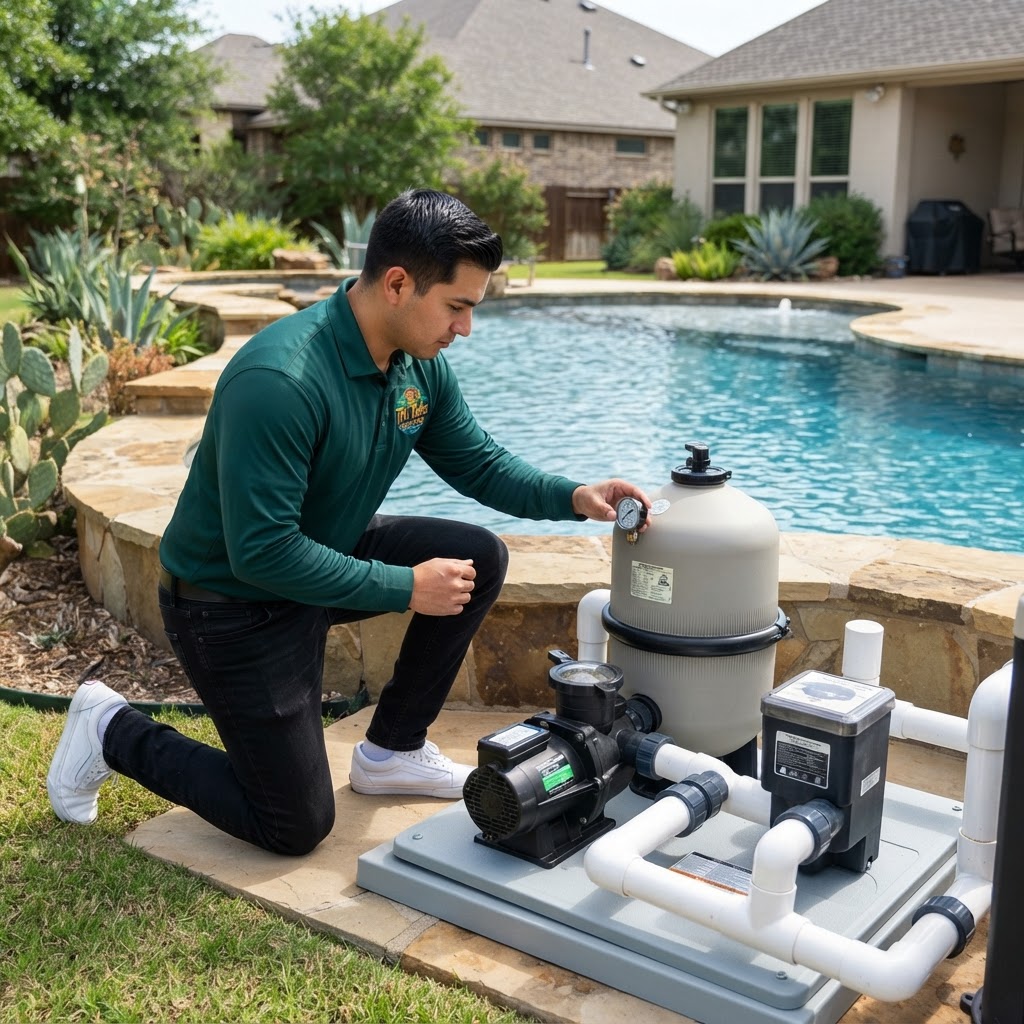
Stagnant water is an invitation for algae. During the summer, your pool pump should run long enough to turn over the entire volume of water at least once, and ideally twice, every 24 hours. For most residential pools, this means running the filtration system for 8 to 12 hours a day.
If you are experiencing extreme heat (95°F+), consider running your pump during the hottest part of the day. This keeps the water moving when algae growth is most aggressive. Additionally, ensure your skimmer and pump baskets are cleared daily to maintain optimal flow rates.
Physical Maintenance: The Three-Step Routine
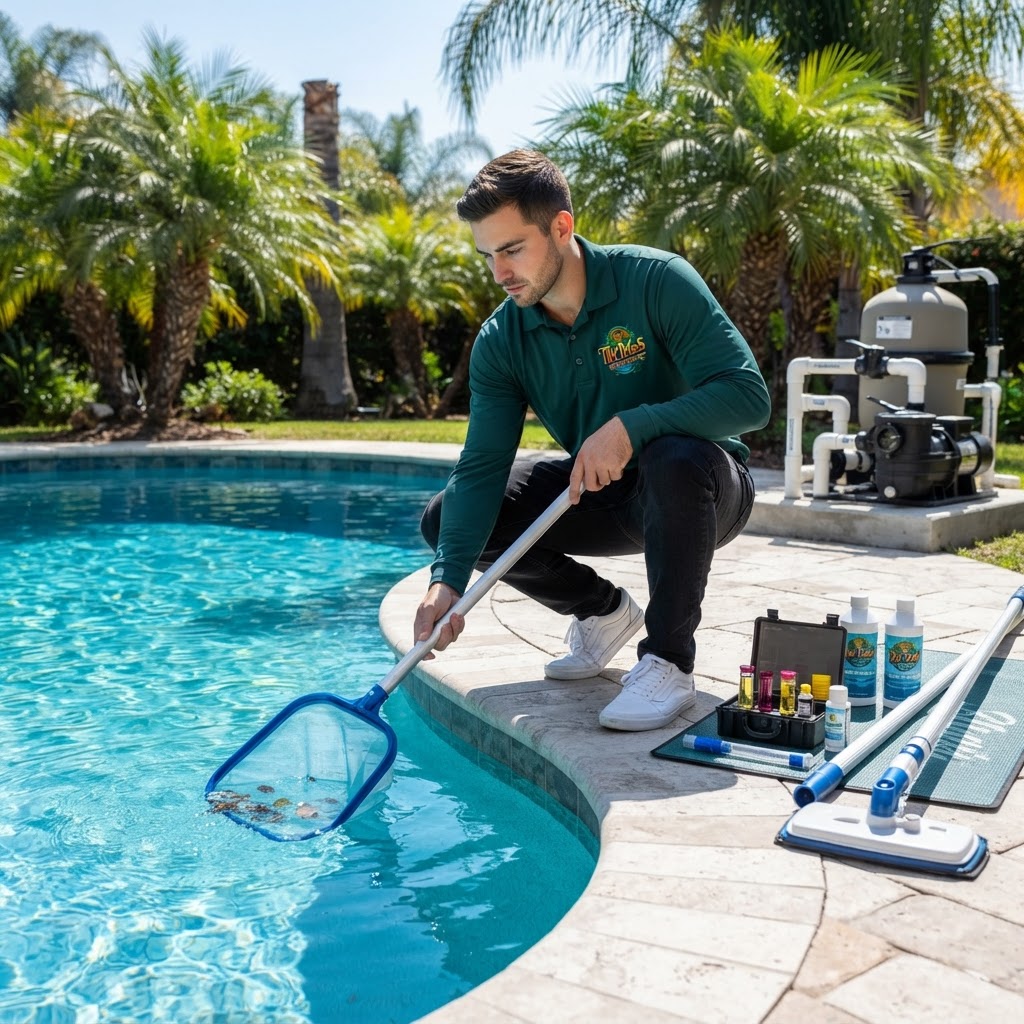
Even with perfect chemistry, physical debris can introduce organic matter that consumes chlorine. Follow this weekly routine to keep the pool floor and walls pristine:
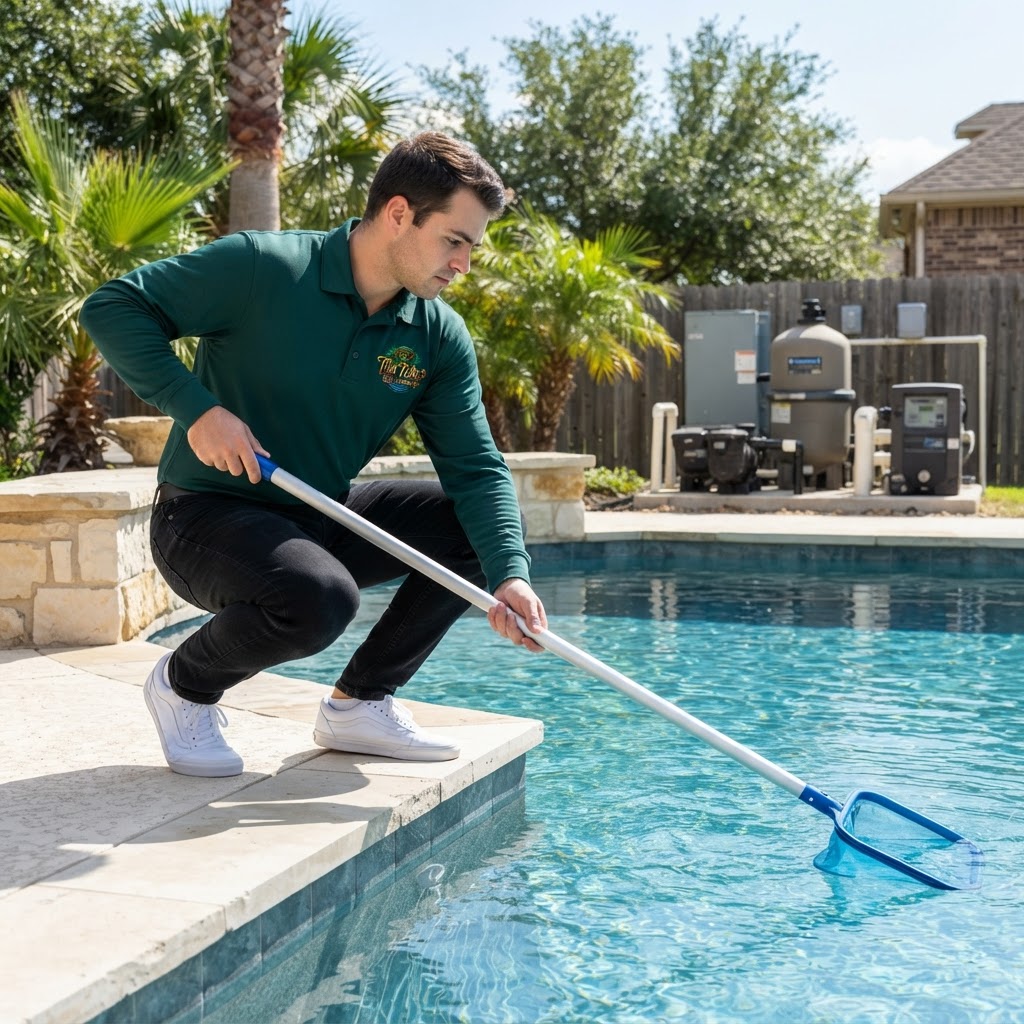
- Skim Daily: Remove floating debris before it sinks and begins to decay.
- Brush Weekly: Use a pool brush to scrub the walls, steps, and "dead spots" where circulation is poor. This breaks up the biofilm that algae use to protect themselves.
- Vacuum: Use a manual vacuum or a robotic cleaner to remove fine sediment and dirt that the filter might miss.
Managing Heavy Bather Loads
Summer often means more guests in the pool. Every person who enters the water introduces sweat, oils, sunscreen, and other organic contaminants. This "bather load" can rapidly deplete your free chlorine levels.
After a large pool party or a period of heavy use, it is standard practice to "shock" the pool. Adding a concentrated dose of chlorine (oxidizer) helps break down combined chloramines and restores the sanitizing power of the water. Always perform shocking in the evening to prevent the sun from burning off the added chlorine immediately.
Safety Notes
Handling pool chemicals requires extreme care, especially in the summer heat when fumes can be more potent. Always follow these safety guidelines:
- Wear PPE: Use chemical-resistant gloves and eye protection when handling chlorine or acid.
- Never Mix Chemicals: Mixing different types of chlorine (e.g., cal-hypo and trichlor) can cause a violent explosion or toxic gas release.
- Store Properly: Keep chemicals in a cool, dry, well-ventilated area out of direct sunlight and away from children.
- Add Chemical to Water: When diluting chemicals, always add the chemical to the water, never the water to the chemical.
When to Call a Professional
While most summer maintenance can be handled by a diligent homeowner, some situations require the expertise of a certified technician. You should contact Tiki Tides Pools if:
- Persistent Algae: If you have shocked the pool and the water remains green or cloudy for more than 48 hours.
- Equipment Failure: If your pump is making unusual noises, leaking, or failing to prime.
- Rapid Water Loss: If you notice your water level dropping more than 1/4 inch per day (beyond normal evaporation), you may have a leak.
- Chemical Imbalance: If your pH or Alkalinity levels remain stubbornly outside the safe range despite your best efforts to adjust them.
Summary
Beating the heat requires a proactive approach to pool care. By maintaining a strict testing schedule, ensuring proper circulation, and keeping your chemical levels within the CDC-recommended ranges of 1.0–3.0 ppm for chlorine and 7.2–7.8 for pH, you can enjoy a worry-free summer. Remember that consistency is the key to preventing costly repairs and water quality issues. As the season eventually winds down, you can begin preparing for the cooler months by reviewing our guide on How to Close and Winterize Your Pool: The Ultimate Step-by-Step Guide. Stay cool, stay safe, and enjoy your Tiki Tides pool!