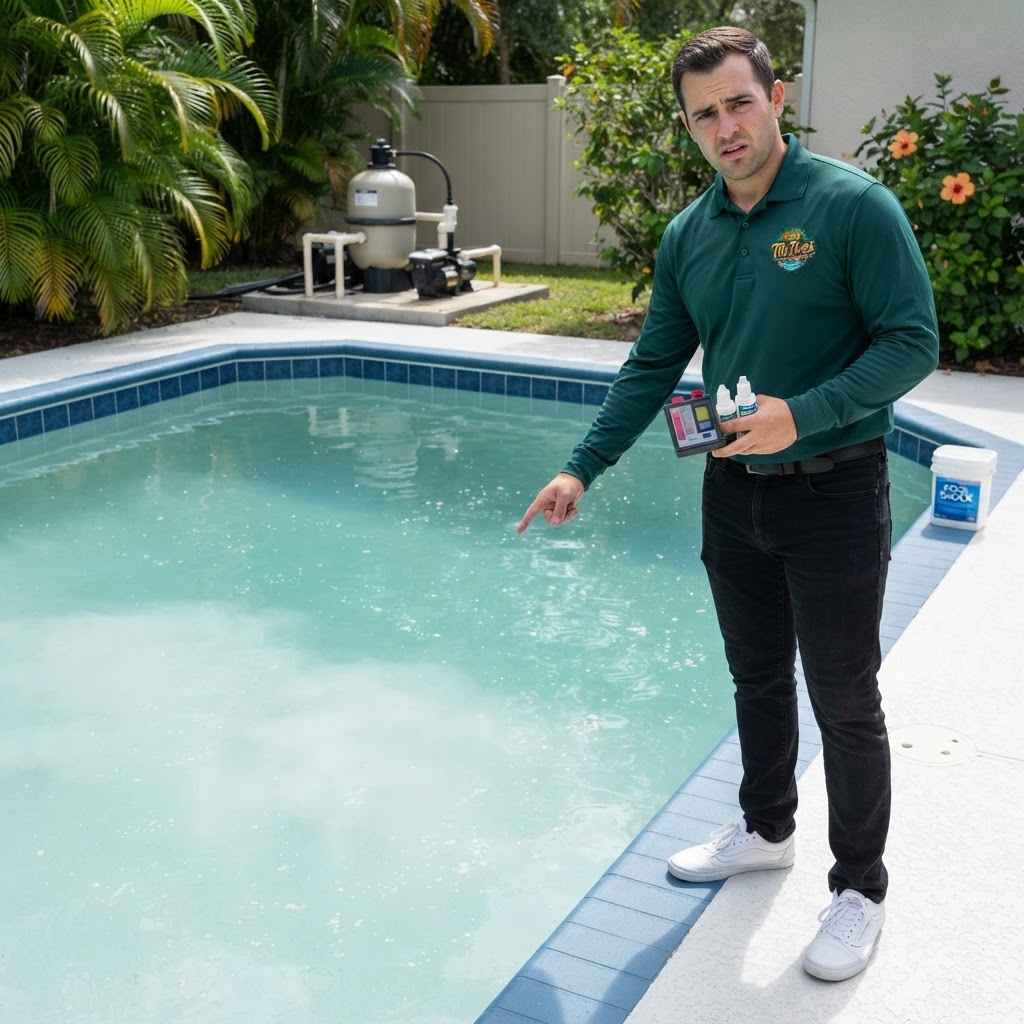
You’ve spent the afternoon testing your water, scrubbing the tile, and finally adding that heavy dose of shock to get your pool ready for the weekend. But instead of the sparkling oasis you expected, you wake up the next morning to a pool that looks like a giant bowl of milk. This phenomenon—cloudy pool water after shocking—is one of the most common frustrations for pool owners, yet it is often a sign that the chemicals are doing exactly what they were designed to do.
Understanding why your water turned cloudy requires a dive into the delicate balance of pool chemistry. Shocking is a process of 'superchlorination,' where you raise the free chlorine level significantly to kill off bacteria, organic contaminants, and algae. However, when this high concentration of chlorine interacts with other imbalances in your water, such as high pH or excessive calcium, the result is a visible precipitate that hangs in the water. This guide will walk you through the primary causes of post-shock cloudiness and provide professional-grade solutions to clear it up fast.
1. High pH and Calcium Hardness Levels
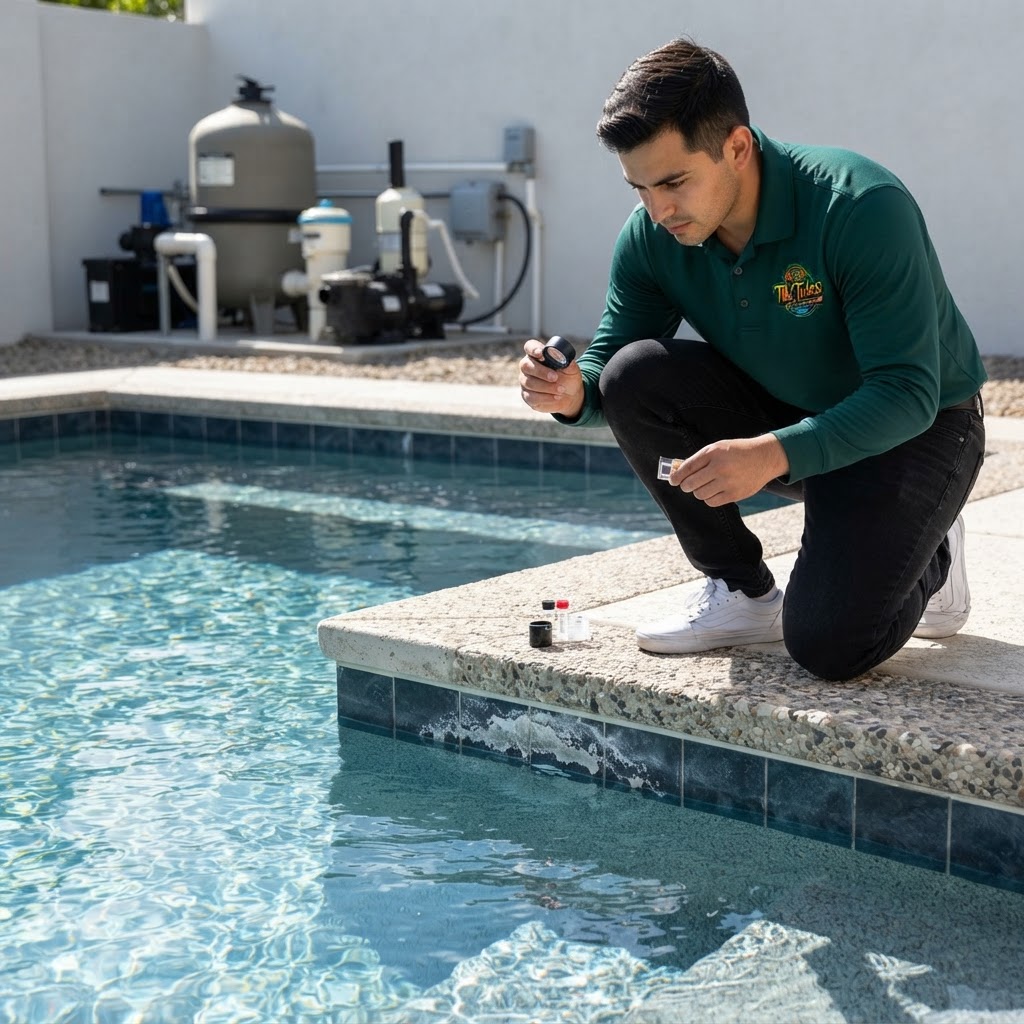
The most frequent cause of cloudiness after shocking is a reaction between the shock itself and the existing mineral levels in your water. Many pool owners use Calcium Hypochlorite (Cal-Hypo) as their primary shock. As the name suggests, Cal-Hypo contains calcium. If your pool's Calcium Hardness is already at the high end of the scale (above 400 ppm), adding Cal-Hypo can push the water past its saturation point, causing calcium to 'fall out' of the solution and create a milky appearance.
Furthermore, chlorine shock is highly alkaline, which naturally raises your pool’s pH. If your pH was already on the high side (above 7.8), the shock treatment can cause the pH to spike even further. In a high-pH environment, calcium becomes less soluble, leading to immediate clouding. This is why we always recommend balancing your pH to 7.2–7.4 before adding any shock treatment.
2. Dead Algae: The White Cloud of Success
If you were shocking your pool specifically to get rid of a green algae bloom, cloudiness is actually a sign of success. When chlorine kills algae, the algae lose their green chlorophyll and turn a grayish-white color. These dead algae particles are extremely fine and often too small for a standard sand filter to catch immediately.
Instead of a green swamp, you are left with a white, misty cloud. This type of cloudiness won't disappear on its own simply by adding more chemicals; it requires mechanical filtration and, in some cases, the help of a clarifier or flocculant to clump those tiny dead particles together so the filter can grab them. If you notice your filter pressure rising during this time, be sure to check our guide on How to Fix High Pool Filter Pressure: A Complete Troubleshooting Guide to ensure your system isn't becoming clogged with dead organic matter.
3. High Cyanuric Acid (CYA) and Chlorine Lock
Cyanuric Acid, often called 'stabilizer' or 'sunscreen for chlorine,' is essential for protecting your chlorine from being burned off by the sun's UV rays. However, there is a point of diminishing returns. The ideal range for CYA is 30–50 ppm. When CYA levels exceed 50–100 ppm, it begins to 'lock' the chlorine, making it far less effective at killing contaminants.
When you shock a pool with high CYA, the chlorine may struggle to fully oxidize the organic material in the water. This partial oxidation leaves behind chloramines and suspended particles that create a hazy, dull look. If your CYA is too high, the only real solution is to partially drain and refill your pool with fresh water to bring the levels back down to the safe 30–50 ppm range.
4. Poor Filtration and Circulation
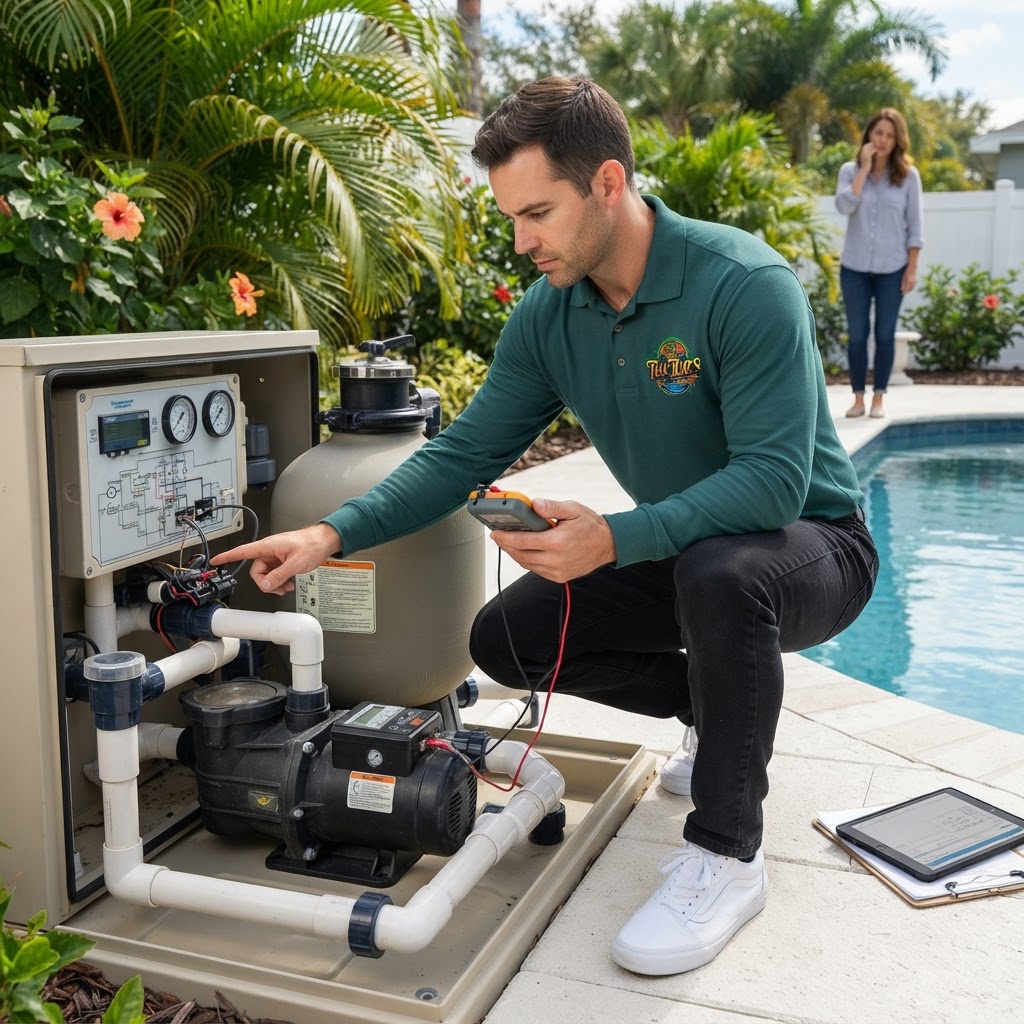
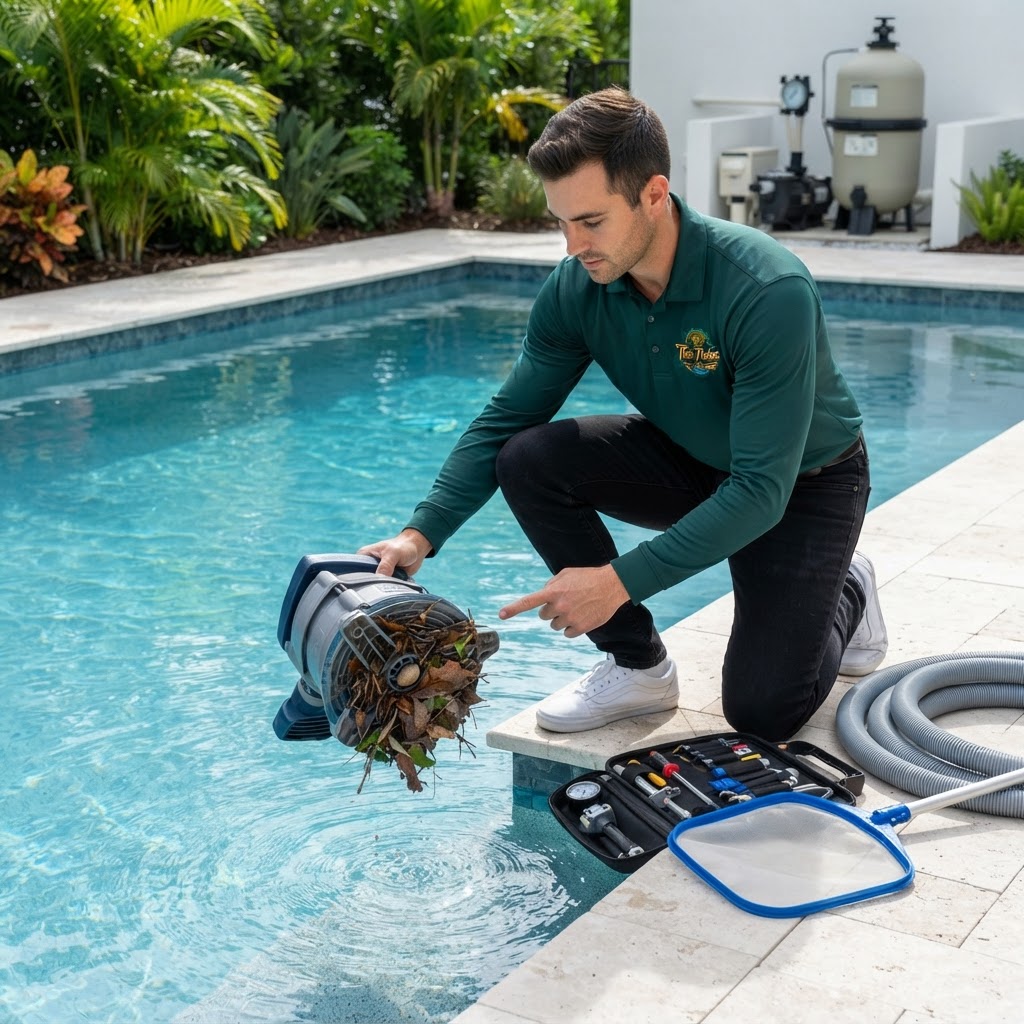
Chemicals can only do half the work; your filtration system must do the rest. After shocking, your filter is suddenly tasked with removing a massive amount of oxidized waste and dead algae. If your pump isn't running long enough or if your filter media (sand, DE, or cartridge) is dirty, the cloudy particles will simply circulate back into the pool.
We recommend running your pump 24/7 after a shock treatment until the water is clear. If you notice that the water isn't moving vigorously through the jets, you might be experiencing Low Water Flow in Your Pool? Fix Weak Pressure Like a Pro. Poor circulation creates 'dead spots' where cloudy water can settle, making it much harder to clear the entire volume of the pool.
Quick Reference: The Post-Shock Checklist
If your pool is currently cloudy, run through this checklist to identify the culprit:
- Test Free Chlorine: Ensure it is within 1.0–3.0 ppm. If it is 0, you didn't add enough shock.
- Check pH: If it is above 7.8, use a pH decreaser (muriatic acid or sodium bisulfate).
- Check Calcium Hardness: If it is above 400 ppm, avoid using Cal-Hypo in the future.
- Run the Pump: Keep the system running 24/7 for at least 48 hours.
- Backwash/Clean Filter: Do this if the pressure is 8–10 PSI above its 'clean' baseline.
Pro Tip: If you need your pool clear for an event tomorrow, use a 'Pool Flocculant' instead of a 'Clarifier.' Flocculant clumps all particles and sinks them to the bottom, allowing you to vacuum them to 'waste.' Just remember: you cannot use flocculant with a cartridge filter unless you have a bypass valve!
Safety Notes
Handling pool chemicals requires extreme care. When shocking your pool, always follow these safety guidelines:
- PPE is Mandatory: Always wear chemical-resistant gloves and safety goggles when handling shock or acid.
- Never Mix Chemicals: Never mix different types of shock (e.g., Cal-Hypo and Di-Chlor) in the same bucket, as this can cause a violent explosion or toxic gas release.
- Add Chemical to Water: If you are pre-dissolving shock, always fill the bucket with water first, then add the chemical. Never add water to the chemical.
- Store Properly: Keep all chemicals in a cool, dry, well-ventilated area out of reach of children and pets.
When to Call a Professional
Sometimes, cloudy water is a symptom of a deeper mechanical issue rather than a simple chemistry imbalance. You should call the experts at Tiki Tides Pools if:
- Your water remains cloudy for more than 48 hours despite balanced chemistry and constant filtration.
- You notice air bubbles in your returns, which indicates a suction-side leak that prevents proper filtration.
- Your filter pressure remains high even after multiple backwash cycles, suggesting your sand or DE grids need a professional deep clean or replacement.
- You are uncomfortable handling muriatic acid or high-strength chlorine treatments.
Summary
Cloudy pool water after shocking is usually a temporary result of high calcium, elevated pH, or the presence of dead algae particles. By maintaining your water within the recommended ranges—Free Chlorine (1.0–3.0 ppm), pH (7.2–7.8), and Total Alkalinity (80–120 ppm)—you can minimize these reactions. Remember that patience is key; your filter needs time to process the debris. Keep your pump running, stay on top of your water chemistry, and you’ll be back to a crystal-clear swim in no time.
Related Reading
- Pool Pump Leaking Water: The Ultimate Guide to Troubleshooting and Repair
- Pool Heater Not Heating: The Ultimate Troubleshooting Guide
- Low Water Flow in Your Pool? Fix Weak Pressure Like a Pro
- How to Fix High Pool Filter Pressure: A Complete Troubleshooting Guide
- Bubbles in Your Jets? How to Diagnose and Fix Air in Pool Returns