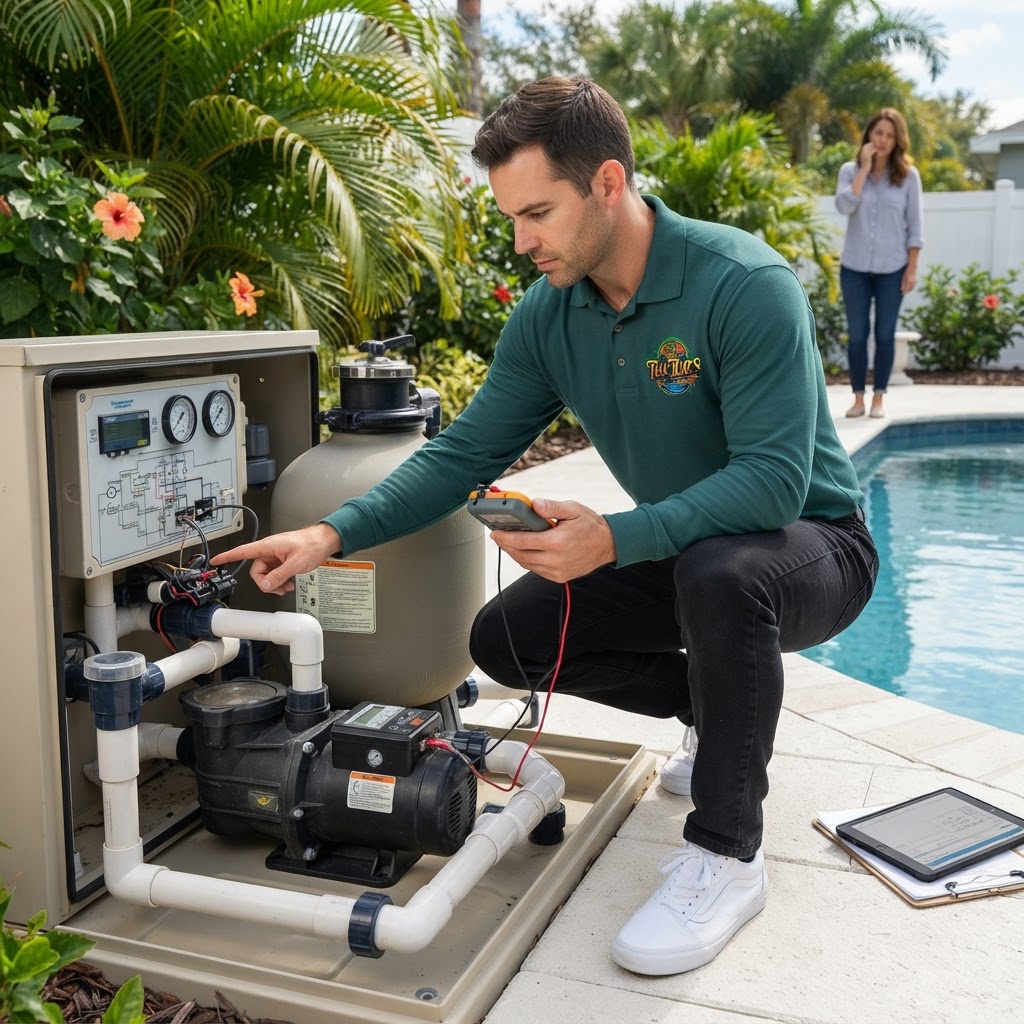
A swimming pool pump is the heart of your backyard oasis. It is responsible for circulating water, distributing chemicals, and powering the filtration system that keeps your water safe and clear. When you notice your pool pump leaking water, it is easy to feel a sense of dread. However, many pump leaks are common maintenance issues that, if caught early, can be fixed before they lead to expensive motor failure or total system breakdown.
Ignoring a leak—even a small drip—can lead to serious consequences. Water dripping onto the motor shaft can cause internal corrosion, leading to a seized motor or electrical shorts. Furthermore, a leak on the suction side can introduce air into the system, causing your pump to lose prime and run dry. In this comprehensive guide, we will walk you through how to identify the source of the leak, the tools you need to fix it, and when it is time to call in the professionals at Tiki Tides Pools.
Identifying the Source of the Leak
Before you can fix the problem, you need to know exactly where the water is coming from. Pool pump leaks generally fall into two categories: suction-side leaks and pressure-side leaks.
The Puddle Test
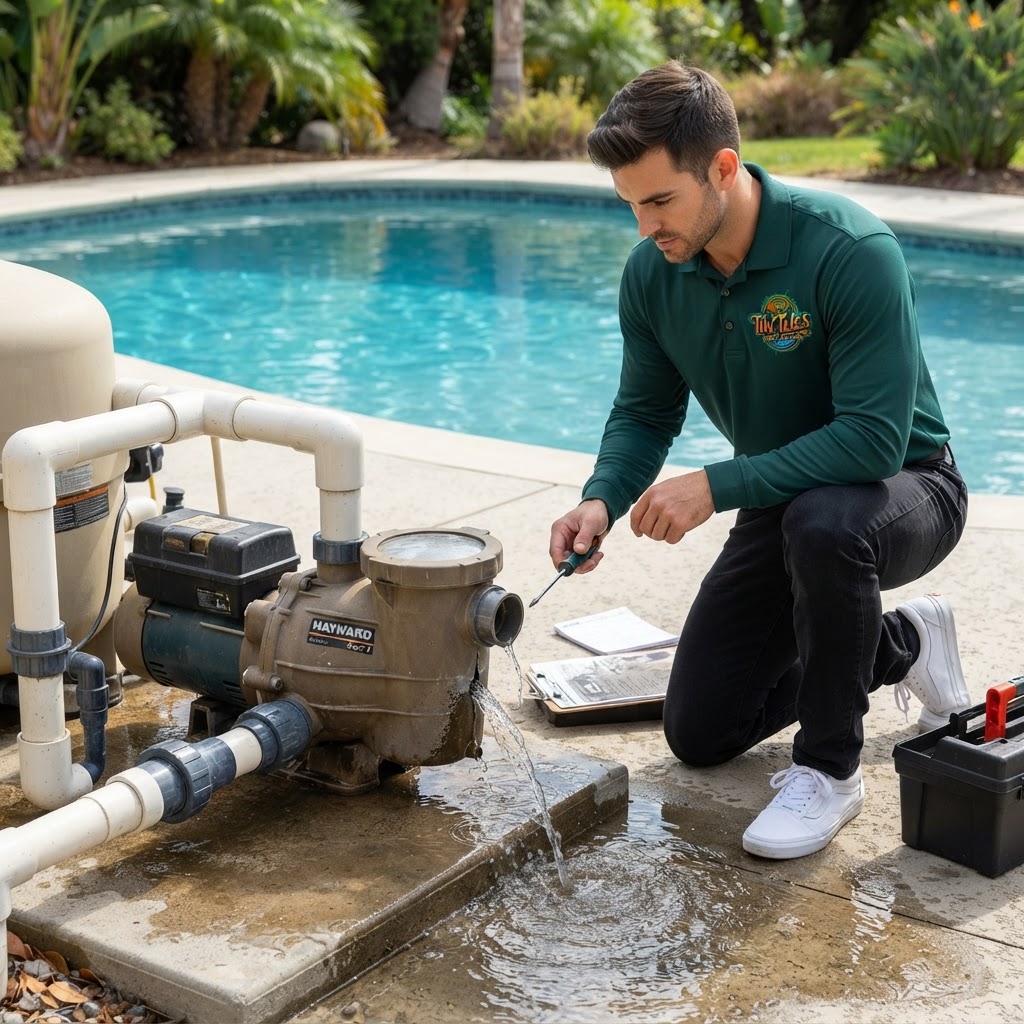
Dry the entire pump housing and the surrounding pad with a towel. Turn the pump on and watch closely with a flashlight. Look for water dripping from the bottom of the pump, spraying from the lid, or seeping from the pipe connections. If you see air bubbles in the pump basket or Bubbles in Your Jets? How to Diagnose and Fix Air in Pool Returns, you likely have a suction-side leak.
Quick Reference: Where is it Leaking?
- Between the Motor and Pump Housing: Likely a mechanical shaft seal failure.
- From the Pump Lid: Likely a worn or dirty lid O-ring.
- At the Pipe Connections (Inlet/Outlet): Likely a failed PVC union, bad thread sealant, or heat-shrunken fittings.
- From the Bottom of the Housing: Possibly a cracked pump volute or failed housing gasket.
- From the Drain Plug: Likely a missing or cracked drain plug O-ring.
Common Causes of Pool Pump Leaks
1. Failed Mechanical Shaft Seal
This is the most frequent cause of water leaking from the bottom of the pump where the motor meets the wet end. The mechanical shaft seal prevents water from traveling down the motor shaft into the motor itself. When this seal fails, you will see a steady drip or a puddle directly beneath the pump's bracket. If left unrepaired, this can cause the Pool Pump Not Working? The Complete DIY Troubleshooting Guide scenario where the bearings fail and the motor seizes.
2. Worn or Damaged O-Rings
Your pump uses several rubber O-rings to create airtight and watertight seals. Over time, these O-rings can dry out, crack, or become flattened. The most common offenders are the pump lid O-ring and the housing (diffuser) O-ring. A leak at the lid can cause the pump to draw in air, leading to Low Water Flow in Your Pool? Fix Weak Pressure Like a Pro.
3. Shrinking PVC Fittings
If your pump has run dry and overheated in the past, the PVC fittings threaded into the pump's inlet and outlet may have shrunk slightly. This creates a gap in the threads, allowing water to spray out under pressure or air to be sucked in.
4. Cracked Pump Housing (Volute)
While rare, the plastic housing of the pump can crack due to freeze damage or extreme pressure spikes. If you notice a crack in the plastic itself, the housing typically needs to be replaced rather than patched.
Pro Tip: Never use petroleum-based lubricants (like Vaseline) on your pool O-rings. Petroleum degrades rubber over time. Always use a silicone-based or Teflon-based lubricant specifically designed for pool equipment to ensure a long-lasting seal.
Tools and Supplies Needed for Repair
If you are planning a DIY repair, ensure you have the following ready:
- Replacement Seal Kit (Specific to your pump model: Hayward, Pentair, Jandy, etc.)
- Phillips and flat-head screwdrivers
- Socket wrench set or adjustable wrench
- Silicone-based pool lubricant (e.g., Magic Lube)
- Teflon tape or pipe thread sealant (non-hardening)
- Strap wrench (for stubborn lids)
Step-by-Step: Replacing a Mechanical Shaft Seal
- Safety First: Turn off the power at the main circuit breaker. Do not rely solely on the pump timer or switch.
- Disassemble the Pump: Remove the bolts or the clamp that holds the motor assembly to the pump housing. Carefully pull the motor away from the housing.
- Remove the Impeller: Use a wrench to hold the motor shaft at the back of the motor while unscrewing the impeller (usually counter-clockwise).
- Swap the Seals: The shaft seal comes in two halves. One half sits in the back of the impeller, and the other sits in the seal plate. Remove the old ones and press the new ones into place. Crucial: Do not touch the white ceramic or black carbon faces of the seal with your bare fingers; oils from your skin can cause premature failure.
- Reassemble: Screw the impeller back on, replace the housing O-ring (lubricate it first!), and bolt the motor back to the housing.
- Prime and Start: Fill the pump basket with water, replace the lid, and turn the power back on.
Safety Notes and Water Chemistry
When working on pool equipment, safety is paramount. Always ensure the electricity is completely disconnected before opening the motor or pump housing. Additionally, remember that poor water chemistry can actually cause leaks. Highly acidic water (pH below 7.2) or high chlorine levels can prematurely degrade rubber seals and O-rings.
Always maintain your water within these safe ranges:
- Free Chlorine: 1.0–3.0 ppm
- pH: 7.2–7.8
- Total Alkalinity: 80–120 ppm
- Calcium Hardness: 200–400 ppm
- Cyanuric Acid (CYA): 30–50 ppm
When to Call a Professional
While replacing an O-ring is a simple DIY task, some situations require an expert technician from Tiki Tides Pools:
- Electrical Smells or Noises: If your pump is humming, screeching, or smells like burning plastic, the motor bearings may have failed due to a long-term leak.
- Cracked Volute: Replacing the main pump body can be complex and requires plumbing knowledge.
- Repeated Seal Failure: If you replace the shaft seal and it leaks again immediately, there may be a warp in the seal plate or an issue with the motor shaft alignment.
- Wiring Concerns: If you are uncomfortable working with high-voltage electrical connections.
Summary
A pool pump leaking water is a signal to act quickly. By identifying the source—whether it's a simple lid O-ring or a more technical mechanical shaft seal—you can prevent catastrophic motor damage and keep your pool running efficiently. Regular inspection of your equipment pad and proper water chemistry maintenance are your best defenses against leaks. If you find yourself over your head, don't hesitate to reach out to the pros to ensure your circulation system remains in peak condition.
Related Reading
- Pool Heater Not Heating: The Ultimate Troubleshooting Guide
- Low Water Flow in Your Pool? Fix Weak Pressure Like a Pro
- How to Fix High Pool Filter Pressure: A Complete Troubleshooting Guide
- Bubbles in Your Jets? How to Diagnose and Fix Air in Pool Returns
- Pool Pump Not Working? The Complete DIY Troubleshooting Guide