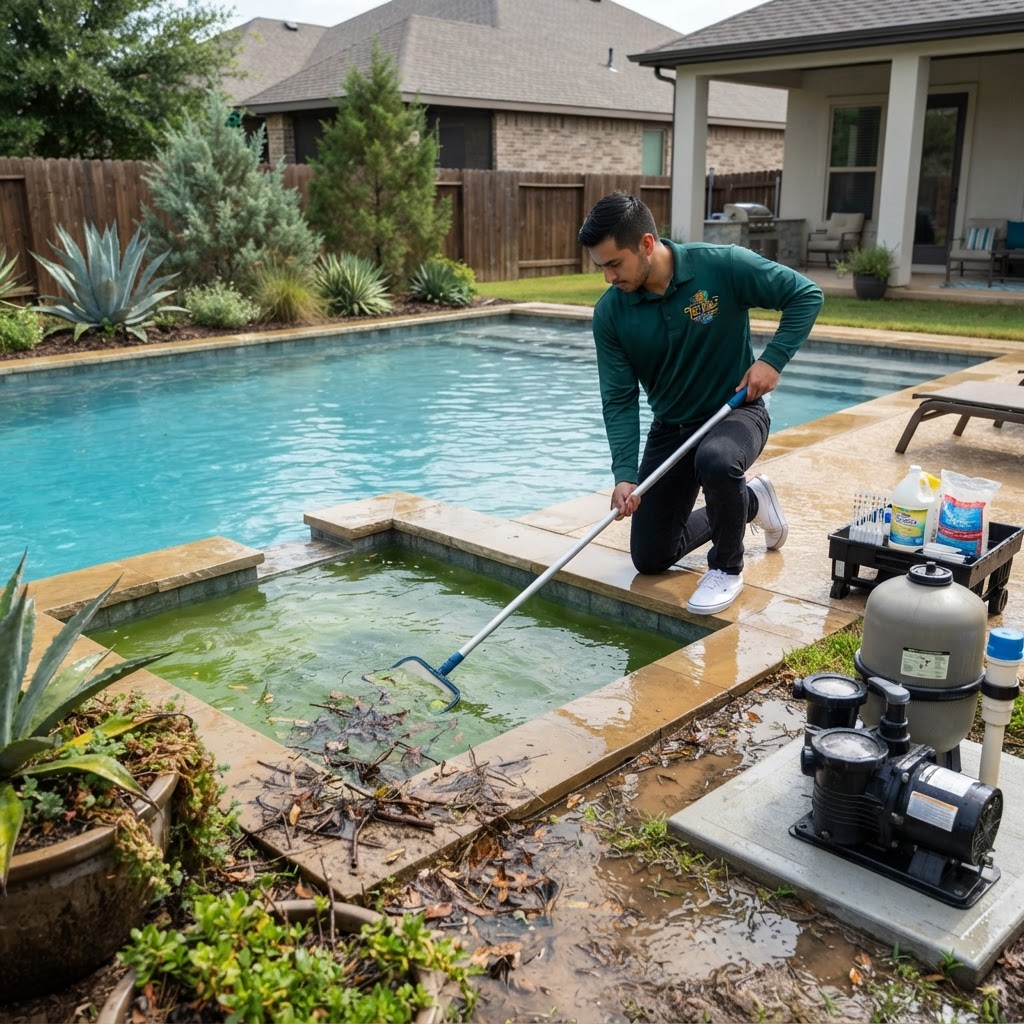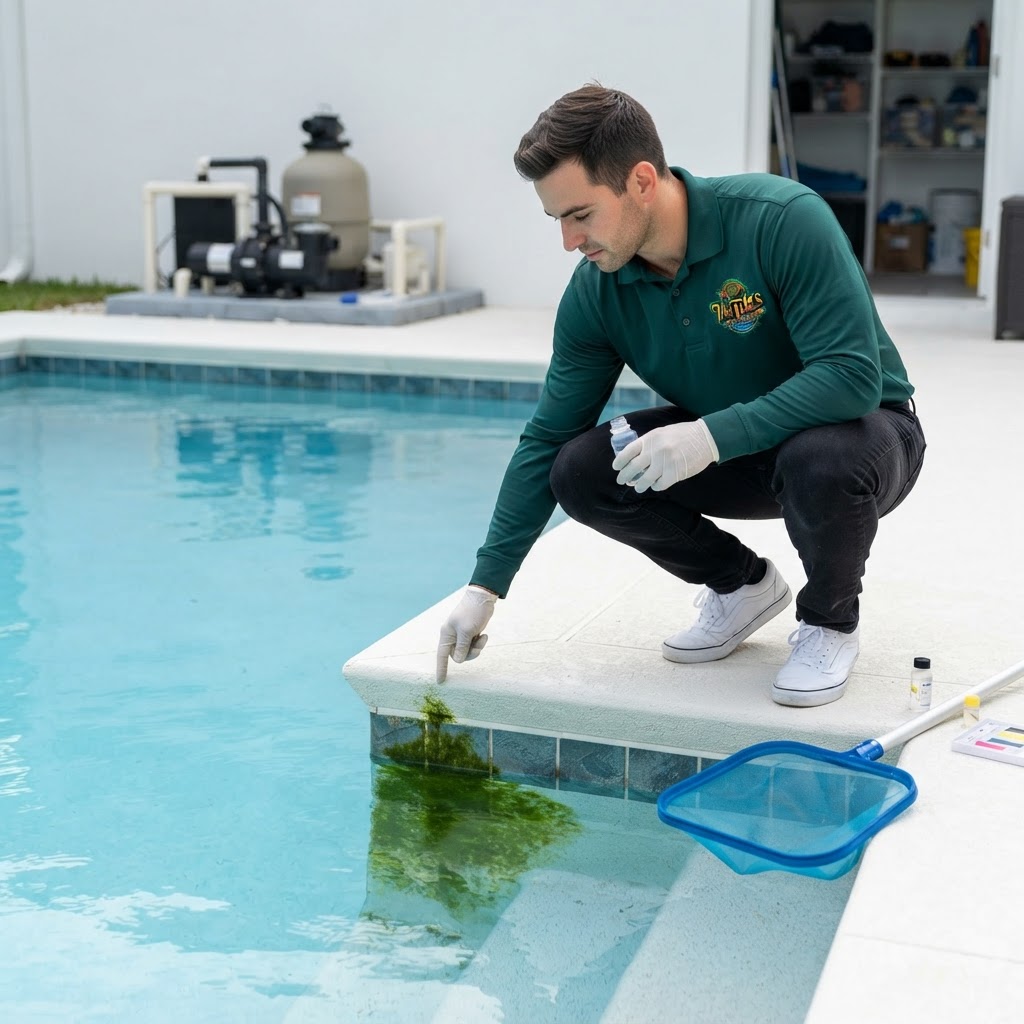
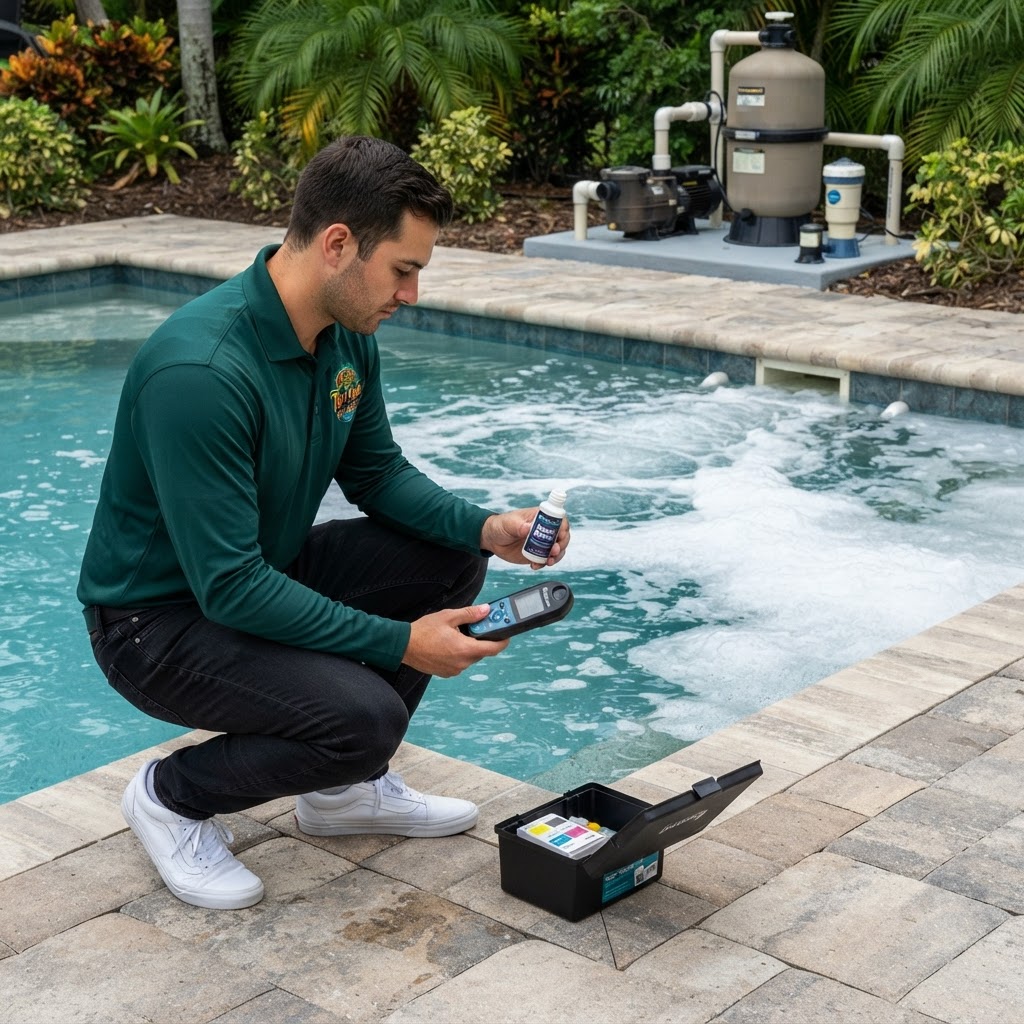
Finding a layer of thick, white foam floating on your pool surface can be a frustrating surprise. While a few bubbles from a return jet are normal, persistent foam that lingers and clumps together is a clear sign that your water chemistry is out of balance. At Tiki Tides Pools, we see this often, and while it usually isn't a health emergency, it is a warning that your filtration and sanitation systems are struggling.
Foam occurs when the surface tension of your pool water is lowered, allowing air to be trapped in bubbles that don't pop. This is usually caused by "surfactants"—substances like soaps, oils, or specific chemicals that interfere with the water's natural structure. Understanding whether your foam is caused by bather load, low calcium, or an impending algae bloom is the first step to fixing it.
In this guide, we will break down the science of pool foam, provide a step-by-step recovery plan, and help you identify when that foam might be a precursor to a much larger problem, like Green Algae Treatment: How to Clear Your Pool Fast.
Common Causes of Foamy Pool Water
1. Low Calcium Hardness (Soft Water)
One of the most overlooked causes of foam is low calcium hardness. When your water is too "soft" (meaning it lacks dissolved calcium), it becomes more susceptible to foaming. Calcium helps stabilize the water; without it, the water becomes thin and easily agitated into a lather.
2. Organic Contaminants and Bather Load
Every time someone swims, they leave behind organic matter: sweat, body oils, skin cells, and hair products. However, the biggest culprits are often external surfactants like sunscreen, lotion, deodorant, and even residual laundry detergent on swimsuits. When these oils accumulate, they create a film on the surface that traps air, resulting in thick foam.
3. Low-Quality Algaecides
Not all pool chemicals are created equal. Many inexpensive, "non-copper" algaecides use surfactants (specifically dimethyl benzyl ammonium chlorides) to kill algae. If you overdose the pool or use a low-grade product, the water will foam aggressively, especially near return jets or water features. If you are dealing with a specific infestation, such as Mustard Algae: How to Identify and Eliminate Yellow Algae, always use professional-grade, non-foaming algaecides.
4. The Algae Connection
Foam can sometimes be the first visible sign of an algae bloom before the water actually turns green. As algae begin to grow, they release organic waste that changes the water's surface tension. If you notice foam accompanied by a slight drop in your Free Chlorine levels, you may be looking at the early stages of a bloom. For more on identifying these early signs, see Why Is My Pool Water Green? 7 Common Causes and Fixes.
Quick Reference: Is it Foam or Air Bubbles?
Before treating the water, ensure you aren't actually dealing with a mechanical issue.
- Air Bubbles: These come out of the return jets, pop almost instantly, and are usually caused by a suction-side air leak (like a loose pump basket lid or a bad O-ring).
- Foam: This lingers on the surface, often clumps in corners or the skimmer, and feels "soapy" or sticky to the touch.
Pro Tip: To quickly test if your foam is caused by soap/oils or low calcium, take a sample of the foam in a jar and shake it. If the foam doubles in size and stays firm, it is likely a surfactant (soap/oil) issue. If it dissipates quickly but the pool remains foamy, check your calcium hardness levels immediately.
Step-by-Step: How to Fix Foamy Pool Water
Step 1: Test and Balance Your Water
Your first move is to get an accurate reading of your chemistry. You cannot fix foam without knowing your baseline. Follow these industry-standard ranges:
- Free Chlorine: 1.0–3.0 ppm (CDC Standard)
- pH: 7.2–7.8
- Total Alkalinity: 80–120 ppm
- Calcium Hardness: 200–400 ppm
- Cyanuric Acid: 30–50 ppm
If your Calcium Hardness is below 200 ppm, add a calcium chloride increaser to bring it into the safe range. This is often the "magic fix" for persistent foam.
Step 2: Shock the Pool (Oxidation)
If your balance is correct but the foam persists, you likely have a high "bather load" or organic buildup. Use a chlorine-based shock to oxidize these contaminants. By raising the Free Chlorine level, you "burn off" the oils and soaps that are creating the foam. Ensure you keep the pump running for at least 24 hours during this process.
Step 3: Use an Enzyme Treatment
Enzymes act like biological "Pac-Men," eating up the non-living organic waste (sunscreen, lotions, oils) that chlorine struggles to break down quickly. Adding a maintenance dose of enzymes can prevent foam from returning and keep your filter cleaner for longer.
Step 4: Clean the Filter and Skim
Physically remove as much foam as possible using a fine-mesh skimmer net. Check your filter pressure; if the foam was caused by heavy oils, your filter media (sand, DE, or cartridge) may be gummed up. A deep clean of the filter is often necessary to fully resolve the issue.
Safety Notes
- Chemical Handling: Always add chemicals to water, never water to chemicals. Wear protective eyewear and gloves when handling pool shock or calcium increasers.
- Swimming Safety: Do not swim if the Free Chlorine is above 5.0 ppm or if the water is so foamy that you cannot see the bottom of the pool. The CDC recommends a pH of 7.2–7.8 to prevent skin and eye irritation.
- Drowning Prevention: Thick foam can obscure a swimmer in distress. Never allow children to swim in a pool with significant surface foam.
When to Call a Professional
While most foam issues can be solved with a little DIY chemistry, some situations require an expert eye:
- Persistent Foam: If you have balanced the calcium and shocked the pool, but the foam returns within 24 hours.
- High TDS: If your Total Dissolved Solids (TDS) are over 2,500 ppm, the water may be "saturated," and no amount of chemicals will fix the foam. A professional can perform a partial drain and refill safely.
- Equipment Issues: If the foam is accompanied by loud noises from the pump or air blowing into the pool, you may have a mechanical failure in your plumbing.
Summary
Foamy pool water is usually a sign of "soft" water or an accumulation of organic waste like sunscreens and oils. By maintaining a Calcium Hardness level of 200–400 ppm and keeping your Free Chlorine between 1.0–3.0 ppm, you can prevent most foaming issues. Remember to skim the surface, shock the water to oxidize contaminants, and consider an enzyme treatment for long-term clarity. Keep your water balanced, and your pool will remain the refreshing oasis it was meant to be.