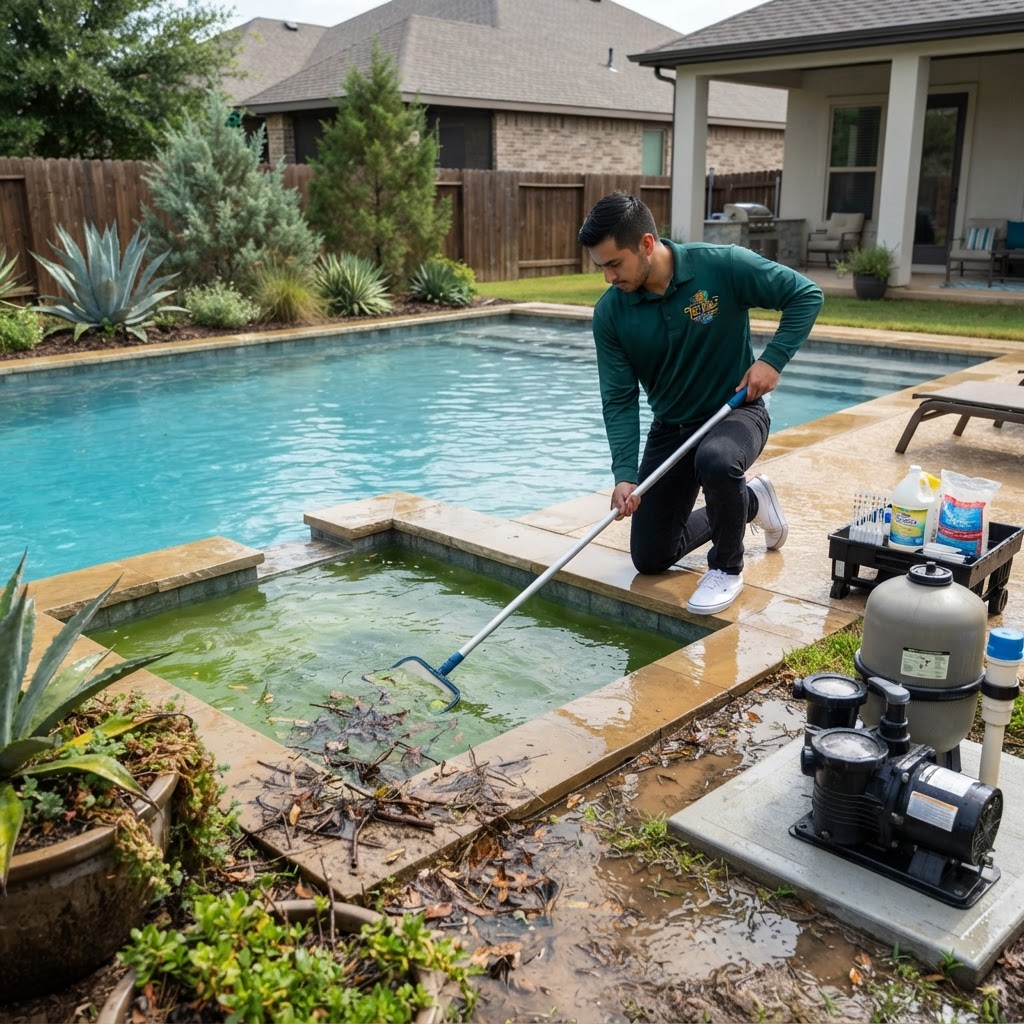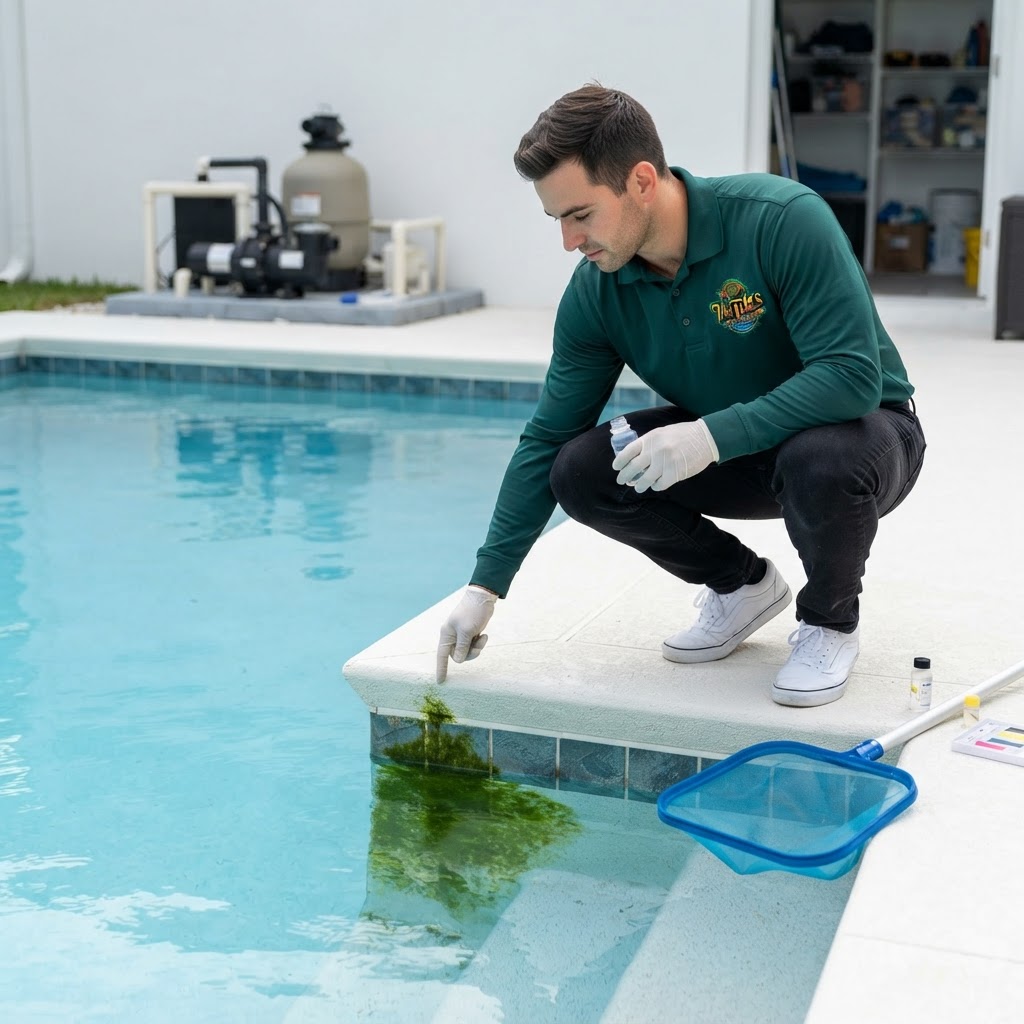
If you have ever noticed small, dark specks on your pool floor or walls that refuse to budge even after a vigorous brushing, you likely aren't dealing with dirt or simple debris. You are likely facing the most formidable opponent in the world of pool maintenance: black algae. Unlike the common green variety, black algae is a resilient, deep-rooted organism that can turn a weekend of relaxation into a weeks-long battle for your pool's health.
At Tiki Tides Pools, we have seen homeowners struggle for months with these stubborn spots. The reason black algae is so difficult to eliminate is that it isn't actually a true algae at all; it is a type of cyanobacteria. It forms a protective, waxy outer shell that shields it from standard chlorine levels, and it sends 'roots' deep into the porous surfaces of your pool, such as plaster, gunite, or grout. To win this fight, you need more than just chemicals—you need a strategic, aggressive plan of attack.
What Exactly is Black Algae?
Black algae (technically Phormidium) is a single-celled organism that grows in large, visible colonies. According to industry experts, these colonies are particularly invasive because they thrive in the tiny pores of pool surfaces Black Algae | Jaw's Pool Service. While Green Algae Treatment: How to Clear Your Pool Fast usually involves clearing up suspended particles in the water, black algae is a surface-level infestation that requires physical destruction of its biofilm to be successful.
Why It Survives Standard Treatments
- The Biofilm: Black algae secretes a waxy, water-resistant coating that prevents chlorine from reaching the bacteria inside Black Algae: Why It Survives Chlorine and How to Actually Kill It - Aiper.
- Deep Roots: It anchors itself into the plaster, meaning even if you kill the surface layer, the 'roots' can regenerate the colony within days.
- Chlorine Resistance: It can withstand much higher levels of sanitizer than Mustard Algae: How to Identify and Eliminate Yellow Algae.
Quick Reference: Signs and Tools
Signs You Have Black Algae:
- Small, dark black or blue-green spots (often the size of a pencil eraser).
- Spots that feel slimy or 'raised' to the touch.
- Patches that do not disappear after a standard shock treatment.
- Spots that appear in 'dead zones' with poor circulation, like corners or behind ladders.
Tools Needed for Eradication:
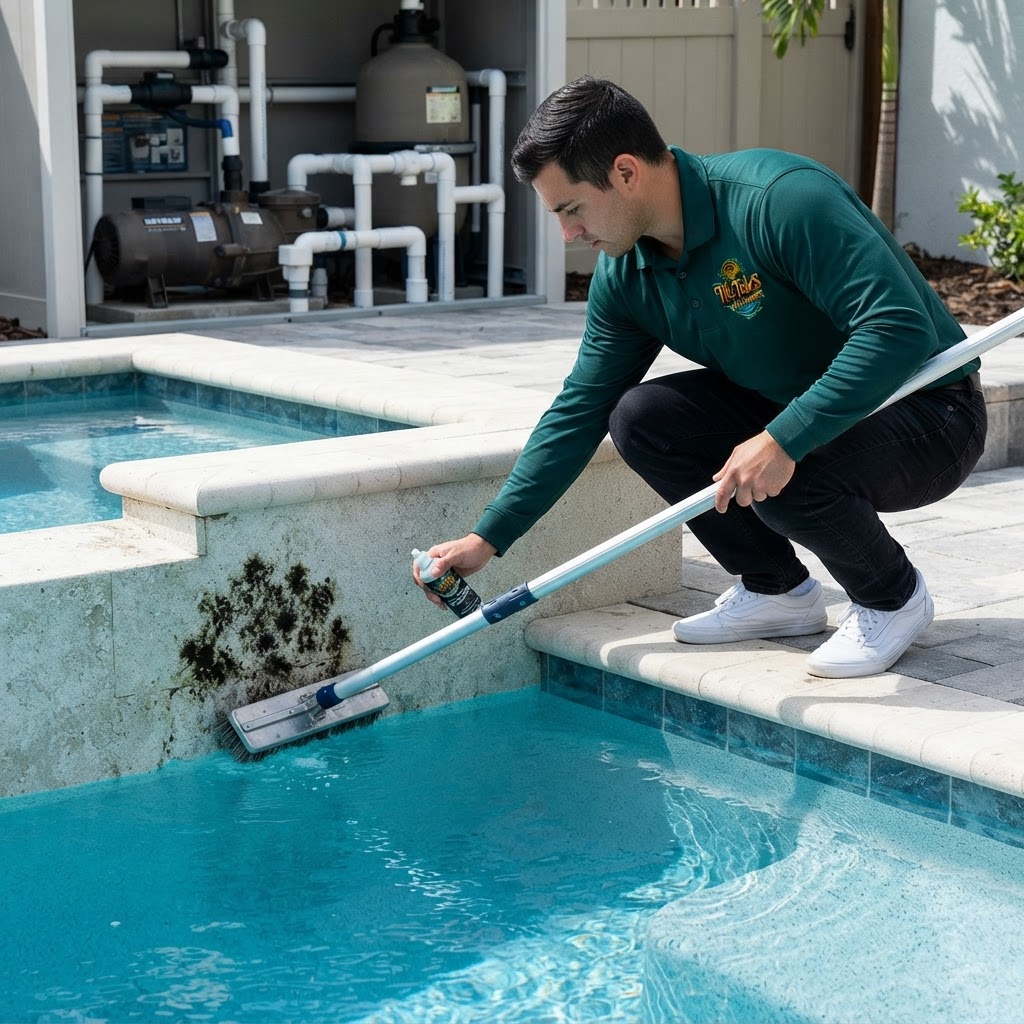
- Stainless Steel Brush: Essential for plaster/gunite pools to break the waxy shell (use nylon for vinyl or fiberglass).
- Trichlor Chlorine Tablets: Used for direct spot treatment.
- Calcium Hypochlorite (Shock): For a high-dose 'kill' treatment.
- Black Algaecide: Specifically formulated copper or silver-based products Treatment of Black Algae in Pools - In The Swim Pool Supplies.
- Water Test Kit: To ensure chemistry is balanced before and after treatment.
The Step-by-Step Eradication Protocol
1. Balance Your Water Chemistry
Before adding any specialty chemicals, your water must be in the ideal range to ensure the chlorine works effectively. The CDC and APSP recommend the following standards for healthy swimming Guidelines for Keeping Your Pool Safe and Healthy:
- pH: 7.2–7.8 (Aim for 7.4–7.6 for best results during treatment).
- Total Alkalinity: 80–120 ppm.
- Calcium Hardness: 200–400 ppm.
- Cyanuric Acid (CYA): 30–50 ppm.
2. The 'Aggressive' Brush
This is the most critical step. You must use a stainless steel brush to physically break the waxy biofilm covering the algae spots How Do I Get Rid of Black Algae in My Pool?. If you do not break this shell, the chlorine will simply roll off the surface without killing the organism. Scrub each spot vigorously until the dark color begins to fade or the surface looks 'scuffed.'
Pro Tip: For spots on the floor, you can use a pumice stone or a weighted brush to apply more pressure. The goal is to expose the 'roots' of the algae to the water.
3. Spot Treatment with Trichlor
After brushing, take a 3-inch Trichlor tablet (wear gloves!) and rub it directly onto the affected spots Black Algae and Your Swimming Pool: Tips for Removal and Prevention | Swimmingpool.com. This delivers a concentrated dose of chlorine directly to the roots. For spots on the floor, you can break the tablet into smaller pieces and let them sit on the spots for a few minutes (do not do this on vinyl liners as it will bleach them).
4. Quadruple Shock the Pool
Standard shock levels won't cut it. You need to raise the Free Chlorine (FC) level significantly. While the CDC standard for daily swimming is 1.0–3.0 ppm, treating black algae requires a 'kill dose.' Consult a professional or use a pool calculator to determine the amount of Calcium Hypochlorite needed to reach 20-30 ppm, depending on your CYA levels.
5. Add a Specialized Algaecide
Use an algaecide specifically labeled for black algae. These often contain metallic components like copper or silver that penetrate the cell walls of the bacteria Treatment of Black Algae in Pools - In The Swim Pool Supplies. Follow the manufacturer's instructions for a 'kill dose' rather than a maintenance dose.
6. Run the Filter and Repeat
Run your pump 24/7 during this process. You must continue to brush the spots 2-3 times a day for the next week. Even if the spots look gone, the roots may still be alive. Brushing ensures that the high chlorine levels continue to reach the deepest parts of the plaster pores.
Safety Notes
Handling pool chemicals requires extreme caution. Always follow these safety guidelines:
- Never Mix Chemicals: Mixing chlorine types (like Trichlor and Cal-Hypo) can cause a violent explosion or toxic gas release How Do I Get Rid of Black Algae in My Pool?.
- Protective Gear: Wear chemical-resistant gloves and safety goggles when handling tablets or shock.
- Storage: Keep all chemicals in a cool, dry, well-ventilated area out of reach of children.
- Swimming: Do not enter the pool until the Free Chlorine levels have returned to the safe range of 1.0–3.0 ppm as recommended by the CDC Guidelines for Keeping Your Pool Safe and Healthy.
When to Call a Professional
Black algae is notoriously difficult to DIY. You should call Tiki Tides Pools or a certified professional if:
- The infestation covers more than 10% of your pool surface.
- You have treated the pool twice and the spots return within a week.
- The algae is located in hard-to-reach areas like deep-end drains or light niches.
- You have a vinyl or fiberglass pool, as aggressive brushing and concentrated chlorine can easily damage these surfaces.
- You suspect the algae has entered your filtration system or plumbing.
In extreme cases, a professional may recommend a full pool drain and an acid wash to strip the top layer of plaster and physically remove the roots One pool guy told me that Black algae is almost impossible to kill. Is it true?.
Summary
Black algae is a test of patience and persistence. By maintaining a balanced pH of 7.2–7.8 and a consistent sanitation routine, you can prevent these invaders from taking hold. However, once they appear, the 'Scrub-Shock-Repeat' cycle is your only path to victory. Stay diligent, keep your brushes moving, and don't hesitate to reach out to the experts at Tiki Tides Pools if the battle becomes more than you can handle.