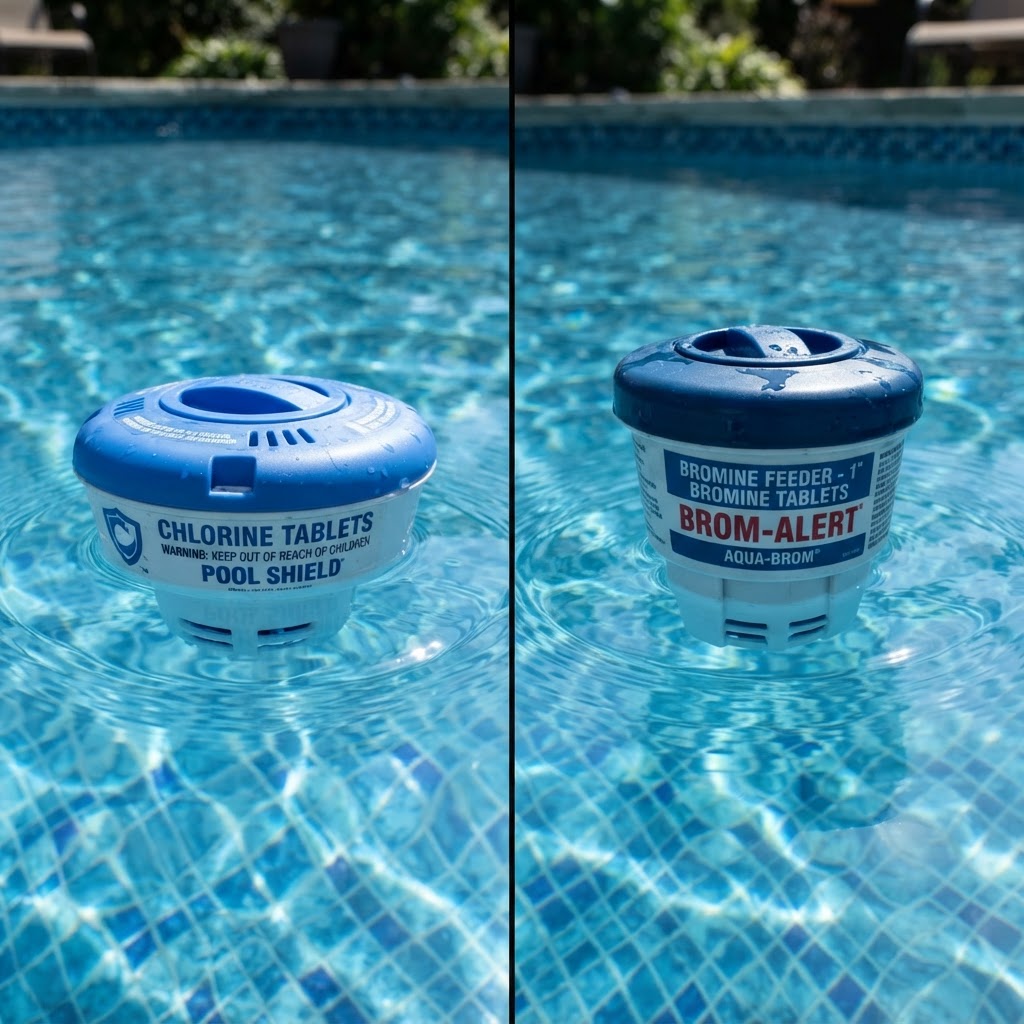
Choosing the right sanitizer is perhaps the most important decision you will make for your pool's health. At Tiki Tides Pools, we know that water chemistry can feel like a high school science project gone wrong, but understanding the difference between chlorine and bromine is the key to a safe, crystal-clear swimming experience. Both chemicals serve the same primary purpose—killing harmful bacteria, algae, and pathogens—but they do so in very different ways, with distinct impacts on your wallet and your skin.
Whether you are building a new pool, reviving an old one, or just looking to improve your current maintenance routine, this guide will walk you through the science, the costs, and the practicalities of chlorine and bromine. By the end, you'll know exactly which sanitizer belongs in your skimmer.
Understanding Chlorine: The Industry Standard
Chlorine is the most widely used pool sanitizer in the world, and for good reason. It is effective, relatively inexpensive, and fast-acting. When you add chlorine to your pool, it reacts with the water to create hypochlorous acid, which is the active agent that kills microorganisms.
How Chlorine Works
Chlorine works primarily through oxidation. It attacks the cell walls of bacteria and organic matter, effectively "burning" them away. However, as chlorine does its job, it reacts with ammonia and nitrogen (found in sweat, urine, and environmental debris) to form "chloramines." These chloramines are what cause that distinct "pool smell" and red eyes—not the chlorine itself. To get rid of chloramines, you must periodically "shock" the pool by adding a high dose of oxidizer to break those chemical bonds.
Pros and Cons of Chlorine
Pros:
- Affordability: Chlorine is significantly cheaper than bromine and is available in many forms.
- Stability: When paired with Cyanuric Acid (CYA), chlorine is protected from being destroyed by UV rays from the sun.
- Ease of Use: It comes in convenient tablets, liquid, or granular forms that are easy to measure and apply.
Cons:
- Volatile pH: Chlorine can fluctuate your pH levels, requiring frequent testing and adjustment.
- Skin Sensitivity: High levels can be harsh on hair, skin, and swimwear if not carefully balanced.
- Byproducts: Chloramines can be irritating and require frequent shocking to clear out.
To master the broader scope of your pool's health, check out our Master Your Water: The Ultimate Guide to Pool Chemistry for Beginners.
Understanding Bromine: The Gentle Powerhouse
Bromine is often the preferred choice for indoor pools and hot tubs. While it belongs to the same halogen family as chlorine, it reacts differently with water and contaminants.
How Bromine Works
Instead of acting primarily as an oxidizer, bromine sanitizes through ionization. It breaks apart the chemical bonds of contaminants. One of the biggest advantages of bromine is what happens after it reacts. Like chlorine, bromine forms a byproduct called "bromamines." However, unlike chloramines, bromamines are still active sanitizers and they do not produce the same offensive odor or skin irritation.
Pros and Cons of Bromine
Pros:
- Heat Stability: Bromine remains stable at much higher temperatures than chlorine, making it the gold standard for spas and hot tubs.
- Longevity: Bromine stays active in the water longer and can be "recharged" by adding a simple oxidizing shock, which converts spent bromide back into active bromine.
- Gentle on Swimmers: It is much less likely to cause the skin rashes or eye irritation associated with chlorine pools.
Cons:
- Cost: Bromine can cost significantly more than chlorine, often double the price per pound.
- UV Sensitivity: Bromine cannot be effectively stabilized with Cyanuric Acid, meaning it degrades quickly in direct sunlight.
- Oxidizing Power: Bromine is a weaker oxidizer than chlorine, meaning the water might not look quite as "sparkling" or clear without regular supplemental shocking.
Chlorine vs Bromine: A Head-to-Head Comparison
1. Cost Efficiency
If you are on a budget and have a large outdoor pool, chlorine is almost always the winner. It treats more gallons of water per dollar spent. However, if you have a smaller pool or a covered indoor pool where chemical loss is lower, the slightly higher cost of bromine might be worth the convenience and increased swimmer comfort.
2. The UV Factor (Outdoor vs. Indoor)
This is a dealbreaker for most pool owners. Chlorine can be "sunscreened" by Cyanuric Acid (CYA), keeping it active for days even in mid-summer. Bromine, however, is destroyed by UV rays in a matter of hours. For this reason, bromine is rarely recommended for outdoor swimming pools that get full sun. If you struggle with maintaining levels, you might need to look at your Total Alkalinity: Your Pool's pH Bodyguard to ensure your chemicals aren't being wasted by pH swings.
3. pH Management
Both sanitizers influence and are influenced by your pH levels. Chlorine tablets tend to have a low pH, which can pull your pool's pH down over time. Bromine is more pH-neutral but still requires a balanced environment to remain effective. For a deeper dive into balancing, read Master Your Water Chemistry: How to Balance Your Pool's pH Levels Like a Pro.
Quick Reference: Ideal Chemical Ranges
To keep your water safe and your equipment from corroding, maintain these industry-standard levels:
- Free Chlorine: 1.0–3.0 ppm (CDC standard)
- Bromine: 3.0–5.0 ppm
- pH: 7.2–7.8 (CDC standard)
- Total Alkalinity: 80–120 ppm
- Calcium Hardness: 200–400 ppm
- Cyanuric Acid (CYA): 30–50 ppm (Chlorine pools only)
Pro Tip: Never switch from chlorine to bromine (or vice versa) simply by adding the new chemical to your existing water. The two chemicals can react dangerously when mixed in concentrated forms. If you want to switch systems, you must either drain the pool entirely or wait until the previous sanitizer level is at zero before starting the new regimen.
Safety Notes
Handling pool chemicals requires extreme care to prevent injury and equipment damage.
- Never Mix Chemicals: Never mix chlorine and bromine in their dry form or in the same feeder. This can cause a violent chemical reaction or even an explosion.
- Storage: Store all chemicals in a cool, dry, ventilated area out of direct sunlight and reach of children.
- Protective Gear: Always wear gloves and eye protection when handling concentrated sanitizers.
- Chemical Addition: Always add chemicals to water, never add water to chemicals.
When to Call a Professional
While basic sanitation is a routine DIY task, some situations require an expert from Tiki Tides Pools:
- If you cannot maintain a sanitizer residual despite heavy dosing (Sanitizer Demand).
- If your water remains cloudy or green despite having balanced levels.
- If you are planning a conversion from one sanitizer system to another and need a system flush.
- If you experience recurring equipment corrosion or scale buildup.
Summary
Choosing between chlorine and bromine comes down to your pool's environment and your personal priorities. Chlorine is the cost-effective, UV-resistant king of outdoor pools. Bromine is the skin-friendly, heat-resistant champion of indoor pools and spas. Regardless of your choice, consistency is the key to safety. Test your water at least twice a week to ensure you remain within the healthy ranges that keep your pool perfect for swimming.