Your pool’s filtration system is the heartbeat of your backyard oasis. It works tirelessly to circulate water, distribute chemicals, and strain out debris. However, when you notice the needle on your pressure gauge creeping into the red zone, it is a clear sign that your system is struggling. High pool filter pressure isn't just a minor annoyance; it can lead to poor water quality, equipment damage, and increased energy costs.
Understanding why your pressure is high is the first step toward a fix. In most cases, a high reading is your filter's way of telling you it's full of dirt and needs a cleaning. But sometimes, the issue lies deeper in the plumbing or the gauge itself. This guide will walk you through diagnosing the cause and implementing the correct fix for sand, D.E., and cartridge filters.
What is "Normal" Pool Filter Pressure?
Before you can identify high pressure, you must know your baseline. Every pool is unique due to its plumbing length, pipe diameter, and pump horsepower.
The Golden Rule: Your "normal" pressure is the reading on the gauge immediately after you have cleaned or backwashed the filter. For most residential pools, this is typically between 8 and 15 PSI (pounds per square inch).
When to take action: You should clean or backwash your filter whenever the pressure rises 8 to 10 PSI above your clean baseline. If your baseline is 10 PSI, you need to service the filter when it hits 18-20 PSI.
Top Causes of High Pool Filter Pressure
1. A Dirty Filter (Most Common)
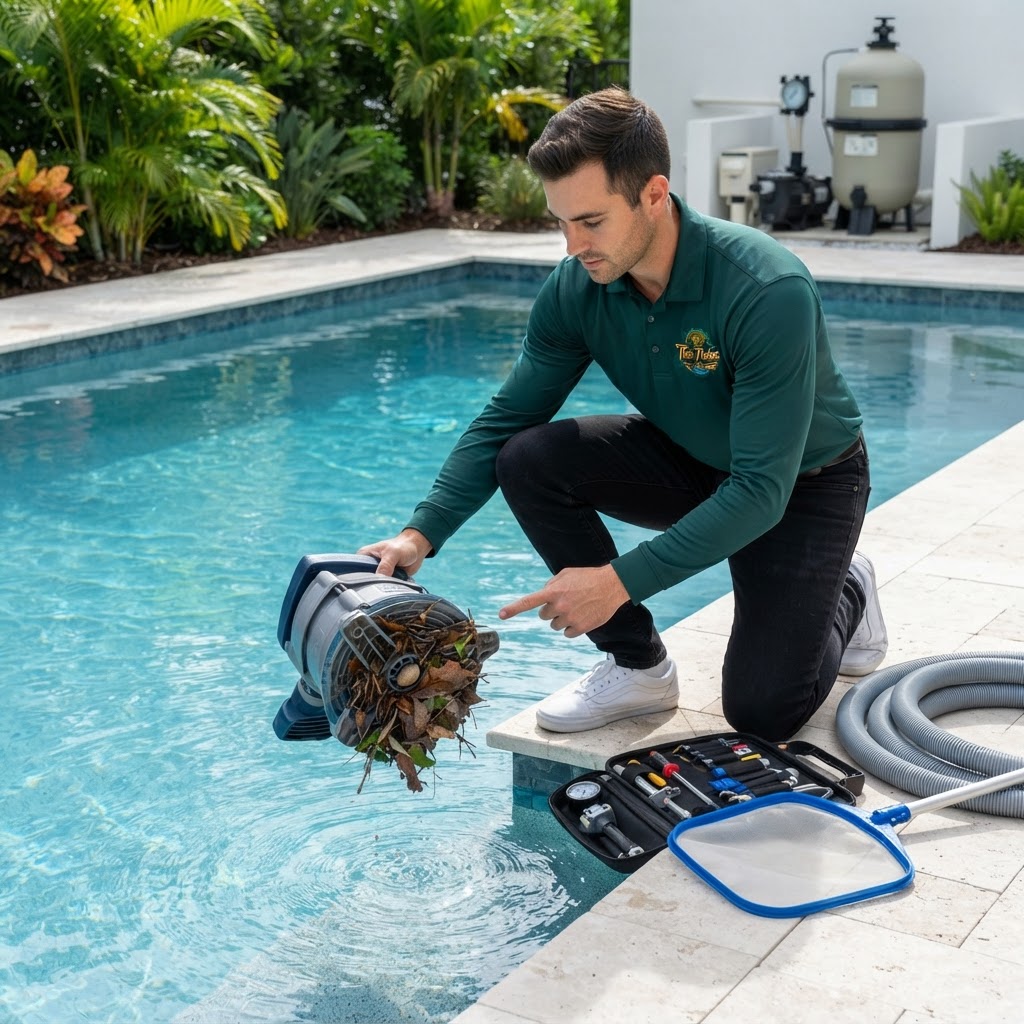
As your filter does its job, it traps oils, skin cells, algae, and organic debris. Eventually, the filter media becomes so saturated that water struggles to pass through, causing back-pressure to build up inside the tank.
2. Closed or Partially Closed Valves
If you recently performed maintenance, you may have left a return-side valve closed. If the water cannot exit the filter tank and return to the pool, the pressure will skyrocket instantly. Always check that all return lines are fully open.
3. A Clogged Salt Cell or Heater
If you have a salt chlorine generator or a pool heater, scale buildup or debris inside these components can create a bottleneck. Since these are located after the filter, any restriction here will cause the filter tank pressure to rise.
4. Broken Internal Components
In DE filters, a torn grid or a broken manifold can cause internal flow issues. In sand filters, a broken lateral might lead to sand entering the pool, but it can also cause uneven pressure distribution.
Pro Tip: If your pressure is high but you notice very weak flow coming out of the jets in the pool, the blockage is definitely inside or before the filter. If you have Bubbles in Your Jets, you might actually have a suction-side issue rather than a pressure-side issue.
Step-by-Step Fixes for Every Filter Type
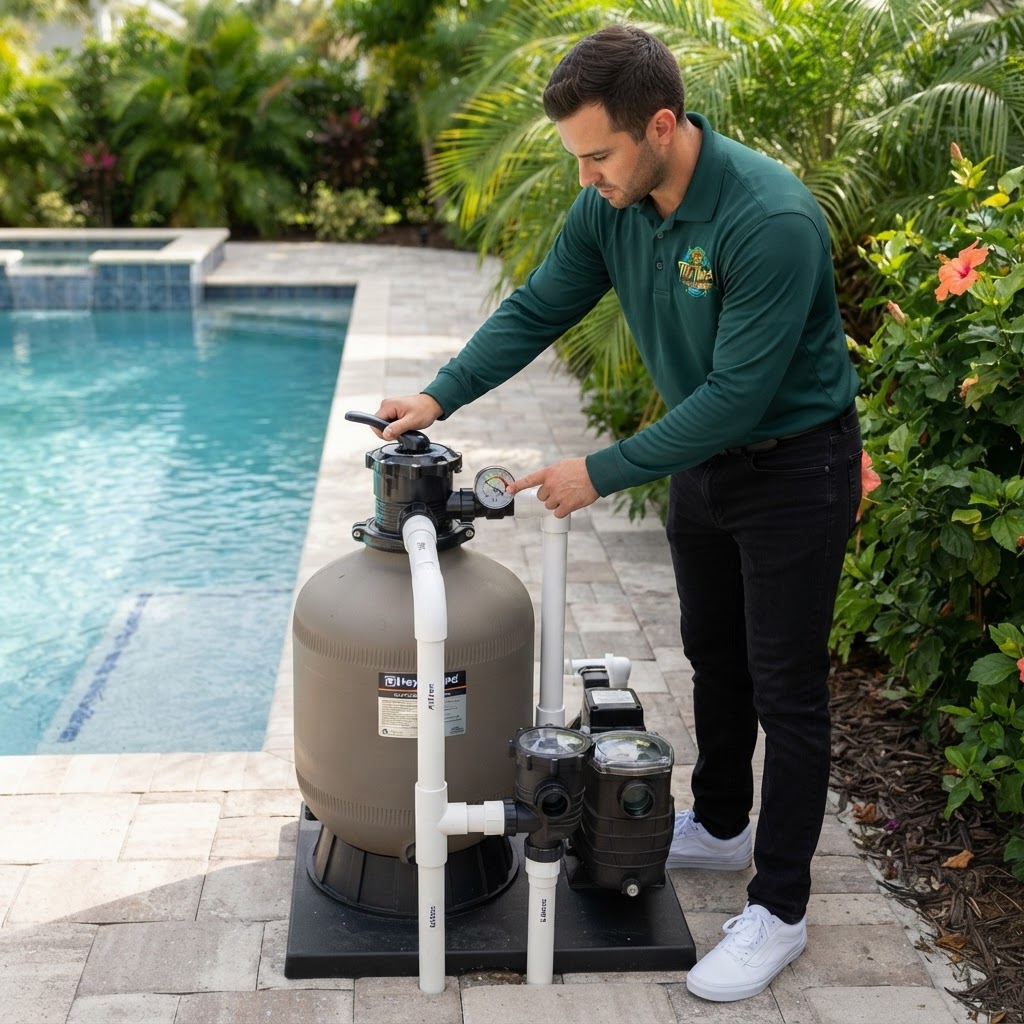
For Sand Filters: Backwashing
- Turn off the pump: Never move the multiport valve handle while the pump is running.
- Set to Backwash: Move the handle to the "Backwash" position and ensure the waste hose is ready.
- Run the Pump: Turn the pump on and let it run for 2–3 minutes or until the water in the sight glass runs clear.
- Rinse: Turn the pump off, switch to "Rinse" for 30 seconds to settle the sand.
- Return to Filter: Turn the pump off, switch back to "Filter," and restart.
For D.E. (Diatomaceous Earth) Filters: Backwash and Recharge
- Backwash: Follow the same steps as the sand filter above.
- Recharge: Once back in "Filter" mode, you must add fresh D.E. powder through the skimmer. Refer to your filter’s manual for the exact amount (usually about 80% of the initial charge after a backwash).
- Deep Clean: Once a year, you must take the tank apart and manually clean the grids with a garden hose to remove built-up oils and minerals.
For Cartridge Filters: Manual Cleaning
- Turn off the pump: Bleed the air out using the air relief valve.
- Remove the Cartridge: Open the filter tank and pull out the pleated cartridge.
- Wash: Use a garden hose with a spray nozzle to wash between every pleat. Do not use a power washer, as it will tear the fabric.
- Degrease (Optional): If the cartridge is grey or oily, soak it in a specialized filter cleaner overnight before rinsing and replacing.
The "Clean Filter, High Pressure" Mystery
If you have thoroughly cleaned your filter but the pressure gauge is still reading high, check these three things:
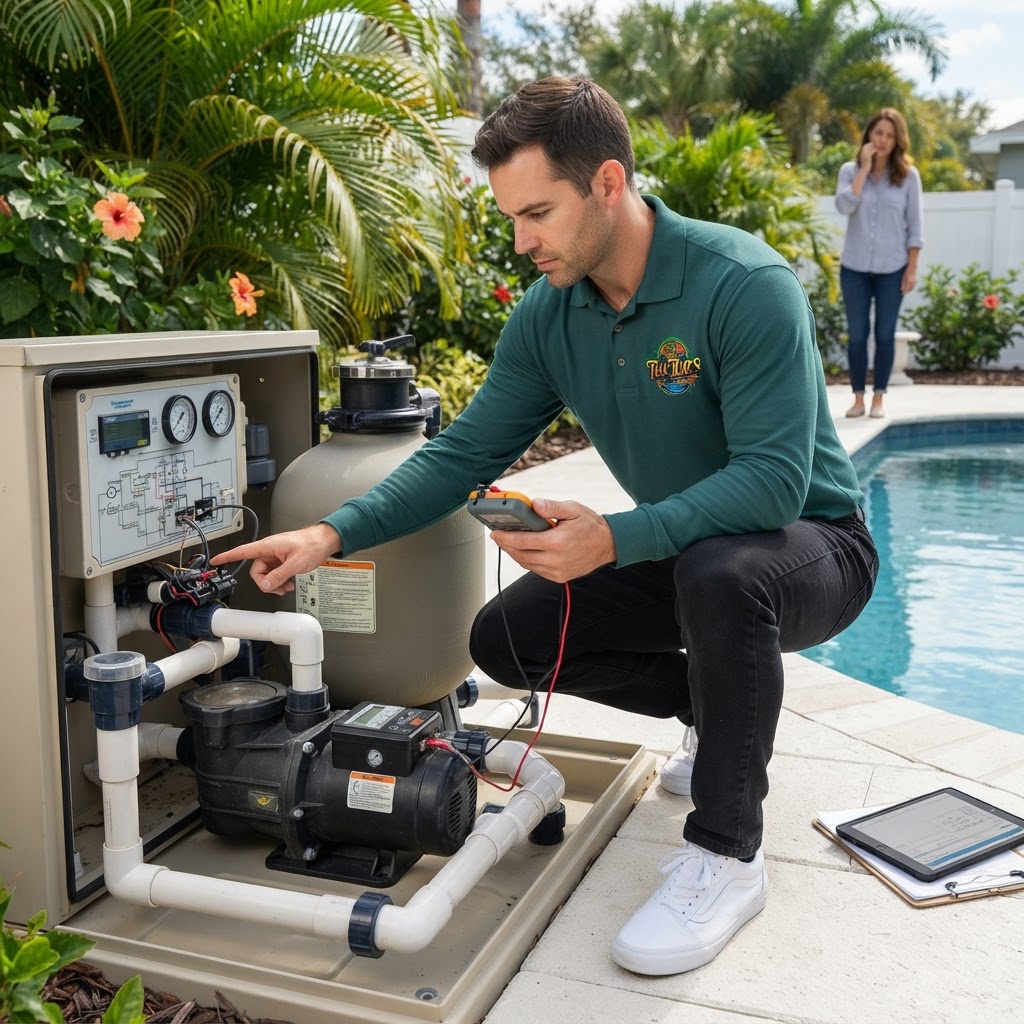
- A Faulty Gauge: Pressure gauges are notorious for failing. If the needle doesn't drop to zero when the pump is turned off, the gauge is broken and needs replacement.
- Calcification: If you have high Calcium Hardness (above 400 ppm), calcium can build up inside your filter media, essentially turning your sand or DE grids into stone. In this case, chemical cleaning or media replacement is necessary.
- Check the Pump: While high pressure usually points to the filter, a Pool Pump Not Working correctly can sometimes lead to erratic pressure readings if the impeller is partially clogged with small debris that passed the basket.
Quick Reference: Signs of High Pressure
- PSI reading 8-10+ above baseline.
- Weak water flow from return jets.
- Poor surface skimming.
- Cloudy or murky water.
- Pumping motor running louder or hotter than usual.
Safety Notes
- Pressure Warning: Pool filter tanks are pressurized vessels. Always turn off the pump and release the air via the air relief valve before loosening any clamps or bolts on the filter tank. Failure to do so can cause the tank lid to blow off with dangerous force.
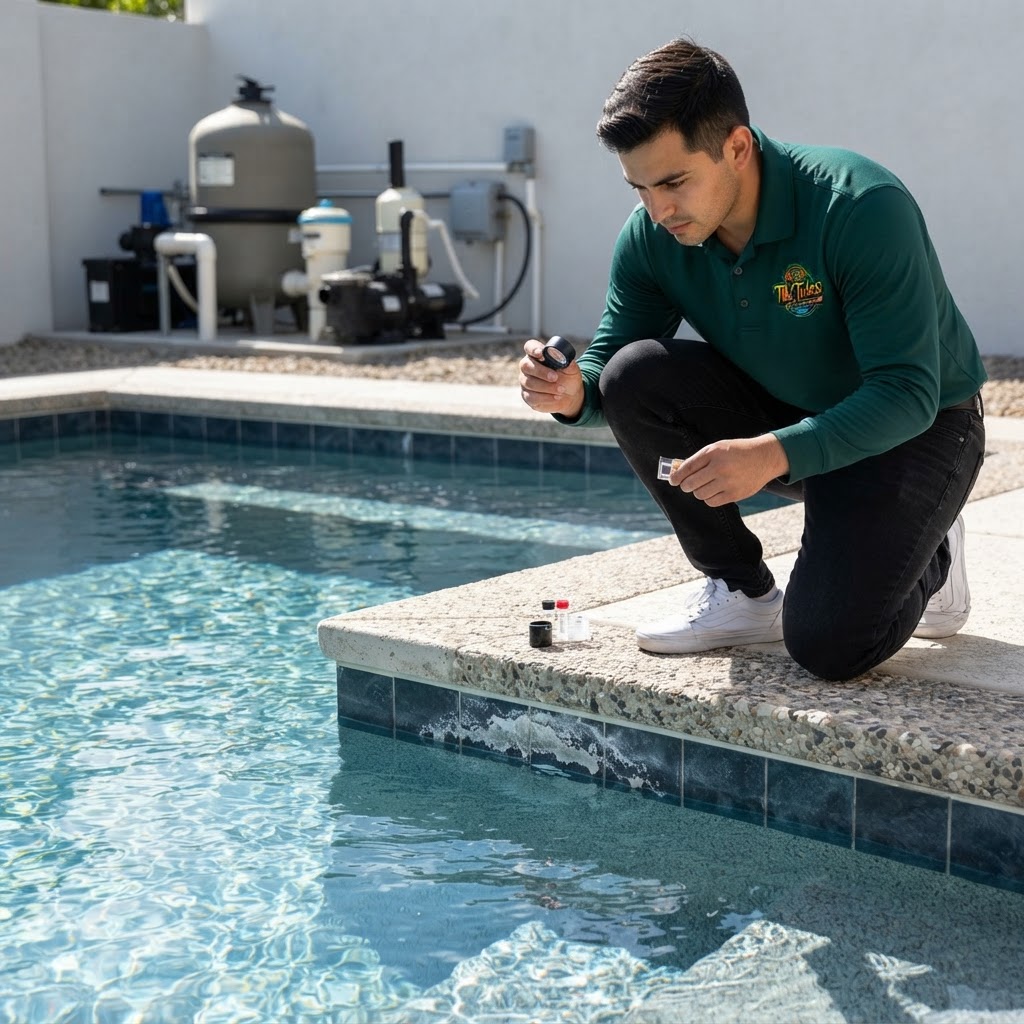
- Chemical Safety: When handling D.E. powder, wear a mask to avoid inhaling the fine dust, which can irritate the lungs. Always maintain your chemical balance within safe ranges to prevent filter-clogging algae blooms:
- Free Chlorine: 1.0–3.0 ppm
- pH: 7.2–7.8
- Total Alkalinity: 80–120 ppm
- Cyanuric Acid: 30–50 ppm
When to Call a Professional
While most high-pressure issues are DIY-friendly, some require an expert touch. Contact Tiki Tides Pools if:
- The filter tank is leaking or showing signs of structural cracking.
- The multiport valve is leaking from the waste line or handle.
- You have backwashed multiple times, but the pressure returns to high levels within hours.
- You suspect a blockage deep within the underground plumbing lines.
Summary
High pool filter pressure is usually a helpful reminder that your system needs maintenance. By keeping an eye on your baseline PSI and performing regular cleanings, you ensure that your pool stays clear and your equipment lasts for years. Remember: a clean filter is the secret to a stress-free swimming season!