Your pool filter is the unsung hero of your backyard oasis. Often described as the "kidneys" of your swimming pool, the filtration system works tirelessly to remove dirt, debris, oils, and microscopic organisms that can turn a sparkling lagoon into a murky pond. However, even the most advanced filtration systems have a limit. As debris accumulates, the internal pressure rises, and the water flow decreases, putting unnecessary strain on your pump and compromising your water chemistry.
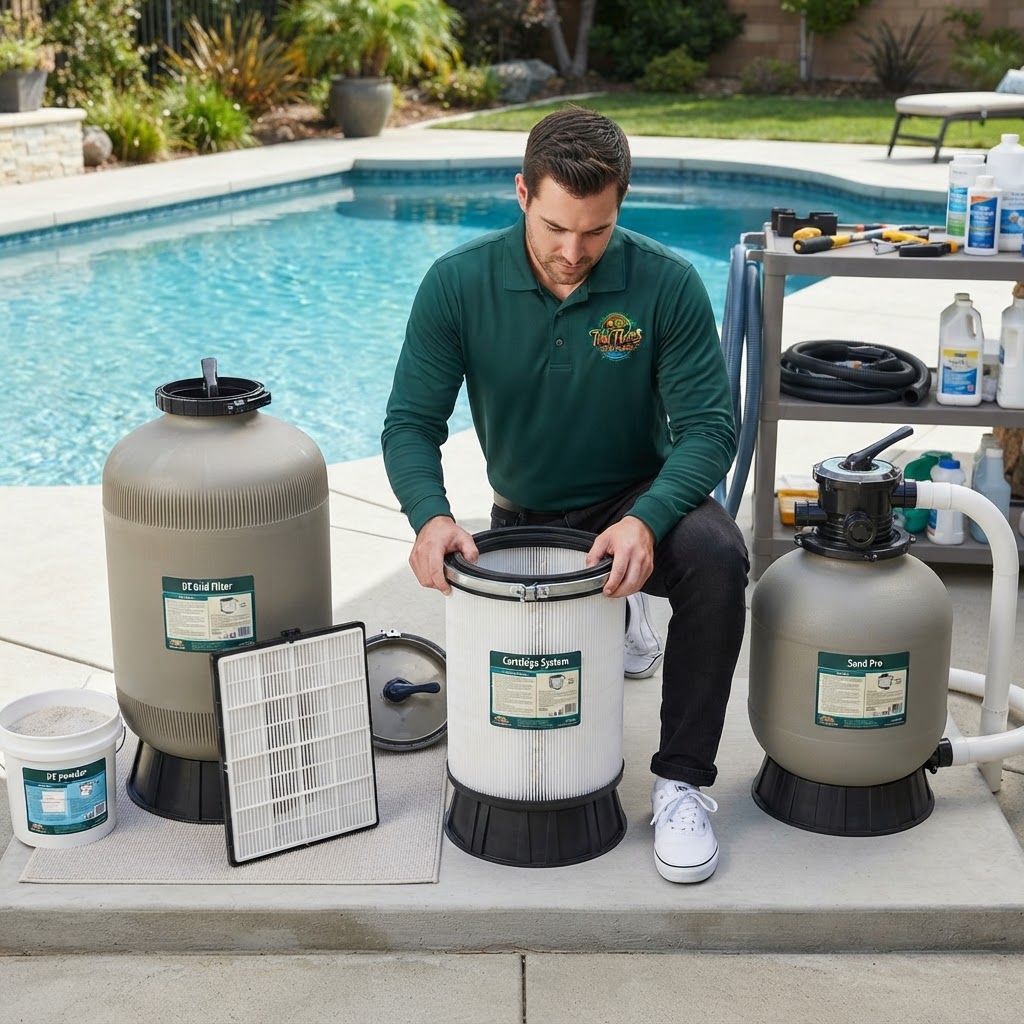
Learning how to clean a pool filter is a fundamental skill for every pool owner. Whether you are dealing with a sand filter, a cartridge system, or a high-efficiency Diatomaceous Earth (DE) unit, regular maintenance is the key to longevity and safety. In this guide, the experts at Tiki Tides Pools will walk you through the precise steps for cleaning each filter type while maintaining industry-standard safety protocols.
Why Filter Maintenance Matters
When a filter is dirty, it can't trap contaminants effectively. This leads to a breakdown in your water sanitation. For example, if your filter isn't capturing organic matter, your Free Chlorine will be depleted faster as it tries to oxidize those particles. To maintain the CDC-recommended Free Chlorine level of 1.0–3.0 ppm, your filter must be operating at peak efficiency. Neglecting your filter can also lead to issues like cloudy pool water and algae blooms.
Signs Your Filter Needs Cleaning
Before diving into the steps, you need to know when to act. The most reliable indicator is your pressure gauge.
- The 10 PSI Rule: Note the "clean pressure" reading when your filter is brand new or freshly cleaned. When the pressure rises 8 to 10 PSI above the clean baseline, it is time for a cleaning.
- Reduced Flow: You may notice weaker suction at the skimmer or less pressure coming from the return jets.
- Cloudy Water: If your chemistry is balanced (pH 7.2–7.8) but the water remains hazy, the filter is likely bypassed or clogged.
How to Clean a Sand Filter (Backwashing)
Sand filters are the most common and easiest to maintain. They use #20 silica sand to trap particles down to about 20-40 microns.
Tools Needed:
- Backwash hose (if not hard-plumbed)
- Sand filter cleaner (optional, for annual deep cleaning)
Step-by-Step Process:
- Turn Off the Pump: Never move the multiport valve handle while the pump is running; this will damage the internal spider gasket.
- Set to Backwash: Move the valve handle to the "Backwash" position. This reverses the flow of water, lifting the sand bed and flushing debris out through the waste line.
- Run the Pump: Turn the pump back on. Watch the sight glass on the side of the valve. The water will initially look dirty. Run it for 2-3 minutes or until the water in the glass is clear.
- Turn Off the Pump: Stop the flow.
- Set to Rinse: Move the handle to "Rinse." Run the pump for about 30-60 seconds. This resettles the sand and prevents a puff of dirty water from returning to the pool.
- Return to Filter: Turn the pump off, set the valve back to "Filter," and turn the pump on. Note the new baseline pressure.
Pro Tip: Once a year, use a specialized sand filter degreaser. Over time, sunscreen and body oils can gunk up the sand, making backwashing less effective. A chemical soak breaks these oils down and restores the sand's filtration capacity.
How to Clean a Cartridge Filter
Cartridge filters utilize pleated fabric elements to trap debris down to 10-15 microns. They do not require backwashing, which saves water, but they do require manual cleaning.
Step-by-Step Process:
- Turn Off the Pump: Ensure no water is moving through the system.
- Release Pressure: Turn the air relief valve on top of the filter tank counter-clockwise to bleed off the pressure. Safety Warning: Wait until the pressure gauge reads zero before attempting to open the tank.
- Open the Tank: Remove the tension clamp or locking ring and lift the top of the filter tank off.
- Remove Cartridges: Carefully lift the cartridges out and inspect them for tears or cracks in the plastic end caps.
- Wash the Elements: Use a garden hose with a spray nozzle (not a pressure washer, which can damage the fabric) to spray the pleats at a 45-degree angle. Work from top to bottom, getting deep into every fold.
- Degrease (Optional): If the cartridges are still gray or feel oily, soak them in a bucket of filter cleaner for 24 hours, then rinse thoroughly. This is also a great time to ensure your pool brushing technique is up to par to keep debris out of the filter in the first place.
- Reassemble: Apply a silicone-based lubricant to the tank O-ring, place the cartridges back in, and secure the tank lid.
- Restart: Open the air relief valve, turn on the pump, and close the valve once a steady stream of water shoots out.
How to Clean a DE (Diatomaceous Earth) Filter
DE filters offer the finest filtration, catching particles as small as 2-5 microns. They require both backwashing and periodic manual "tear-down" cleanings.
Step-by-Step Process:
- Backwash: Follow the same backwashing steps as a sand filter (Backwash -> Rinse -> Filter).
- Add DE Powder: Because backwashing removes the DE coating from the internal grids, you must replace it. Mix a slurry of DE powder and water in a bucket. With the pump running, pour the slurry into the skimmer closest to the equipment. Consult your filter manual for the exact amount (usually measured in lbs or "DE scoops").
- The Deep Clean (Twice a Year): Twice a year, you must take the filter apart. Drain the tank, remove the internal grid assembly, and hose off every grid manually. Soak the grids in a muriatic acid solution if calcium scale is present (refer to our guide on removing calcium scale for safety tips on acid handling).
Safety Notes
Working with pool equipment involves high pressure and electricity. Always follow these safety guidelines:
- Pressure Relief: Always bleed the air pressure before opening any filter tank. A pressurized tank lid can be launched with enough force to cause fatal injuries.
- Chemical Handling: When using filter cleaners or acid soaks, wear chemical-resistant gloves and eye protection. Always add chemicals to water, never water to chemicals.
- Electrical: Ensure your hands are dry when operating the pump switch, and never work on the pump motor while it is plugged in or powered.
When to Call a Professional
While routine cleaning is a great DIY task, some situations require a pro from Tiki Tides Pools:
- Cracked Manifolds: If you see sand or DE powder returning to the pool, you likely have a broken internal component.
- Leaking Multiport Valves: If water is constantly leaking out of your waste line while in the "Filter" position, your internal gaskets need replacement.
- High Pressure Persistence: If the pressure remains high even after a thorough cleaning, your filter media (sand or DE grids) may be reaching the end of its life (typically 5-7 years for sand, 10+ for DE grids, and 2-3 for cartridges).
Summary
A clean filter is the foundation of a healthy swimming environment. By monitoring your pressure gauge and performing regular cleanings—whether it's backwashing your sand filter or hosing down your cartridges—you ensure your water stays within the safe pH range of 7.2–7.8 and stays crystal clear. For the best results, incorporate filter checks into your weekly vacuuming routine. If you're ever in doubt, the team at Tiki Tides Pools is here to help with expert equipment inspections and deep cleaning services.