Nothing puts a damper on a planned pool party like diving into ice-cold water when you expected a balmy 82 degrees. Your pool heater is the unsung hero of your backyard oasis, extending your swimming season into the crisp autumn months and ensuring early spring comfort. However, like any complex piece of machinery involving water, electricity, and often gas, things can go wrong.
Understanding the basics of pool heater troubleshooting can save you a significant amount of money in unnecessary service calls and, more importantly, can help you identify when a situation is a simple DIY fix versus a serious safety hazard. At Tiki Tides Pools, we believe an informed pool owner is a happy pool owner. In this guide, we will walk through the most common heater malfunctions and provide actionable steps to get the heat back on.
First Things First: The Basics of Heater Operation
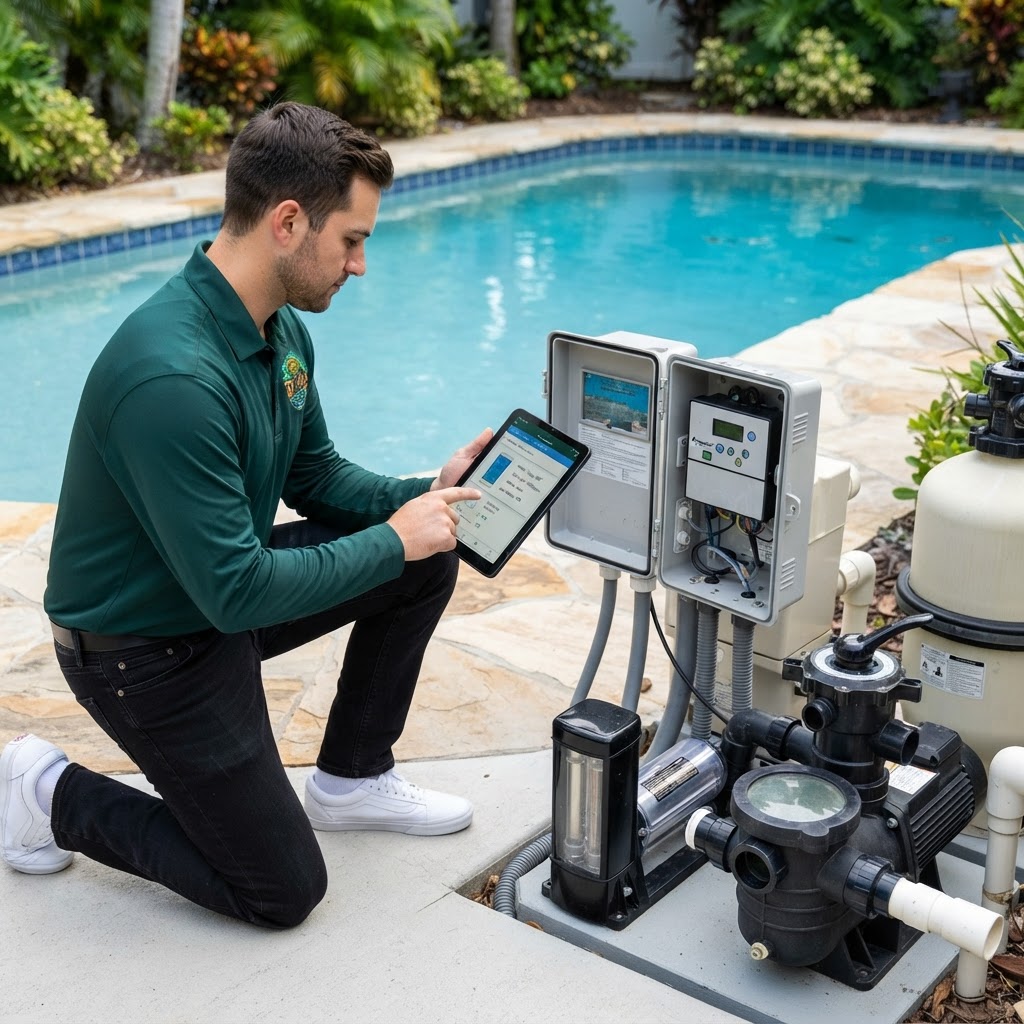
Before diving into the mechanical guts of your heater, it is essential to ensure the environment is right for it to operate. Most heaters, whether gas or electric heat pumps, rely on three fundamental components: fuel (gas or electricity), airflow (for combustion or heat exchange), and water flow. If any of these are restricted, the heater's safety sensors will prevent it from firing up.
Common Symptoms of a Malfunctioning Heater
- The heater won't ignite or turn on at all.
- The heater starts but shuts off after a few minutes (short-cycling).
- The water isn't reaching the desired temperature.
- The heater is making unusual banging, whistling, or grinding noises.
- There is visible water leaking from the heater cabinet.
Check Your Water Flow First
One of the most frequent causes of heater failure isn't the heater itself—it's the water flow. Most pool heaters have a 'Pressure Switch' designed to shut the unit off if there isn't enough water moving through the internal heat exchanger to prevent overheating and melting the internal components.
If your filter is dirty or your pump basket is full of debris, the flow rate drops. Start by checking your pump. If you aren't sure how it operates, read our guide on How Does a Pool Pump Work? The Heart of Your Swimming Pool Explained. If the pump is running fine, check your filter pressure. A high-pressure reading on your filter gauge indicates a blockage. In many cases, you simply need to Master the Flow: When and How to Backwash Your Pool Filter Like a Pro to restore proper flow and get the heater running again.
Pro Tip: Always ensure your pool's water level is halfway up the skimmer opening. If the water is too low, the pump may suck in air, causing a loss of prime and triggering the heater’s low-pressure safety shut-off.
Troubleshooting a Heater That Won't Ignite
If the heater has power and the pump is moving water, but the unit refuses to ignite, check the following:
- Check the Thermostat: It sounds simple, but ensure the thermostat is set to a temperature higher than the current pool water. Also, verify that the heater is set to 'Pool' or 'Spa' mode correctly.
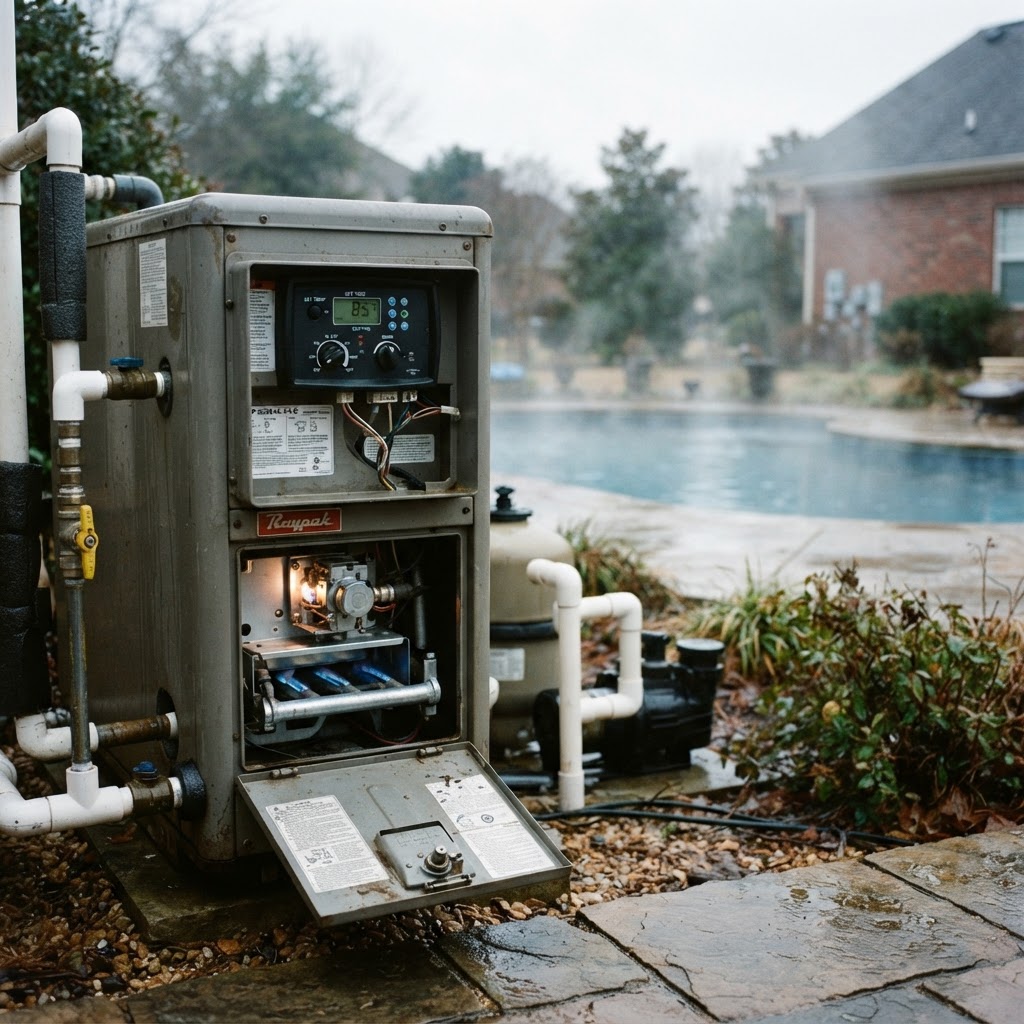
- Inspect the Gas Supply: For gas heaters, ensure the gas valve (both at the meter and inside the heater cabinet) is in the 'ON' position. If you use propane, check your tank level. Propane heaters are particularly sensitive to low tank pressure.
- Clear Debris: Spiders and wasps love the smell of gas and often build nests inside the burner orifices or the pilot light assembly. A small blockage here can prevent ignition entirely.
- Airflow and Exhaust: Ensure the top of the heater is clear of leaves, branches, or covers. Gas heaters require a specific air-to-fuel ratio to ignite safely.
Addressing Strange Noises and Leaks
If your heater sounds like a tea kettle or a freight train, you likely have an internal flow issue.
- Whistling: This often points to a gas pressure issue or a clogged burner orifice. This requires a professional to adjust the gas manifold pressure.
- Banging (Knocking): This is often 'knocking' caused by water boiling inside the heat exchanger. This happens when the water flow is too slow or the internal bypass valve has failed.
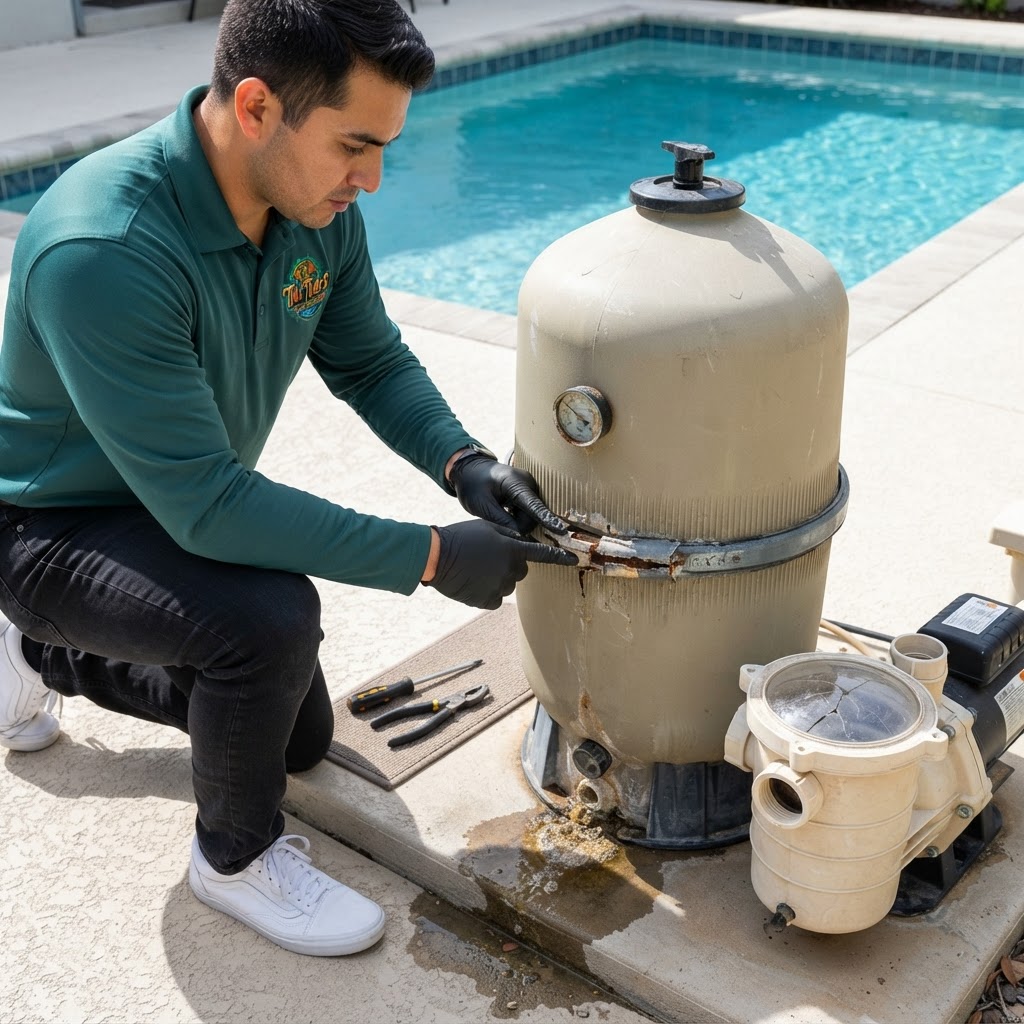
- Leaking: If you see water pooling under the heater, it could be condensation (normal on startup) or a pinhole leak in the heat exchanger. Heat exchanger leaks are often the result of poor water chemistry.
The Critical Role of Water Chemistry
Maintaining proper water chemistry isn't just for swimmer comfort; it's vital for the lifespan of your heater. The heat exchanger inside your unit is usually made of copper or cupro-nickel. If your pH drops below the recommended range (7.2–7.8), the water becomes acidic and will literally eat the copper out of your heater. Conversely, high Calcium Hardness (above 400 ppm) or high Total Alkalinity (above 120 ppm) will cause scale buildup inside the exchanger, reducing efficiency and eventually causing the unit to overheat and fail.
Safe Operating Ranges for Your Heater:
- Free Chlorine: 1.0–3.0 ppm
- pH: 7.2–7.8
- Total Alkalinity: 80–120 ppm
- Calcium Hardness: 200–400 ppm
- Cyanuric Acid: 30–50 ppm
Safety Notes
Working on pool heaters involves high-voltage electricity and flammable gas.
- Never attempt to bypass safety switches (like the pressure switch or high-limit switch) permanently. These are there to prevent explosions and fires.
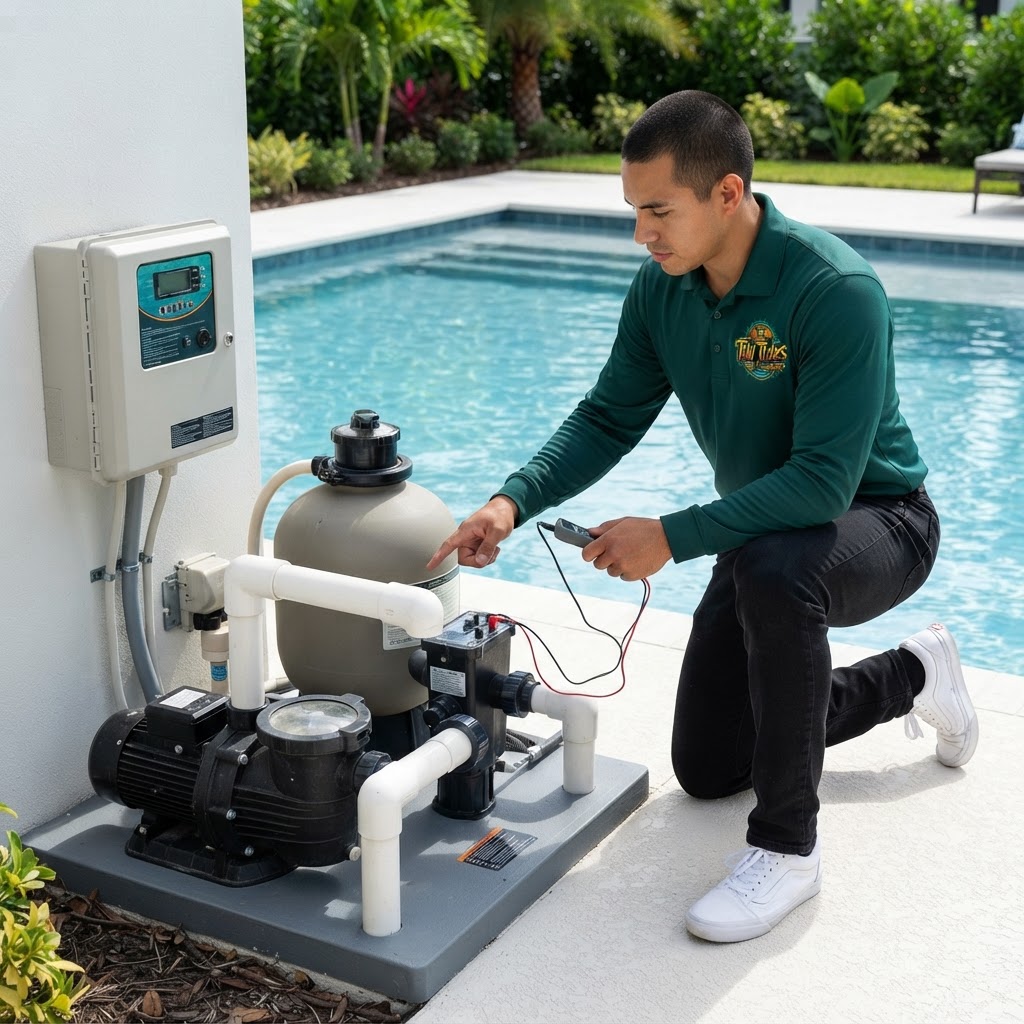
- Always turn off the electrical breaker and the gas supply before opening the heater's service panels.
- Smell Gas? If you smell a 'rotten egg' odor, immediately turn off the gas supply at the meter, leave the area, and call your local gas company or fire department.
When to Call a Professional
While cleaning a pump basket or backwashing a filter are great DIY tasks, some heater issues require a certified technician. You should call Tiki Tides Pools if:
- You suspect a gas leak or have issues with the gas valve.
- The electronic control board is showing 'Service' codes that don't clear after a power cycle.
- The heat exchanger is leaking water.
- The heater requires internal wiring repairs.
- You need to replace the pilot assembly or the ignition control module.
Summary
A pool heater is a significant investment that provides immense comfort. By keeping your filter clean, ensuring proper water flow, and maintaining your chemistry within the CDC-recommended ranges (pH 7.2–7.8), you can prevent the vast majority of common heater problems. When troubleshooting, always start with the simplest solutions—check the power, the gas, and the flow—before moving on to more complex components. If the fix isn't immediately apparent, don't risk your safety; contact a professional to get your pool back to the perfect temperature.", "meta_description": "Expert pool heater troubleshooting guide. Learn to fix ignition issues, low flow errors, and strange noises while maintaining safe chemical levels.", "keywords": ["pool heater troubleshooting", "gas pool heater repair", "pool heater won't ignite", "swimming pool heating issues", "pool heater making noise", "pool heater pressure switch", "low water flow pool heater"], "tags": ["Pool Equipment", "Maintenance", "Heater Repair", "Pool School"], "problem_tags": ["equipment_issue", "maintenance_tips"], "reading_time": 6}