Vacation is a time for relaxation and recharging, but for pool owners, it often comes with a side of anxiety. The thought of returning from a week in the sun only to find a murky, green lagoon in the backyard is enough to dampen any traveler's spirit. Without regular circulation and chemical monitoring, a swimming pool can quickly succumb to algae blooms and debris buildup, especially during the peak of summer.
Proper vacation pool care is about more than just adding a little extra chlorine; it is about setting up a self-sustaining system that can withstand heat, evaporation, and wind while you are gone. By following a structured pre-departure routine, you can ensure that your pool remains a refreshing oasis rather than a maintenance nightmare. This guide will walk you through the critical steps to take before you lock the door and head for the airport.
The Pre-Vacation Cleaning Blitz
Before you even think about chemicals, you must physically clean the pool. Debris left in the water will consume your sanitizer (chlorine) much faster, leaving the water vulnerable to algae.
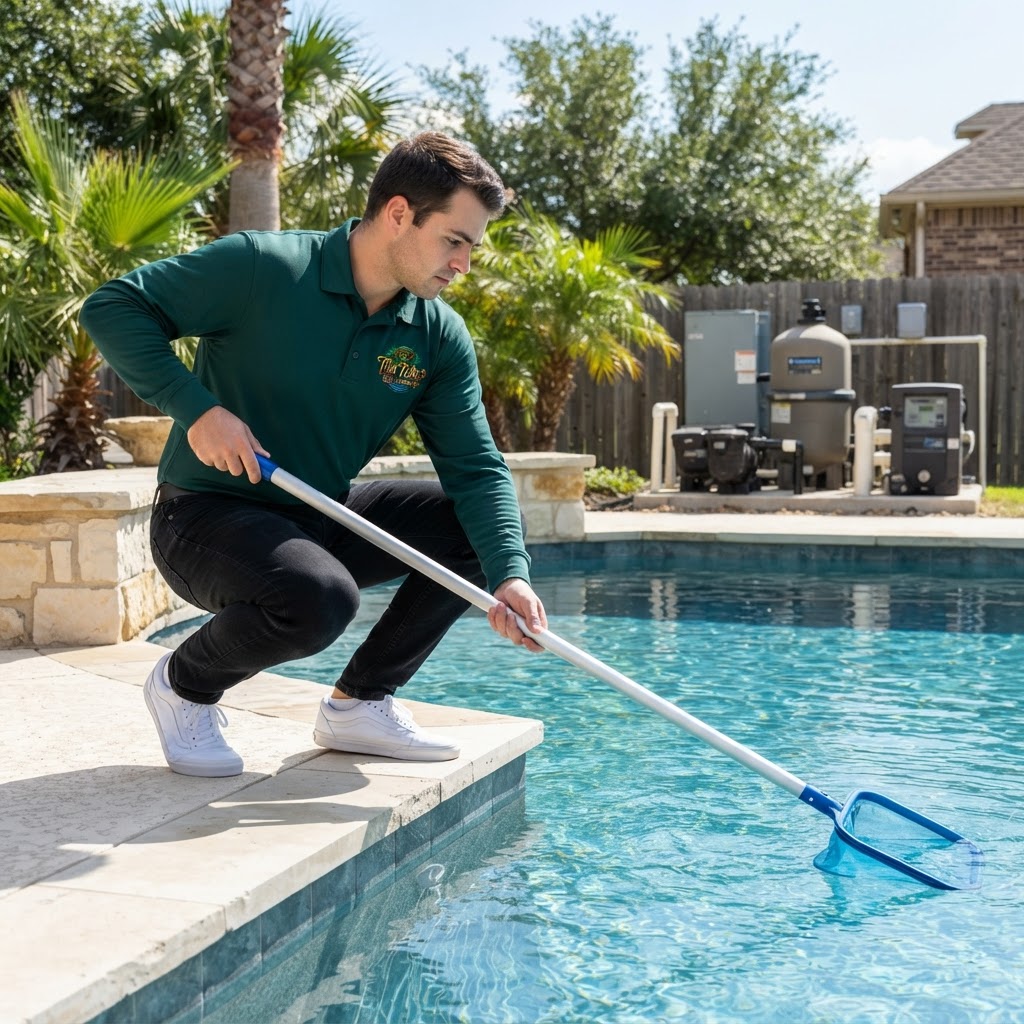
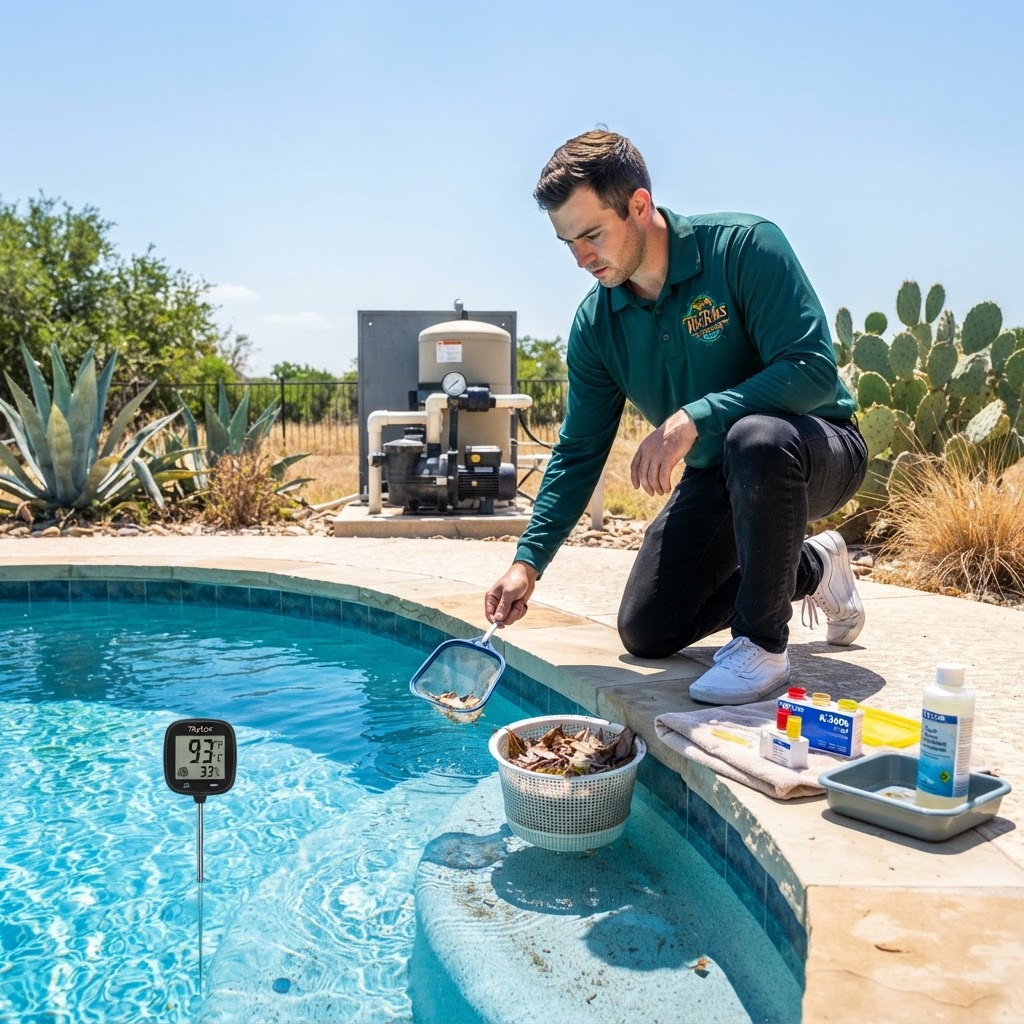
- Skim and Vacuum: Remove all floating leaves, insects, and debris. Use a manual vacuum or a robotic cleaner to ensure the floor is spotless. Any organic matter left behind will rot and spike the demand for chlorine.
- Brush the Walls: Algae often starts in the 'dead zones' of a pool—corners, steps, and behind ladders. Brushing these areas loosens microscopic spores so the filter can catch them.
- Empty All Baskets: Clean out the skimmer baskets and the pump strainer basket. If these clog while you are away, water flow will be restricted, which can lead to pump overheating or a total loss of filtration.
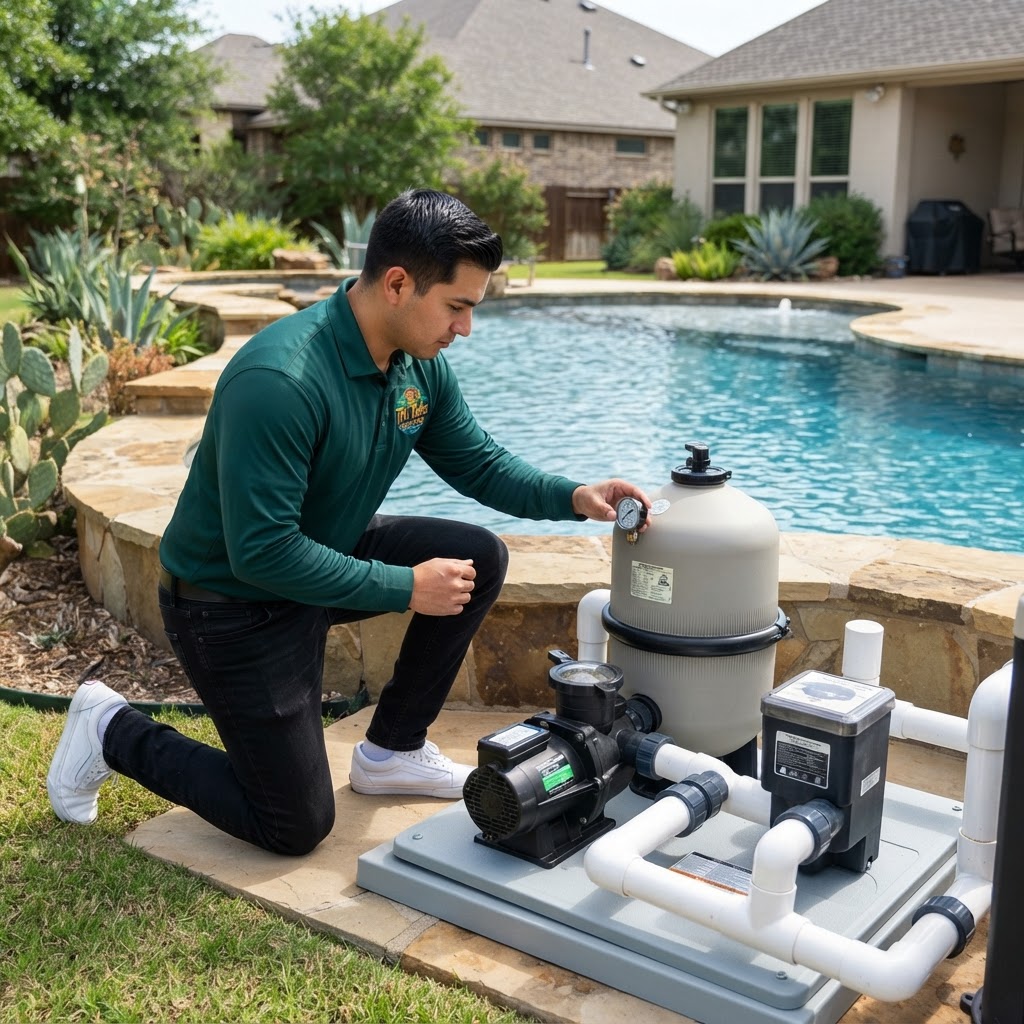
- Clean the Filter: If your filter pressure is 8-10 PSI above its 'clean' baseline, backwash it or clean the cartridges now. You want maximum flow rate while you are gone.
Balancing Chemistry for Stability
Water chemistry is the heart of vacation pool care. You want your levels to be perfect—or even slightly on the high side for sanitizer—to provide a buffer against the elements. According to CDC and APSP standards, you should aim for these specific ranges before leaving:
- Free Chlorine: 1.0–3.0 ppm (Consider bumping this to 4.0 or 5.0 ppm just before leaving if you don't have an automated feeder).
- pH: 7.2–7.8 (Aim for the lower end, around 7.2-7.4, as pH tends to rise naturally).
- Total Alkalinity: 80–120 ppm.
- Calcium Hardness: 200–400 ppm.
- Cyanuric Acid (CYA): 30–50 ppm (This 'sunscreen' for chlorine is vital to prevent the sun from burning off your sanitizer in hours).
Pro Tip: If you are going away for more than three days, add a preventative dose of a long-lasting algaecide. This acts as a secondary line of defense if your chlorine levels happen to dip below the recommended range.
For more detailed advice on managing your pool during the hottest months, see our Summer Pool Maintenance: Beating the Heat for a Crystal Clear Season guide.
Managing Water Levels and Evaporation
One of the most common vacation disasters is the water level dropping below the skimmer opening. When this happens, the pump sucks in air instead of water, which can burn out the motor.
In hot climates, evaporation can easily take an inch or two of water per week. Before you leave, fill your pool to the very top of the skimmer opening (about an inch higher than your usual midpoint). This extra volume provides a safety margin. If you have an automatic water leveler, double-check that it is functioning correctly and that the water supply is turned on.
Equipment and Automation Check
Your pool needs to 'breathe' through circulation. Do not turn your pump off to save electricity while you are away. Stagnant water is an invitation for mosquitoes and algae.
- Set the Timer: Ensure your pump is set to run at least 8 to 12 hours a day. If you have a variable speed pump, running it at a lower RPM for 24 hours is even better for consistent filtration.
- Check the Chlorinator: If you use a salt chlorine generator, ensure the cell is clean and the salinity is correct. If you use a tablet feeder, fill it to capacity and set the dial to a medium-high setting.
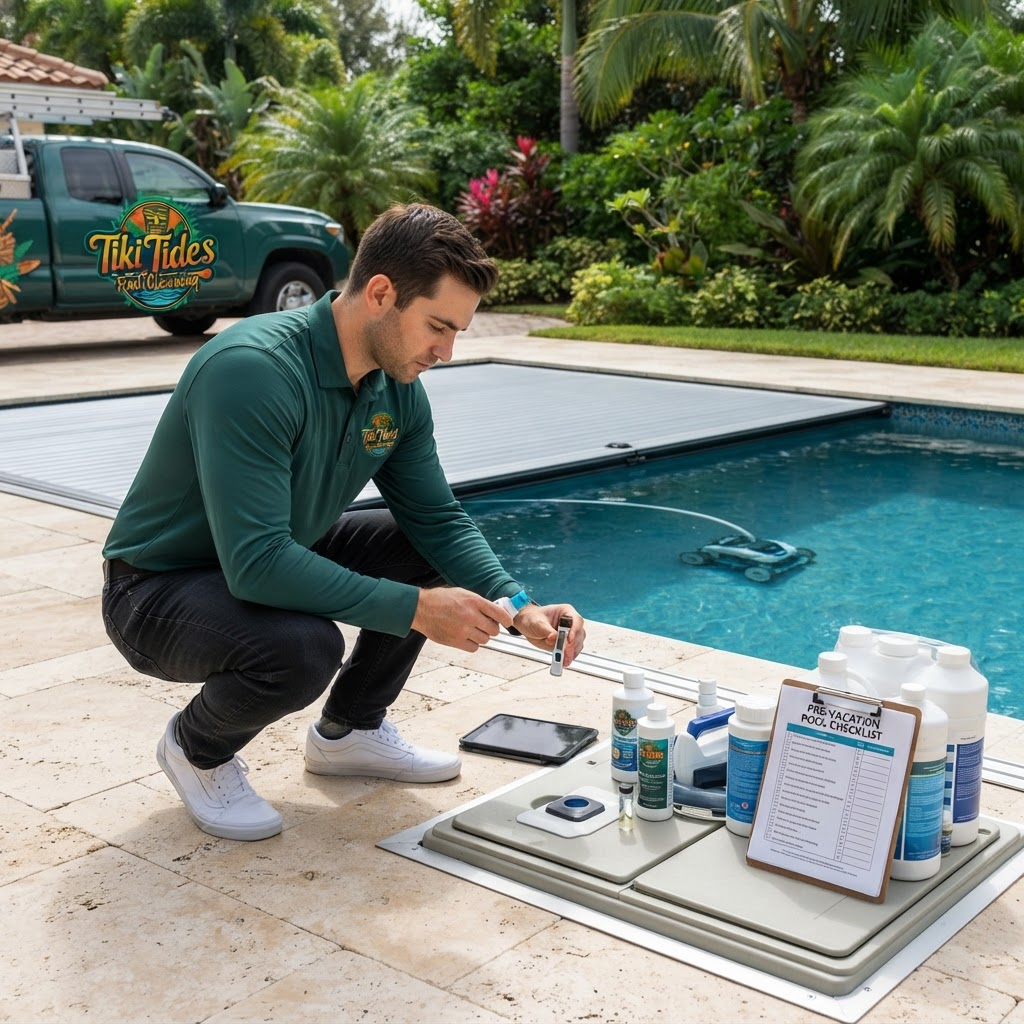
- Secure the Cover: If you use a safety cover, ensure it is anchored properly. However, remove solar blankets (bubble covers) if you are leaving for more than a few days in high heat, as they can trap too much heat and accelerate chlorine depletion.
Quick Reference Checklist
Use this list on the day of your departure to ensure nothing is missed:
- [ ] Water level topped off to the top of the skimmer.
- [ ] Skimmer and pump baskets completely empty.
- [ ] Chlorine tablets added to the floater or feeder.
- [ ] Pump timer verified and active.
- [ ] Pool gate locked and alarms armed.
- [ ] Patio furniture secured (in case of storms).
If you are traveling during a particularly volatile time of year, you may also want to review our Hurricane and Storm Pool Preparation: The Ultimate Safety Guide to protect your equipment from wind and rain.
Safety Notes
- Chemical Storage: Never leave open containers of chlorine or acid near the pool or in direct sunlight while you are away.
- Entrapment Hazards: Ensure all suction grate covers are secure and in good repair before leaving the pool unattended.
- Drowning Prevention: A pool is a liability. Ensure your perimeter fence meets local codes and that all self-closing gates are functioning. If you have a pool sitter, ensure they know how to turn off the power to the pump in an emergency.
When to Call a Professional
While a weekend trip is manageable for most DIY owners, there are times when you should call Tiki Tides Pools for professional assistance:
- Extended Trips: If you will be gone for more than 10 days, a professional should visit at least once to check chemistry and empty baskets.
- Equipment Issues: If your pump has been making strange noises or your filter pressure is rising rapidly, get it fixed before you leave. A failure while you are away can lead to expensive repairs.
- Long-Term Absence: If you are leaving for the season, you should consider a full closing. See our How to Close and Winterize Your Pool: The Ultimate Step-by-Step Guide for more information.
Summary
Vacation pool care is all about preparation and prevention. By cleaning the pool thoroughly, balancing the water to CDC standards (pH 7.2–7.8, Free Chlorine 1.0–3.0 ppm), and ensuring your equipment is on a reliable timer, you can enjoy your trip with total peace of mind. A little work today ensures a crystal-clear swim the moment you return home.
Related Reading
- Fall Pool Maintenance Guide: Preparing Your Oasis for the Off-Season
- Hurricane and Storm Pool Preparation: The Ultimate Safety Guide
- Summer Pool Maintenance: Beating the Heat for a Crystal Clear Season
- How to Close and Winterize Your Pool: The Ultimate Step-by-Step Guide
- The Ultimate Pool Opening Checklist: A Step-by-Step Spring Start-Up Guide