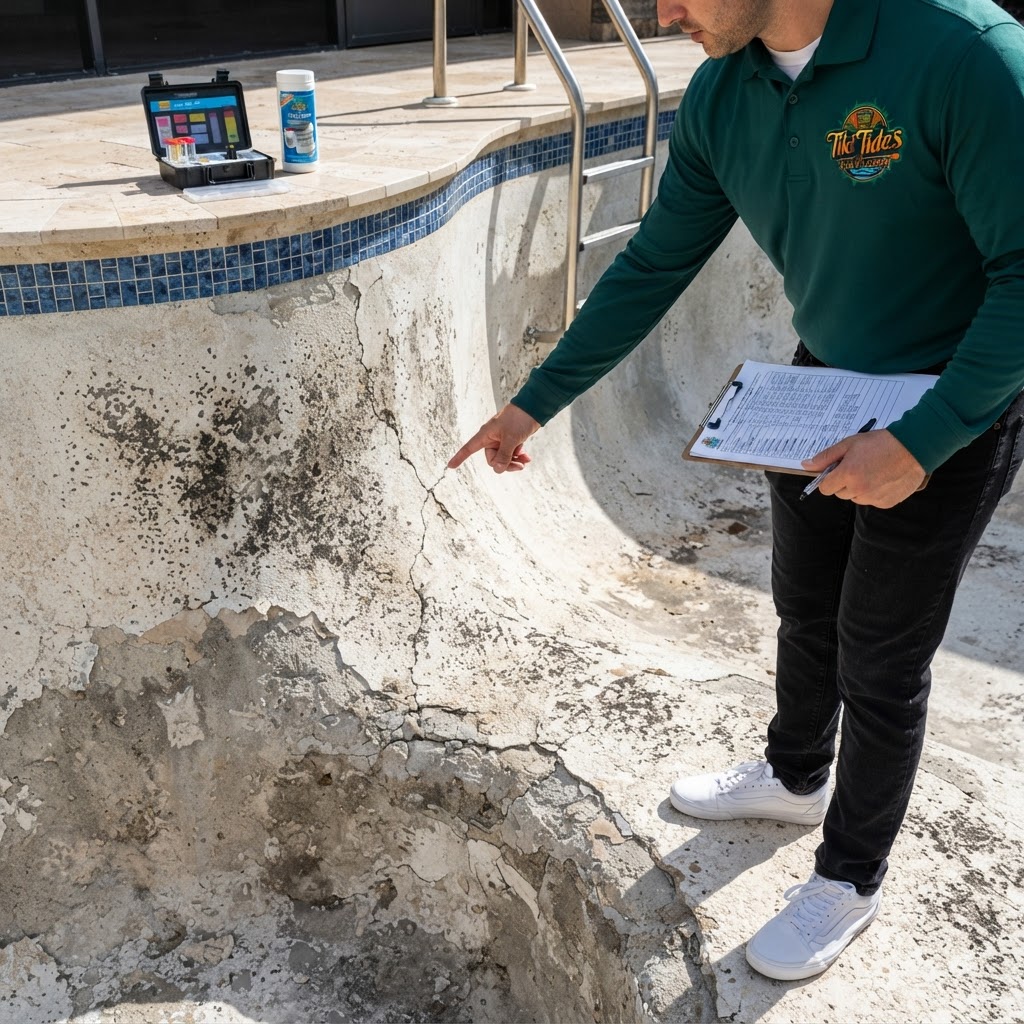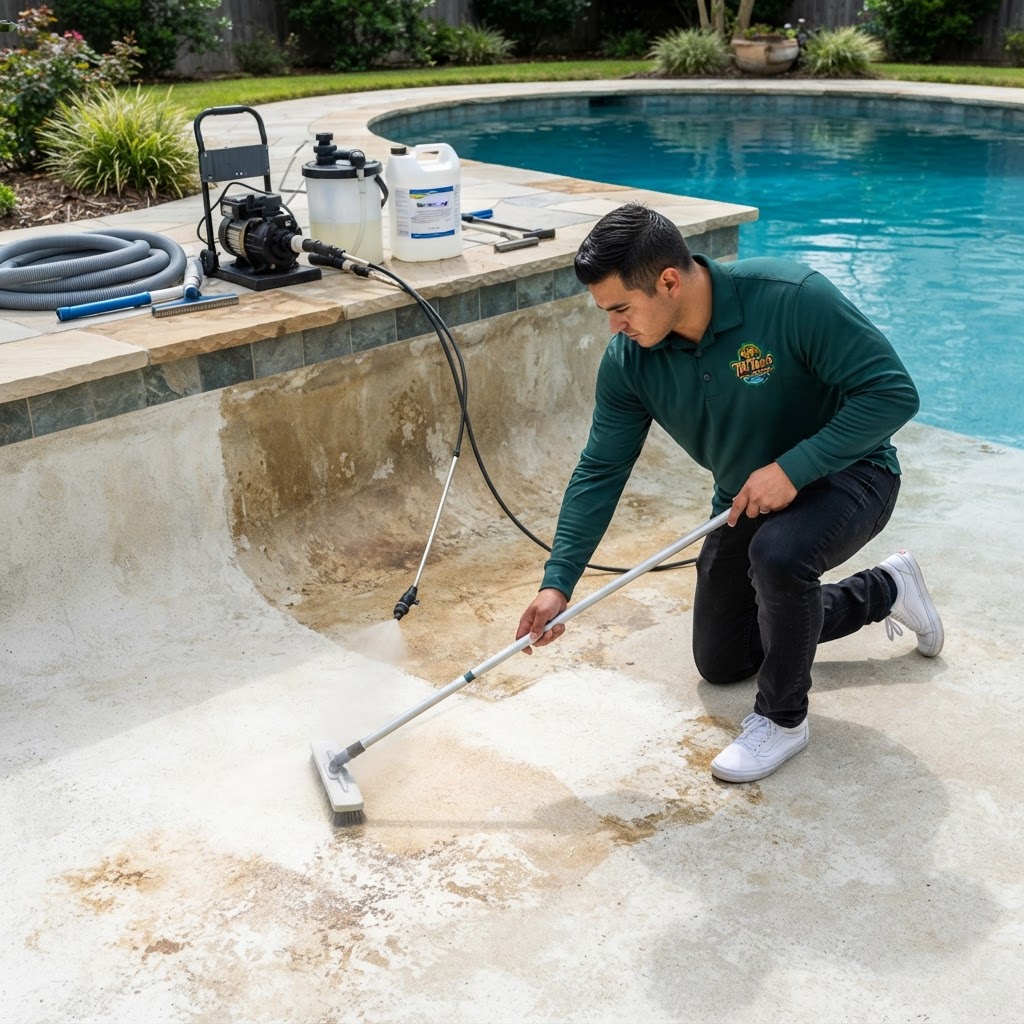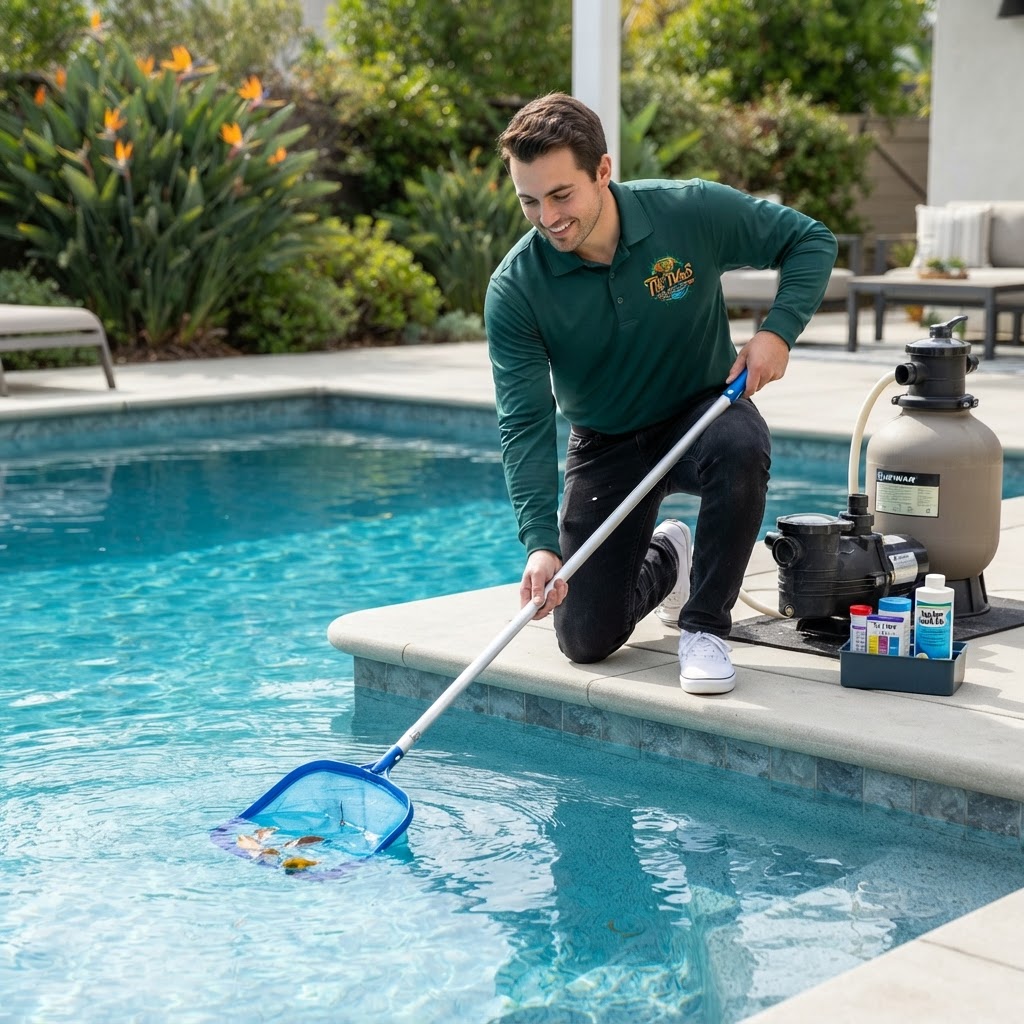
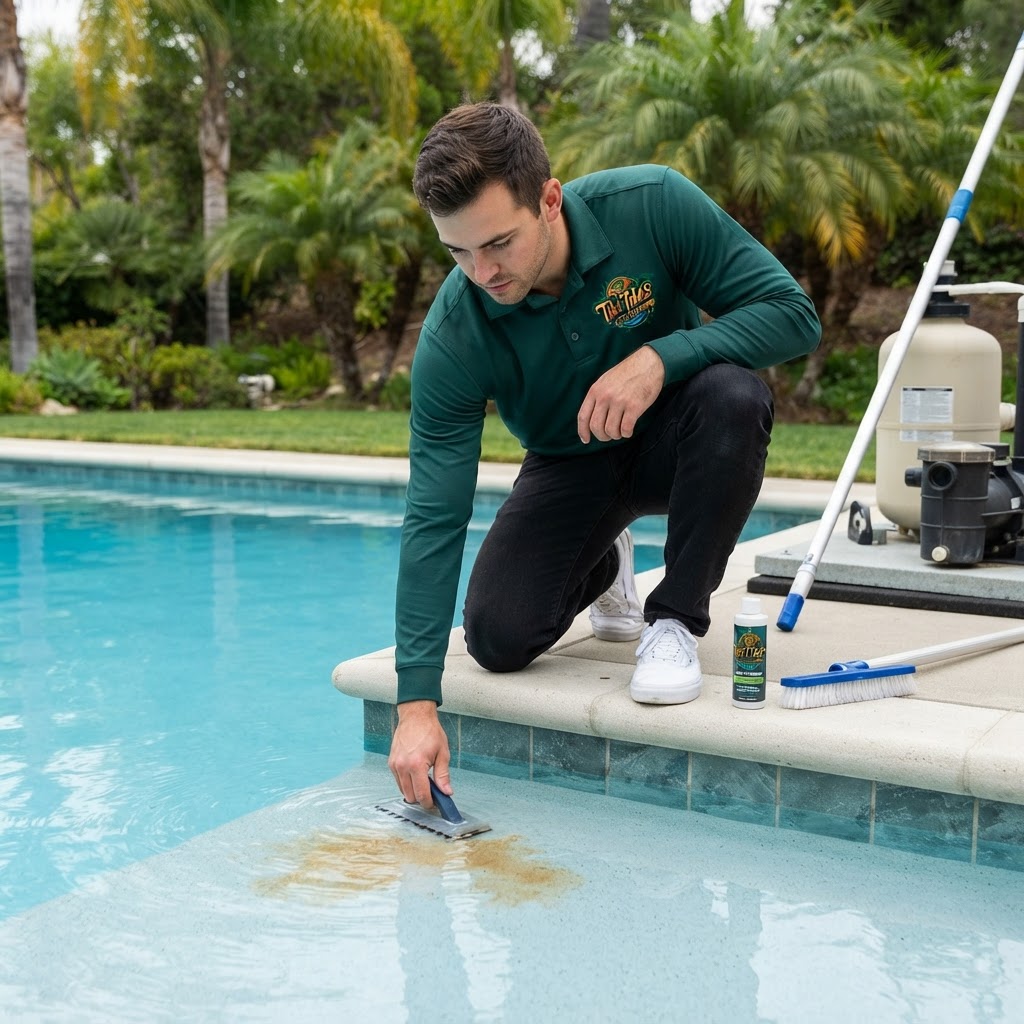
There is nothing quite as frustrating for a pool owner as looking through crystal-clear water only to see ugly, stubborn stains on the floor or walls. Whether they are mysterious brown blotches, greenish-blue streaks, or rust-colored spots, stains can make a well-maintained pool look neglected. Understanding the cause of these stains is the first step toward a spotless finish.
At Tiki Tides Pools, we know that pool stains aren't just an aesthetic issue; they often signal a chemical imbalance or the presence of unwanted minerals in your water. If left untreated, some stains can become permanent or lead to the degradation of your pool's plaster or vinyl liner. This guide will walk you through the professional methods for identifying, removing, and preventing both organic and metal pool stains.
Identifying the Type of Pool Stain
Before you reach for the chemicals, you must identify what you are dealing with. Treating a metal stain with organic removal methods (and vice versa) is a waste of time and money. Generally, pool stains fall into two categories: Organic and Metal.
Organic Stains
Organic stains are caused by natural debris that settles on the pool surface and decays. Common culprits include:
- Leaves and acorns
- Berries and seeds from nearby landscaping
- Dead algae or worms
- Pollen and bird droppings
Visual Cues: Organic stains are usually green, brown, or blackish-purple. They often take the shape of the object that caused them (e.g., a leaf-shaped brown spot).
Metal Stains
Metal stains occur when minerals in the water oxidize and plate onto the pool surface. This can happen due to well water, corroding copper heaters, or low-quality pool chemicals. Common metals include:
- Iron: Rusty, brown, or yellowish-orange stains.
- Copper: Blue-green, teal, or even black stains (often caused by copper-based algaecides or heater corrosion).
- Manganese: Pink, dark purple, or black stains.
Visual Cues: Metal stains are often more uniform or appear as streaks across large areas. Unlike organic stains, they do not brush away easily.
The Quick Diagnostic Tests
Not sure which one you have? Try these two simple DIY tests before buying expensive treatments.
1. The Chlorine Test (For Organic Stains)
Place a small amount of granular chlorine (or a chlorine tablet) directly on the stain for about 1 to 2 minutes. If the stain lightens or disappears, it is organic. Chlorine is a powerful bleaching agent for organic matter.
2. The Vitamin C Test (For Metal Stains)
Crush up 15–20 Vitamin C (ascorbic acid) tablets, put them in a mesh bag or sock, and hold it against the stain for 30 seconds. If the stain vanishes or lightens significantly, it is a metal stain. Ascorbic acid reacts with metal oxides to pull them back into the water solution.
Pro Tip: Always ensure your water is properly balanced according to the Ultimate Pool Maintenance Checklist before starting any stain removal process. High pH can cause metals to fall out of solution and stain, while low pH can corrode metal components in your equipment.
How to Remove Organic Pool Stains
Organic stains are usually the easiest to handle because they respond well to high levels of sanitizer and physical agitation.
- Balance Your Water: Ensure your pH is between 7.2 and 7.8 and your Total Alkalinity is between 80 and 120 ppm.
- Shock the Pool: Raise your Free Chlorine levels to approximately 10–20 ppm (triple shock) to bleach out the organic pigments. Ensure you follow CDC guidelines and do not swim until Free Chlorine returns to the 1.0–3.0 ppm range.
- Brushing is Key: Use a stiff brush (nylon for vinyl, stainless steel for plaster) to vigorously scrub the area. For more details on the best tools, see our guide on Mastering the Art of Pool Brushing.
- Enzyme Treatments: If the stains are stubborn, add an enzyme-based cleaner. Enzymes help break down organic oils and debris, making it easier for the chlorine to finish the job.
How to Remove Metal Pool Stains
Removing metal stains requires a chemical process called "chelation" or "sequestration." Chlorine won't help here—in fact, high chlorine can actually make metal stains worse.
- Lower the Chlorine Level: For an ascorbic acid treatment to work, you need to bring your Free Chlorine level down to 0.0–0.5 ppm. You can do this by waiting or using a chlorine neutralizer.
- Add Ascorbic Acid: Add 1/2 pound of ascorbic acid per 10,000 gallons of pool water. Sprinkle it over the stained areas. Watch as the stains magically lift from the surface.
- Circulate the Water: Set your filter to "Circulate" or "Filter" for 24 hours to ensure the acid is evenly distributed.
- Add a Sequestering Agent: This is the most critical step. Once the acid lifts the metal off the surface, it is still in the water. A sequestering agent (metal chelator) binds to these minerals so they can be removed by the filter or stay in solution without re-staining.
- Gradually Re-balance: Slowly bring your pH and Alkalinity back to the safe ranges (pH 7.2–7.8, Alkalinity 80–120 ppm). Avoid "slugging" the pool with chemicals, as a rapid rise in pH can cause the metals to drop back onto the surface immediately.
Prevention: Keep Stains from Returning
- Regular Cleaning: Don't let leaves sit on the bottom. Use our Step-by-Step Guide to Vacuuming to keep debris off the floor.
- Test Fill Water: If you use well water, test it for iron and copper before adding it to the pool.
- Use Metal Pre-Filters: Use a pre-filter on your garden hose when topping off the pool to catch minerals before they enter.
- Maintain Equipment: Low pH (below 7.0) is acidic and will eat away at the copper heat exchanger in your pool heater, leading to teal-colored copper stains.
Safety Notes
- Chemical Handling: Always wear gloves and eye protection when handling pool chemicals, especially acids and concentrated chlorine.
- Storage: Never mix different types of chemicals (like chlorine and acid) together. This can create toxic chlorine gas or cause explosions.
- Swimming Safety: Do not allow swimmers in the pool during a stain treatment. Wait until Free Chlorine is between 1.0–3.0 ppm and pH is 7.2–7.8.
When to Call a Professional
Some stains are more than just surface-level. If you have tried the tests above and the stains do not budge, you may be dealing with:
- Calcium Scale: Hard, white, or grey crusty deposits that require professional acid washing.
- Cobalting: Small black spots on fiberglass pools that are actually blisters in the gel coat.
- Deeply Set Plaster Stains: Old stains in plaster may require a professional "no-drain" acid start-up or a full drain-and-acid-wash.
If the stain covers more than 50% of your pool surface, or if you are uncomfortable handling large quantities of acid, contact Tiki Tides Pools for a professional consultation.
Summary
Removing pool stains requires a bit of detective work and the right chemical approach. By identifying whether a stain is organic (brown/green, reacts to chlorine) or metallic (rust/blue, reacts to Vitamin C), you can restore your pool’s beauty without unnecessary stress. Remember: clean water isn't just about clarity—it's about chemistry. Keep your levels balanced, your floor vacuumed, and your metals sequestered for a sparkling, stain-free season.
Related Reading
- The Ultimate Pool Maintenance Checklist: Daily, Weekly, and Monthly Tasks
- How to Clean a Pool Filter: The Ultimate Guide for DE, Cartridge, and Sand Filters
- How to Clean Pool Tile: The Ultimate Guide to Removing Calcium Scale
- Master the Art of Pool Brushing: The Ultimate Guide to a Spotless Pool
- How to Vacuum a Pool: The Ultimate Step-by-Step Guide for a Sparkling Finish