Finding a pinkish, slimy substance creeping along your pool’s waterline or behind the ladder can be a frustrating discovery for any homeowner. Often referred to as "pink algae," this nuisance is one of the most misunderstood issues in pool maintenance. Unlike common green algae, this invader is resilient, stubborn, and requires a specific approach to eradicate.
At Tiki Tides Pools, we know that a clean pool is a safe pool. Understanding the science behind pink slime is the first step toward reclaiming your backyard oasis. In this guide, we will break down exactly what this substance is, why it chose your pool, and the professional-grade steps you need to take to remove it and prevent its return.
What Is Pink Algae (Pink Slime)?
The first thing every pool owner should know is that pink algae is not actually algae. It is a naturally occurring bacterium known as Methylobacterium. While it looks like a plant-based growth, it is actually a biofilm—a colony of bacteria that creates a heavy, protective slime coating to shield itself from external threats like chlorine.
This bacterium is "methanol-consuming," meaning it can feed on organic nutrients that traditional algae ignore. Because it develops this thick, gelatinous shell, it is significantly more resistant to standard sanitizer levels than Green Algae Treatment. If you see pink streaks or spots, you aren't just looking at a stain; you're looking at a sophisticated bacterial fortress.
Signs of a Pink Slime Infestation
Pink slime doesn't always turn the whole pool pink. Instead, it hides in areas with low circulation. Look for these common signs:
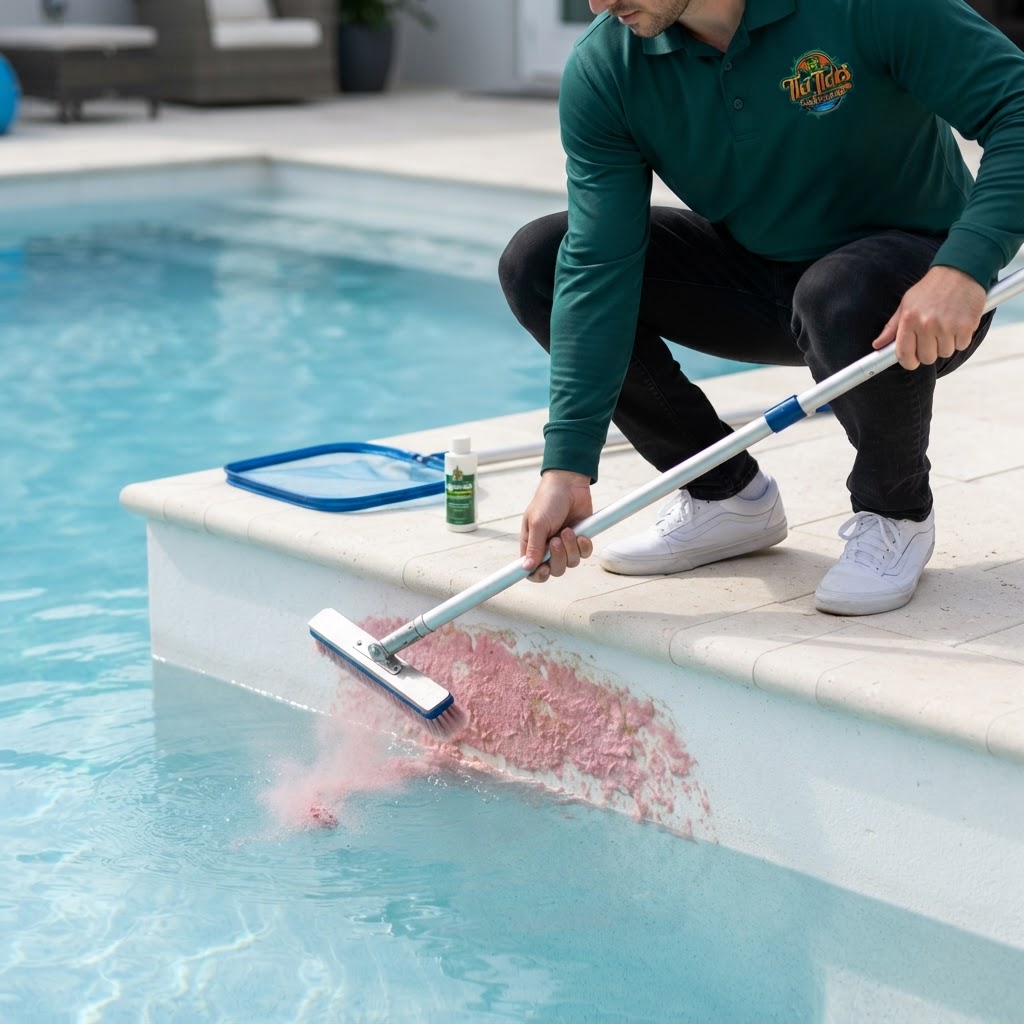
- Pink or Reddish Streaks: Often found along the grout lines of tiles or in the corners of the pool.
- Slimy Texture: If you run your hand along the waterline or a pool light and it feels unusually slick or "soapy," you likely have a biofilm forming.
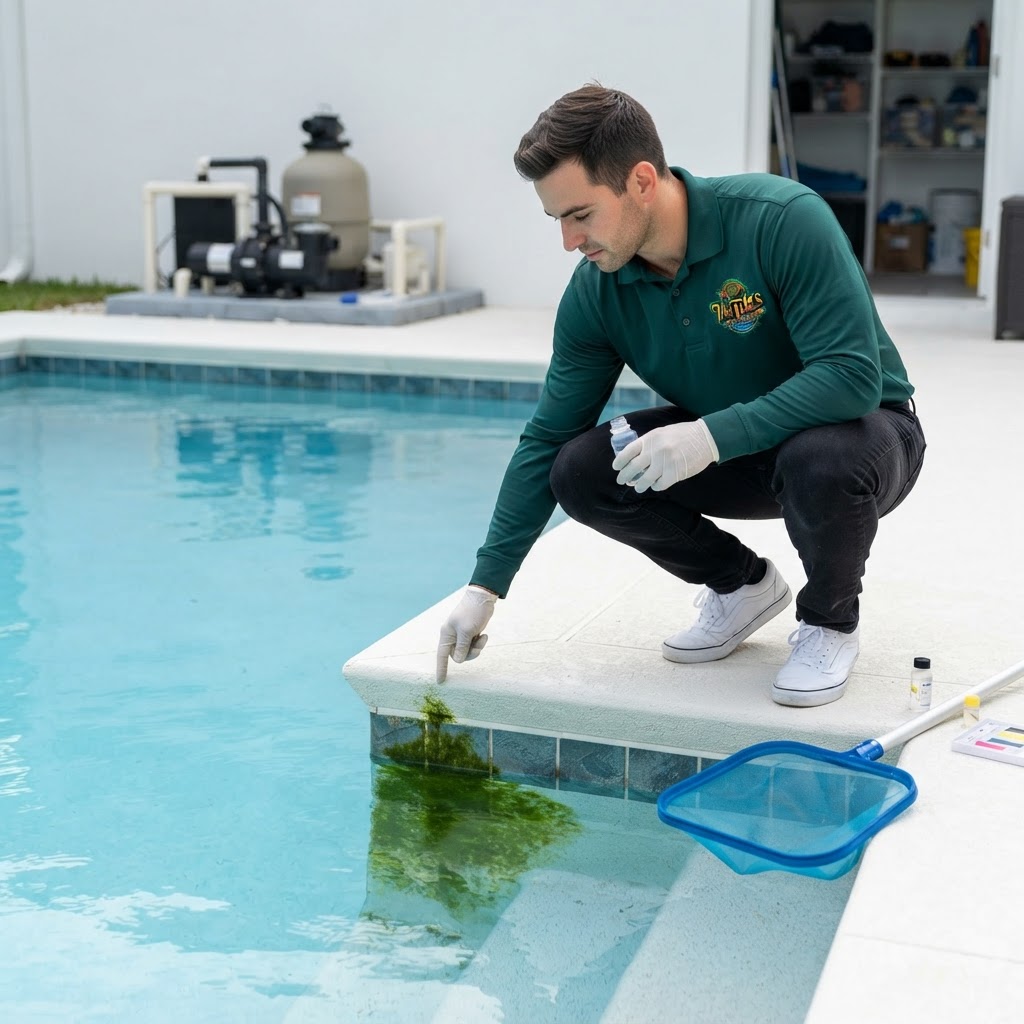
- Hiding Spots: Check behind the pool ladder, inside the skimmer basket, under the diving board, and around the O-rings of your pool equipment.
- Cloudy Water: As the bacteria multiply, they can contribute to a general lack of clarity in the water.
Why Is Pink Slime Growing in My Pool?
Bacteria thrive where they are undisturbed. The most common causes of a pink algae outbreak include:
- Poor Circulation: Dead zones where water doesn't move allow bacteria to settle and form colonies.
- Low Sanitizer Levels: If your Free Chlorine drops below the CDC-recommended 1.0–3.0 ppm, the bacteria have an opportunity to take hold.
- Organic Contaminants: Sunscreen, skin cells, and garden runoff provide the nutrients the bacteria need to grow.
- Contaminated Equipment: Pink slime can hitch a ride on pool toys, life vests, or even suits that were used in natural bodies of water or other infested pools.
Pro Tip: Don't forget to disinfect your pool toys! Soak them in a bucket of water with a small amount of bleach or a specialized pool cleaner. If you don't kill the bacteria on the toys, you'll re-infect the pool the moment they go back in the water.
Step-by-Step Removal Guide
Because of the protective biofilm, simply adding chlorine won't work. You must follow these steps to break the cycle.
1. Clean the Filter
Before you start treating the water, ensure your filter is clean. Backwash your sand filter, change the D.E., or deep-clean your cartridge. Pink slime loves to hide inside the filter media, where it is dark and damp.
2. Balance the Water Chemistry
Chemicals work most effectively when the water is balanced. Use a high-quality test kit to ensure your levels meet these industry standards:
- pH: 7.2–7.8 (Aim for 7.2 during treatment to make the chlorine more aggressive)
- Total Alkalinity: 80–120 ppm
- Calcium Hardness: 200–400 ppm
- Cyanuric Acid (CYA): 30–50 ppm
3. Manually Brush the Entire Pool
This is the most critical step. You must physically break the slime's protective coating. Use a stiff pool brush to scrub every inch of the pool—walls, floor, steps, and especially behind the ladder and inside the skimmer. If you don't brush, the chlorine will simply bounce off the slime.
4. Shock the Pool
You need to raise the Free Chlorine level significantly to kill the bacteria. While the CDC recommends a maintenance level of 1.0–3.0 ppm, treating an active infestation requires a "shock" dose. Follow the manufacturer's instructions on your calcium hypochlorite shock to reach a temporary level of 10–20 ppm. Keep the pump running 24/7 during this process.
5. Use a Specialized Algaecide
While it's a bacterium, certain "pink algae" algaecides (often silver-based or containing specific surfactants) are designed to help penetrate the biofilm. Add this after the chlorine levels have started to stabilize.
6. Vacuum and Filter
Once the bacteria are dead, they will settle on the floor. Vacuum the pool (to waste, if possible) and continue running the filter until the water is crystal clear.
Comparison of Common Pool Problems
| Feature | Pink Slime | Mustard Algae | Black Algae | | :--- | :--- | :--- | :--- | | Type | Bacteria | Algae | Cyanobacteria | | Appearance | Pink/Red Slime | Yellow Powder | Dark Raised Spots | | Difficulty | Moderate | High | Very High | | Key Fix | Brushing + Shock | High Shock + Cleaning | Scraping + Chlorine |
Safety Notes
- Chemical Handling: Always wear gloves and eye protection when handling pool shock or algaecides. Never mix different types of chlorine together.
- Storage: Store chemicals in a cool, dry, well-ventilated area out of reach of children.
- Swimming: Do not enter the pool until the Free Chlorine level has returned to the safe range of 1.0–3.0 ppm and the pH is between 7.2 and 7.8.
When to Call a Professional
If you have treated the pool and the pink slime returns within a week, you likely have a deep-seated infestation in your plumbing or internal filter components. A professional service like Tiki Tides Pools can perform a deep system flush and use professional-grade oxidizers to ensure the bacteria are eradicated from the pipes where your brush can't reach.
Summary
Pink algae (pink slime) is a bacterial biofilm that requires physical intervention to remove. By maintaining a consistent Free Chlorine level of 1.0–3.0 ppm, ensuring proper circulation, and performing weekly brushing, you can keep your pool clear of this slippery nuisance. Remember: when in doubt, brush it out!