When most homeowners think about pool maintenance, they picture vacuuming the floor or testing the water chemistry. While those tasks are vital, there is a silent hero working 24/7 to keep your water clear: the pool skimmer. Often referred to as the 'mouth' of your pool’s filtration system, the skimmer is the primary entry point for water as it travels toward your pump and filter.
Maintaining the skimmer is not just about aesthetics; it is about protecting your expensive equipment and ensuring proper sanitation. A clogged or broken skimmer can lead to poor circulation, which in turn causes 'dead spots' in the water where algae can bloom. In this guide, we will walk you through everything you need to know about skimmer anatomy, routine maintenance, and troubleshooting to keep your Tiki Tides pool in peak condition.
The Anatomy of Your Pool Skimmer
Before you can maintain it, you must understand the components that make the skimmer work. Most inground skimmers consist of several key parts:
- Skimmer Lid: The visible plastic cover on your pool deck. It prevents people from stepping into the skimmer well and keeps large debris from falling in.
- Skimmer Mouth/Throat: The opening on the pool side where water enters.
- Weir Door: The swinging flap inside the throat. This is a critical component that adjusts to the water level and prevents debris from floating back into the pool when the pump is off.
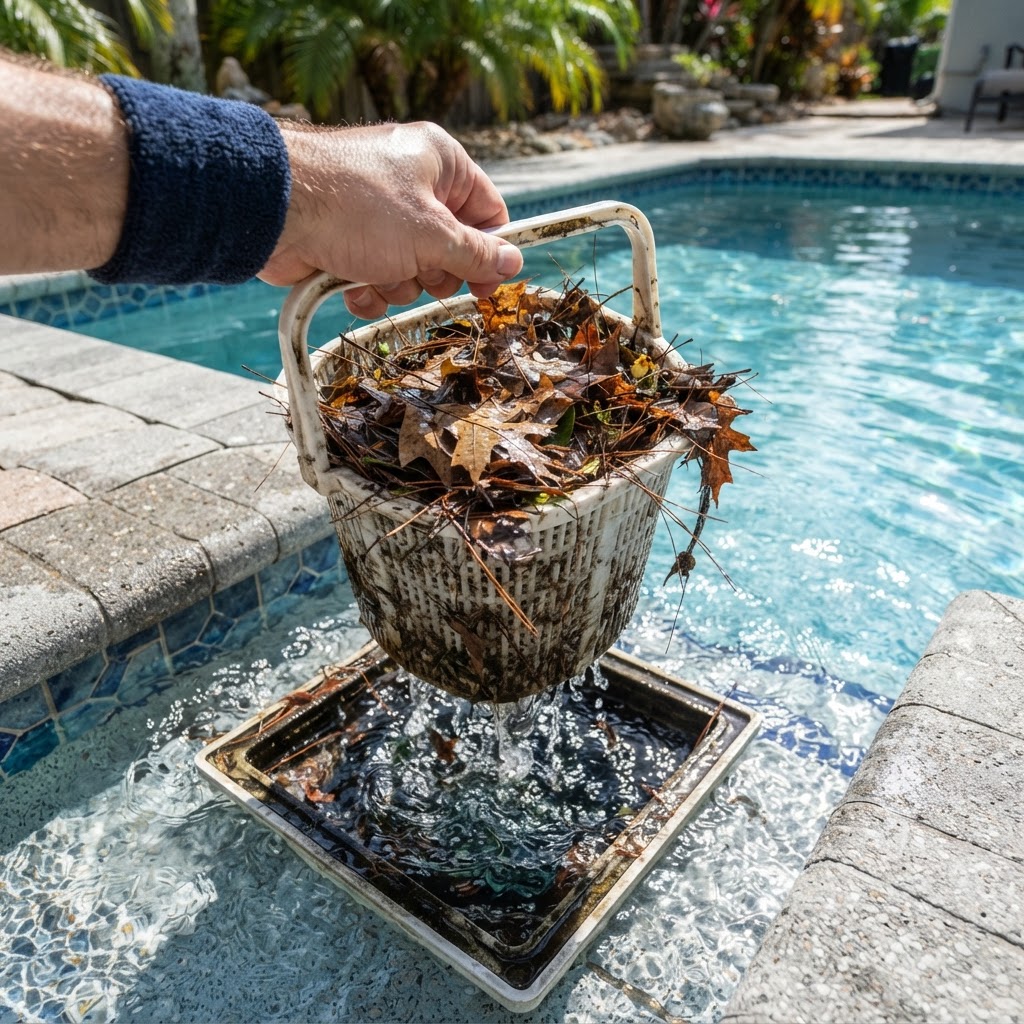
- Skimmer Basket: The strainer that catches leaves, twigs, and bugs before they reach your pump.
- Equalizer Line: A secondary pipe below the main suction line that prevents the pump from sucking air if the water level drops too low.
Understanding how does a pool pump work helps illustrate why the skimmer is so important. The pump creates the suction that pulls water through these components, making the skimmer the first line of defense against system clogs.
The Crucial Role of the Weir Door
Many pool owners overlook the weir door, sometimes even removing it if it becomes detached. This is a mistake. The weir door is engineered to create a small 'waterfall' effect at the surface. By slightly restricting the flow, it increases the velocity of the water entering the skimmer, which pulls in floating debris from a much larger radius.
Furthermore, when the pump turns off, the weir door floats to a vertical position, acting as a gate that keeps the captured debris trapped inside the skimmer throat. Without a functioning weir door, your skimming efficiency can drop by as much as 50%.
Step-by-Step Skimmer Maintenance Schedule
To keep your circulation system healthy, follow this maintenance routine:
Daily/Weekly Tasks
- Empty the Basket: Check your skimmer basket at least twice a week—more often during the fall or after a storm. A full basket restricts water flow, forcing your pump to work harder and potentially causing it to overheat.
- Clear the Throat: Occasionally, large sticks or palm fronds can get lodged in the skimmer throat, blocking the weir door. Reach in and clear these manually.
- Inspect the Lid: Ensure the lid is not cracked or warped. A loose lid is a significant trip hazard on the pool deck.
Monthly Tasks
- Check the Weir Door: Ensure the flap moves freely. If it sticks, debris won't be captured effectively.
- Inspect the Housing: Look for cracks in the plastic skimmer body. Even small cracks can lead to water loss and soil erosion around the pool shell.
- Clean the O-Rings: If your skimmer has a vacuum plate with an O-ring, ensure it is lubricated with a silicone-based lubricant.
Pro Tip: If you struggle with fine debris like pollen, pet hair, or small pine needles, try using a 'skimmer sock' over your basket. These fine mesh liners catch microscopic particles before they ever reach your filter, extending the time between filter cleanings.
Troubleshooting Common Skimmer Issues
If you notice your pool water isn't as clear as usual, the skimmer is the first place to look.
Low Suction: If the skimmer isn't pulling water effectively, first check the basket for clogs. If the basket is clear, you may need to check your filter pressure. A dirty filter can slow down the entire circulation loop. If your pressure is 8-10 PSI above its 'clean' baseline, it is time to backwash your pool filter.
Air Bubbles in the Return Jets: This often indicates an 'air leak' on the suction side. Check if the water level in the pool is too low. If the water level drops below the midpoint of the skimmer mouth, the skimmer will suck in air, which can damage your pump's mechanical seal.
The 'Vortex' Effect: If you see a whirlpool forming in your skimmer, it means the water is moving fast but the level is slightly low. This can draw air into the system. Adding water to the pool is the simplest fix.
Safety Notes and Water Chemistry
Proper skimmer function is essential for distributing chemicals. When the skimmer works correctly, it helps mix added chemicals into the entire volume of the pool. However, never add pool chemicals—especially chlorine tablets—directly into the skimmer basket unless specifically instructed by a professional. The high concentration of chemicals can corrode the plastic skimmer housing and damage your pump and heater components over time.
Always maintain these safe water quality ranges:
- Free Chlorine: 1.0–3.0 ppm
- pH: 7.2–7.8
- Total Alkalinity: 80–120 ppm
- Calcium Hardness: 200–400 ppm
- Cyanuric Acid (CYA): 30–50 ppm
When performing deep cleaning or repairs on the skimmer, always turn off the pool pump at the breaker to prevent accidental suction injuries or equipment damage.
When to Call a Professional
While most skimmer maintenance is DIY-friendly, some issues require an expert touch. Contact Tiki Tides Pools if you notice:
- Persistent Leaks: If you are losing more than 1/4 inch of water a day, you may have a leak where the skimmer meets the pool wall.
- Cracked Skimmer Body: Structural cracks in the skimmer housing often require specialized epoxy injection or full replacement.
- Underground Clogs: If the skimmer has no suction and the basket is clear, there may be an obstruction in the underground plumbing lines that requires professional 'blowing out' of the pipes.
Summary
Your pool skimmer is the gateway to a clean swimming environment. By spending just five minutes a week emptying the basket and checking the weir door, you can prevent major equipment failures and keep your water sparkling. Remember, a clean skimmer leads to a healthy pump, and a healthy pump leads to a beautiful pool. Keep the heart of your circulation clean, and enjoy the peace of mind that comes with a well-maintained Tiki Tides pool.
Related Reading
- Save Big on Energy: Are Variable Speed Pool Pumps Actually Worth It?
- Pool Heater Troubleshooting: How to Fix Common Heating Problems
- Master the Flow: When and How to Backwash Your Pool Filter Like a Pro
- Which Pool Filter is Best? Sand vs. Cartridge vs. DE Filters Compared
- How Does a Pool Pump Work? The Heart of Your Swimming Pool Explained