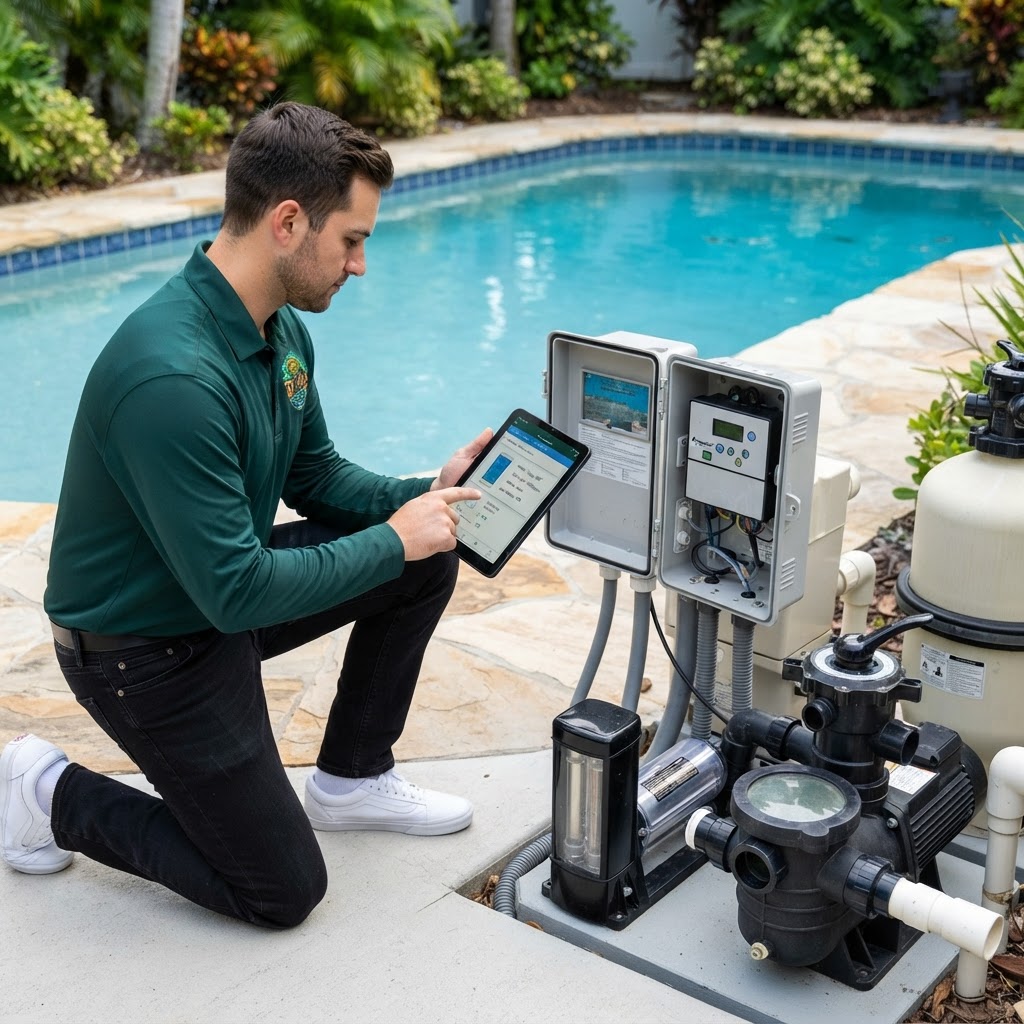
The pool pump is the beating heart of your entire pool system. Without continuous water movement, your filter cannot trap particulate debris, sanitizers fail to disperse evenly, and your pristine backyard oasis can transform into an unhygienic algae pond within days. Recognizing the signs your pool pump is going bad before it breaks down completely saves you from costly emergency equipment replacements and ruined swimming seasons.
While high-quality pool pumps typically last between 8 to 12 years with routine care, exposure to constant heat, moisture, vibration, and mechanical strain eventually takes its toll. In this guide, our certified technicians at Tiki Tides Pools break down the top mechanical and operational warning signs of pump failure, practical diagnostic steps, and when to choose repair versus a full system upgrade.
1. Unusual and Excessive Pump Noises
A healthy pool pump operates with a predictable, steady mechanical hum. When internal components deteriorate, the sounds coming from your equipment pad will shift noticeably:
- Screeching or High-Pitched Whining: This almost always points to worn-out motor shaft bearings. Once the seals degrade, moisture enters the motor housing and washes away bearing grease, leading to friction and high-pitched squealing.
- Rattling or "Marbles in a Blender": This harsh sound generally indicates pump cavitation. Cavitation happens when the pump is starved of water, causing low-pressure air bubbles to form and rapidly implode against the impeller. A jammed skimmer or clogged suction line is frequently the culprit.
- Loud Humming or Buzzing Without Spinning: If your pump buzzes upon turning on but the motor shaft fails to spin, you likely have a seized motor bearing, an impeller jammed with physical debris, or a failed start/run capacitor.
2. Loss of Prime and Persistent Air Bubbles
If you see a continuous stream of fine air bubbles shooting from your return jets, or if your pump strainer basket repeatedly runs half-dry, your system is drawing air into the suction side or failing to hold suction.
While occasionally needing to re-prime after cleaning your equipment is normal, a pump that continually loses prime indicates failing components. To narrow this down, make sure to inspect your pool skimmer maintenance habits first—ensure the weir door isn't sticking and the pool water level sits halfway up the skimmer mouth. If water levels and baskets are clear, review how to prime a pool pump to see if an air leak exists at the pump lid O-ring, drain plugs, or intake union.
3. Reduced Flow Rate and Weak Jet Pressure
Weak flow at the pool returns and low readings on your filter pressure gauge can signal that your pump’s internal mechanics are giving out:
- Clogged or Damaged Impeller: Pine needles, pebbles, and hair can bypass a damaged pump basket and wedge inside the impeller vanes. Over time, friction can snap or erode impeller blades.
- Filter Backpressure: Before condemning the pump, verify that your filter medium isn't loaded with dirt. A dirty filter causes low return flow combined with high filter pressure. If pressure remains elevated, you may need to backwash your pool filter before re-testing pump pressure.
- Dying Motor Windings: An aging motor struggling under electrical load will run at diminished RPMs, leading to poor water turnover despite normal voltage input.
4. Water Leaks Beneath the Equipment Pad
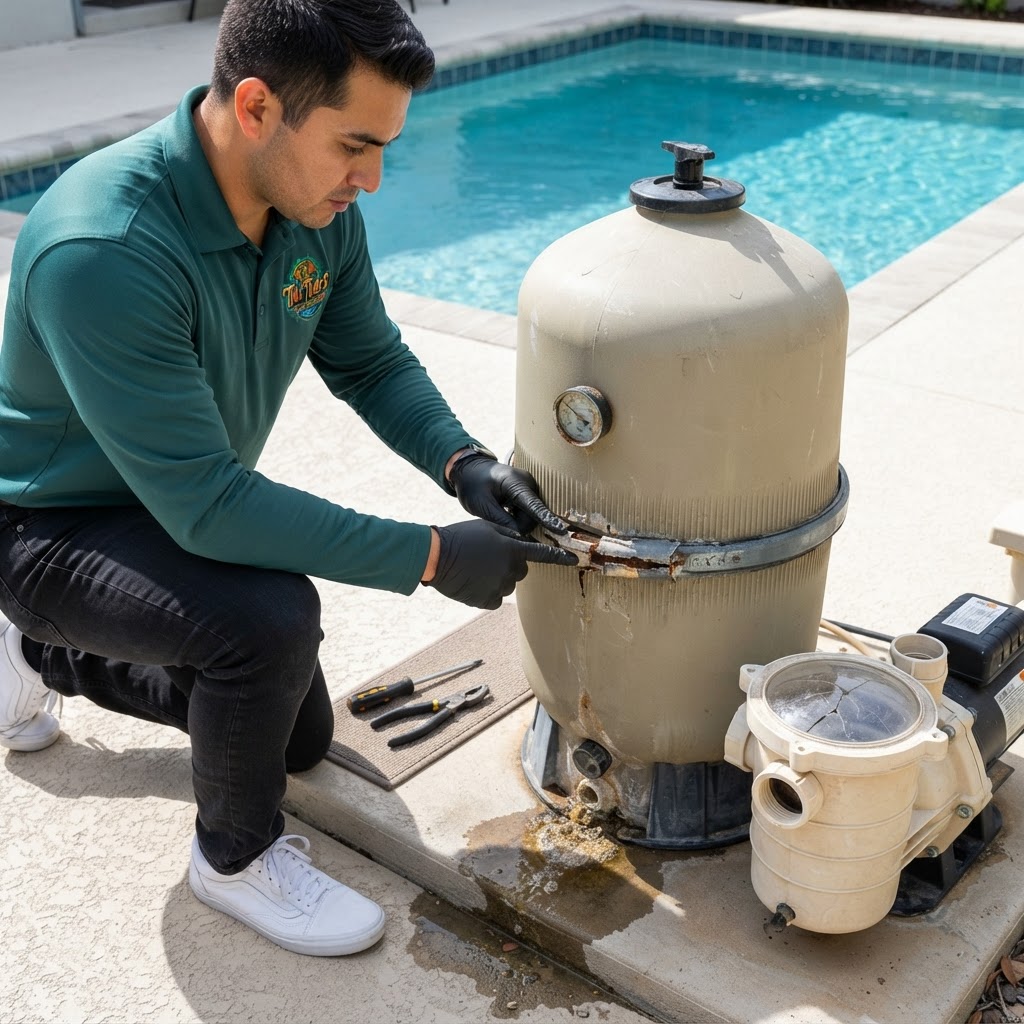
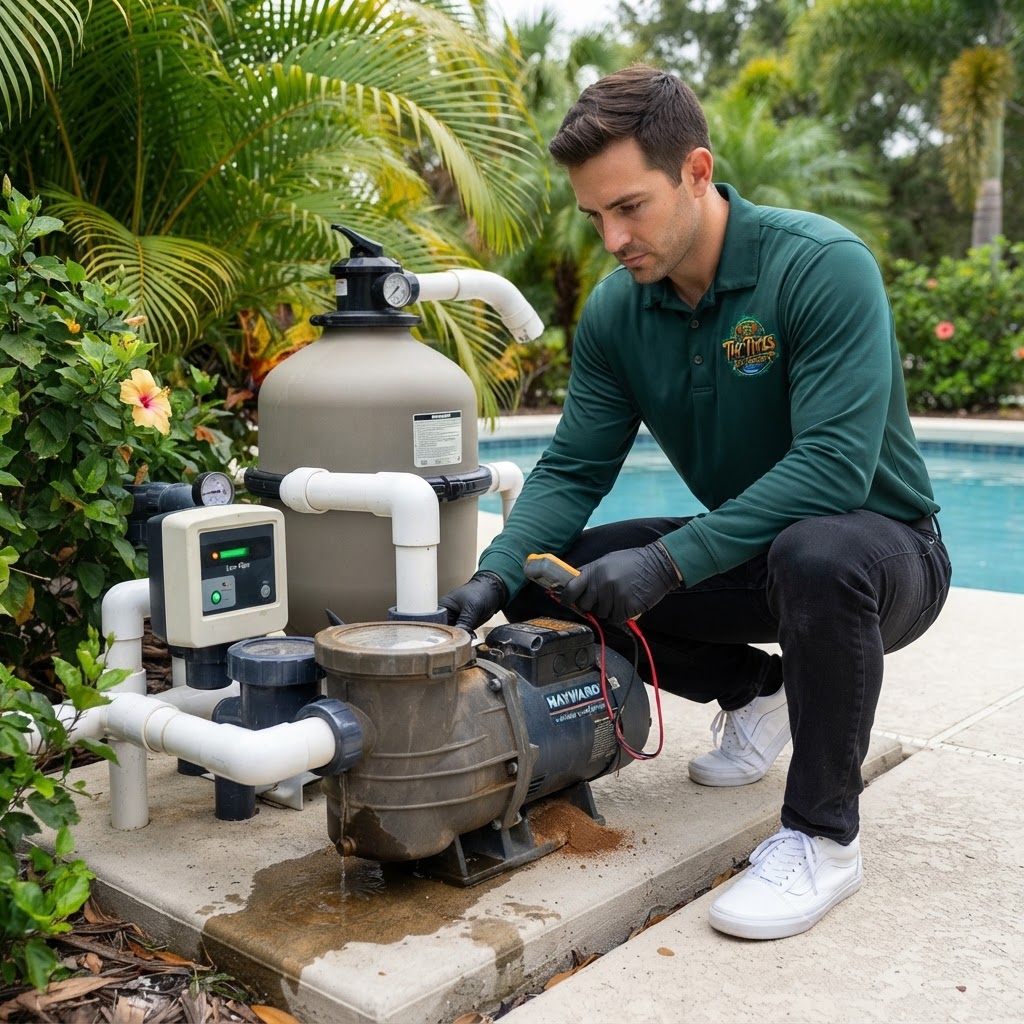
Water pooling directly beneath the seam where the pump motor bolts to the strainer wet-end is a critical red flag.
This almost always indicates a failed mechanical shaft seal. The shaft seal prevents chlorinated pool water inside the pump housing from seeping into the dry electric motor. Once this seal breaks, water travels along the motor shaft directly into the front bearings. If not repaired immediately, shaft seal leaks will cause catastrophic motor failure, internal rust, and tripped breakers.
5. Overheating and Constant Electrical Tripping
Does your pool pump run for 15 to 45 minutes and then shut off abruptly on its own?
Modern pool pump motors feature built-in thermal overload protectors designed to cut electrical power before wires melt or catch fire. Common causes include:
- Clogged motor air vents blocked by leaves, mulch, or dirt.
- Excessive ambient heat combined with worn, high-friction bearings.
- Worn internal electrical windings drawing excessive amperage.
- A failing circuit breaker or undersized electrical supply wire.
Pro Tip: To pinpoint elusive suction-side air leaks around pump lid O-rings or threaded intake fittings, apply thick shaving cream around the pipe joints while the pump runs. If the pump pulls the foam inward at any spot, you've pinpointed your air leak without getting water inside the electrical end.
Quick Reference: Pump Diagnostic Checklist
| Symptom | Primary Cause | Immediate Action | | :--- | :--- | :--- | | Screeching / Grinding | Worn motor bearings | Replace motor bearings or complete motor assembly | | Puddle under motor | Blown mechanical shaft seal | Replace shaft seal and seal bracket gasket immediately | | Pump runs hot & shuts off | Thermal overload / High amp draw | Clear rear fan vents; test capacitor & amp draw | | Air bubbles in return jets | Suction leak / Lid gasket dry | Lubricate lid O-ring with silicone lube; check skimmer water level | | Buzzing, no rotation | Blown capacitor or jammed impeller | Cut power, remove debris from impeller, test capacitor |
Safety Notes
Working around high-voltage pool equipment and pressurized water systems carries inherent hazards. Keep these critical safety standards in mind:
- Lockout/Tagout Power: Always turn off the dedicated pool sub-panel breaker before removing the pump lid, reaching into the impeller housing, or opening the motor canopy. Never rely solely on an automated timer or app switch.
- Release System Pressure: Before loosening the pump strainer lid or multiport valve, shut down the system and open the manual air relief valve on top of the filter until the pressure gauge reads 0 PSI.
- Chemical Balance and Water Sanitation: If your pump fails, pool water stagnates quickly. Maintain your sanitization baseline according to CDC and APSP guidelines to prevent bacterial proliferation:
- Free Chlorine: 1.0–3.0 ppm
- pH: 7.2–7.8
- Total Alkalinity: 80–120 ppm
- Calcium Hardness: 200–400 ppm
- Cyanuric Acid (CYA): 30–50 ppm
When to Call a Professional
While clearing leaves out of a strainer basket or lubricating a rubber lid gasket is well within DIY territory, several complex diagnostics require professional intervention:
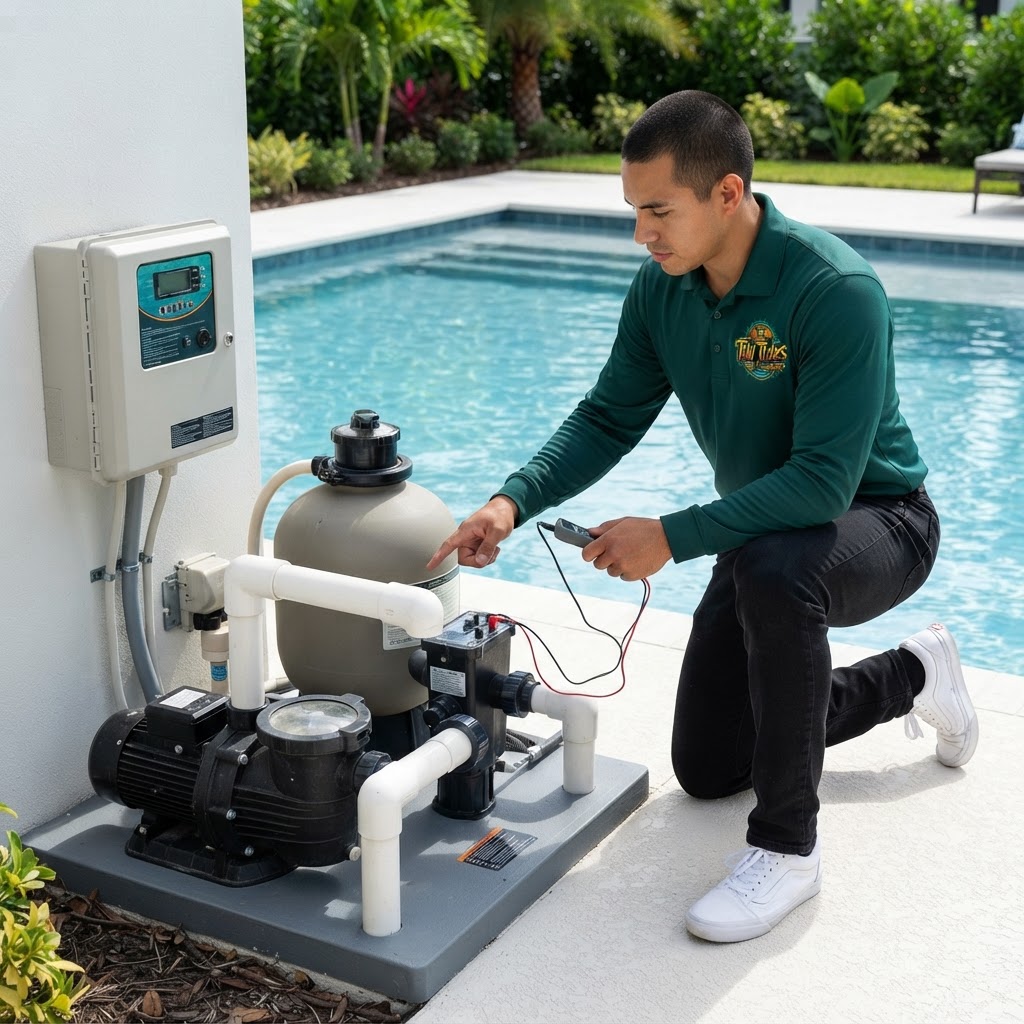
- High-Voltage Wiring & Capacitors: Motor capacitors store dangerous electrical charges even when power is disconnected. Certified technicians have the meters and safety tools required to discharge and test these safely.
- Shaft Seal and Bearing Replacements: Disassembling the motor housing and pressing new bearings onto an armature shaft requires specialized pullers and precise alignment.
- Frequent Breaker Tripping: If resetting your pump breaker causes an immediate secondary trip or sparking, stop immediately to avoid panel fires.
- Upgrading to Variable Speed: If your single-speed pump is more than 8 years old and facing an expensive motor rebuild, it is often more cost-effective to upgrade. Explore whether variable speed pool pumps are worth it to dramatically cut monthly electrical costs while meeting updated Department of Energy (DOE) efficiency mandates.
Summary
Your pool pump gives plenty of clues before it fails completely. Screeching bearings, leaking shaft seals, persistent air leaks, and unexplained thermal shutdowns are clear warnings that your circulation system is compromised. By catching these issues early, you can often execute a simple repair and avoid stagnant, cloudy water. If troubleshooting the motor or electrical components feels overwhelming, connect with the certified team at Tiki Tides Pools to keep your equipment running smoothly all season long.
Related Reading
- How to Prime a Pool Pump: A Step-by-Step Guide to Restoring Suction
- Pool Skimmer Maintenance: Keeping the Heart of Circulation Clean
- Save Big on Energy: Are Variable Speed Pool Pumps Actually Worth It?
- Pool Heater Troubleshooting: How to Fix Common Heating Problems
- Master the Flow: When and How to Backwash Your Pool Filter Like a Pro