Few things are as frustrating to a pool owner as jumping into the water only to realize the return jets feel like a weak trickle. Low water flow is more than just a minor annoyance; it is a critical warning sign that your pool's 'circulatory system' is struggling. Without proper flow, your pool cannot effectively filter out debris, and your sanitizers cannot reach every corner of the water. This stagnation often leads to cloudy water or, worse, an algae bloom that can turn your backyard oasis into a swamp overnight.
Maintaining proper circulation is the backbone of pool health. When water moves efficiently, it passes through the filter to remove contaminants and ensures that chemicals, like Free Chlorine (which should always be kept between 1.0–3.0 ppm according to CDC standards), are evenly distributed. When flow drops, the entire system begins to fail. Your heater may shut off to prevent overheating, your salt cell might stop producing chlorine, and your pump motor may undergo unnecessary stress that leads to a premature (and expensive) burnout.
In this guide, we will break down the mechanics of pool circulation, help you identify whether your problem is on the suction or pressure side of the system, and provide a step-by-step troubleshooting path to get your water moving again.
Signs Your Pool Has Low Water Flow
Before diving into the equipment pad, it is important to recognize the symptoms of low flow. Some are obvious, while others are subtle indicators of a growing problem. Look for these signs:
-
Weak Return Jets: The most common sign. If you place your hand over the return eyeball and feel very little pressure, your flow is compromised.
-
Air Bubbles in the Pump: If you see air swirling under the clear lid of your pump basket, or if the water level inside the basket is low, you have a suction-side issue. For a deeper dive into this specific problem, check out our guide on Bubbles in Your Jets? How to Diagnose and Fix Air in Pool Returns.
-
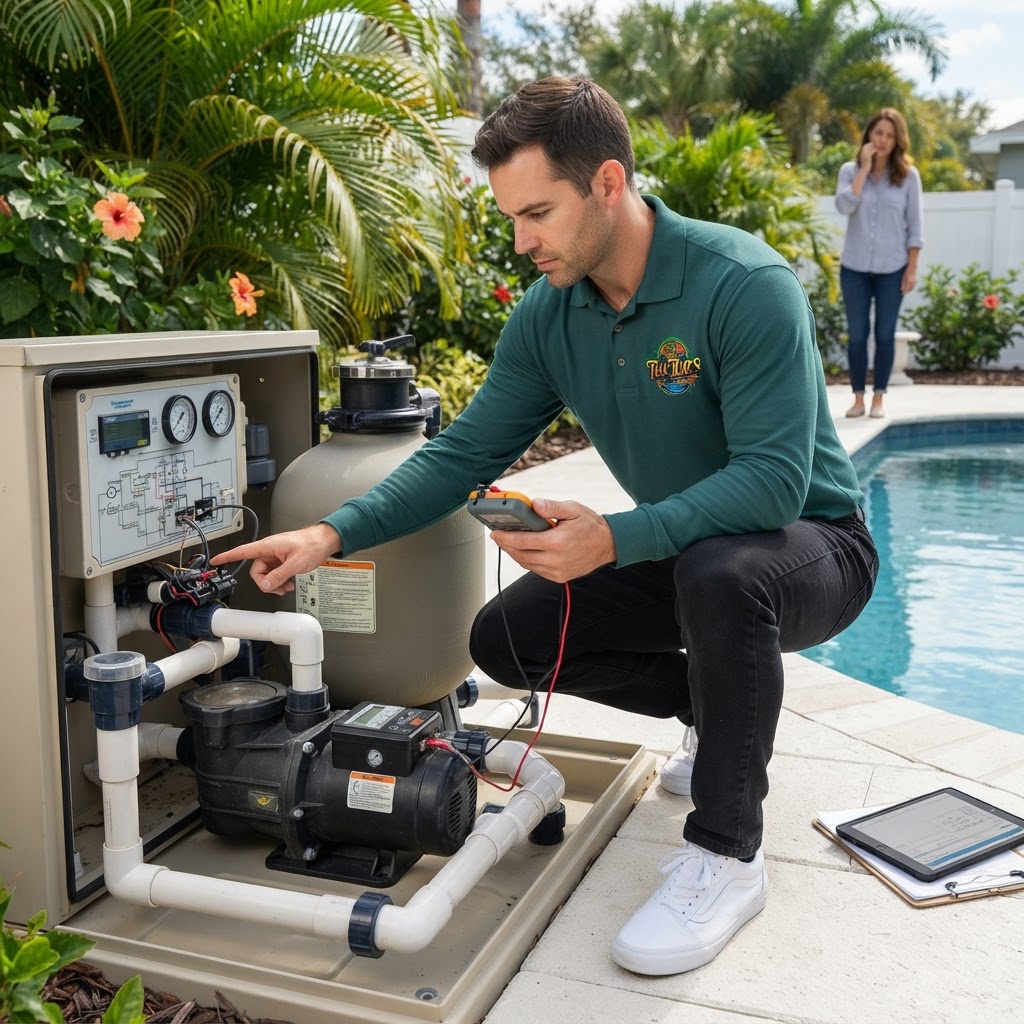
High or Low Filter Pressure: Your pressure gauge is your best friend. A reading significantly higher than your 'clean' baseline indicates a blockage after the pump (pressure side). A reading significantly lower than normal indicates a blockage before the pump (suction side).
-
Heater 'Low Flow' Error: Modern pool heaters have sensors that shut the unit down if they don't detect enough water moving through the heat exchanger.
-
Noisy Pump: A pump that sounds like it is 'grinding rocks' may be experiencing cavitation due to restricted water flow.
Suction Side vs. Pressure Side: The Great Divide
To fix low water flow, you must first determine where the restriction is happening. Think of your pool system in two halves. The Suction Side includes everything from the skimmer and main drain up to the pump. The Pressure Side includes everything from the pump through the filter, heater, and back to the return jets.
Common Suction Side Issues
If your filter pressure gauge is reading lower than normal, the pump isn't getting enough water. Check these areas:
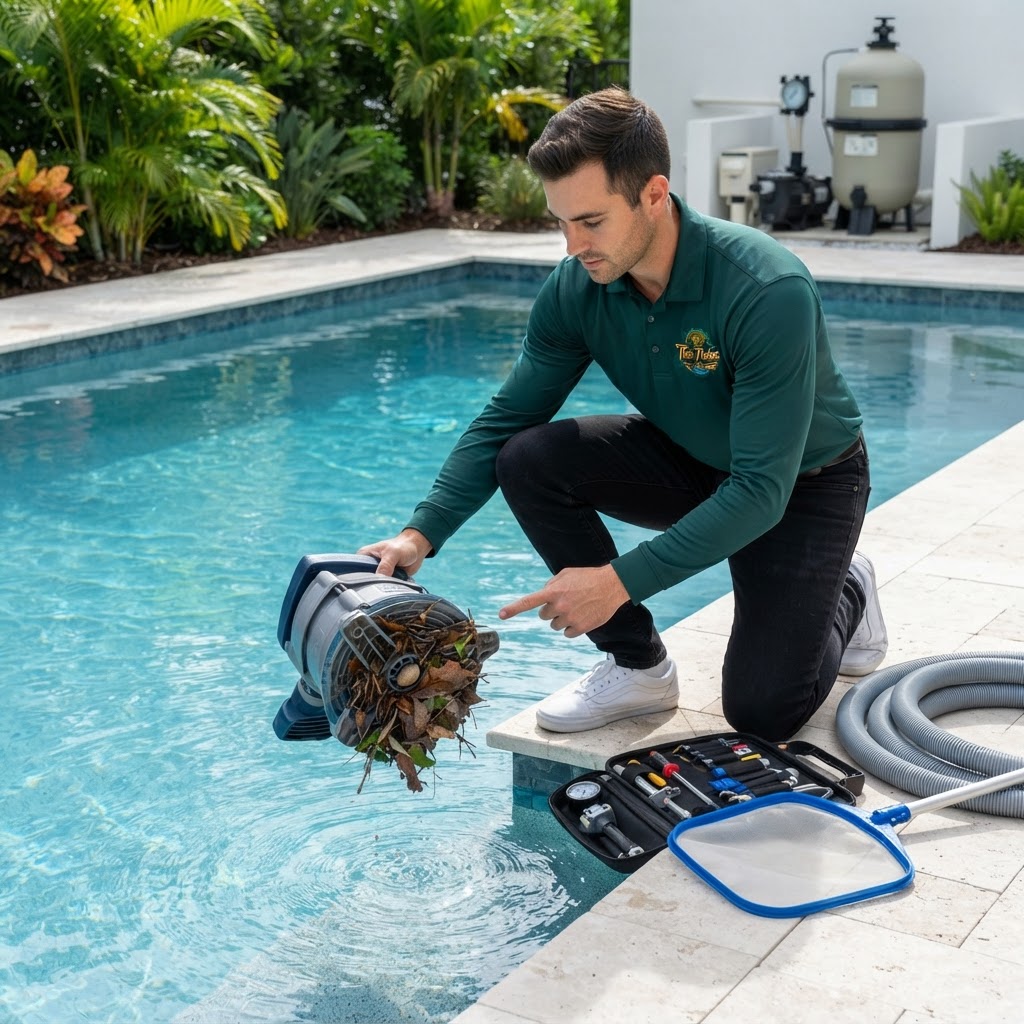
- Clogged Skimmer Basket: This is the most common and easiest fix. Large amounts of leaves or debris can choke off the water supply.
- Stuck Skimmer Weir: The 'flapper' door in your skimmer can sometimes get stuck in the upright position, preventing water from entering the throat.
- Low Water Level: If the pool water level is below the midpoint of the skimmer opening, the pump will suck in air instead of water. Ensure water is at the correct level to maintain prime.
- Clogged Pump Basket: If the skimmer basket is damaged, debris can reach the pump basket. If this is full, water flow stops.
- Clogged Main Drain: While less common, the main drain line can become obstructed by large debris or even small toys.
Common Pressure Side Issues
If your filter pressure gauge is reading 8–10 PSI higher than your clean baseline, the pump is pushing water, but it is hitting a wall. Check these areas:
- Dirty Filter: Whether you have sand, DE, or cartridge, a dirty filter is the leading cause of low return flow. For detailed instructions on managing this, see How to Fix High Pool Filter Pressure: A Complete Troubleshooting Guide.
- Closed Valves: Ensure that all valves on the return side are fully open. A partially closed Jandy valve can significantly restrict flow.
- Clogged Salt Cell: If you have a saltwater pool, calcium buildup on the cell plates can act like a physical dam, slowing water down.
The Clogged Impeller: The Silent Flow Killer
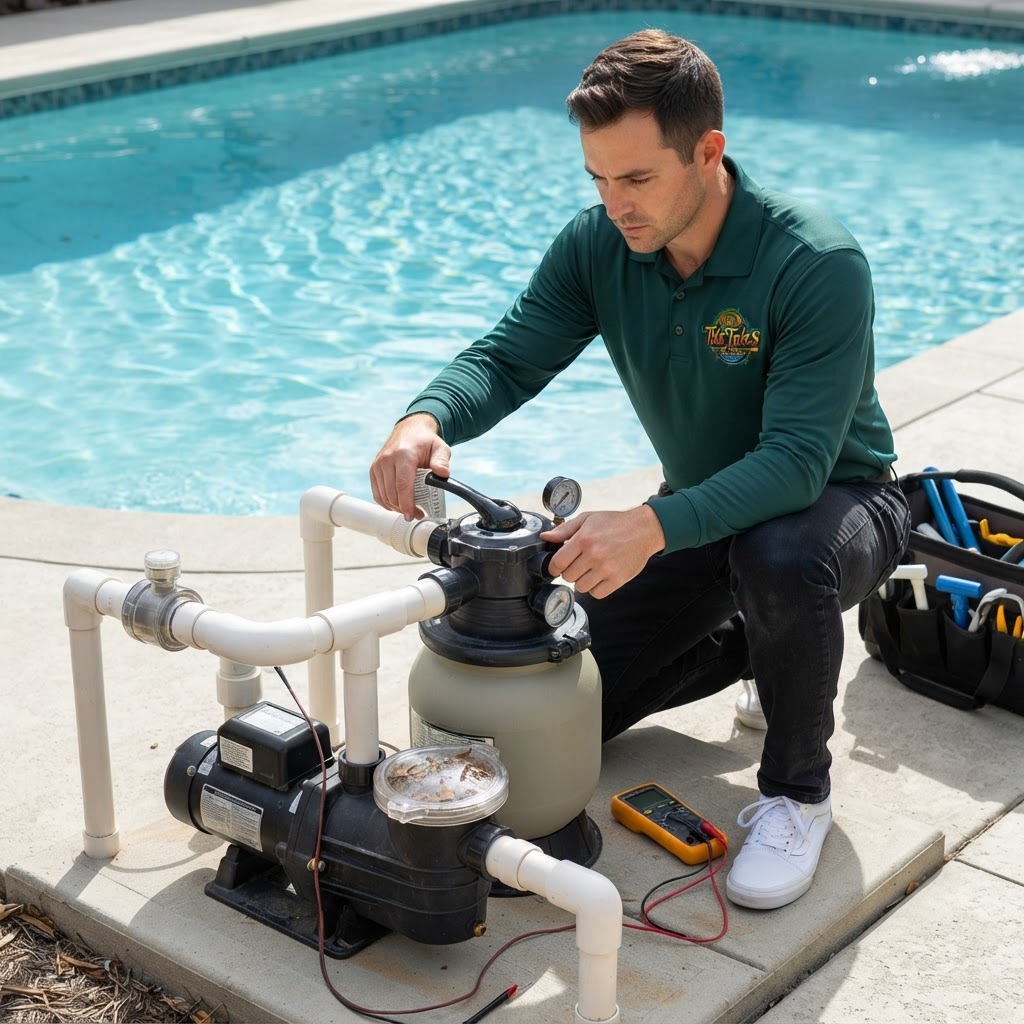
Sometimes, your baskets are clean and your filter is fresh, but the flow is still weak. This often points to a clogged impeller. The impeller is the spinning component inside the pump that creates the centrifugal force to move water. Small debris, like pine needles, pebbles, or seeds, can pass through the pump basket and lodge in the narrow vanes of the impeller.
To check this, you must turn off the power at the breaker, open the pump lid, and reach into the intake hole at the back of the basket housing. If you feel debris, it must be carefully cleared out using a bent wire or needle-nose pliers.
Pro Tip: Always check your impeller if you recently had a 'skimmer bypass' event (e.g., the skimmer basket floated up or was left out while vacuuming). Even a few small twigs can reduce pump efficiency by 50% or more.
Step-by-Step Troubleshooting Checklist
Follow these steps in order to diagnose and resolve your low flow issues:
- Check the Water Level: Ensure it is at the halfway mark of the skimmer.
- Clean All Baskets: Empty the skimmer and pump baskets. Inspect them for cracks that might allow debris through.
- Check the Filter Pressure: If high, backwash your sand/DE filter or clean your cartridges. If the pressure remains high after cleaning, the media may be chemically fouled or reached its end of life.
- Inspect the Skimmer Weir: Make sure it moves freely.
- Check for Air Leaks: Look for bubbles in the pump. Ensure the pump lid O-ring is lubricated with a silicone-based lubricant and that the lid is tight.
- Verify Valve Positions: Ensure all suction and return valves are in the 'open' position.
- Clear the Impeller: As described above, check for physical obstructions inside the pump housing.
Safety Notes
Working on pool equipment involves both high-voltage electricity and pressurized systems. Always follow these safety guidelines:
- Electrical Safety: Always turn off the power at the main circuit breaker before opening the pump or handling any electrical components.
- Pressure Relief: Before opening the filter or pump lid, always turn the pump off and open the air relief valve on top of the filter tank to bleed off any built-up pressure.
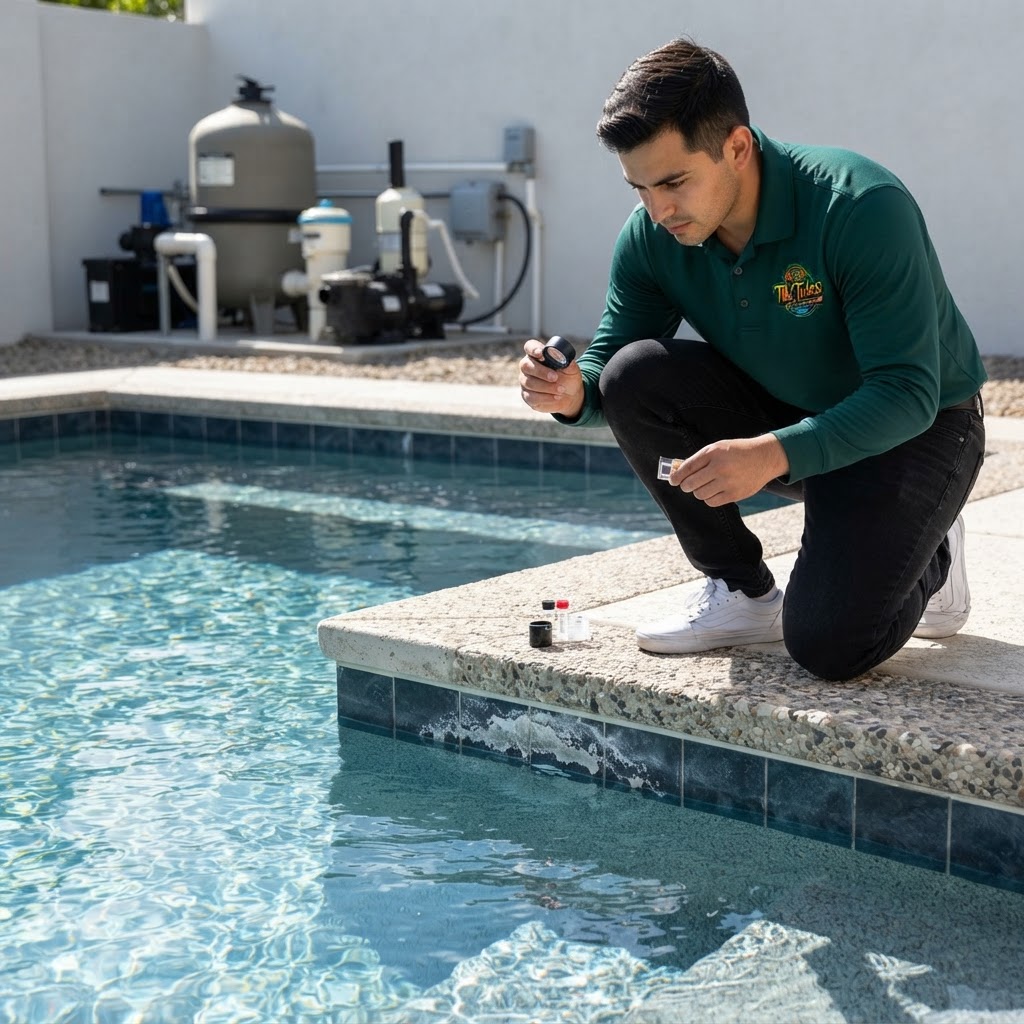
- Chemical Balance: Low flow can lead to chemical imbalances. Once flow is restored, re-test your water. Ensure pH is between 7.2–7.8 and Total Alkalinity is between 80–120 ppm to prevent equipment corrosion or scale buildup.
When to Call a Professional
While many low flow issues are DIY-friendly, some require professional tools and expertise. You should call Tiki Tides Pools if:
- Underground Blockages: If you suspect a clog in the underground plumbing lines that cannot be cleared with a Drain King or garden hose.
- Pump Motor Issues: If the motor is humming but not turning, or if it is making a high-pitched screaming sound (bearing failure), the motor likely needs replacement. See our Pool Pump Not Working? The Complete DIY Troubleshooting Guide for more on this.
- Structural Leaks: If you find you are constantly losing water, which leads to suction issues, you may have a structural leak. Refer to Why Is My Pool Losing Water? The Ultimate Leak Detection Guide for help.
- Persistent High Pressure: If cleaning the filter does not lower the pressure, there may be internal manifold damage or serious calcification issues.
Summary
Low water flow is a signal that your pool's health is at risk. By systematically checking the suction side (baskets and water level) and the pressure side (filter and valves), most pool owners can identify the culprit in minutes. Keep your baskets clear, your filter clean, and your impeller free of debris to ensure your pool remains a crystal-clear sanctuary all summer long. Remember, a well-circulated pool is a healthy pool!